Geometric Algebra for Causal Discovery: Sector Rotation May Be a Market Bet in Disguise
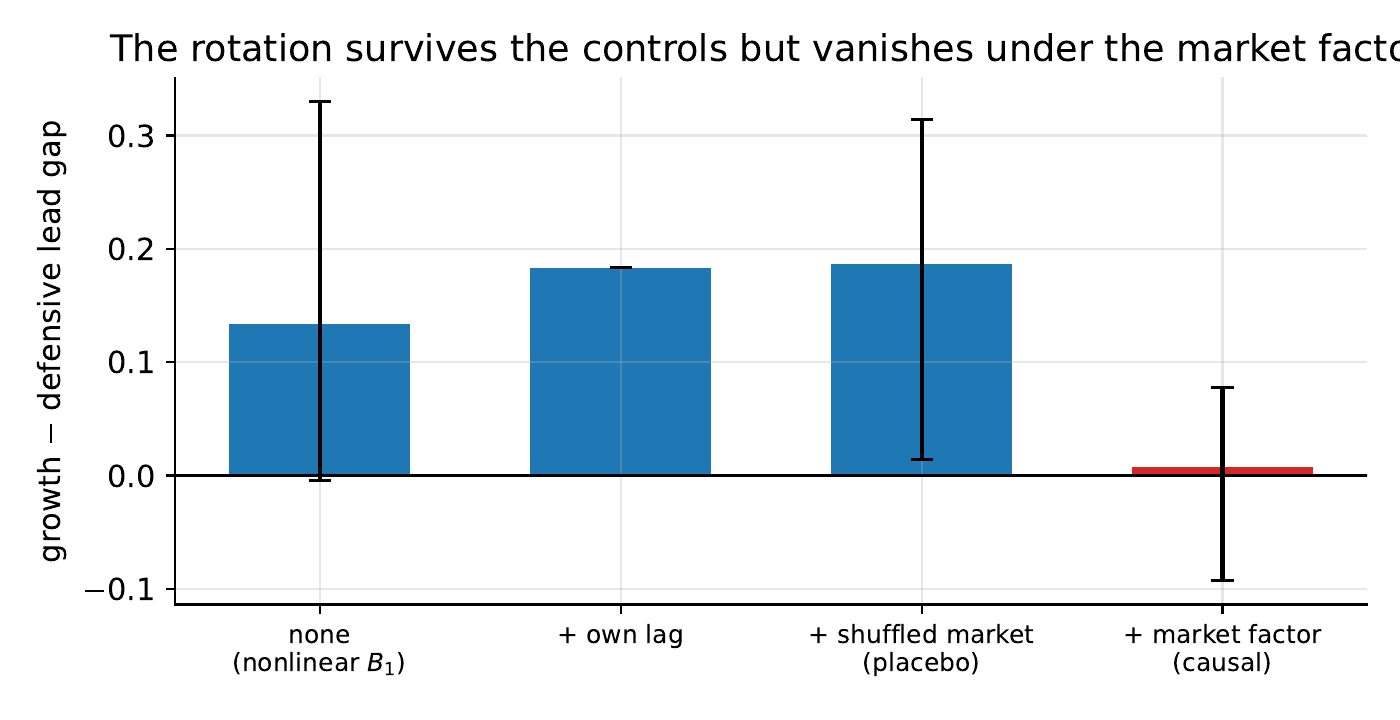
The growth-to-defensive lead-lag survives every check but one. Condition on the market factor and the direct signal is gone.

My personal Substack
Live Last read · last published · next check
The growth-to-defensive lead-lag survives every check but one. Condition on the market factor and the direct signal is gone.
Correlation gives you an angle. The arrow lives in a different grade of the same object.
This is the seventh post in Knowledge Graphs as Geometry, a weekly series that develops a single idea one chapter at a time: every relation in a knowledge graph is an operation in space, and the named models are that operation in different guises.
Chapter 7 of The Learned Kernel. The previous chapters argued that the geometry, the kernel, should be learned rather than chosen. Learning the geometry introduces a failure mode that a fixed kernel does not have: the model can overfit the geometry itself and then report a score it cannot reproduce on new data. This chapter is about detecting that failure, and the remedy is a single held-out fold.
A design that lets a bank put a language model behind decisions without giving up the evidence and the reasoning underneath them.
This is Chapter 6 in Knowledge Graphs as Geometry, a weekly series developing a single thesis: every knowledge graph relation is an operation in space, and the dozens of named embedding models are one operation in different notation.
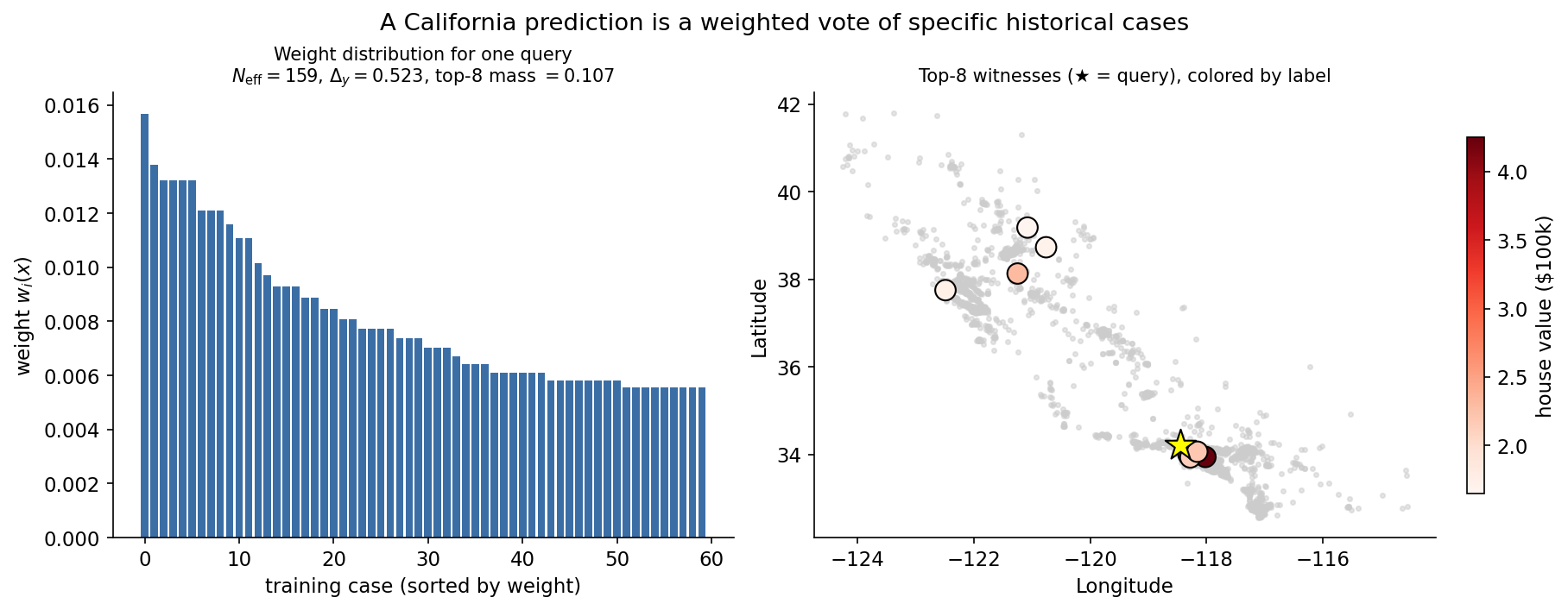
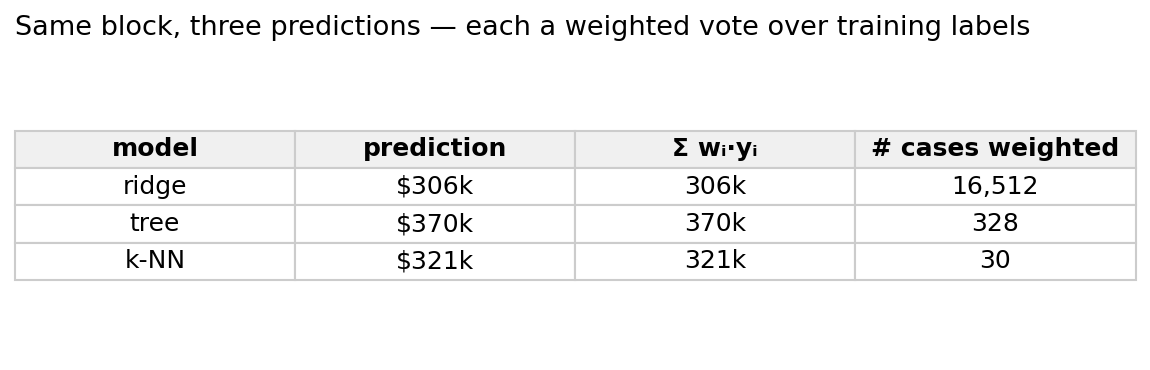
Chapter 6 of Learning as a Geometry Discovery. An earlier chapter showed that a gradient-boosted tree ensemble is a kernel machine with a similarity learned from the labels https://agussudjianto.substack.com/p/trees-are-kernels-and-the-kernel. This chapter examines a single prediction from such a model and asks what it is made of: which historical cases supported it, how many of them effectively,…
This is the fifth post in Knowledge Graphs as Geometry, a weekly series that builds one idea, chapter by chapter: a knowledge graph stores facts as relations, every relation is an operation in space and predicting a missing fact is geometry.
Governing AI in Regulated Industries
Chapter 5 of The Learned Kernel. Last time we saw that a gradient-boosted ensemble is secretly a kernel machine (https://agussudjianto.substack.com/p/trees-are-kernels-and-the-kernel), with a similarity it learned from the labels.
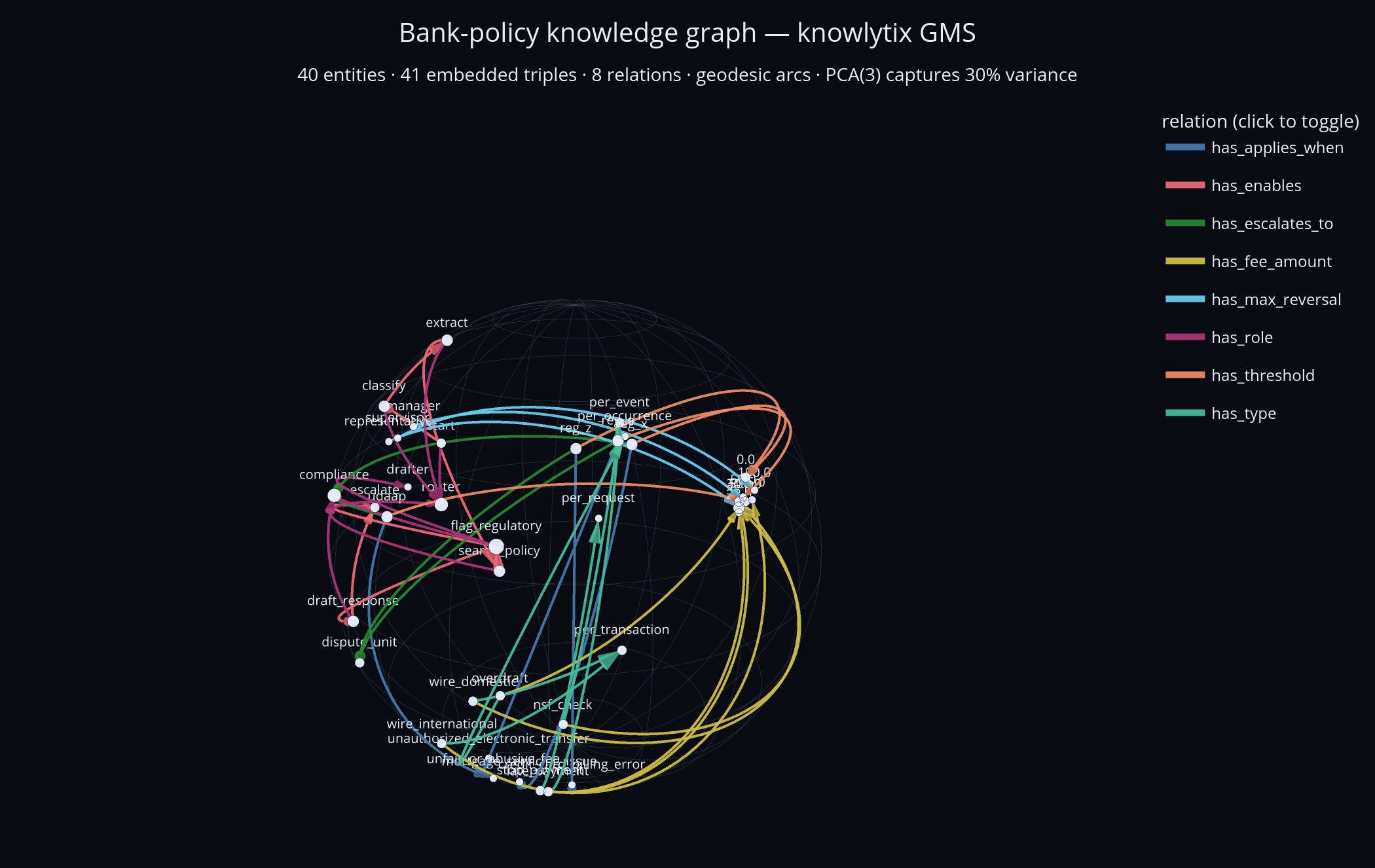
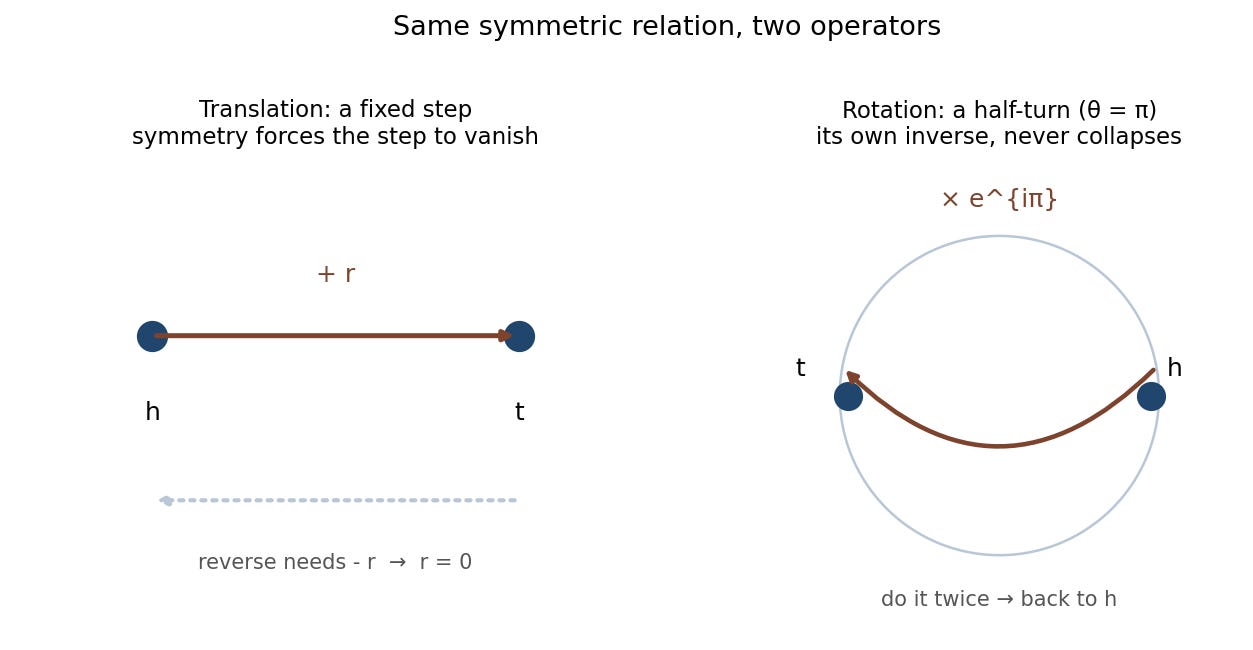
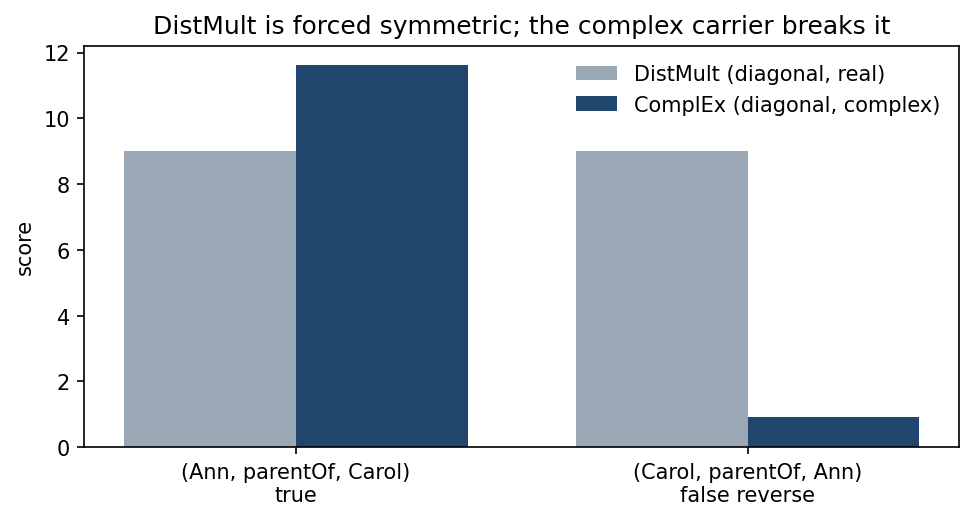
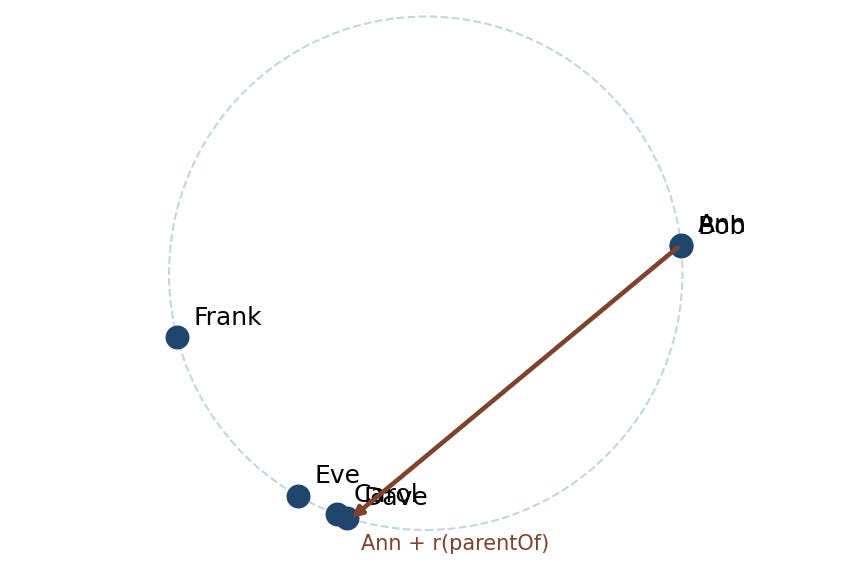
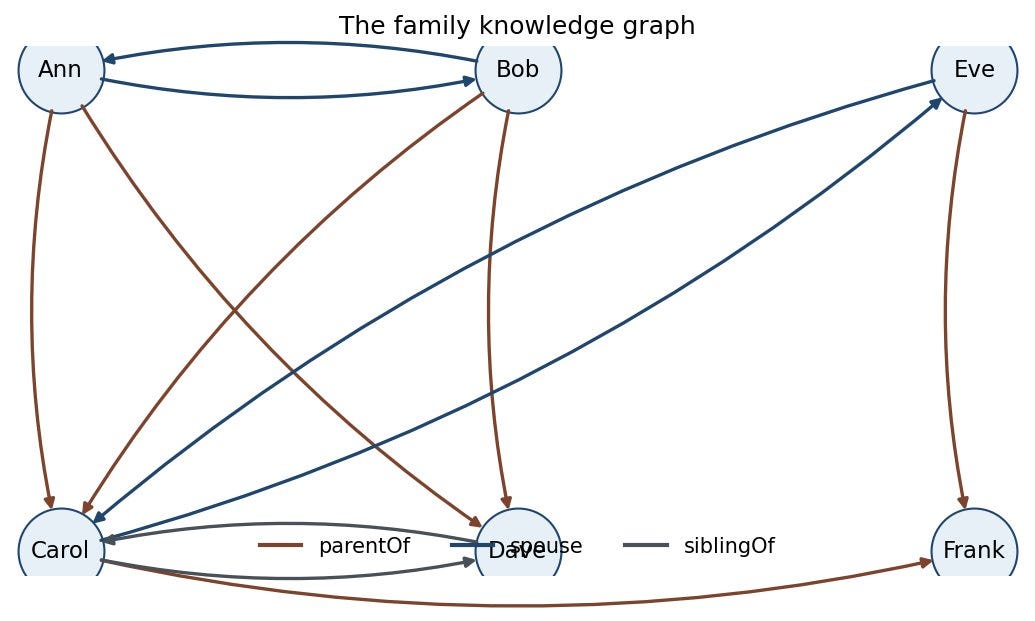
This is an example follow-up to the fourth post in Knowledge Graphs as Geometry. Last time a relation became a rotation and score by distance, symmetry stops being a trap. That earlier demonstration used six people in a family graph, and this week the same rotation runs a bank’s compliance memory, the geometry an AI agent has to obey when a customer complaint lands on its desk. The tool is
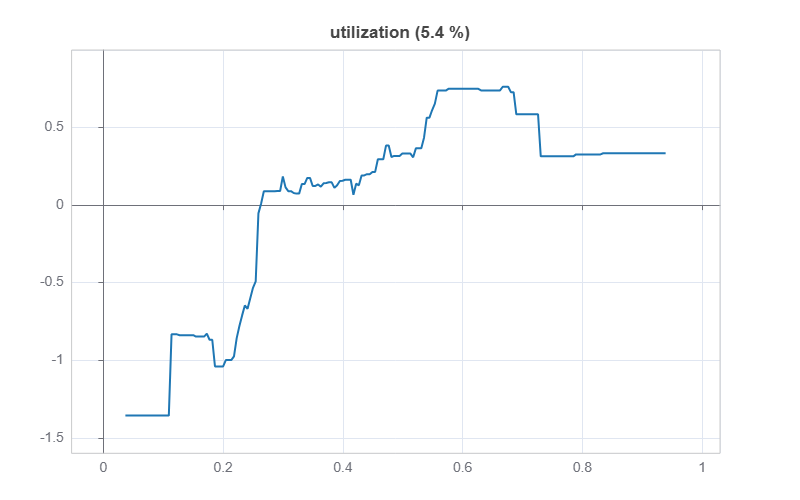
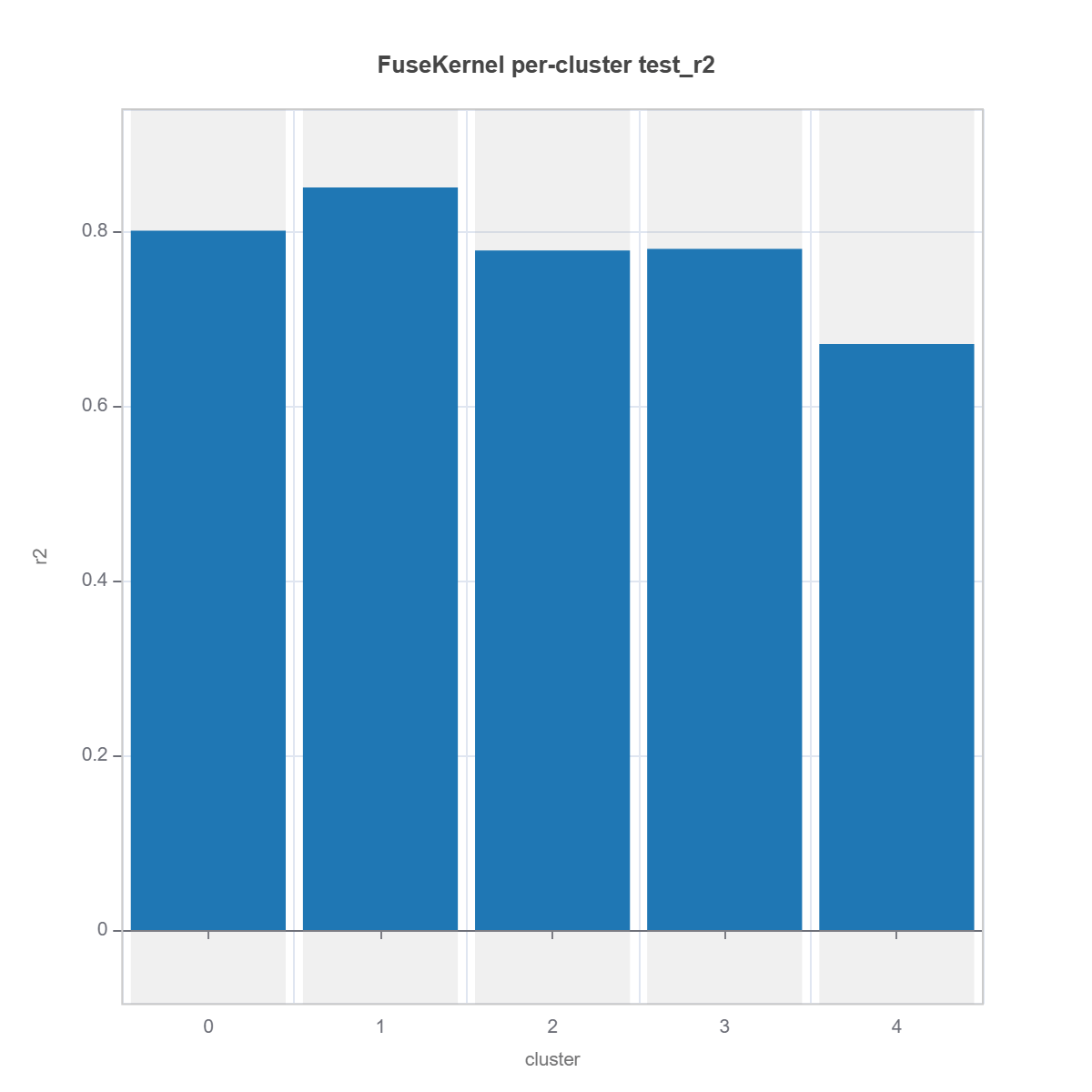
Post 5 of The Learned Kernel. Last time we showed that a gradient-boosted ensemble carries its own map of where it fails — read the leaf kernel, cluster by it, and the weak regions surface on their own. I promised we’d act on that map. This is the repair — and we do it in credit, where the fix is only allowed if it keeps the model monotone and readable.
This is the fourth post in Knowledge Graphs as Geometry, a weekly series that turns the model zoo into one idea.
Chapter 4 of The Learned Kernel. Last time we said the geometry should be learned, not chosen, and named boosting as the first engine that does it. This time we take the kernel a boosted ensemble grows for free and use it for something the black box never offered: a map of exactly where the model fails.
This is the third post in Knowledge Graphs as Geometry, a weekly series that builds one idea, chapter by chapter: a knowledge graph stores facts as relations, every relation is an operation in space, and predicting a missing fact is geometry.
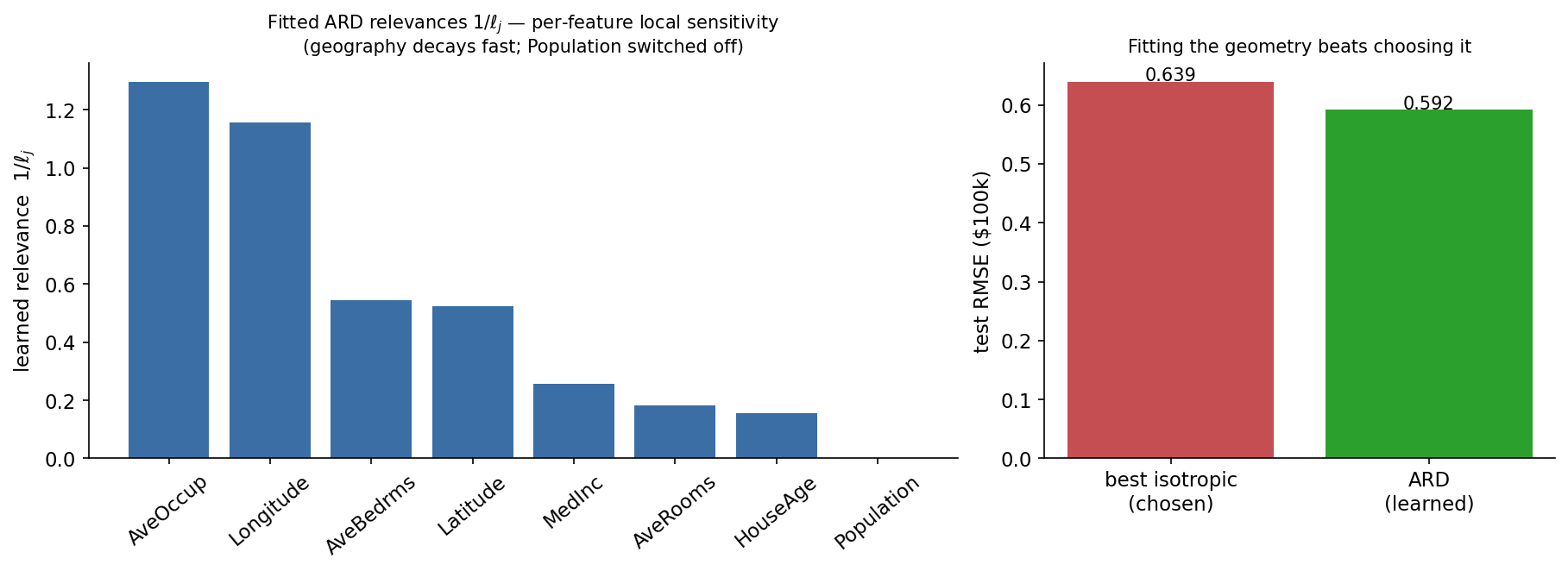
Chapter 3 of The Learned Kernel. Last time, five methods collapsed into one machine whose only real input is the kernel. This time we stop choosing that kernel by hand — and confront the two things that go wrong the moment you try to learn it instead.
This is the second post in Knowledge Graphs as Geometry, a weekly series that builds one idea, chapter by chapter: a knowledge graph stores facts as relations, every relation is an operation in space, and predicting a missing fact is geometry.
The language around tabular transformers makes row attention and column attention sound like new modeling primitives.
Post #2 of The Learned Kernel.
This is the first post in Knowledge Graphs as Geometry, a weekly series that builds one idea, chapter by chapter: a knowledge graph stores facts as relations, every relation is an operation in space, and predicting a missing fact is geometry.
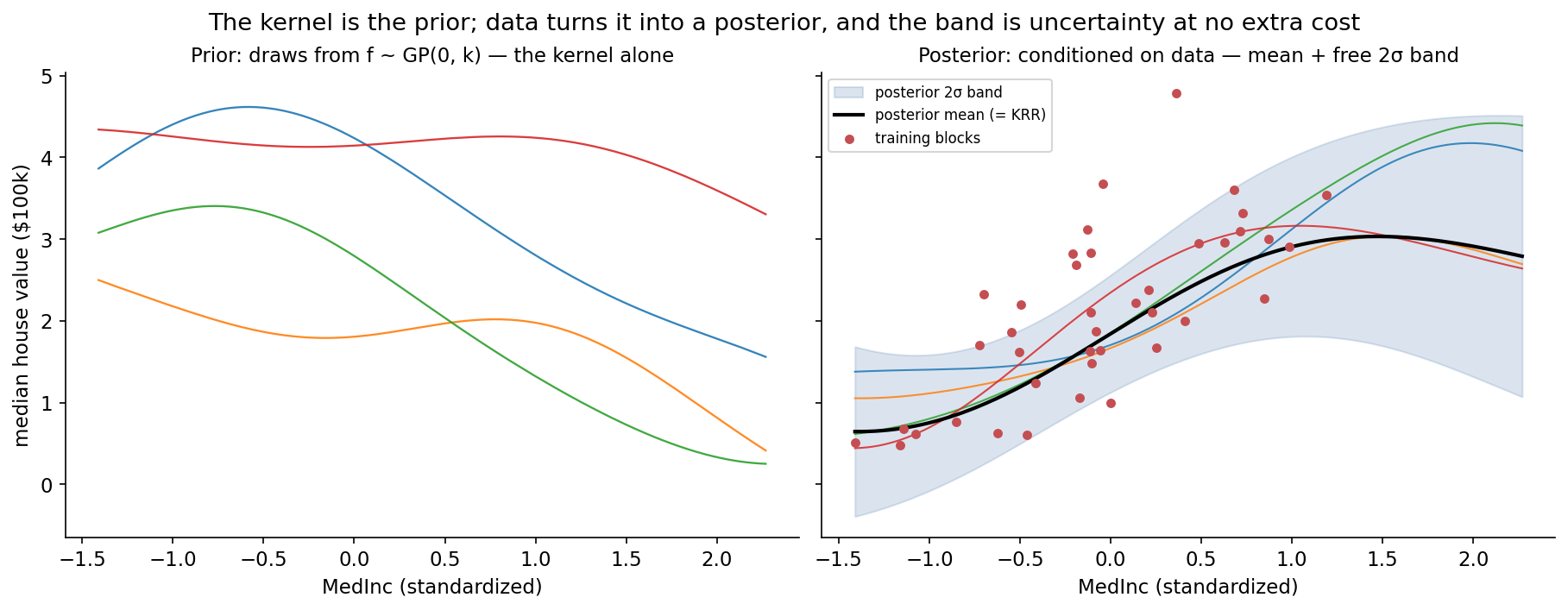
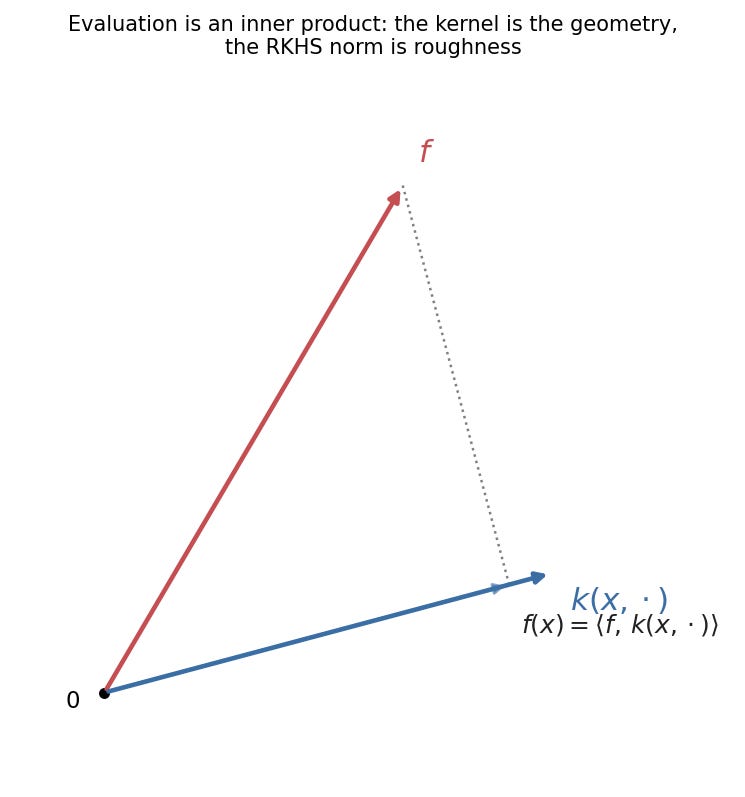
This is the first post in The Learned Kernel, a weekly series that builds one idea, chapter by chapter: learning is the discovery of geometry, the kernel is what carries it, and the kernel should be learned, not chosen.