Welsbach Weekly: The Audit Becomes the Deal
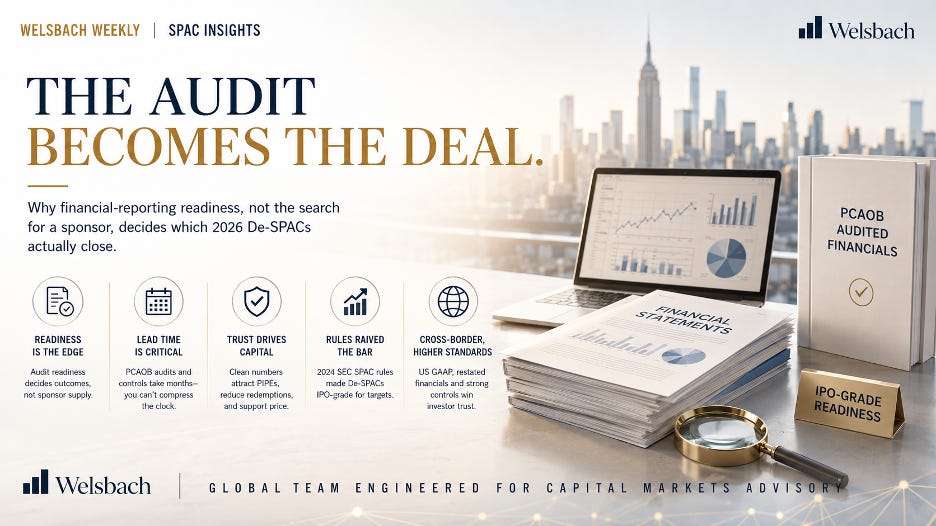
Why financial-reporting readiness, not the search for a sponsor, decides which 2026 De-SPACs actually close

We spend hours researching, and talking to the smartest founders, dealmakers and investors in the SPAC landscape. This is our attempt to give you a monthly summary on how we are thinking about the macro, fund raises, SPACs, and what lies ahead
Live Last read · last published · next check
Why financial-reporting readiness, not the search for a sponsor, decides which 2026 De-SPACs actually close
We spend hours researching, and talking to the smartest founders, dealmakers and investors in the SPAC landscape.
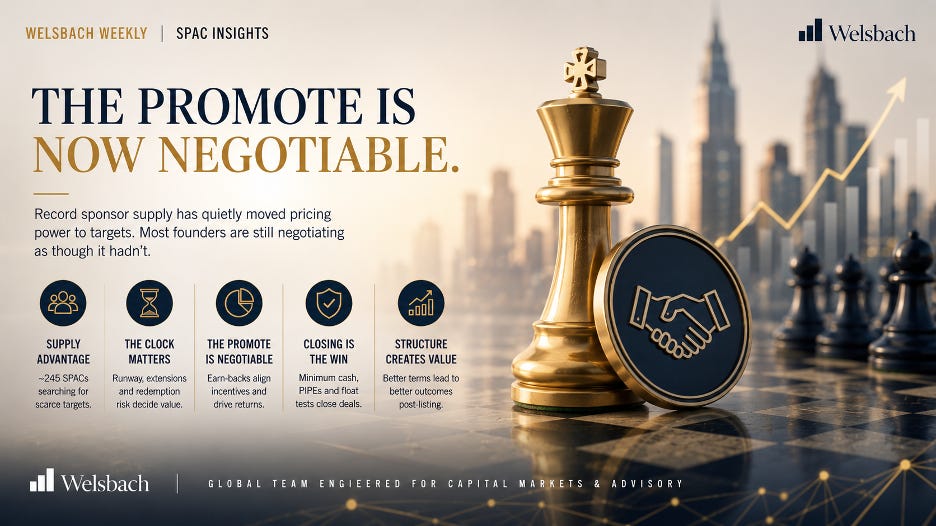
Record sponsor supply has quietly moved pricing power to targets. Most founders are still negotiating as though it hadn't
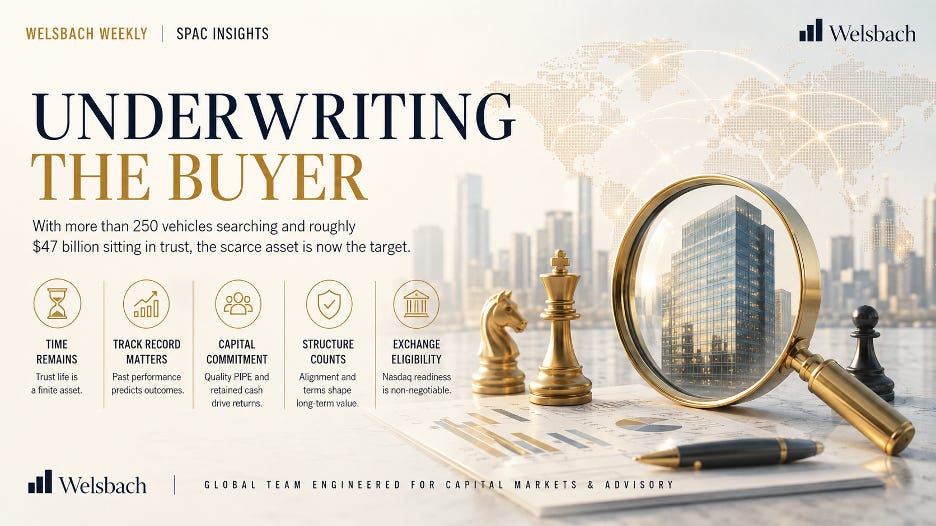
With more than 250 vehicles searching and roughly $50 billion sitting in trust, the scarce asset is now the target. The risk founders still fail to price is which SPAC they say yes to
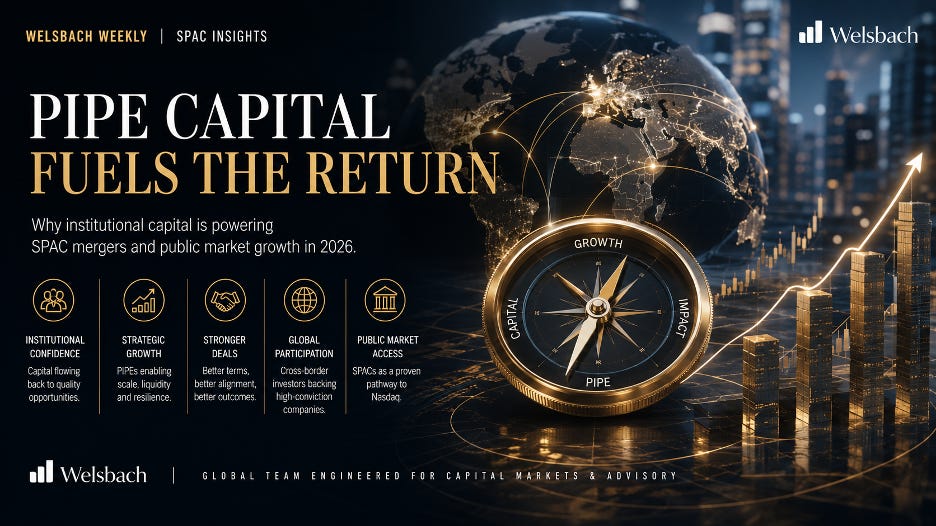
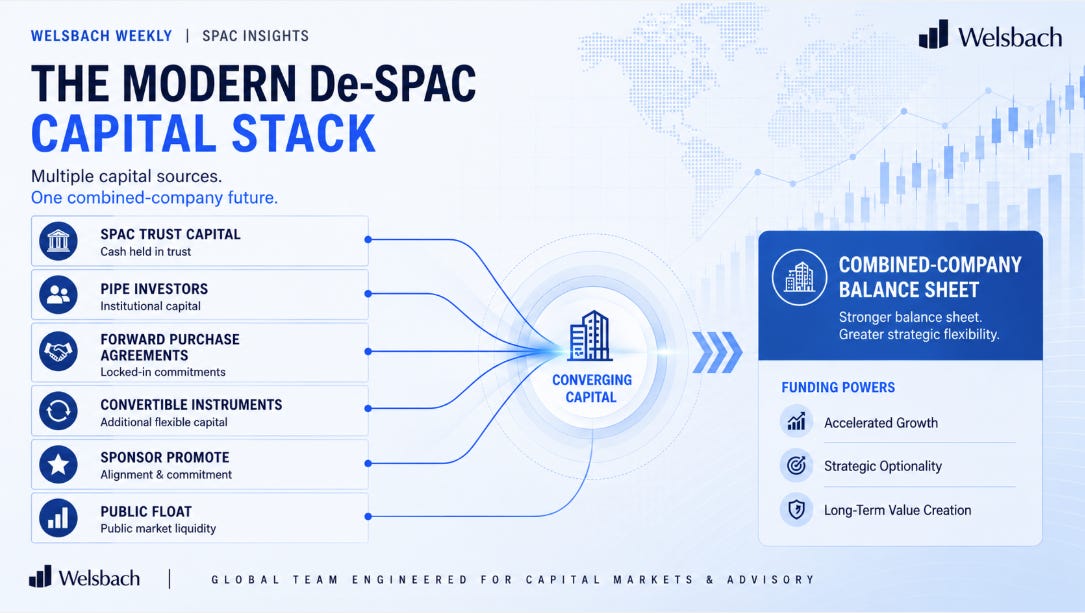
The strongest SPAC transactions no longer begin with announcements. They begin with committed institutional capital that validates quality, reduces execution risk, and builds market confidence
We spend hours researching, and talking to the smartest founders, dealmakers and investors in the SPAC landscape.
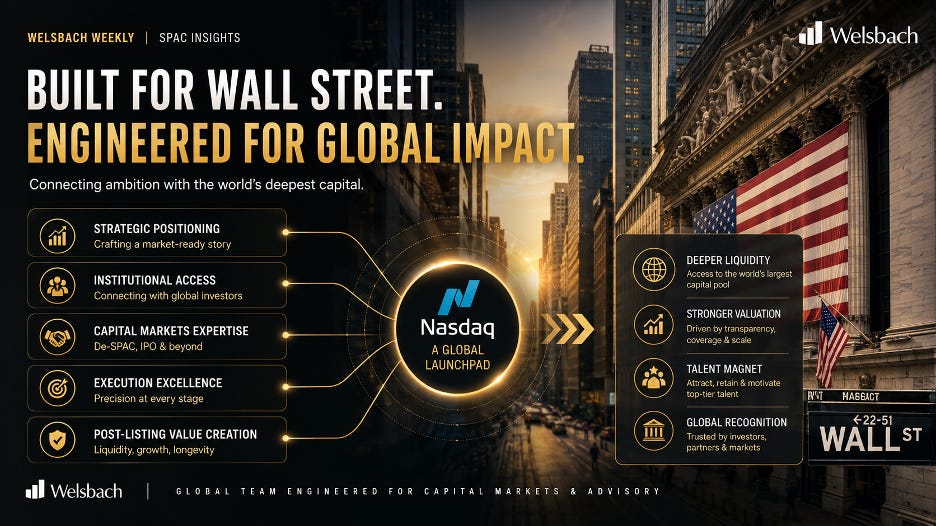
Every year, hundreds of companies ring the opening bell at Nasdaq. Yet only a few become global institutions. The difference isn't the listing, it's what it unlocks
A successful de-SPAC is no longer defined by the listing, it is defined by what comes next, when liquidity determines whether a company thrives or falters
And the process that actually works.
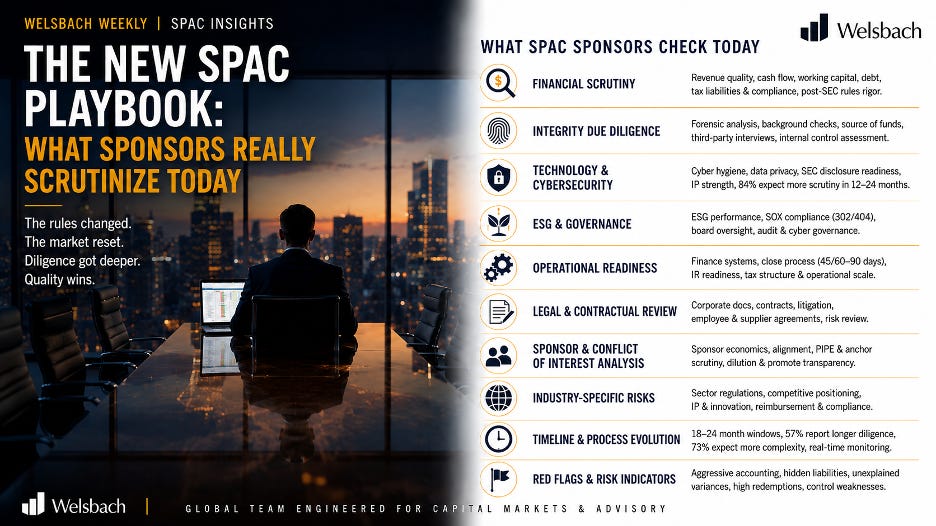
The biggest risk to a de-SPAC transaction in 2026 isn't market volatility, it's discovering too late that your company isn't ready for public-market scrutiny