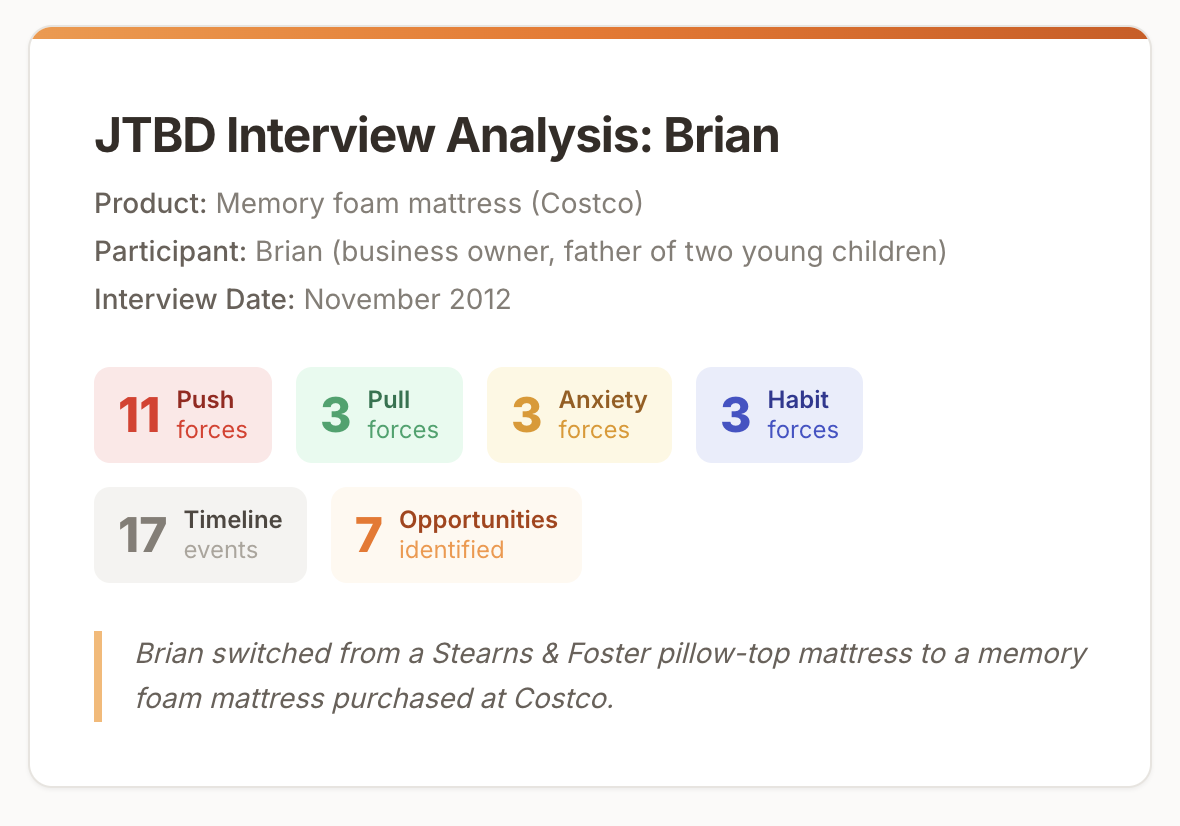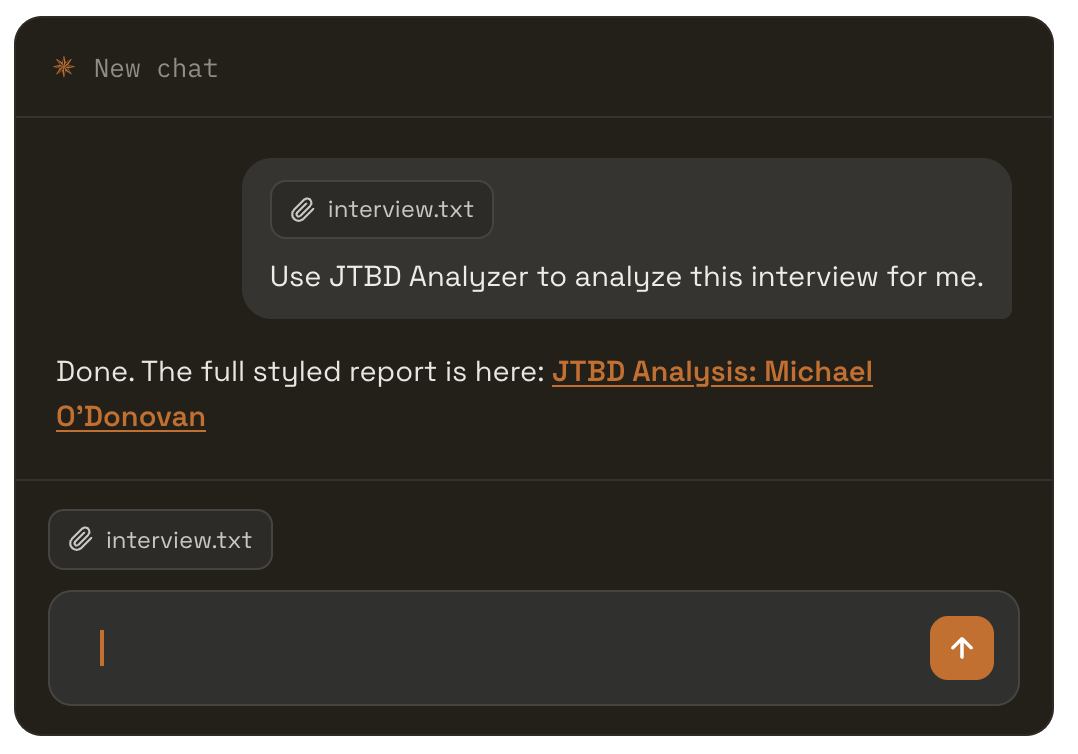
Launched: AI Jobs to be Done Interview Analysis
I ran the Sennie interview through it. Here's what came back in under two minutes.

Real Jobs-to-be-Done interviews, plus the tools and concepts behind them. I'll help you use JTBD to find opportunities that move the needle. I worked to formalize the framework with Clay Christensen and Bob Moesta. This is where I show how it works.
Live Last read · last published · next check
I ran the Sennie interview through it. Here's what came back in under two minutes.
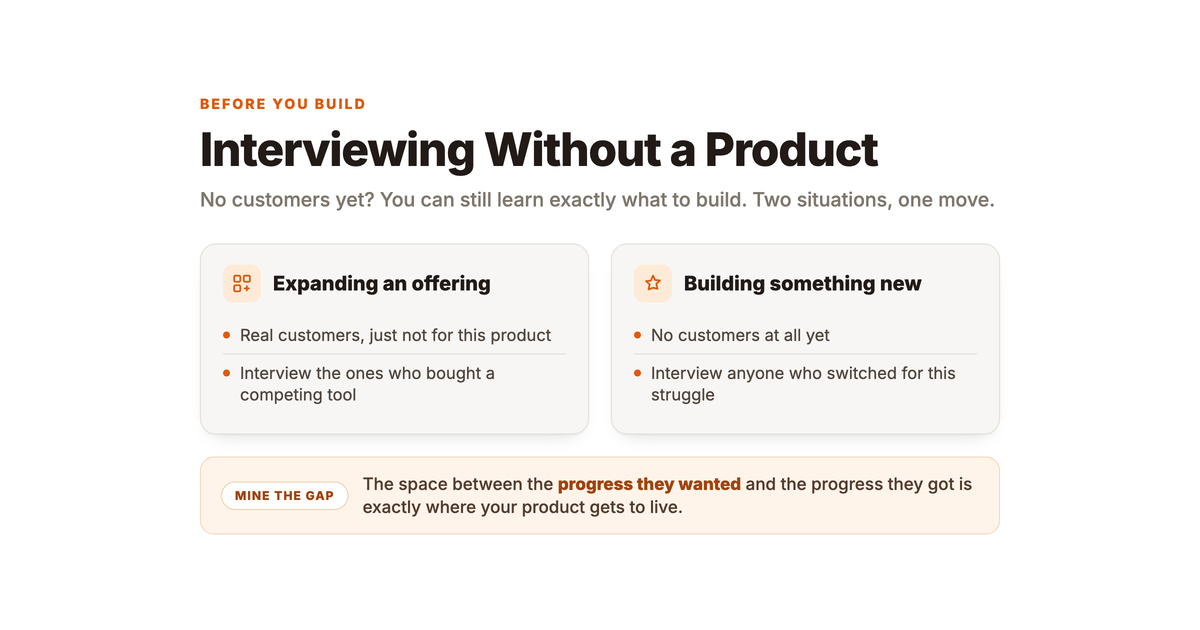
Whether you're extending a product line or inventing a category, someone is already paying to try to make the progress you're after. Go study that purchase.
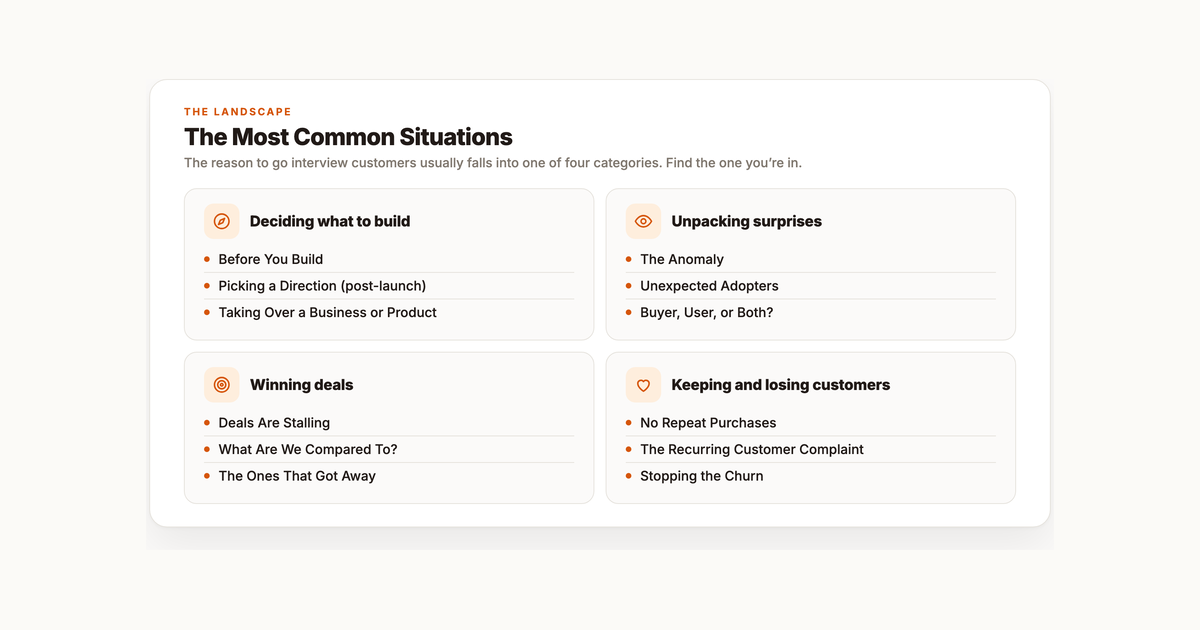
You rarely have to invent the research question - it comes from the situation you're in. Here are the twelve that should send you looking.
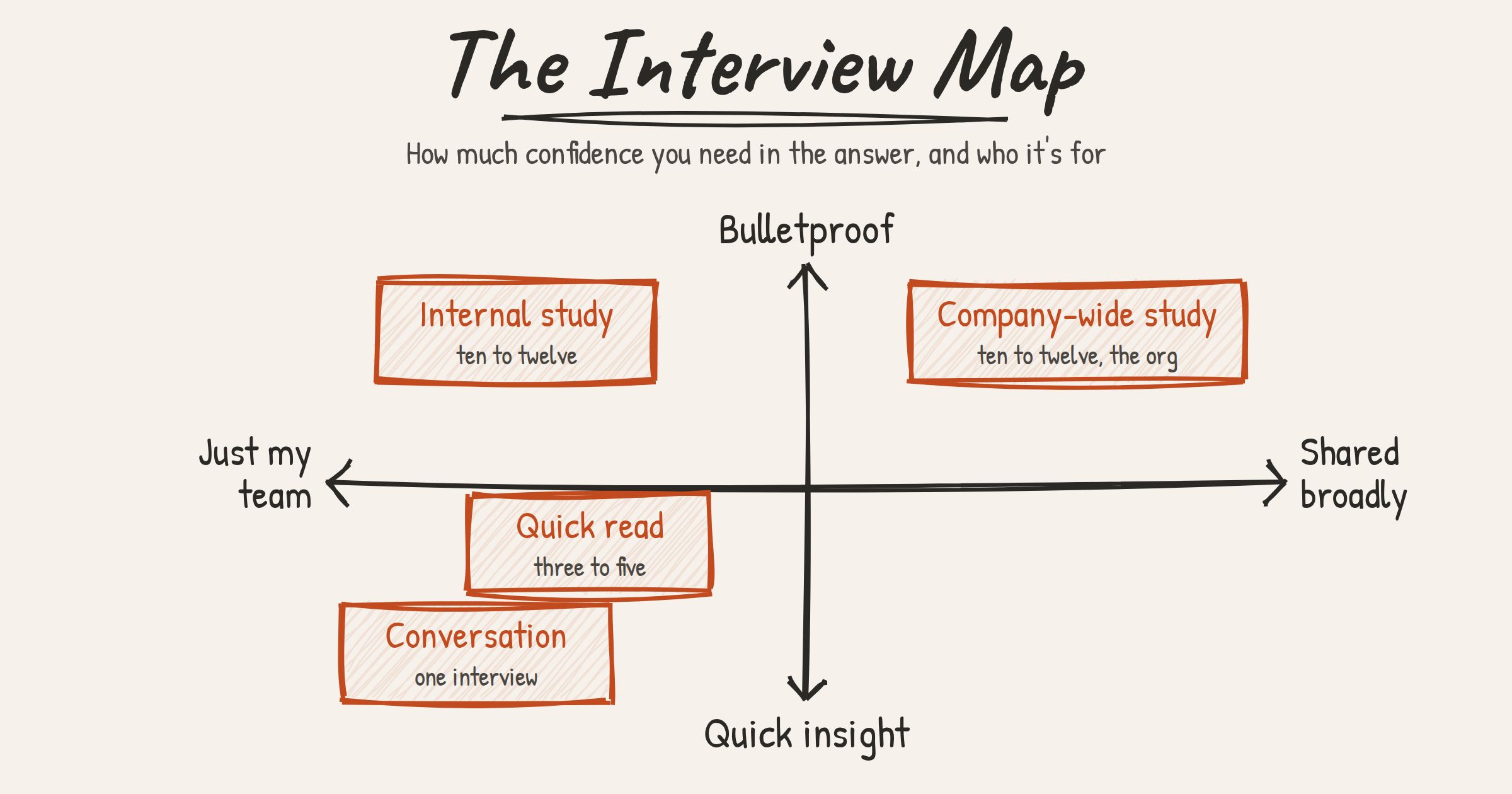
You know you should talk to customers. What stops you is everything else: Is now the right time? How many? How formal? Here's a simple map for designing the right Jobs to be Done project.
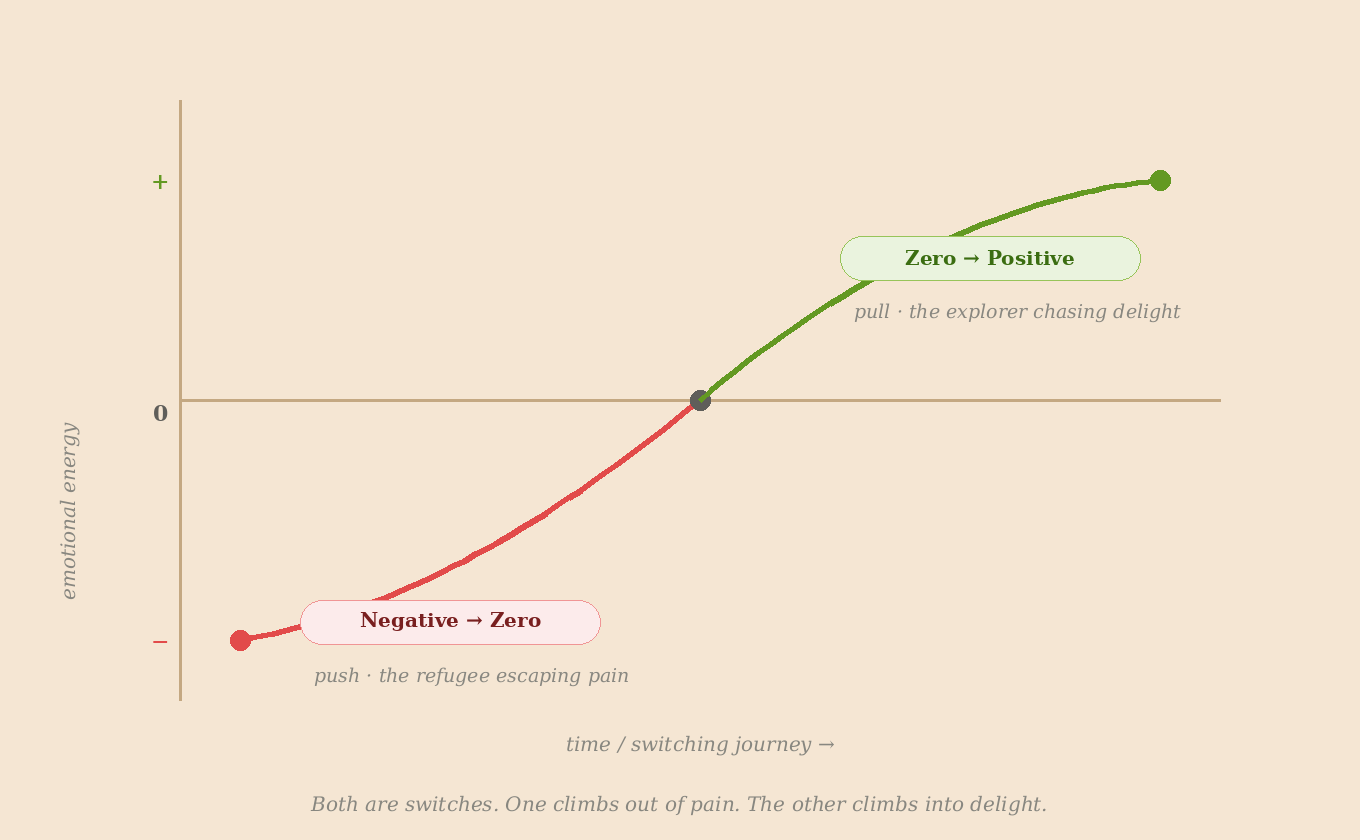
Not all switching energy is equal. Escaping pain and chasing delight produce completely different timelines, completely different urgency patterns, and completely different levels of loyalty.
Two minutes from raw transcript to forces, timeline, and opportunities to act on.
You're not designing a product. You're designing your customer's belief that they can succeed with it.
When a company buys enterprise software, there’s always one person who drove the decision. That person didn’t buy the software for the company. They bought it for themselves.
The same customer can hire two completely different products from the same category. Not because one is better. Because the job is different.
The most powerful product discovery doesn’t come from ads, reviews, or recommendations. It comes from watching someone do something you didn’t know was possible.