
I’ve spent years (decades?) analyzing Jobs to be Done interviews by hand.
You’re a subscriber here, so you probably know that just finding folks to interview and conducting the interviews takes time. Then the analysis that follows is hours per interview.
It’s always worth it. The findings always have us leaning forward in our seats and eagerly talking about what to build next.
I just wanted it all to happen faster.
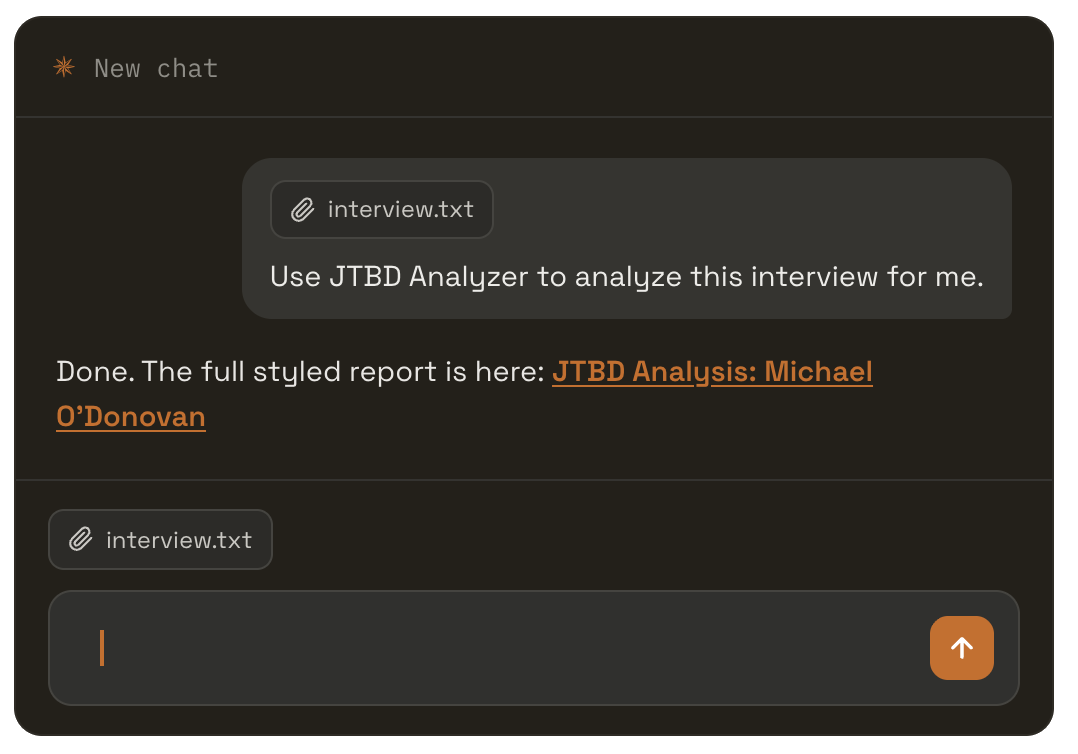
So I built a tool that does it. You drop in a transcript (file or paste), and about two minutes later you get product opportunities, an honest assessment of how the interview itself went, the four forces, the timeline of events, and the requirements the customer was hiring for.
It’s not a generic AI prompt (I tried it - it just returns slop). It’s my analysis process, encoded and tested against real expert analyses.
Rather than tell you that it works, I’ll just show you. A while back I shared my full interview with Sennie, the ER nurse who bought an AWS course on Udemy while plotting her escape from nursing. I ran that exact transcript through the analyzer. Here’s some of what came back.
It found the real job in the first paragraph:
This is a really rich story
about someone who is not actually shopping for a course. She’s shopping for a new life. The course is almost incidental. What Sennie hired Udemy to do was give her a low-cost, low-risk way to answer a much bigger question: ‘Is tech actually for me, and can I really pull off this transition?’
It understood that the impulse buy wasn’t actually an impulse buy:
The purchase itself looks like a snap decision. Nighttime, in bed after a long shift, scrolling TikTok, and she buys. But the timeline shows this was a tipping point, not a whim. She’d already made the decision days, weeks before, registered her Udemy account, read the curriculum, checked reviews. She’d been procrastinating. Then a TikTok video reminded her, and she picked up her phone and did it. All the work had been done. The forces had already tipped. She just needed the nudge.
This is the kind of distinction that separates JTBD analysis from a survey. The moment of purchase and the moment of decision were weeks apart, and the report caught it.
It mapped all four forces, with evidence. Seven pushes, four pulls, four anxieties, three habits, each one anchored to a direct quote. One example from the anxiety column:
What if I commit to a subscription and don’t stick with it? ‘I didn’t want to go for a monthly subscription plan because I wasn’t sure if this is something I’ll continue doing.’
She managed this by paying once.
And it even graded me:
Chris did well reconstructing the purchase scene (nighttime, in bed, saved credit card) and the decision-versus-action gap. Some technical difficulties (power outage, freezing) interrupted the flow.
My power went out mid-interview. The analyzer noticed, and told me what it cost the interview. If you’re trying to get better at interviewing, this section alone is worth running your transcripts through it.
The full analysis is public and you can read the whole thing here, timeline, forces, requirements, and product opportunities it surfaced for the online course space:
https://ai.jtbdinterviews.com/example-jtbd-analysis-online-course
If you’re working on a project and doing interviews, or you’re learning the craft and want feedback, try it out. The first analysis is free: Analyze an Interview
No posts
Comments
Nothing yet. Say the first thing.
Sign in to join the conversation.