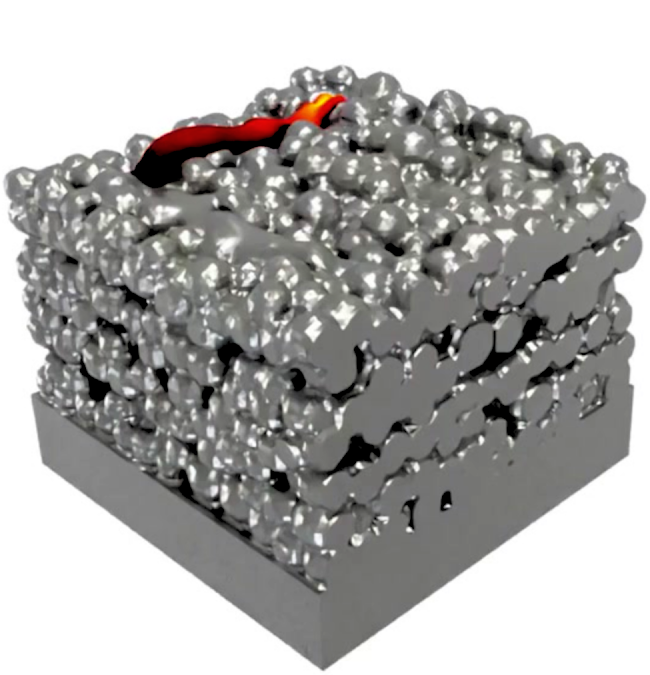
How does TPMS lattice structure design behave during Laser Powder Bed Fusion (LPBF)? In this simulation, analyzes the thermal and mechanical behavior, deformation, and residual stress.
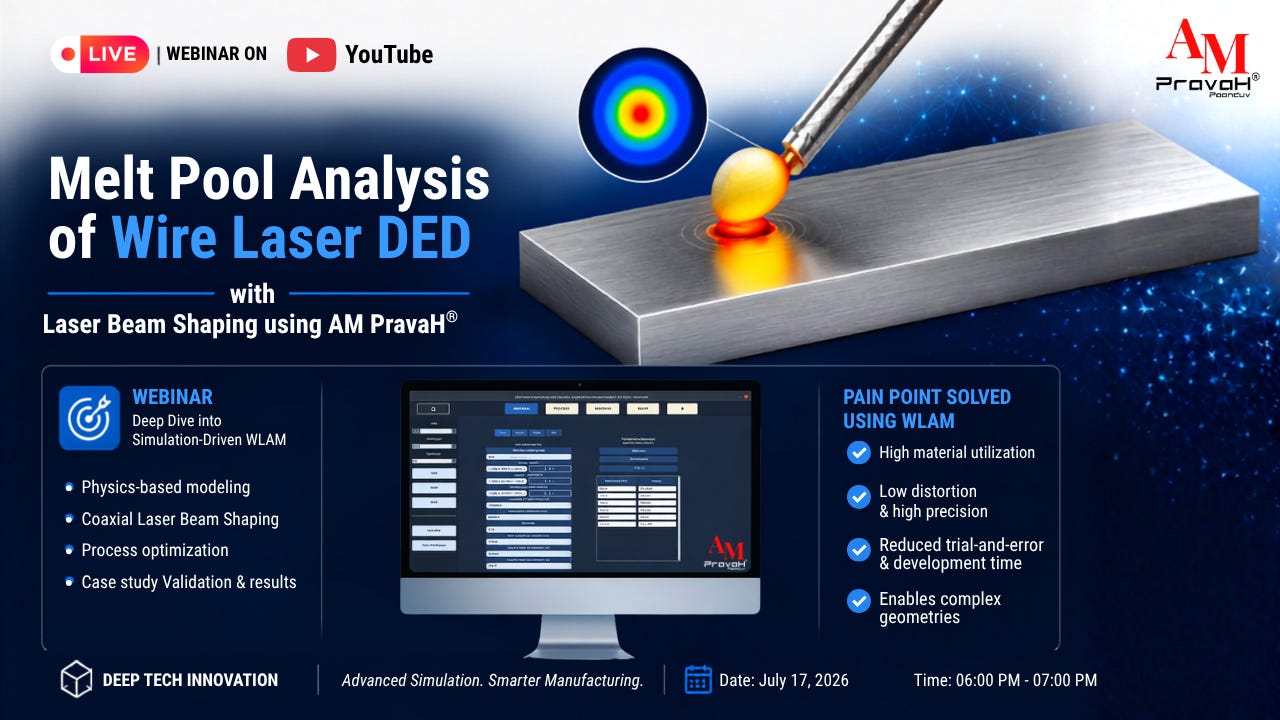
As manufacturers push for higher deposition rates in Wire Laser Directed Energy Deposition (Wire DED), increasing laser power isn’t always the best solution.
As manufacturers push for higher deposition rates in Wire Laser Directed Energy Deposition (Wire DED), increasing laser power isn’t always the best solution.
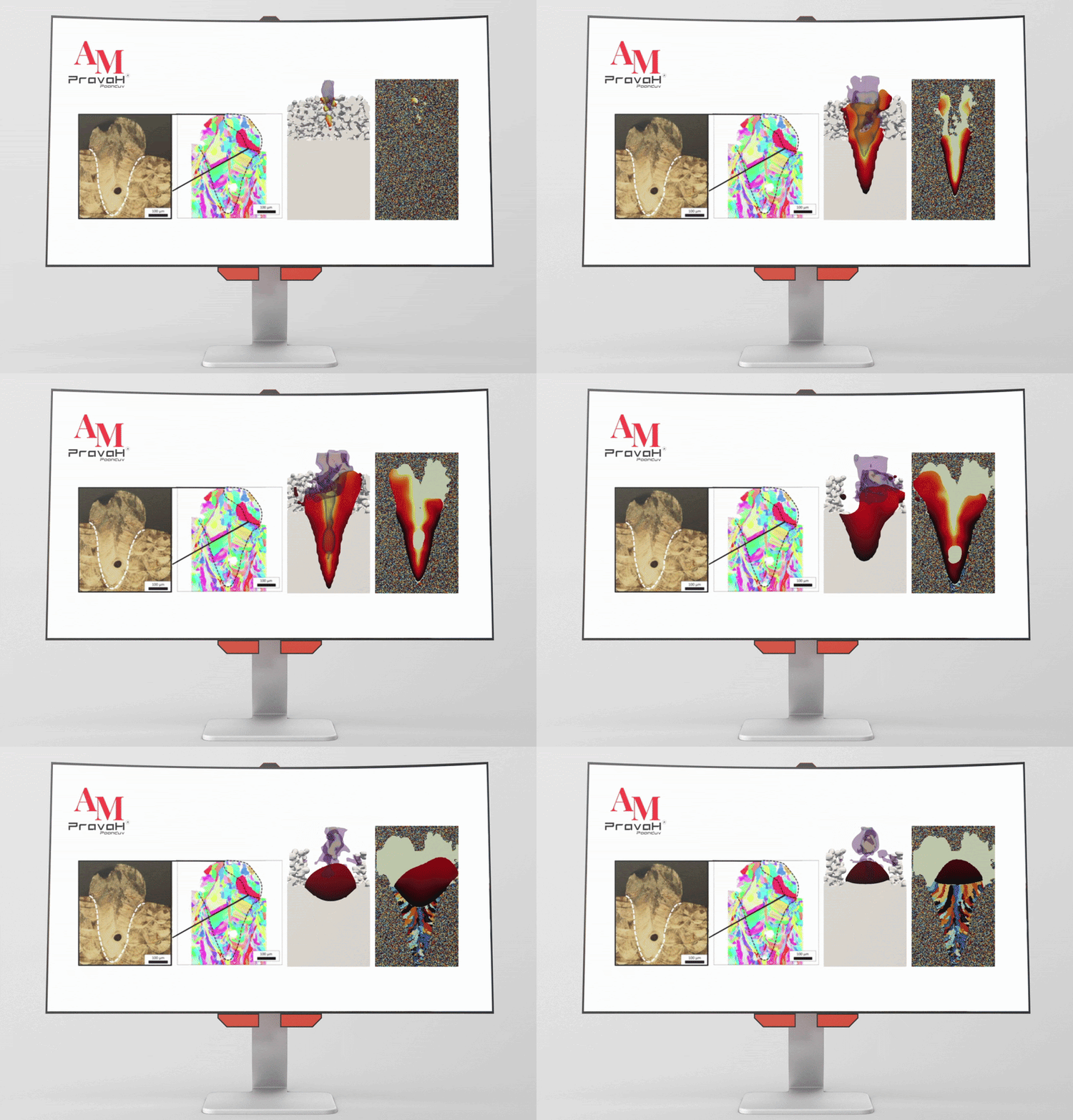
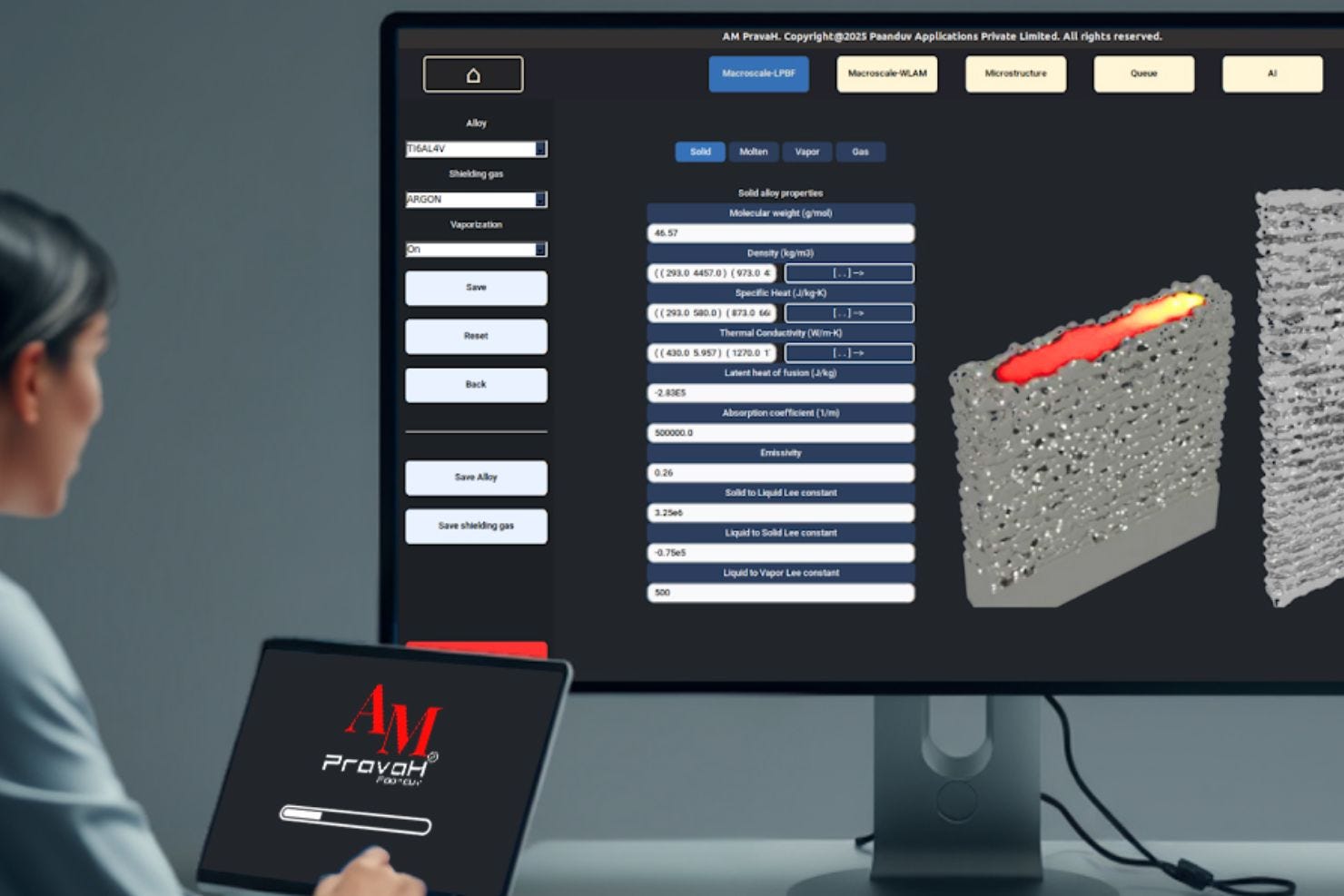
The current additive manufacturing simulation landscape is dangerously fragmented. Relying on isolated tools for melt pool dynamics, grain evolution, and stress analysis is more than just inefficient.
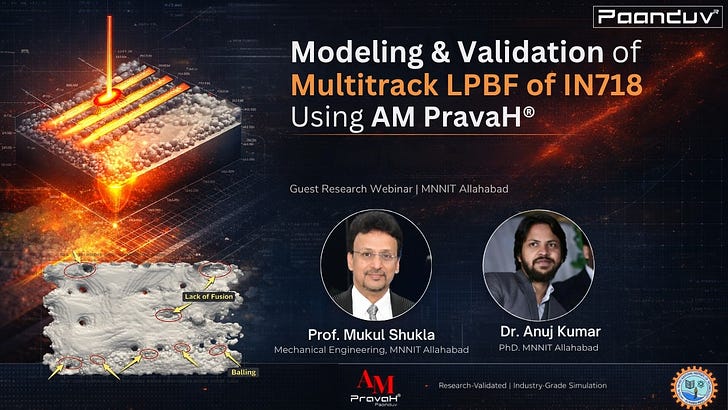
We’re hosting a Guest Research Webinar where faculty from Motilal Nehru National Institute Of Technology Allahabad will present a 𝘃𝗮𝗹𝗶𝗱𝗮𝘁𝗲𝗱 𝗺𝘂𝗹𝘁𝗶𝘁𝗿𝗮𝗰𝗸 𝗟𝗣𝗕𝗙 𝘀𝘁𝘂𝗱𝘆 𝗼𝗳 𝗜𝗡
Many 𝗟𝗮𝘀𝗲𝗿 𝗣𝗼𝘄𝗱𝗲𝗿 𝗕𝗲𝗱 𝗙𝘂𝘀𝗶𝗼𝗻 (𝗟𝗣𝗕𝗙) simulations look accurate on screen but fail to match experimental results. Multitrack LPBF involves complex melt pool dynamics,
At Paanduv Applications, we believe that real innovation happens when advanced tools are accessible to those who are eager to learn, research, and build the future of manufacturing.
At Paanduv Applications, we believe that real innovation happens when advanced tools are accessible to those who are eager to learn, research, and build the future of manufacturing.
At Paanduv Applications, we believe that real innovation happens when advanced tools are accessible to those who are eager to learn, research, and build the future of manufacturing.
There has been growing momentum around laser beam shaping in LPBF, as it introduces new possibilities for controlling melt pool behavior beyond conventional tuning of laser power and scan speed.