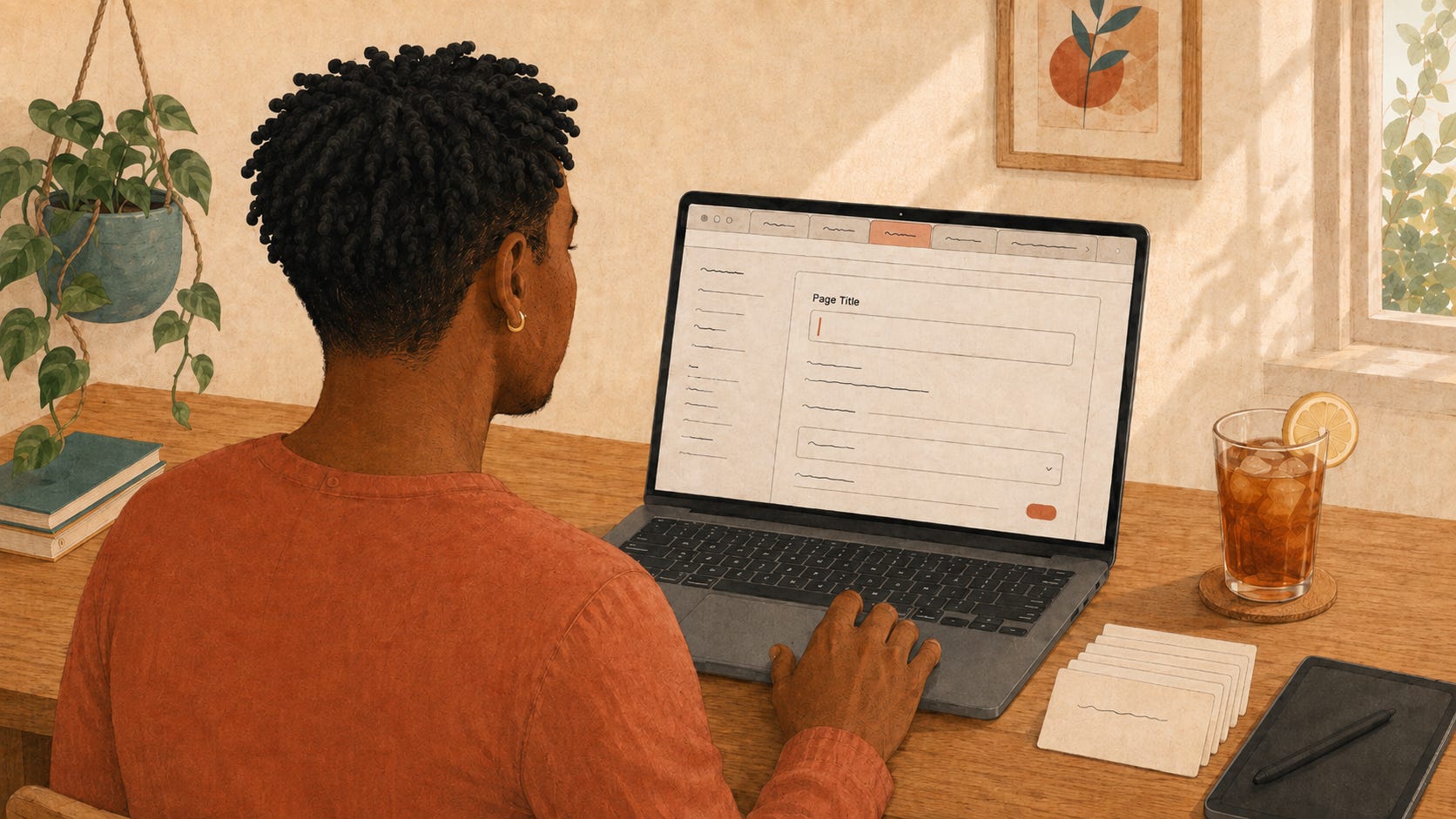
Page Titles: The First Thing Screen Readers Read
The text in your browser tab is the first thing a screen reader announces. Here's how to write page titles that tell visitors exactly where they've landed.

Practical guidance for creative entrepreneurs making digital content accessible for everyone.
Live Last read · last published · next check
The text in your browser tab is the first thing a screen reader announces. Here's how to write page titles that tell visitors exactly where they've landed.
Don’t use your mouse and press Tab. A five-minute keyboard test of your own website will show you what no automated accessibility scan can.
Promo graphics freeze your words into images, where they can't be resized, restyled, or read aloud. How to keep the graphic and still reach everyone.
Overlay widgets promise to make your site accessible with one line of code. Why screen reader users don’t like them, what the FTC found, and what you should do instead.
An accessibility scan flags what’s wrong on your site in seconds. How to run one with free tools, read the report, and the issues no scan can catch.
Plain language is an accessibility practice, not a style preference. Who it helps, the eighth-grade reading-level rule, and the edits that can improve the reading level.
Auto-play video, rotating carousels, and looping motion can quietly drive visitors away. Here’s who they exclude, and how to put people back in control.
An accessibility statement is a short page telling visitors you care and how to reach you. How to write one for your site, and how to read other people’s.
July is Disability Pride Month. The history behind the date, the story of the Disability Pride Flag, and what the month means when you're a creator of one.
Captions and transcripts for the audio you publish: the vocabulary, why auto-captions aren't enough, and the workflow that scales for a solo operation.
Readability isn't a property of your writing. It's a relationship between you, your audience, and where they're reading. Plus what you can do to improve it.
Lulu's “Publish & Prosper” podcast tackled book accessibility. Let’s talk about what they nailed, what to add, and why formats alone aren't enough.