What the model looks like in practice, who qualifies, and what we’re learning as we build it. Inside the Fluid IC: a practical look at how fluid individual contributor roles work, who qualifies, how designers grow, and how organizations can build flexible teams around cross-functional problems.
The New Middle, Where Designer Careers Actually Grow. AI is expanding what designers can do. Explore the emerging middle ground between design engineering and product management, where fluid roles, broader capabilities, and new career paths are reshaping how designers grow.
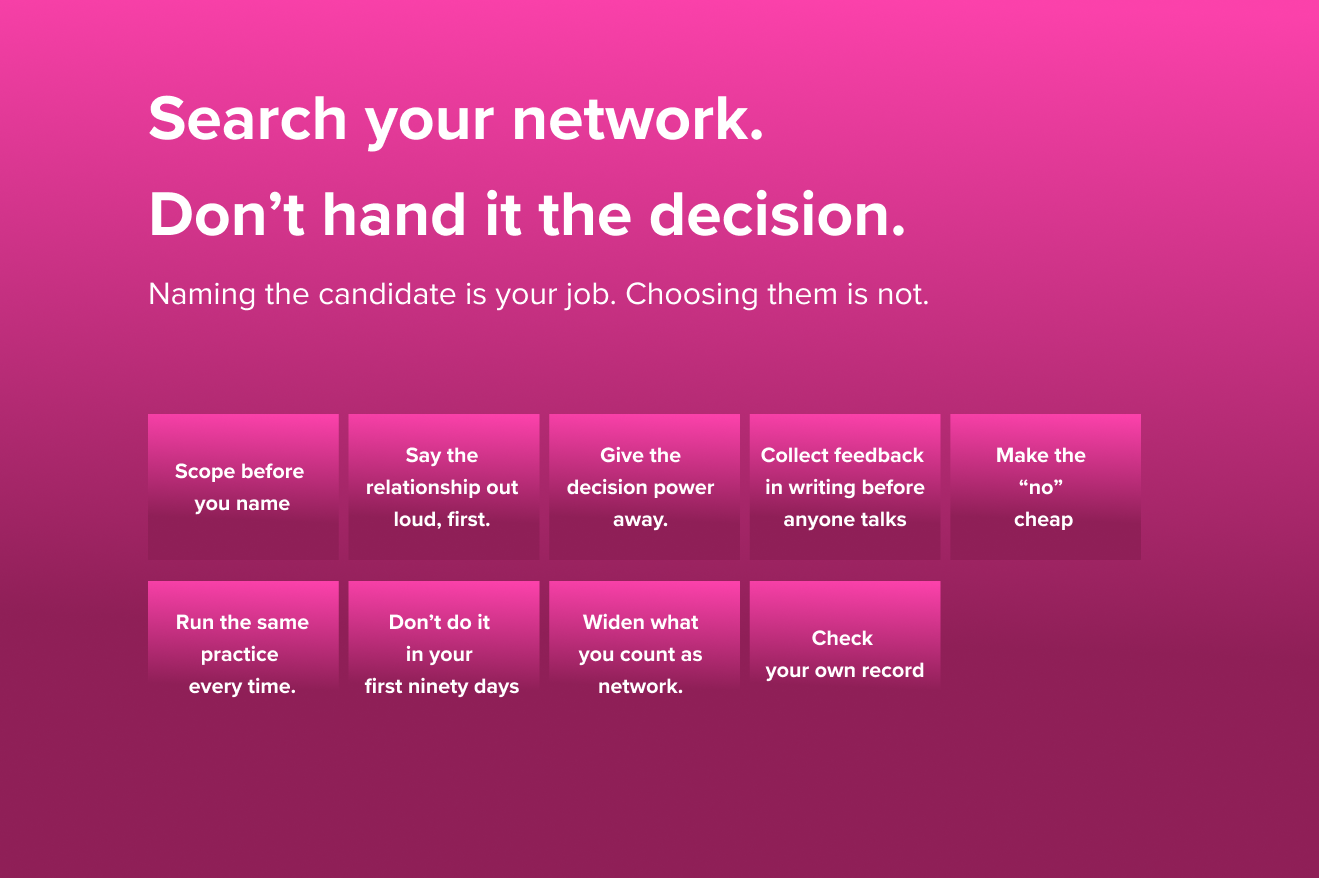
Naming the candidate is your job. Choosing them is not. Hiring from your network finds better matches than any funnel. It also invites nepotism, and a new team rarely says no to the boss. The failure modes and the practices that keep referral hiring honest.
The market doesn’t have a talent shortage. It has a matching problem. Companies can't find senior talent. Senior talent can't get replies. Cursor's head of talent calls it a tale of two cities. A hiring manager and recent candidate on what actually closes the gap: matching, not volume.
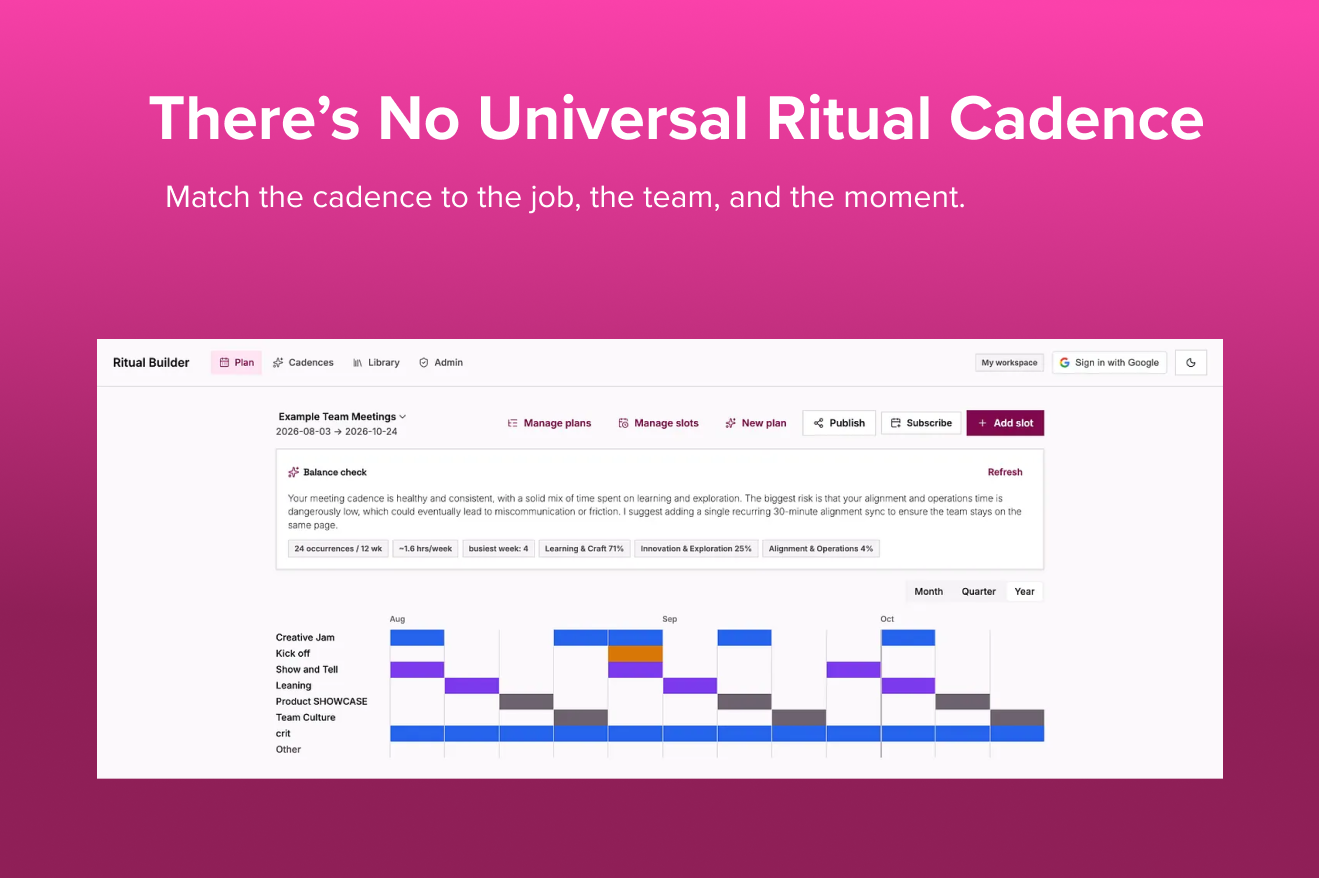
Match the cadence to the job, the team, and the moment. There's no universal ritual cadence. Learn how to choose the right meeting rhythm based on your team's work, relationships, and stage of growth, instead of relying on default schedules or organizational conventions.
Don't preserve rituals. Preserve their purpose. Every team ritual has an expiration date. As teams evolve, recurring meetings and rituals can lose their purpose without anyone noticing. Learn how to recognize the signs, redesign team rituals intentionally, and create meeting cadences that make collaboration, culture, and time together worth investing in.
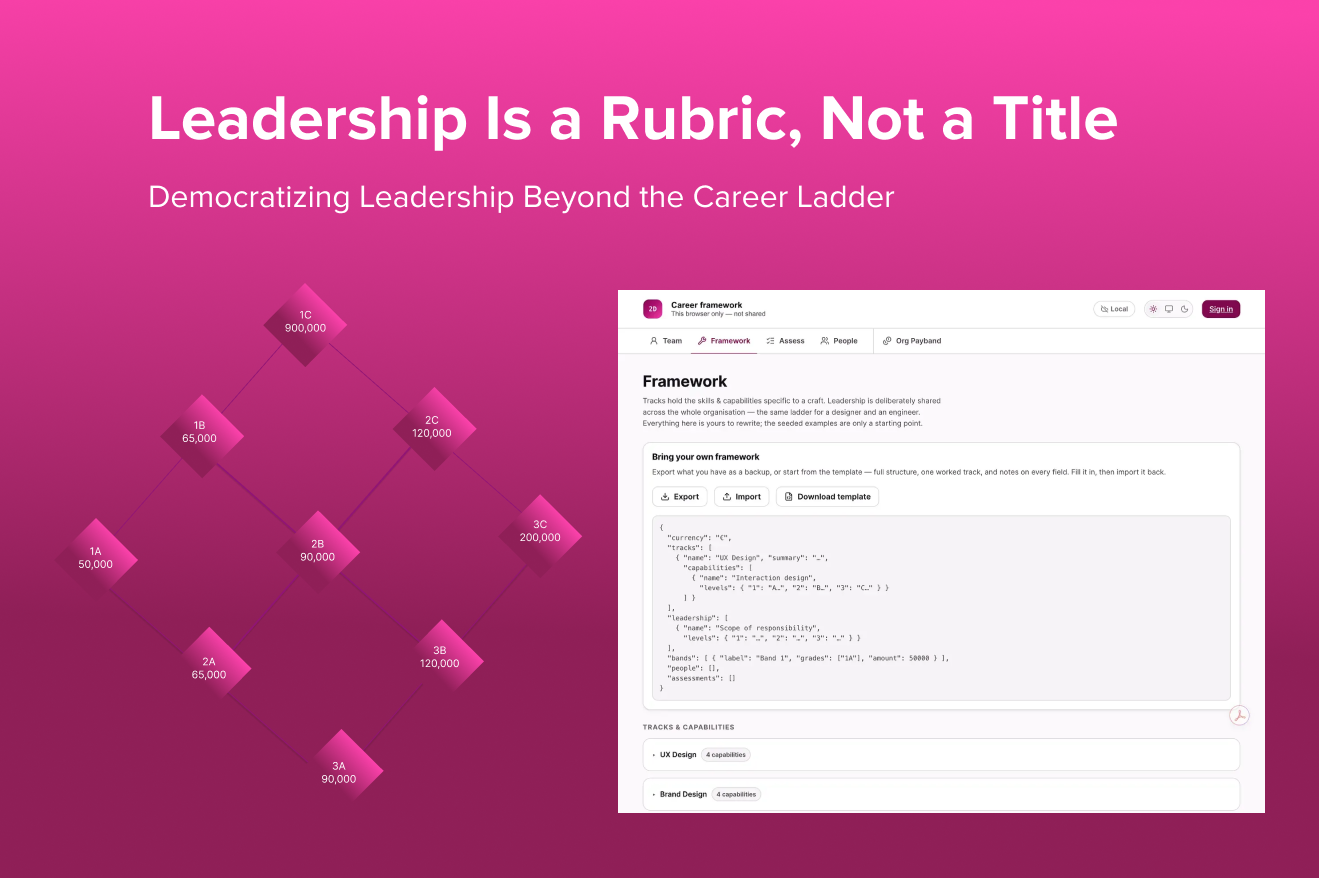
Democratizing Leadership Beyond the Career Ladder. As organizations flatten and roles become more fluid, performance evaluation must evolve too. Explore how autonomy, growth, and shared responsibility change when leadership belongs to everyone, and why experimenting with new ways to develop people may matter more than ever.
When the Bar Keeps Moving, Standing Still Isn’t Enough. Performance isn't a fixed standard. It's a moving target. Why can a high 2 outperform a low 3? This post explores how calibration should measure direction, adaptability, and growth, and why managers must help teams move with a constantly changing bar rather than simply maintain their position.
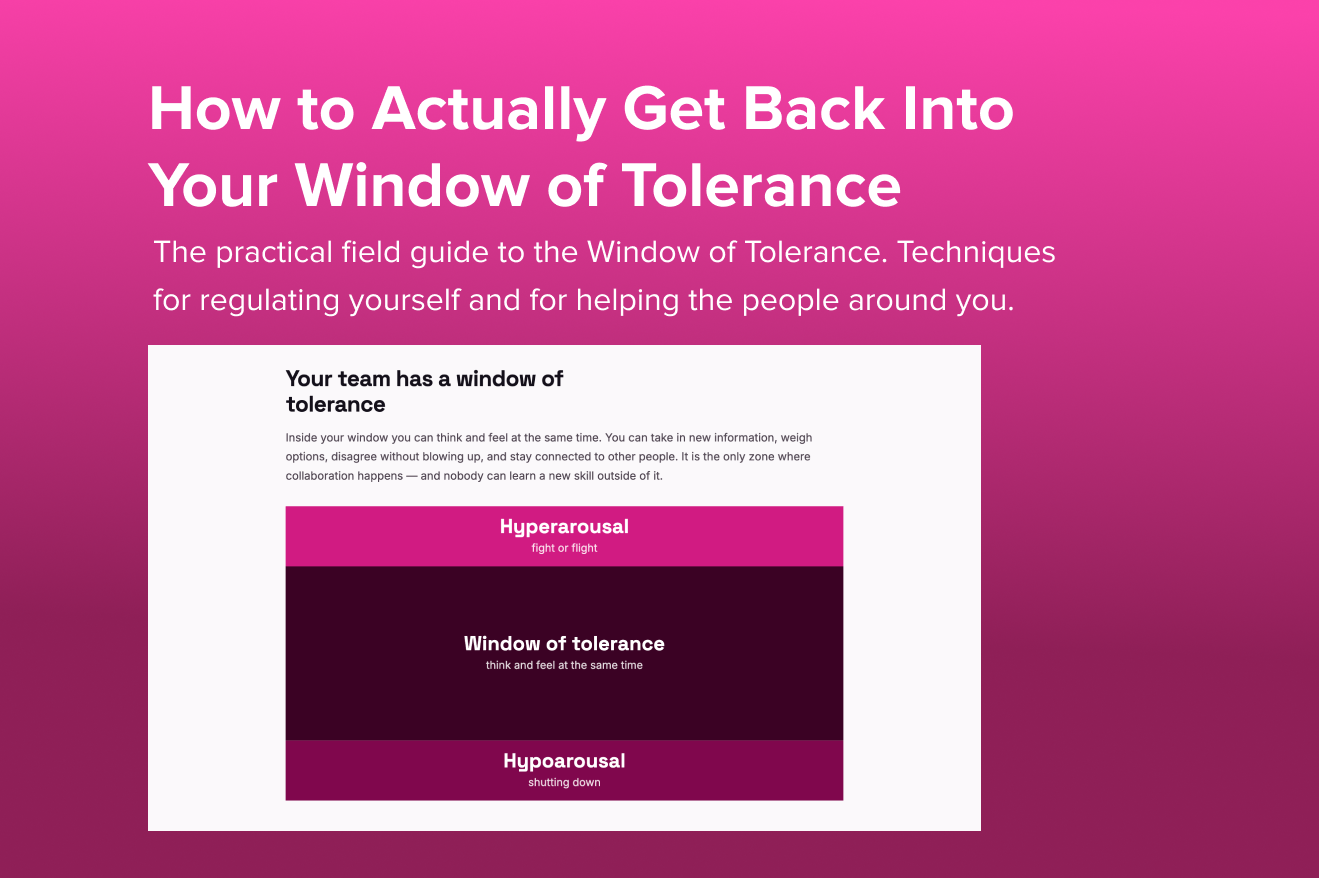
The practical field guide to the Window of Tolerance. Techniques for regulating yourself and for helping the people around you. Learn how to recognize when you're outside your Window of Tolerance and use practical techniques to regulate yourself and support others. This field guide covers hyperarousal, hypoarousal, co-regulation, and building resilience in an era of constant change.
Why intelligent teams stop learning under pressure, and what leaders can do about it. The Window of Tolerance explains why smart teams struggle under stress and why leadership in the AI era starts with regulation, not productivity. Learn how leaders can build resilience, widen team capacity, and create the conditions for collaboration, learning, and change.