
Every year I invite Alla Weinberg to guest speak with my Leadership by Design class at CCA. This is her third year. In past years, she taught us about the nervous system — how our bodies, not our org charts, decide whether we can collaborate on any given day. This year she added a concept on top of it, and it snapped everything into place for me: the Window of Tolerance.
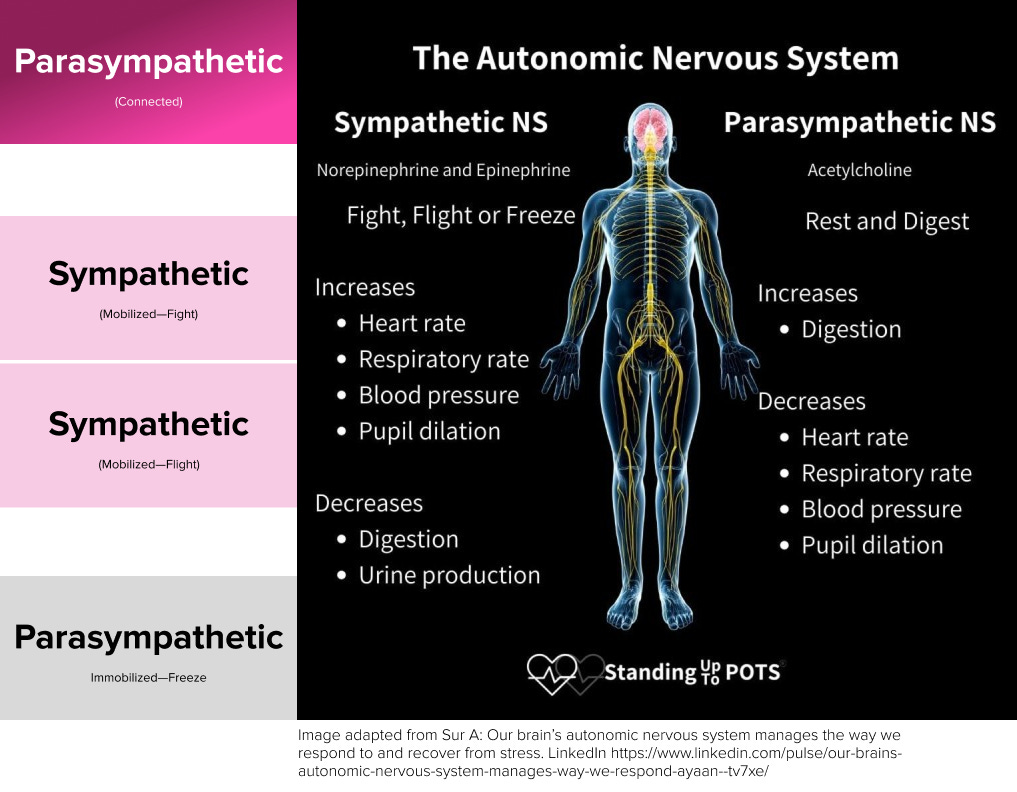
Here is what I struggled with before. The nervous system model gives you a ladder of states: freeze at the bottom, then flight, then fight. It is hard to think about how you get yourself, or anyone else, up to a state where you can actually be connected again and address the challenge in front of you from fight to connected.
But the window of tolerance changed it.
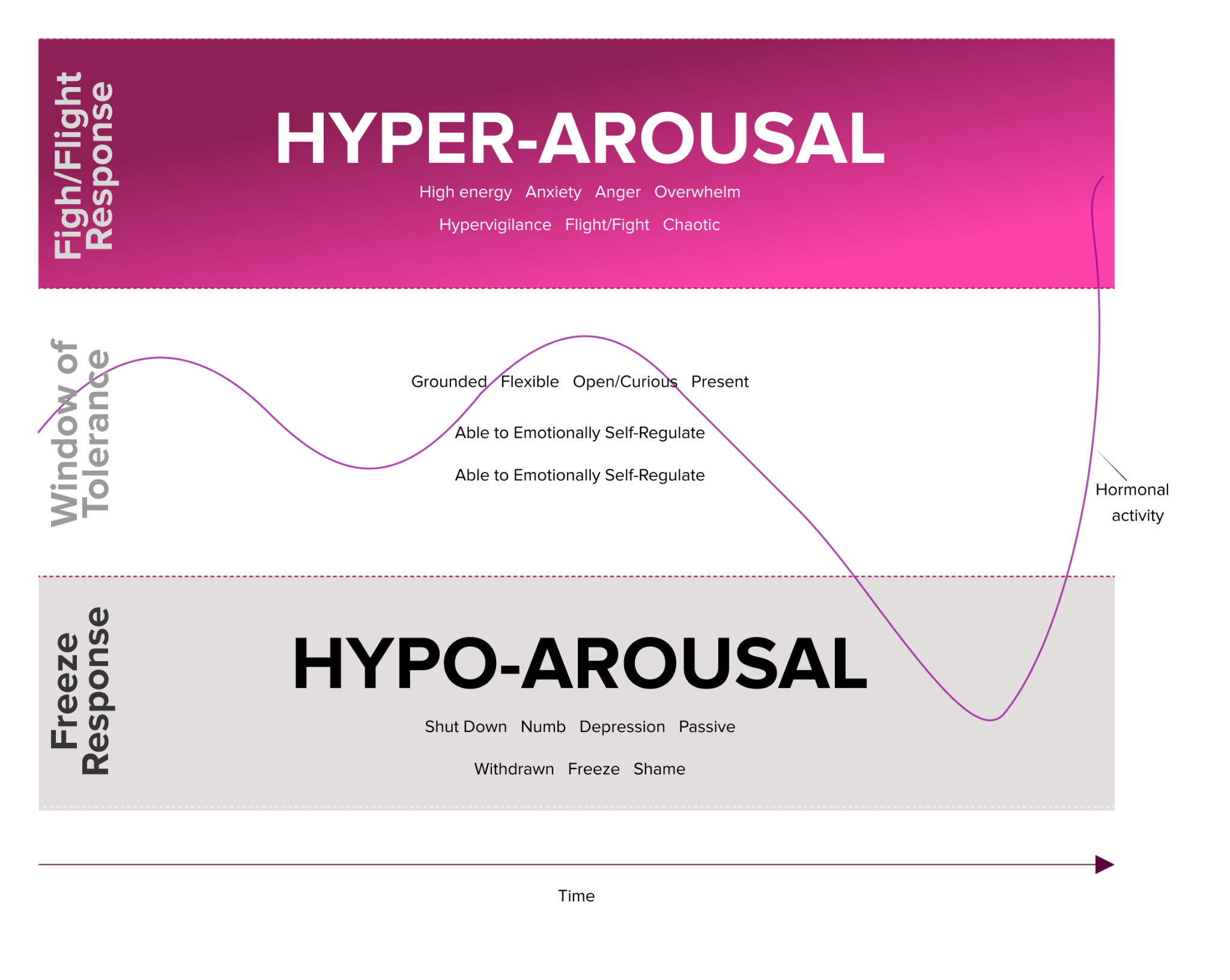
The term comes from psychiatrist Dan Siegel. Inside your Window of Tolerance, you can think and feel at the same time. You can take in new information, weigh options, disagree without blowing up, and stay connected to other people. This is the zone where real work happens, and the only zone where collaboration happens.
Push above the window, you hit hyperarousal: fight or flight. Racing thoughts, anxiety, irritation, urgency about everything. You are doing a lot, but you are not thinking well.
Drop below the window, you hit hypoarousal: freeze and shut down. Numb, disconnected, checked out. You are present in the meeting, but your mind is not.
Each person’s window is a different size. Some people have a tall band. They can absorb a lot of stress and stay inside it. Others have a narrower one. Same meeting, same deadline, same piece of hard feedback — it can land completely differently depending on the person, because the window itself is different.
The same condition, the same stress, pushes different people out of their window at different points. Two people can sit through the same hard conversation; one stays regulated, one doesn’t; and that difference isn't about effort or character. It’s the window.
Once you understand the model, you start seeing it everywhere. Product launches. Reorgs. Layoffs. Performance conversations. And increasingly, AI transformation.
I don’t think team members have ever had their window of tolerance tested the way it’s being tested in the AI era. The tools change weekly. The workflows change monthly. The expectations change constantly. The skills people spent a career building feel suddenly negotiable. Every announcement carries an implicit question: what’s the new tool today? Or worse: am I still needed? That’s not a workload problem. That’s a sustained threat signal, and it keeps pushing people above or below their window of tolerance.
I’ve talked at length before about AI transformation, and about why starting small is so crucial. Here is the piece I hadn’t connected until now: the skill gap is the easy part to address.
If someone is not inside their window of tolerance, they are not in a state to learn a new skill at all.
The gap isn’t the problem yet. Starting small works because a small, concrete, achievable task is regulating in itself. It gives someone a win they can actually feel, inside a window they can actually stay in. Scaffold the size of the ask to the size of the window you’re working with. Eventually you will get to the size of the change you’re ultimately trying to make.
Regulate yourself first. This is not a nice-to-have; it’s a must. Co-regulation means your state is contagious. Before the hard meeting, get your own nervous system inside its window, whatever that takes for you. Your team will absorb your state before they hear your words. If you're realizing that your own window has been under pressure lately, I wrote a piece, How to Actually Get Back Into Your Window, that walks through a few practical ways to regulate and recover
Name the state, not the behavior. “We seem to be in urgency mode this week” lands differently than “why is everyone being sloppy.” Naming a state is information. Naming a behavior is judgment, and judgment becomes one more stressor on top of the ones already pushing someone out of their window.
The first job is keeping people inside their window. The next job, and it’s a different job, is helping them widen it.
Widening happens through repeated positive experience, not through a single breakthrough. That’s why scaffolding matters: a string of small, winnable challenges builds up someone’s capacity to tolerate stress without leaving the window. Step by step, the band gets taller.
Make the environment predictable. Uncertainty pushes people out of their window faster than almost anything else. Rituals, team norms, consistent rhythms, and honest regular communication all stabilize a team. Even “I don’t know yet,” said plainly and often, is a stabilizer. Ambiguity is a heavier load than bad news.
Build in recovery, on purpose. Teams that experience stress followed by real recovery, a hard sprint, real rest, and an honest retro build wider windows over time. Teams that experience stress followed by more stress build narrower ones. Recovery isn’t a break from the work. It’s part of the work.
Recently, the team went through a Quality Day and surfaced an overwhelming number of fixes needed. That’s a stressor. Leadership could have let it snowball into more pressure. Instead, we took a contain-and-assign approach, stabilizing the team instead of adding to the load.
We bucketed every ticket into three lanes: product fixes went to the engineering backlog, AI agents closed what they could outright, and each designer owned exactly one ticket to fix themselves. Nobody drowned in all open items. Everybody had one clear, winnable piece of it.
We didn’t reduce the amount of work. We reduced the amount of uncertainty. We came back with wins, not burnout. That’s the window widening in practice.
What Alla gave my class this year is the same thing I want to give you: a simpler question. Not “how do I fix this person” or “how do I fix this process,” but “is this person inside their window right now?”
If yes, coach, challenge, stretch them. If no, regulate first. Nothing else works until you do. In the AI era, leadership needs to manage changes but, more importantly, help people stay inside their window long enough to navigate it together.
No posts
Comments
Nothing yet. Say the first thing.
Sign in to join the conversation.