
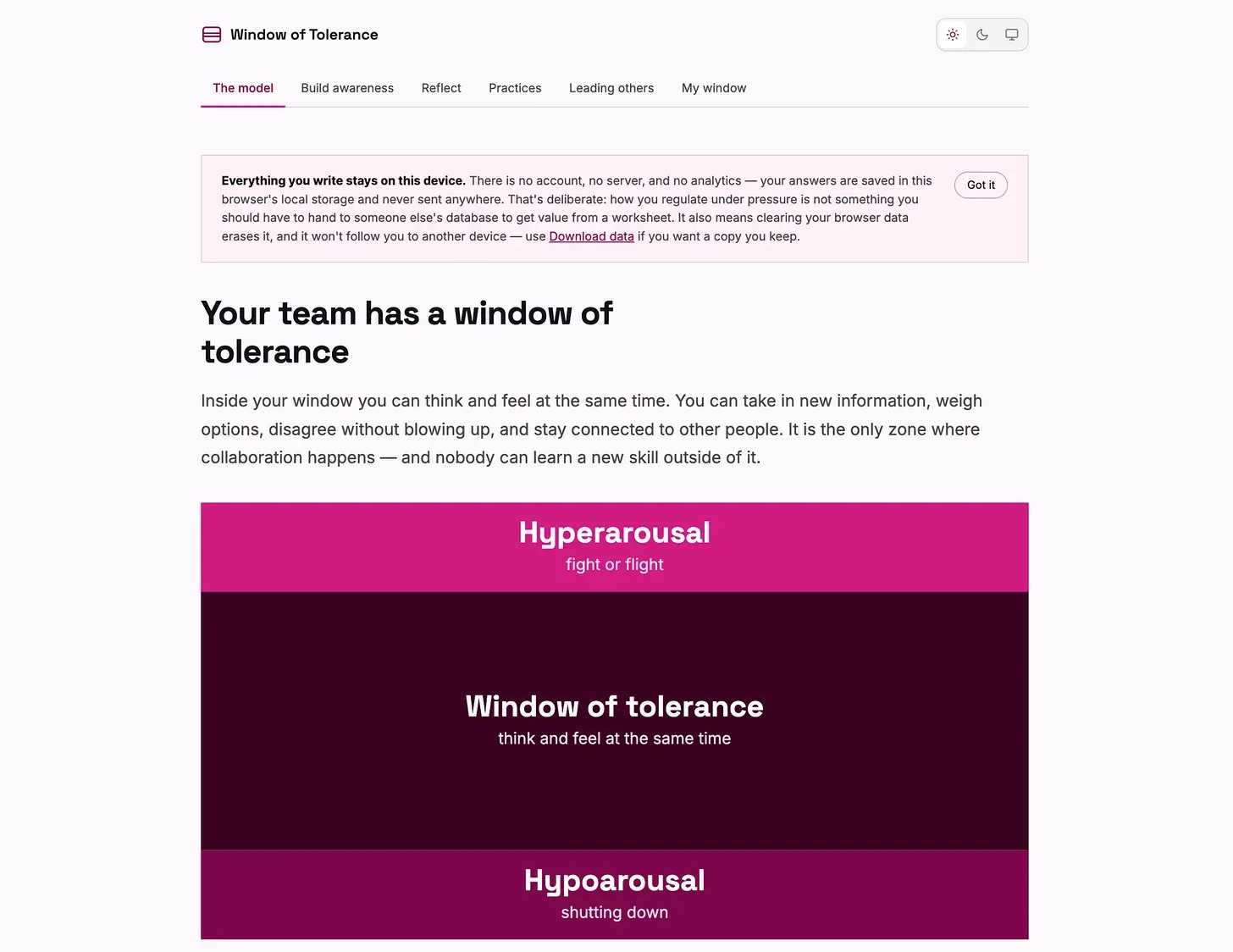
I discussed why intelligent teams stop learning under pressure in my post “Your Team Has a Window of Tolerance.” It laid out the concept: everyone has a Window of Tolerance, everyone’s window is a different size, and nobody can think, learn, or collaborate well outside of theirs. This post is the practical follow-up.
Two things before we get into it.
First, this is individual work. Your team is not a single nervous system with a single window. It’s a group of people, each with their own band, each getting pushed out of it by different things at different times. “Regulating the team” really means helping enough individuals get back into their own windows that the team can function together. There’s no shortcut around the individual work.
Second, recognizing the state comes before fixing it. You cannot regulate what you haven’t noticed. Your body knows. You just need to recognize it.
There is no single way back into your window. Deep breathing, walking, stretching, singing, or talking to a friend all work for different people. The important thing is to know what reliably works for you before you need it.
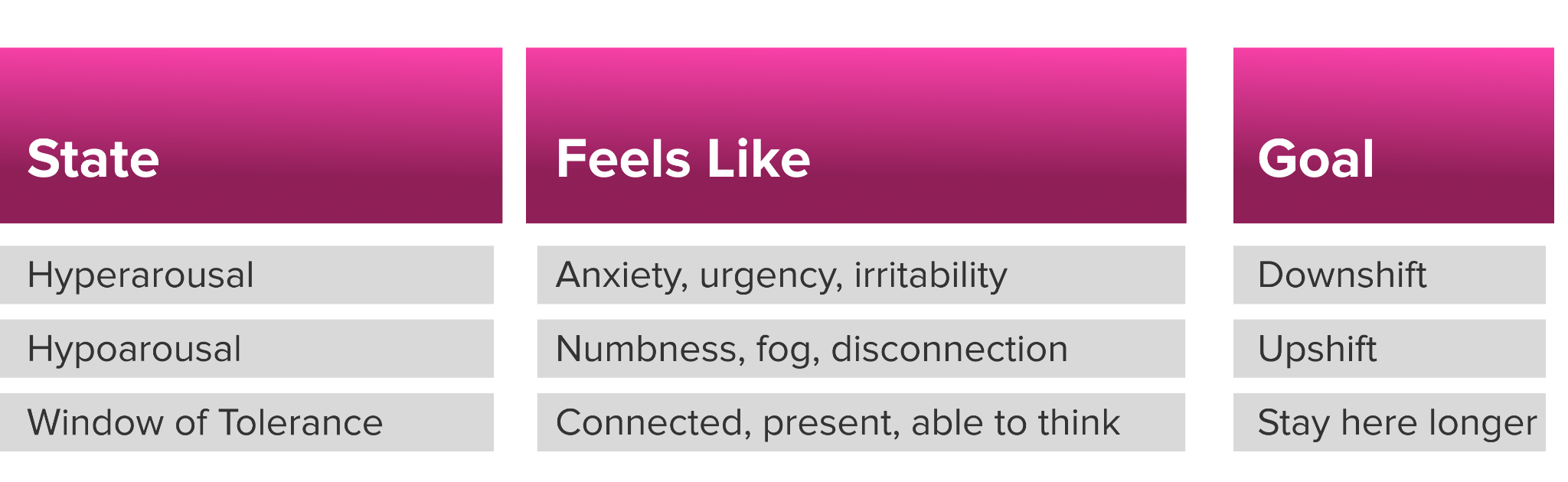
Recognizing hyperarousal — in yourself, in others
Racing thoughts. Shallow or fast breathing. Irritability that feels disproportionate to its trigger. Urgency about everything, including things that were not urgent yesterday. Trouble sitting still. Snapping at a message that would normally roll off you.
In someone else, watch for the tell that they’re doing a lot but not thinking clearly. For example, fast replies, short fuse, decisions that get made and then remade a day later.
Recognizing hypoarousal — in yourself, in others
Numbness. Flatness. “Whatever, it’s fine” said without any charge behind it. Trouble starting tasks, even simple ones. Zoning out mid-conversation. A kind of fog that makes even small decisions feel heavy.
In someone else, this one is easy to miss because it’s quiet. No pushback, no questions, cameras off, a nod instead of an answer. It reads as agreement. It’s often the opposite; it’s absence. Sometimes, they “agreed,” but you don’t see action or results.
Comments
Nothing yet. Say the first thing.
Sign in to join the conversation.