
Python

OpenAI Bought Astral - and my fav tool uv
Python
Updated: March 22, 2026
OpenAI is buying Astral, the team behind `uv`, Ruff, and `ty`. I love these tools, but I also get that "someone bought the plumbing" anxiety. This post breaks down why `uv` became my default, what acquisitions tend to break in open source, and the specific red flags (logins, telemetry, AI "help," enterprise splits) that would make me bail fast. read on »

Python Pydantic Validation: Stop Writing Manual Checks
Python
Updated: March 03, 2026
Manual input checks start as "just a few if statements" and end as validation logic smeared across your whole codebase. This post shows how Pydantic v2 pulls that mess into one model: typed fields, safe coercion (yes, "42" - 42), clean error messages, and custom rules with @field_validator-so your Flask routes stay thin and your data stays sane. read on »

Python asyncio Recipes
Python
Updated: March 03, 2026
Asyncio gets easier once you stop trying to memorize the event loop and start using a few patterns that work. This post is a copy-paste set of the recipes I actually ship: concurrent URL fetches, timeouts, worker pools with queues, debouncing noisy events, running blocking code with `to_thread()`, and clean shutdown with signals. Each one includes the common mistake that bites people (like per-request `ClientSession`s or forgetting `task_done()`). read on »

Mastering Python's itertools: Efficient Data Processing and Manipulation
Python
Updated: June 29, 2026
itertools is Python's built-in way to write cleaner loops without building huge lists first. This post shows the iterator mindset-stream values, keep pipelines moving-and the handful of tools worth memorizing: cycle/repeat, chain, product, permutations, and combinations. It ends with a practical log-processing pipeline and a few guardrails to avoid infinite-iterator pain. read on »

Python 3.15 JIT: Is the Corolla Finally a Rocket?
Python
Updated: February 27, 2026
Explore Python 3.15's new JIT compiler and performance improvements. Discover if this release finally transforms Python from a reliable workhorse into a high-speed powerhouse for developers. read on »

Calling LLMs from Python: LangChain, LiteLLM, and HF Transformers
Python
Updated: February 13, 2026
Most LLM tutorials stop at "call the API and print the output." That's demo-ready, not production-ready. In this post, we'll talk about the unglamorous stuff that keeps your app alive after real users show up: prompt templates (not string soup), retries and rate limits, streaming for better UX, caching to stop burning money, structured outputs, safe logging, and evals you can actually track. Boring? Yes. Also the difference between "cool prototype" and "doesn't page you at 2am." read on »
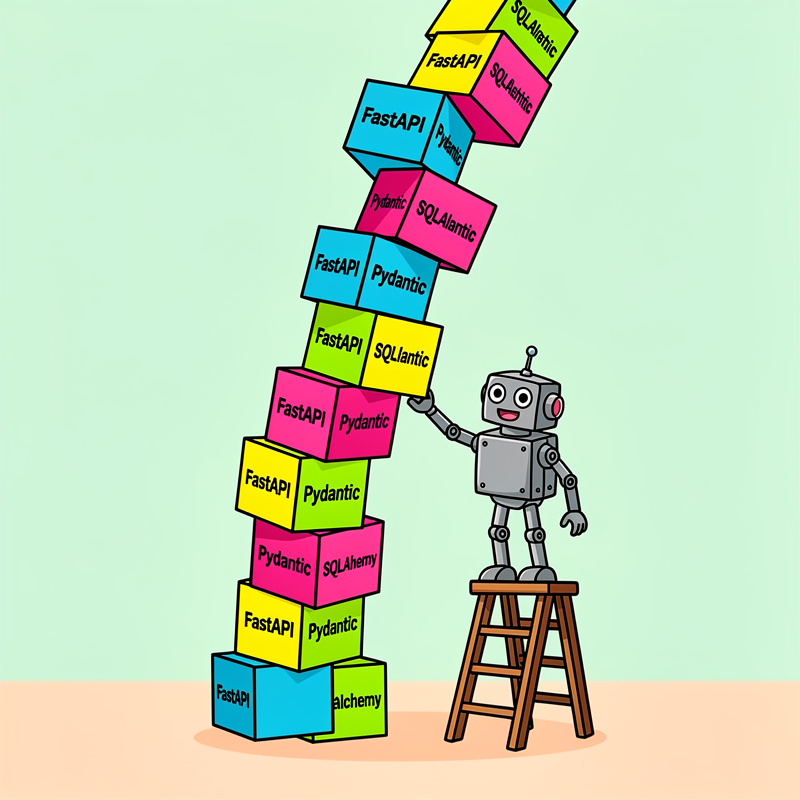
FastAPI + Pydantic + SQLAlchemy: The Modern Python Stack
Python
Updated: January 26, 2026
If your FastAPI project currently looks like a junk drawer (and your database session handling feels like a haunted house), this post is for you. I'm walking through the minimum "actually works in production" stack: **FastAPI** for routes, **Pydantic** for clean input/output schemas, and **SQLAlchemy** for persistence-wired together with dependency injection so you don't end up debugging global state at 2am. You'll get a sane folder layout, a single correct way to create DB sessions, boring CRUD functions (the best kind), and a quick note on how to override the DB in tests without accidentally nuking your dev data. read on »

FastAPI: A Flask Developer's Guide
Python
Updated: January 26, 2026
If you've shipped real Flask apps, you already know the deal: it's friendly, flexible, and will happily let you copy-paste input validation until you die of boredom. FastAPI is different. It shows up with typed models, automatic request validation, and API docs that generate themselves while you're still looking for your Postman collection. In this guide, I'll walk through what actually changes when you switch from Flask to FastAPI, plus a tiny CRUD conversion that won't turn into a week-long "framework migration journey." read on »

How to Build a Simple RAG Pipeline in Python
Python
Updated: January 26, 2026
RAG is just a fancy way to say: stop making the model guess when you can hand it the right notes. In this post, I walk through a simple, one-file RAG pipeline in Python-ingest, chunk, embed+index (FAISS), then retrieve+answer with citations. It's the version most teams should build first: boring, readable, and easy to debug before you start buying "enterprise" problems. read on »

Python Type Hints Tutorial: Catch Bugs Before Production with mypy
Python
Updated: March 18, 2026
Type hints won't make Python "typed," but they will stop a lot of dumb bugs before they hit prod. This post shows how hints act like inline docs, why the payoff is in messy glue code, and how tools like mypy catch problems (like passing a string where an int belongs) before runtime. It also covers Optional, Union, Callable, generics, and a sane "start where it hurts" approach-without turning your repo into a type museum. read on »

Functional Programming in Python: map, filter, reduce, and Beyond | Python Guide
Python
Updated: March 18, 2026
List comprehensions got you hooked. Now open the rest of Python's functional toolbox: first-class functions, `map()`/`filter()` for lazy pipelines, `reduce()` (carefully), `partial()` for clean specialization, and `lru_cache` for instant speedups. The payoff is simple: fewer side effects, more predictable code, and transformations you can test without drama. read on »

12 Python Built-ins and Standard Library Tools for Cleaner, More Maintainable Code
Python
Updated: March 18, 2026
Smart code that nobody can maintain isn't smart. This post walks through 12 boring Python built-ins and stdlib tools that make intent obvious: `enumerate()`, `zip(strict=True)`, `any()`/`all()`, `partial()`, `iter(..., sentinel)`, `filter()`/`map()`, `chain()`, `defaultdict`, `groupby()`, and `lru_cache()`. Each one cuts glue code, prevents quiet bugs, and makes the next dev's life easier-especially after the "wizard" leaves. read on »

Mastering Python's Context Managers: Beyond the Basic 'with' Statement
Python
Updated: December 22, 2025
Explore Python's context managers beyond basic 'with' statements. Learn to create custom managers, handle multiple resources, and use them for timing and logging. Discover how mastering context managers can enhance your Python skills and even relate to startup management. read on »

Python Walrus Operator (:=) Explained: Use Cases, Examples & When to Avoid It
Python
Updated: March 18, 2026
The walrus operator (`:=`) lets you assign a value inside an expression. Used well, it cuts repetition in `while` loops, `if` checks, and comprehensions. Used badly, it turns clean code into a puzzle. Here's how to spot the difference, with real examples and a few foot-guns to avoid. read on »

Python Virtual Environments and Dependency Management: A Practical Guide for Developers
Python
Updated: March 18, 2026
If pip has ever nuked your night by installing the wrong versions, this is for you. Here's my simple, opinionated setup for Python projects: pick the right Python version, keep repos organized, use a fresh venv every time, install with pip, freeze to <code>requirements.txt</code>, and delete the venv when it gets weird. No heroics. Just fewer 2am regrets. read on »

Python is Slow? Here's Why That Doesn't Matter (And How Python 3.11-3.14 Got Faster Anyway)
Python
Updated: March 18, 2026
"Python is slow" is a lazy diagnosis. If your app spends its time waiting on Postgres, the network, or S3, the interpreter isn't the bottleneck-your queries and indexes are. CPython also got a lot faster in 3.11–3.14, often with zero code changes, and 3.14 makes the GIL optional for real parallel threads. Stop chanting. Profile first. Upgrade second. Rewrite in Rust only if the numbers force you. read on »

Handle Python KeyError Without Crashing Your Code
Python
Updated: January 24, 2026
When working with Python dictionaries you'll find yourself needing to access a key that may or may not exist. The easiest way to do this is with the get() method. read on »

Python For Loops Explained: Iteration, Scoping, and Generators
Python
Updated: December 22, 2025
Python has some pretty amazing features, and one of its most powerful and versatile is the for loop. As you can see by the examples below the for loop in Python is quite powerful when used in conjunction with... read on »

Generate a Strong Random Password in Python: Secure Method
Python
Updated: December 22, 2025
The conciseness of the Python language paird with its easy-to-use REPL make it ideal to hack out quick and easy scripts. One thing you can do is quickly and securely generate a random password with practically one line of code. read on »

Fix a Broken Python Environment: Troubleshooting Guide | SethServer
Python
Updated: December 22, 2025
If you've spent any time working with Python environments you're bound to have run into errors such as pip: command not found, No module named pip, ModuleNotFoundError: No module named 'distutils.util', or other Python 2.x vs Python 3.x issues. read on »