
Hi there,
An interview planned for this issue fell through at the last minute. I have a keynote about adaptability & innovation mentality. The universe, apparently, wanted a live demonstration.
I had a blank screen, three hours and a pot of saffron rice I had just made for my son, and I sat there for a minute realizing: I already know what this issue is.
I have been cooking with saffron since I learnt about its cognitive powers. It started at Mission Heirloom, became a habit, something I do three or four mornings a week without thinking about it. I call it my happy spice. Not in a wellness-content way. In the way that when I eat it, something steadies. And while I was sitting with that thought, an email from Pablos came in.
You know which Pablos if you have been reading for a while. If not, the futurist, inventor, the kind of person who invests in things a decade before the market agrees. But unexpectedly so, this time he was writing to me about obesity, about GLP-1 medications, and about a company that found a completely different mechanism for treating it. No muscle loss. No anhedonia. Oral administration. A pathway that has been sitting in the scientific literature for years, quiet, while something louder occupied the market.
I read his email and thought: this is the same story as saffron! The mechanism that actually works is almost always the one that had no lobby.
Signal 3 is about that pattern. And about what changes when you have a co-founder who works all night, never asks for equity, and can help you go back for the thing you stopped building.
The mechanism that actually works is almost always the one that had no lobby.
Mental Infrastructure: Tips for better human performance. When your body runs well, your mind thinks sharper. Build habits that strengthen both performance and decision-making.
The blood-brain barrier does not let things through easily. It is the brain’s checkpoint, built from blood vessels and structural proteins that keep most substances in the bloodstream from reaching neural tissue.
Nearly 99% of small molecules cannot cross it.
The pharmaceuticals that do cost billions to develop and years to approve.
Saffron crosses it on its own!
That is not a small fact.
I learnt this in March 2021, during a week I spent researching brain health for my AllBlackSheep community, yes in my Instagram. I had been cooking with saffron for years, but I had not understood the mechanism until then. Once I did, the ritual I had been doing three mornings a week started to feel less like preference and more like maintenance.
Saffron contains Safranal, a compound that protects brain cells against oxidative stress. Oxidative stress is exactly what chronic digital overload generates. Thirty open tabs, a phone that never fully quiets, two projects running in the background of your mind, a message you have been avoiding for two days. That is not just psychological pressure. It is a measurable chemical event.
Safranal does not block the pressure. It repairs the cells that absorb it.
There are also two antioxidants, crocin and crocetin, that further protect neural tissue. And a flavonoid called kaempferol that shows anti-inflammatory and antidepressant activity in clinical trials. Not in wellness content. In peer-reviewed clinical trials, for mild-to-moderate depression, anxiety, Alzheimer’s, and Parkinson’s.
Less than 24% of people with depression get adequate treatment. Antidepressants do not work for everyone, and for many, the side effects are their own problem. Saffron is not a replacement for medication. It is a real complementary approach with real evidence behind it, and almost no one talks about it because there is no patent on a spice.
What I notice personally: steadier mood through the afternoon, easier focus, less of that mid-day fraying that feels like your brain starting to lose signal. My son (now almost 9) has been eating it since he was two. He has never asked why. He just eats his eggs and rice. I use it generously.
"It may help improve mood, memory, and learning ability, protect brain cells against oxidative stress, and reduce inflammation. It crosses the blood-brain barrier.
Most food compounds cannot do that."
1 cup long grain organic basmati, 1.5 cups broth, 3 tablespoons ghee or coconut oil, half a loose tablespoon of saffron threads (yes, that much), whole cumin seeds, a quarter cup of raisins or dried mulberries, a quarter cup of roasted pistachios, sea salt to taste.
Heat the fat on high, quick-saute the cumin and saffron to activate the oils. Add the rice and let it turn transparent. Add the raisins and broth. First boil, then lowest setting, 18 minutes. Turn off the heat, cover, let it sweat and expand for 10 more.
Add the pistachios at the end.
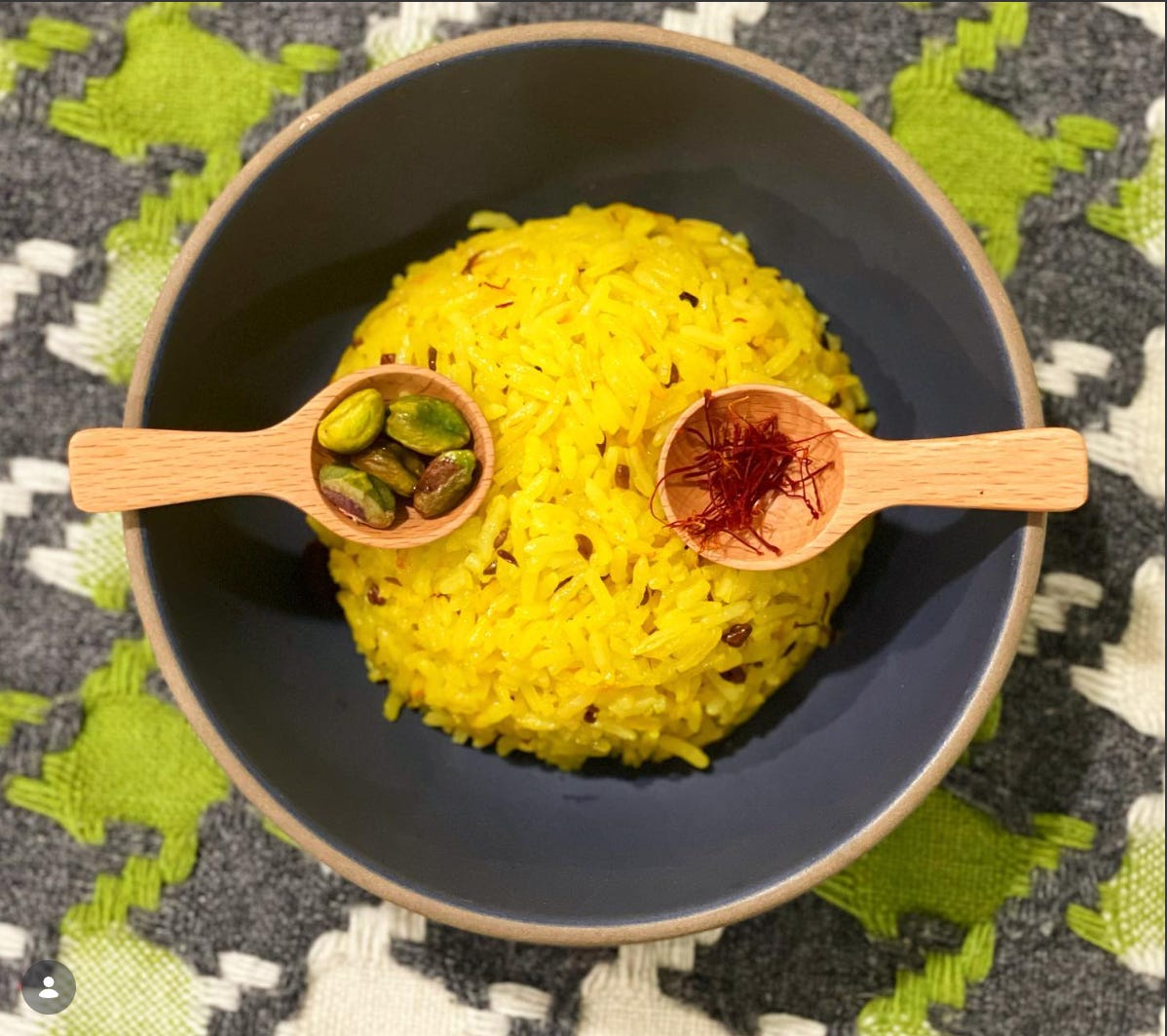
Eat it slowly. That part matters too.
Have you stopped to check on how your brain is running right now?
Not metaphorically. Literally.
Minds on a Mission: Showcasing inspiring startups, smart inventions, and bold ideas I follow closely, that add optimism, possibility, and momentum to the way we see the future.
Pablos Holman has been a futurist since before that became a conference category. We had a conversation for this newsletter back in November 2025 about energy, systems, and the strange patterns that only become obvious in hindsight. He is the kind of person who tends to call things early, then quietly watches the rest of the world catch up.
A few days ago, he sent me an email with the subject line:
"GLP-1s are done."
My first thought was honestly: Pablos? Did someone hack your account? Because the man who hacks satellites emailing me about obesity drugs was not on my bingo card.
He was not hacked, and he was not entirely joking either. His team had just invested in a company called Graviton .
GLP-1 medications produce real weight loss. That part is true. They also opened an entirely new chapter in metabolic medicine. I find them fascinating, and for many patients, genuinely important when properly prescribed and monitored. We could dedicate an entire issue to them alone if enough people are interested (let me know).
But the point of interest here is something else:
What happens when one breakthrough becomes so dominant that every other pathway disappears from the conversation?
Pablos’ fund backed Graviton, a New York company developing a therapy targeting the ROCK-2 pathway instead.
Unlike GLP-1s, which primarily work through appetite regulation, ROCK-2 inhibition appears tied to thermogenesis and adipose tissue remodeling. In simple terms: shifting fat tissue toward a higher-energy state that burns fuel rather than storing it.
The mechanism has been in scientific literature for years. Not ignored because it failed, but because another narrative captured most of the attention, capital, and momentum.
Graviton is not claiming a miracle cure. They are revisiting a mechanism most people stopped looking at once GLP-1s took over the room.
The company is also pursuing an oral medication rather than an injectable one, which matters more than it sounds. Manufacturing, cost, distribution, adherence, and accessibility all change once refrigeration and injection infrastructure leave the equation.
None of this means GLP-1s are "over." That is not the point.
The point is that technology tends to lock around one visible winner, while other mechanisms wait in the background for someone patient enough to keep building.
If you are new here: this is the conversation with Pablos. Three signals on energy, conviction, and why unpredictability is not the enemy. Worth reading alongside this one.
What mechanism in your field is sitting in the literature, unbuilt, because something louder got there first?
An Invitation to Build: Tools and perspectives to stay resilient as the pace of change accelerates.
Follow me along this thread, because I think this pattern is hiding in more places than we realize.
I closed Mission Heirloom in 2018. People have made a lot of assumptions about why.
The restaurant worked. The food was real. The community around it was real. The model was real.
What it demanded was 120-hour weeks. Three go-to-market channels running at the same time: the restaurant, three satellite commissary kitchens for wholesale through Good Eggs and FreshDirect, and the Amazon product line.
Each one was a full business.
What I did not anticipate was what those years inside that kitchen would do to my body. I was eating the cleanest food I had ever eaten, constantly, and for the first time in years my inflammation markers started dropping. Stress and all.
I had been told for years that getting pregnant would be difficult if not impossible. I had accepted that.
Then I got pregnant.
My son is why I closed.
Not because the business failed.
Because something more important became possible.
And I would make the same choice again.
And the life required to sustain that business became incompatible with the life I wanted to live as a mother.
The Mission Heirloom model did not become wrong when I left it.
The pathway was right.
I stopped building on it because the conditions around it were no longer right for the life I had to choose.
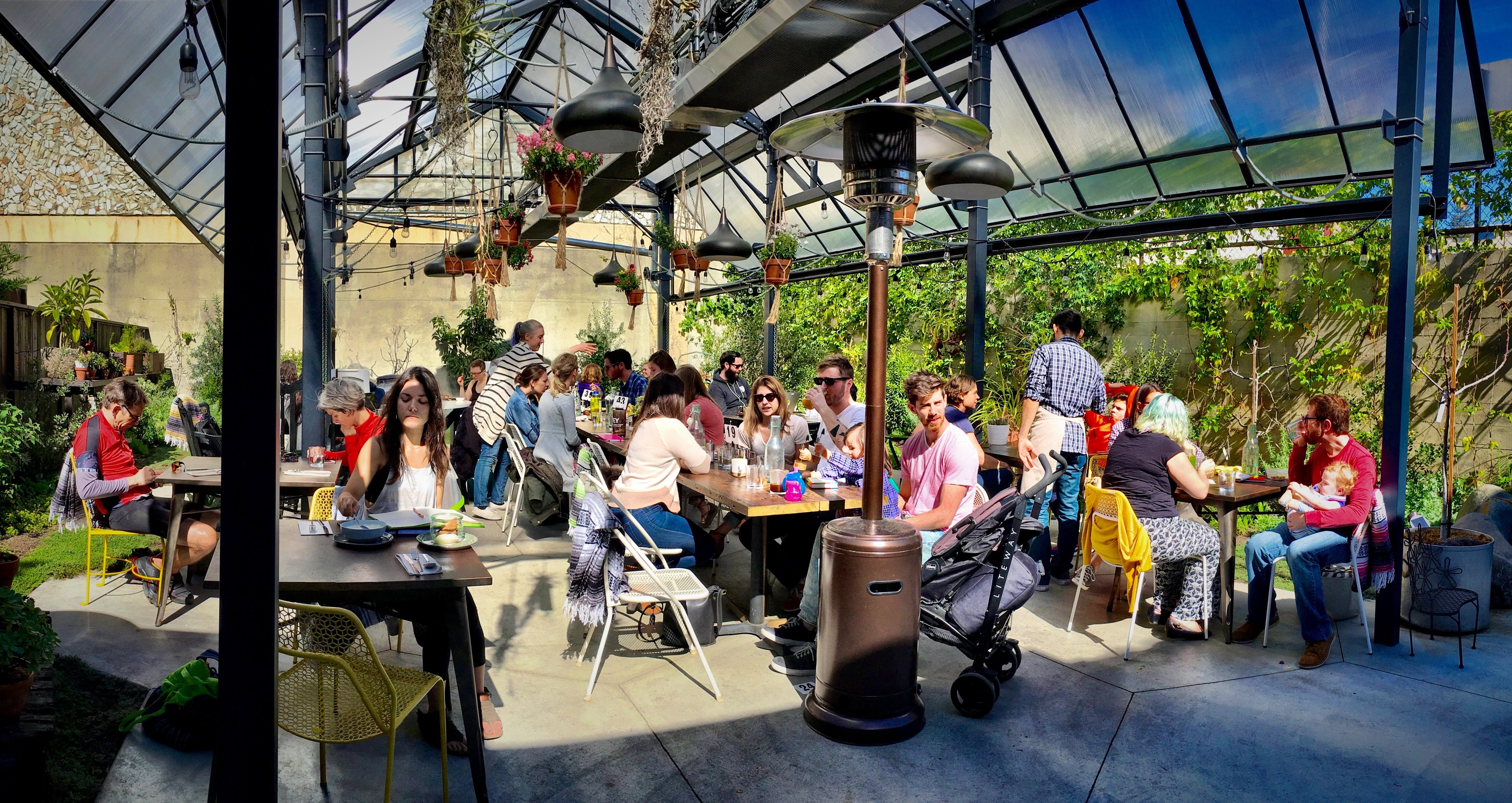
That pattern is everywhere.
The ROCK-2 pathway sat in the literature while GLP-1 captured the market. Saffron has been studied for mood for centuries while pharmaceutical antidepressants became the standard framework. A model for clean, real, community-anchored food proved itself in Berkeley and still has not been built at scale.
The abandoned pathway is almost never abandoned because it was wrong.
It is abandoned because something else was louder. Better funded. Better timed. Easier to explain. Easier to finance. Easier to scale under the conditions of that moment.
Or because the person who saw it first could not keep paying the human cost of carrying it.
That is the part I want you to notice.
Your abandoned pathway may not be a failed idea.
It may be a version of your intelligence that stopped having somewhere to go.
A model you understood before the market did.
A product you could see before the tools existed.
A body of knowledge your industry dismissed because it was not fashionable yet.
A system that worked, but asked too much of one human body.
A truth you kept bumping into, but could not afford to build around at the time.
Most people do not abandon their best pathways because they are wrong.
They abandon them because the operating cost is too high.
Too much staff. Too much capital. Too much coordination.
Too much repetition. Too much time away from the life they are trying to protect.
So the idea gets filed under "later."
Then later becomes never.
But conditions change.
For the last few months, I have been building my work around AI systems. Not the tools that generate content and strip my voice out of it. The tools that let one person do the operational work of six.
Agents that research, organize, draft, track, route, compare, and remember.
A small workforce I built myself, for almost nothing per month.
And it made something very obvious:
The barrier that killed many good ideas was often not the idea.
It was the overhead. The overwhelm.
AI does not make every abandoned pathway worth returning to. Some things should stay buried. Some ideas were wrong. Some versions of ourselves were expensive for a reason.
But many were not wrong.
They were simply too heavy for the tools available at the time.
That is what has changed.
The idea that was right but five years too early.
The model that worked until your life could not hold it.
The research direction your field left behind because something louder won the room.
The business you closed, not because it failed, but because you had to choose.
The book we talk about an issue ago with MeiMei Fox that never got written!
Maybe your book never happened, but the webinar just got a new date!
It may still be there.
Not waiting for nostalgia.
Waiting for new conditions.
The question is not:
"Should I go back and rebuild the exact thing I left?"
That is usually a trap.
The better question is:
What becomes possible now that the operating cost of building has collapsed?
You now have access to leverage that used to require staff, capital, coordination, and infrastructure. Not perfectly. Not magically. But materially.
You have systems that can help you think, research, organize, draft, test, track, and execute.
You have a co-founder who works all night, never asks for equity, and is very good at the parts you never were.
So look again.
What did you stop building, not because it was wrong, but because the conditions were not right?
What did your field leave behind because something louder arrived first?
What did your younger self understand before the world had the tools to make it viable?
That is the invitation.
Not to romanticize the past. To return to the pathway with better leverage.
What Is Your Abandoned Pathway?
See you in two weeks or sooner if you dare to leave me a comment!
Yrmis
These Signals are for you, not your job title. Subscribe here with your personal email to keep them when everything else changes.
If this sparked a question, reply!
Human replies are still underrated, and as rare as it is these days, I actually do respond.
The keynote is the argument. This podcast? It's how I actually think. Messier, funnier, more human. Listen to Breakfast with Benefits and hear what the stage version leaves out.
Entrepreneurial Trajectory | Work with me.
Comments
Nothing yet. Say the first thing.
Sign in to join the conversation.