

“A piece of aged cheese behaves completely differently inside your body than a spoonful of plain butter.” — Dr. Rob
I love cheese. Most of us do. But is cheese good for you? In this week’s newsletter I’m going to bring you up to date on what the current research says. You may be surprised.
We were warned about cheese fifty years ago: avoid it. Or buy the tasteless low fat variety.
The rationale seemed obvious back in the day. Cheese contains fat and sodium. Fat raises cholesterol. Cholesterol clogs human arteries. Resulting in heart disease, cancer, or a premature grave.
Simple logic. Wrong conclusion.
I’ve recently changed my mind about cheese. For many years I’ve avoided cheese with the assumption that it was one of the bad guys due to its saturated fat and high sodium.
In my work exploring health and longevity, I have seen people make this same mistake. It was all a neat formula. But the human body does not care about neat formulas.
Your body operates as a complex, evolving ecosystem. Pointing a finger at a single component like saturated fat and stripping it out of its natural environment distorts the actual reality.
This week, I’m looking at real human research data gathered over the last fifteen years. By doing so, the cheese story shifts entirely. Researchers have tracked millions of people across decades. The findings have been clear: regular cheese consumption does not cause heart disease, stroke, or early death. Moderate daily intake actually correlates with better cardiovascular outcomes.
In other words, zero harm. Potential benefit.
These findings fly in the face of accepted beliefs about cheese.
Surprised? I was.
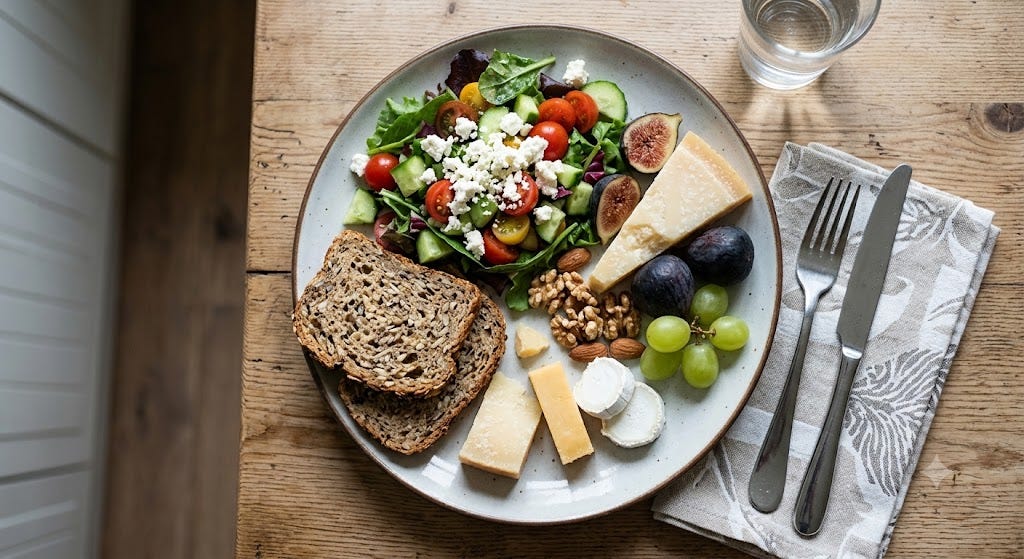
Cheese is far more than a block of fat. It lives. It ferments. Proteins, calcium, active peptides, and live microbes interact constantly inside your gut. High calcium levels bind to fatty acids during digestion, forcing your body to excrete fat instead of absorbing it. Fermentation produces natural vitamin K2. That single nutrient directs calcium into bone tissue and keeps it out of your blood vessels.
A piece of aged cheese behaves completely differently inside your body than a spoonful of plain butter.
I often tell people that you do not need to quit eating cheese to stay healthy and vital. Just consume it wisely.
I recommend picking fermented and aged varieties whenever you can. Options like Parmigiano Reggiano, aged cheddar, feta, Swiss, or real gouda work best. Aging builds up short chain fatty acids and vitamin K2. That protects your vascular walls. It feeds your gut microbiome.
Next, pair your cheese with fiber. I advise against eating cheese alone or inside factory made snacks. Combine small portions with real plant foods. Leafy greens, whole grain flatbreads, walnuts, and lentils are great matches. Protein, fat, and plant fiber together slow down digestion and prevent blood sugar spikes.
Treat cheese it as an accent to your meal. Use it to finish a dish rather than make up the whole plate. A small wedge of sharp cheese makes plant forward meals taste fantastic.
The story of cheese proves why single nutrient nutrition fails. Zoom out. Look at the whole food system.
Cheese is a living, complex matrix. Eaten thoughtfully alongside an active lifestyle, and a healthy diet, it supports your health while bringing genuine joy to your dinner table.
How much cheese is actually healthy?
Context matters. So does dosage.
I tell people that cheese follows a classic J shaped curve in human research. Benefits do not scale infinitely. More is not better.
Study after study shows a sweet spot. The optimal daily intake sits right around one to one and a half ounces per day. That is about thirty to forty grams. Think of a portion the size of two small dice or a slim wedge alongside your meal.
At that moderate dose, you get the bioactive peptides, the calcium matrix, and the vitamin K2 without overloading your system.
What happens when you push past that?
If you consume three or four ounces of high fat cheese every single day, the curve flips. Excess saturated fat and sodium can overwhelm the protective benefits of the dairy matrix. You end up spiking total daily calories and crowding out other essential whole foods.
It is dose dependent. A small wedge nourishes your biology. A block of cheese on a daily basis works against your goals.
Nutrition is not a math problem.
I stopped looking at food through a reductionist lens years ago, and cheese is the perfect reminder of why I did so.
Forget the old rules that tell you to fear real food. You do not have to choose between your longevity and a meal that tastes good. Look at the whole system. Eat food that ferments, feeds your gut, and nourishes your life.
Enjoy your cheese. Eat it moderately with intention. Share it with people you love.
That is how we build a life of health, vitality, and balance.
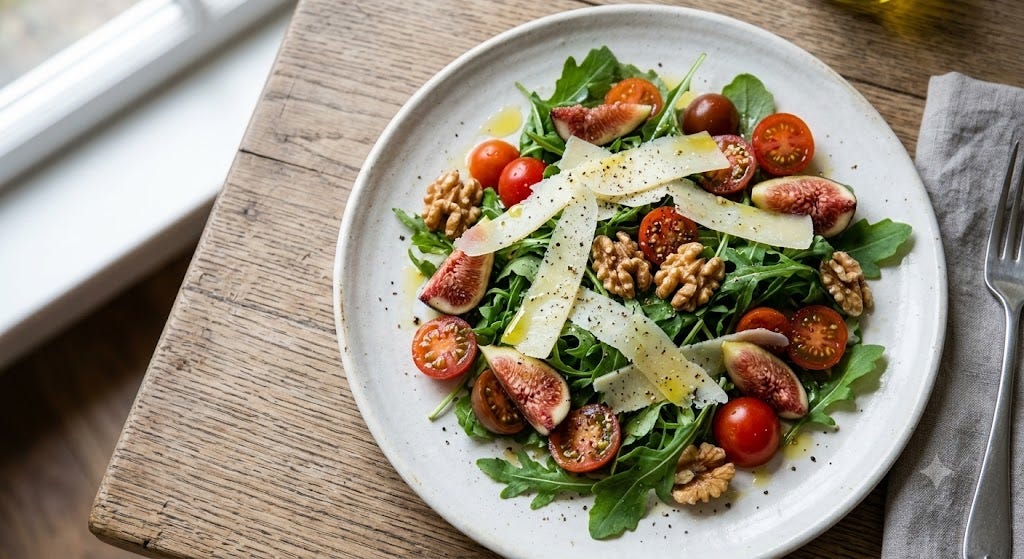
You don’t need complicated recipes or hours in the kitchen to make cheese work for your health. A simple, thoughtfully constructed plate delivers maximum nutritional impact with almost zero prep. And it’s mighty tasty.
One ounce of Parmigiano Reggiano or sharp aged cheddar, shaved or sliced into thin ribbons.
One cup of fresh dark leafy greens, such as arugula or baby spinach.
Half a cup of fresh cherry tomatoes or sliced fresh figs.
A small handful of raw walnut halves.
A light drizzle of extra virgin olive oil and a dash of cracked black pepper.
Toss the greens, tomatoes, and walnuts onto a plate. Drizzle lightly with extra virgin olive oil and black pepper. Scatter the shaved aged cheese over the top as a rich flavor accent.
In under five minutes, you have a complete system. The plant fiber slows digestion. The healthy fats from the walnuts and olive oil protect your blood sugar. And the aged cheese provides vitamin K2 and bioactive peptides in its optimal daily dose.
Simple, intentional, and deeply satisfying.
Enjoy and let me know how it goes.
Share Vitality Vibes: Aligning the Systems of Life
Zhang, M., et al. Cheese consumption and multiple health outcomes: an umbrella review and updated meta-analysis of prospective studies. Advances in Nutrition. https://pubmed.ncbi.nlm.nih.gov/37328108/
Chen, G. C., et al. Cheese consumption and risk of cardiovascular disease: a meta-analysis of prospective studies. European Journal of Nutrition. https://pubmed.ncbi.nlm.nih.gov/27517544/
Thorning, T. K., et al. Whole dairy matrix or single nutrients in assessment of health effects: current evidence and story of the dairy matrix. American Journal of Clinical Nutrition. https://pubmed.ncbi.nlm.nih.gov/28404576/
Feel free to let me know your reactions or to ask any questions you may have.
Reminder: if you have any concerns about the your health, don’t hesitate to see your medical provider. None of the suggestions in this newsletter should supersede the advice of your physician. Vitality Vibes does not diagnose or treat any medical diseases or conditions.
If you like what you read, don’t forget to click the heart button and subscribe, as well as sharing on social media. It makes my work more visible.
Comments
Nothing yet. Say the first thing.
Sign in to join the conversation.