
Most interactive adventures aren’t very long. They’re maybe 150 pages. Maybe less.
This is great for the reluctant reader. They’re easy to jump into, and they beg to be reread. You read a couple pages. You make a choice. You follow a path. You make another choice. Eventually you save the world, discover the treasure, get eaten by a dragon (or some such), or otherwise reach THE END.
Then, like we talked about in a previous article, you go back to the page where you made the obviously terrible decision and pretend it never happened. You know it’s this page, because you held your finger in there “just in case.”
It’s short. It hooks readers. And it’s easy to put down without having to invest hours at a time into the reading of it.
But…all interactive adventures didn’t get this memo. Somewhere along the way, interactive adventures branched out. They grew up. They got bigger.
I went over to my amazing shelves of interactive adventures, and I pulled out some of the heftier ones I’ve collected. These ones give readers the freedom of an interactive adventure but on the scale of something closer to a novel.
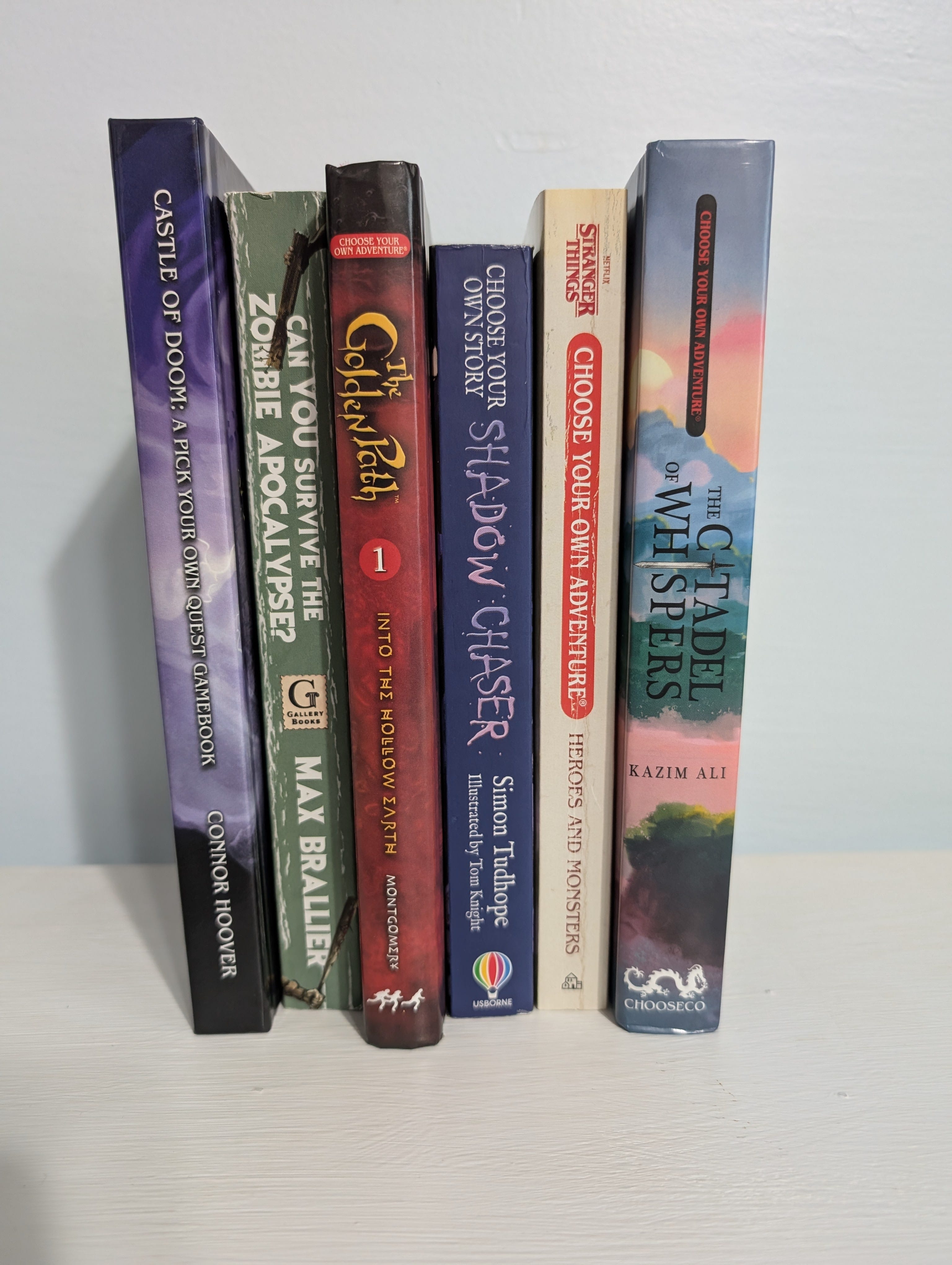
Traditional novels have one enormous advantage over interactive adventures when it comes to telling a story: everybody reads the same story. An author has hundreds of pages to develop characters, build relationships, plant clues, and create subplots. Sidenote: this is hard work. All those plot threads carried across an entire novel is not for the faint of heart. And don’t get me started on the revisions. But I digress…
Write a 300-page interactive adventure with twenty different endings, and no individual reader is going to experience all 300 pages on a single read-through. A huge percentage of the book may exist on paths that reader never takes.
Still, it’s a fun challenge, and it’s nice to look at what publishers have tried in making interactive adventures feel bigger.
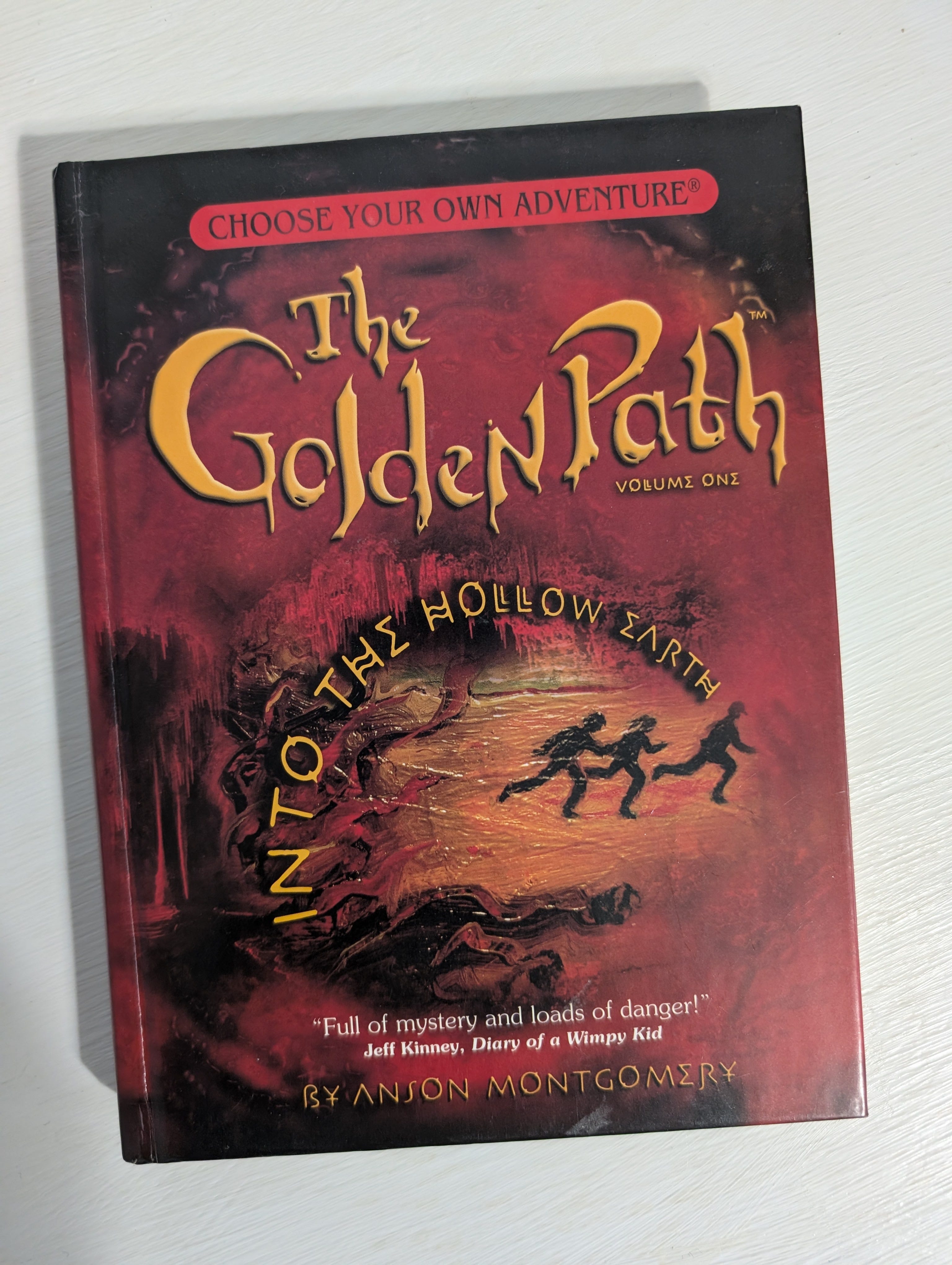
The Golden Path: Into the Hollow Earth (Choose Your Own Adventure) by Anson Montgomery does something fascinating.
It’s Volume One. The story begins with a search for your missing parents, but four of its storylines don’t end with the book. They continue into Volume Two (which I also have).
That’s a very different way of thinking about interactive fiction. Your choice isn’t necessarily leading toward an ending. It might be leading toward an entire second book.
“Turn to page 83” has become “Go get Volume Two.”
This is the ultimate way to get kids begging their parents to buy them the next book. Seriously well played.
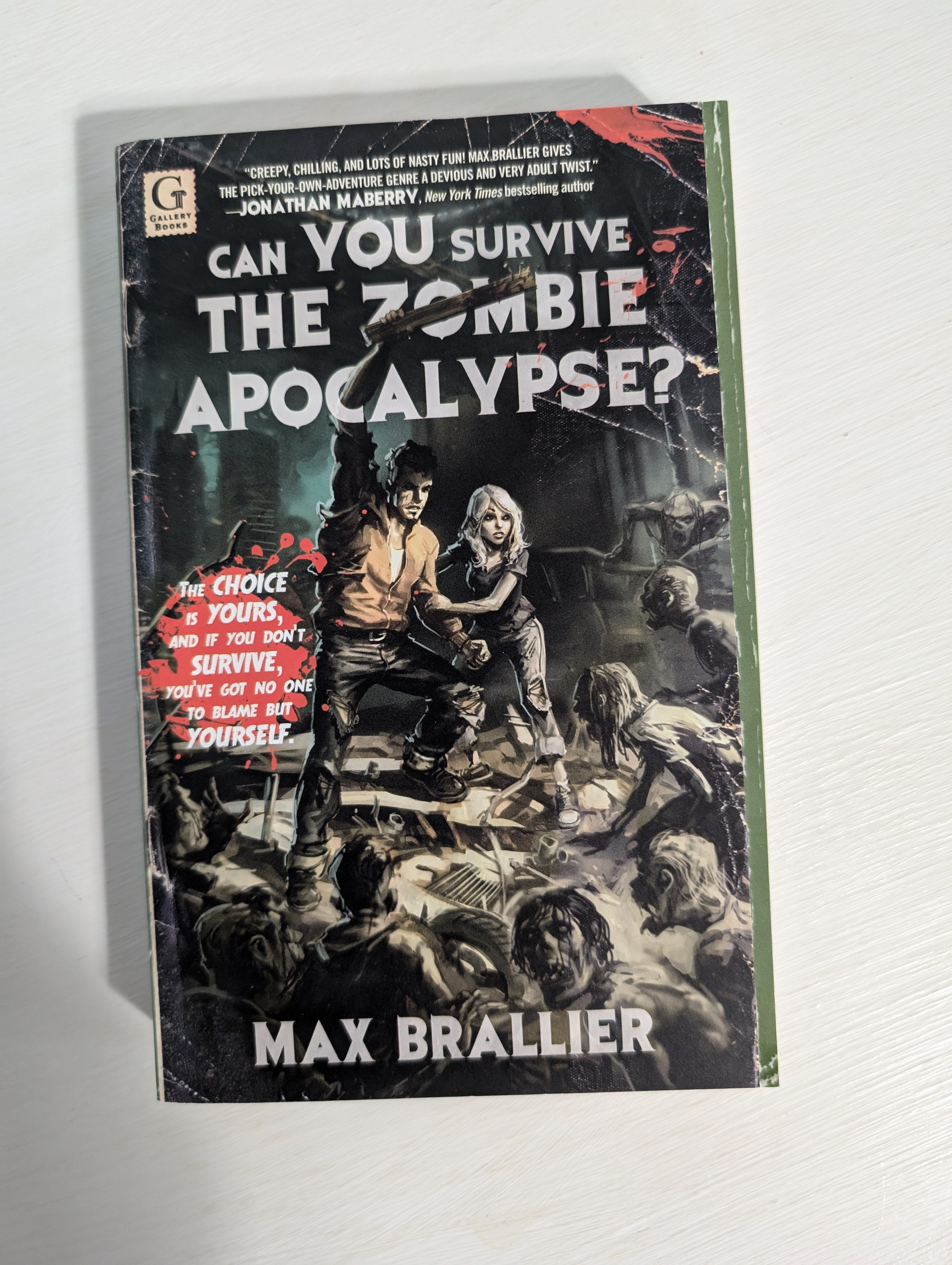
Then there’s Max Brallier’s (yes, of Last Kids on Earth fame) Can You Survive the Zombie Apocalypse? The back cover promises 100 paths and 50 endings. That’s less like a branching tree and more like a branching forest someone has filled with zombies.
It also shows us something important. This “long form” doesn’t necessarily mean that a single trip through the book takes hundreds of pages. We can still aim for our reluctant readers here, still get them flipping those pages.
You can experience the book again and again and keep finding stories you haven’t seen before.
Another side note: Pick Your Own Quest: The Haunted Manor boasts over 50 endings. But there were so many possibilities in the story that I couldn’t stop myself. Otherwise, I normally aim for “Over 30” or “Over 40.”
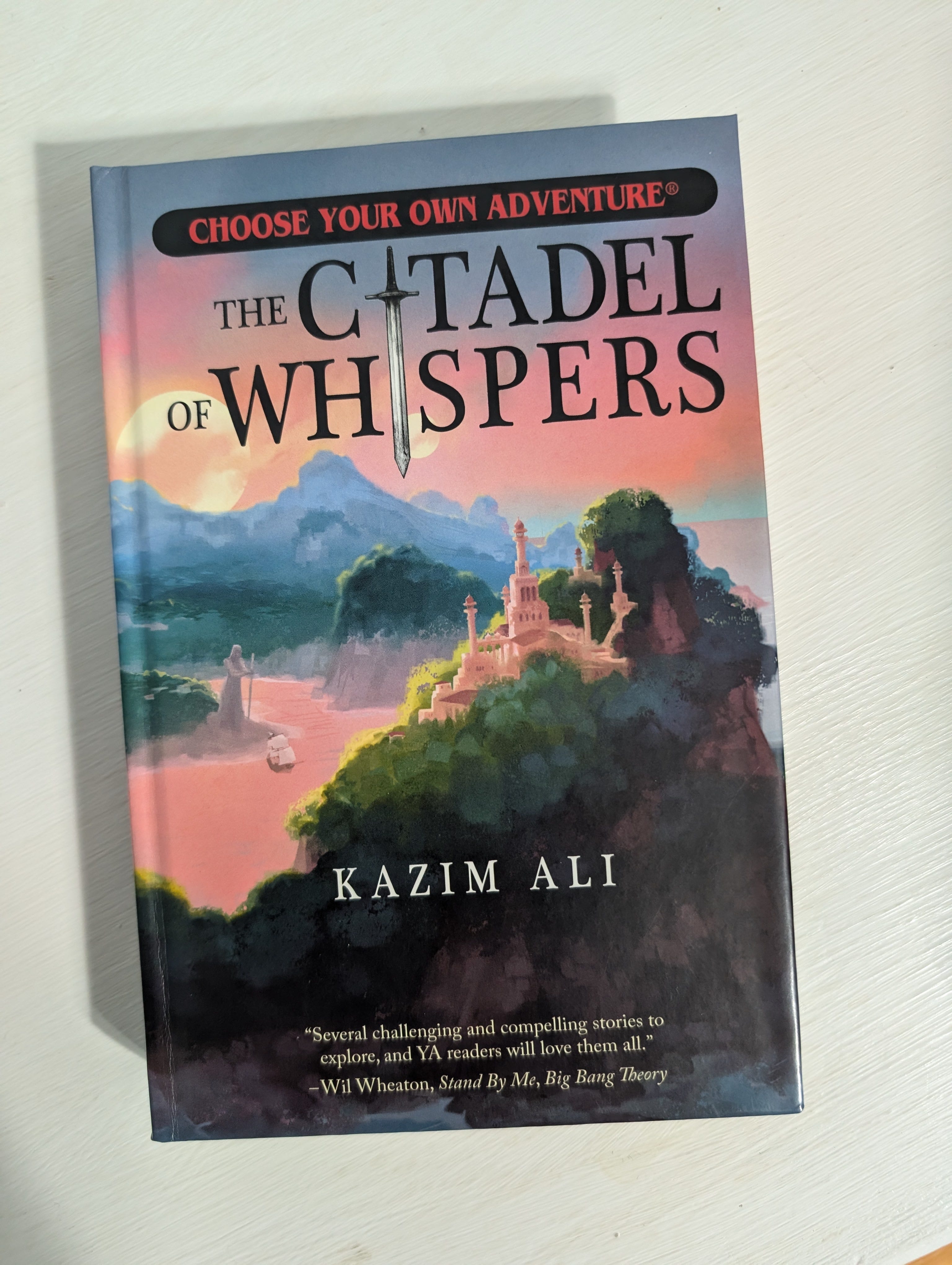
The Citadel of Whispers (Choose Your Own Adventure) by Kazim Ali immediately feels different from the classic paperback interactive adventure. The author has written more than twenty books of poetry and prose. The book looks more literary. The price point is higher. The whole package feels much more like a conventional YA novel. Everything about the physical presentation here changes our expectations.
This isn’t a little paperback you’re supposed to race through, fingers holding checkpoints. It looks and feels like a novel.
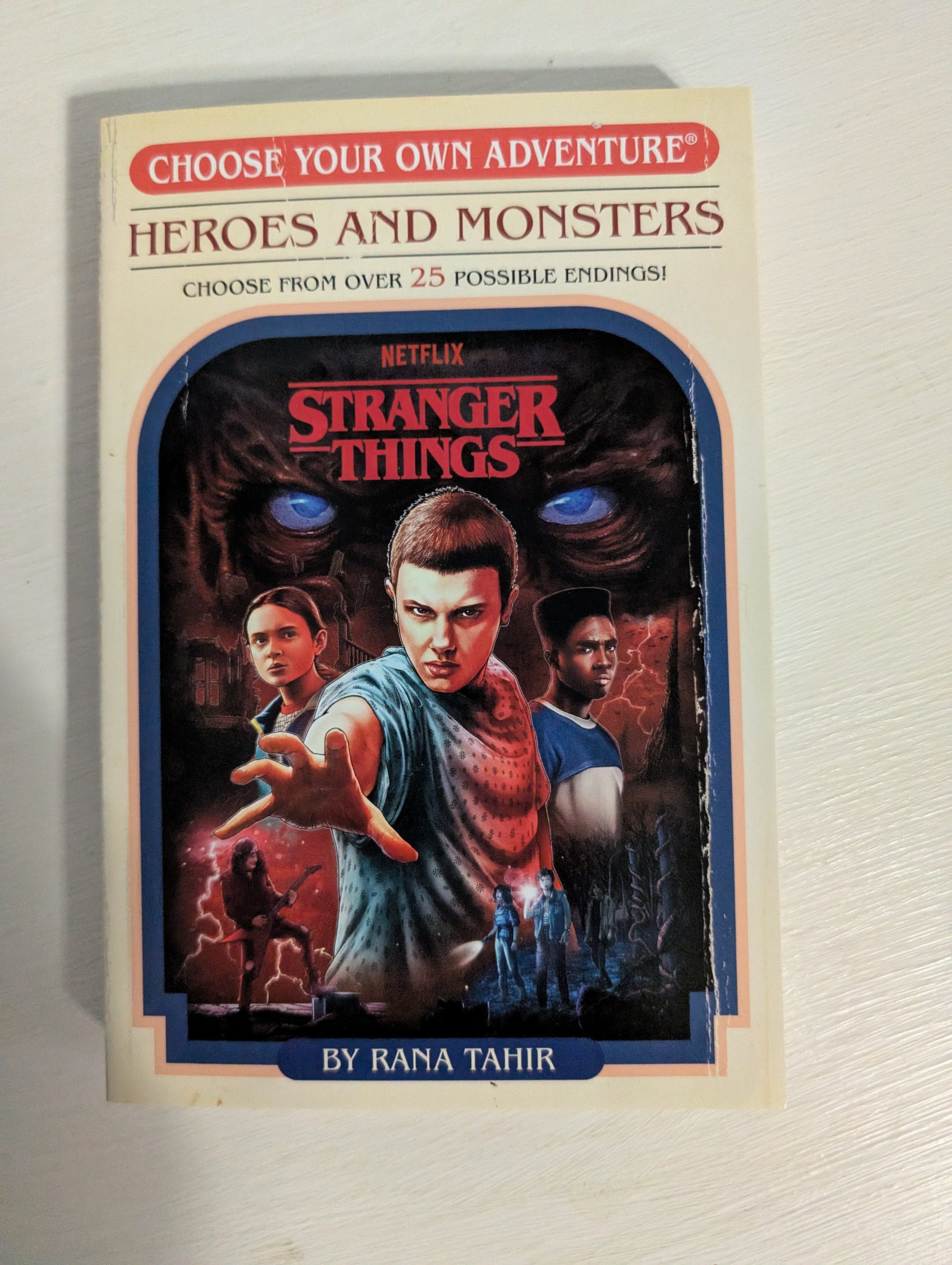
Stranger Things: Heroes and Monsters (Choose Your Own Adventure) by Rana Tahir takes another approach. Instead of building an enormous new world, it drops you into one you already know.
The larger story already exists. You know the characters (Eleven, Dustin, Max, etc.). You know the setting (Hawkins). You know that hanging around with these people is a terrible idea because you’ve likely watched the show if you’ve picked this book up.
And now you get to be part of that story (for just under 300 pages).
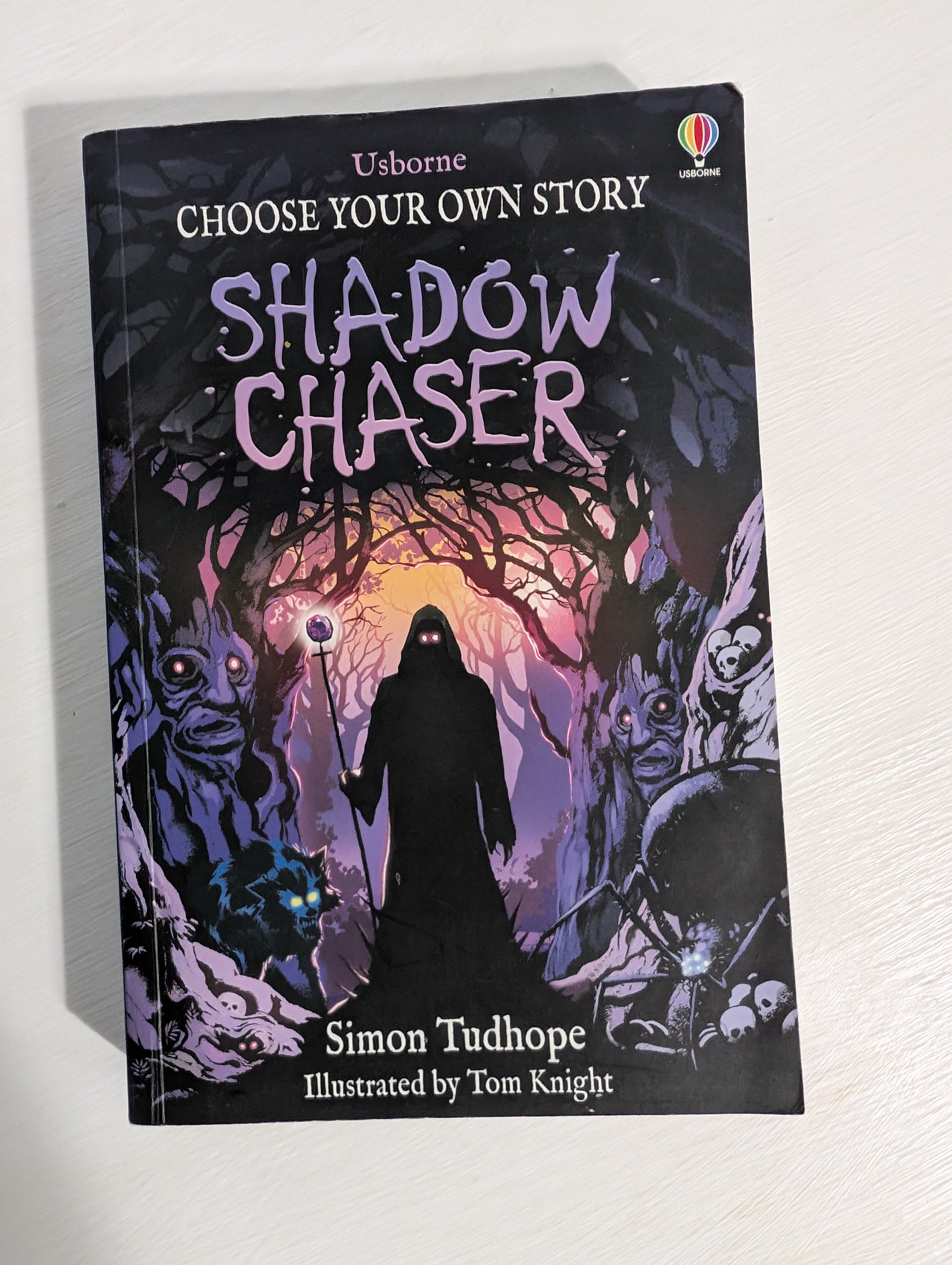
Meanwhile, Usborne’s Shadow Chaser (Choose Your Own Story) by Simon Tudhope blurs the boundaries another way. It’s heavily illustrated, and even the pictures contain secrets that readers have to unlock. Is it a novel? A gamebook? A puzzle book? Whatever it is, it’s my favorite of the bunch. It feels great in my hands, and I adore the look of it.
This ties in nicely to Castle of Doom (Pick Your Own Quest).
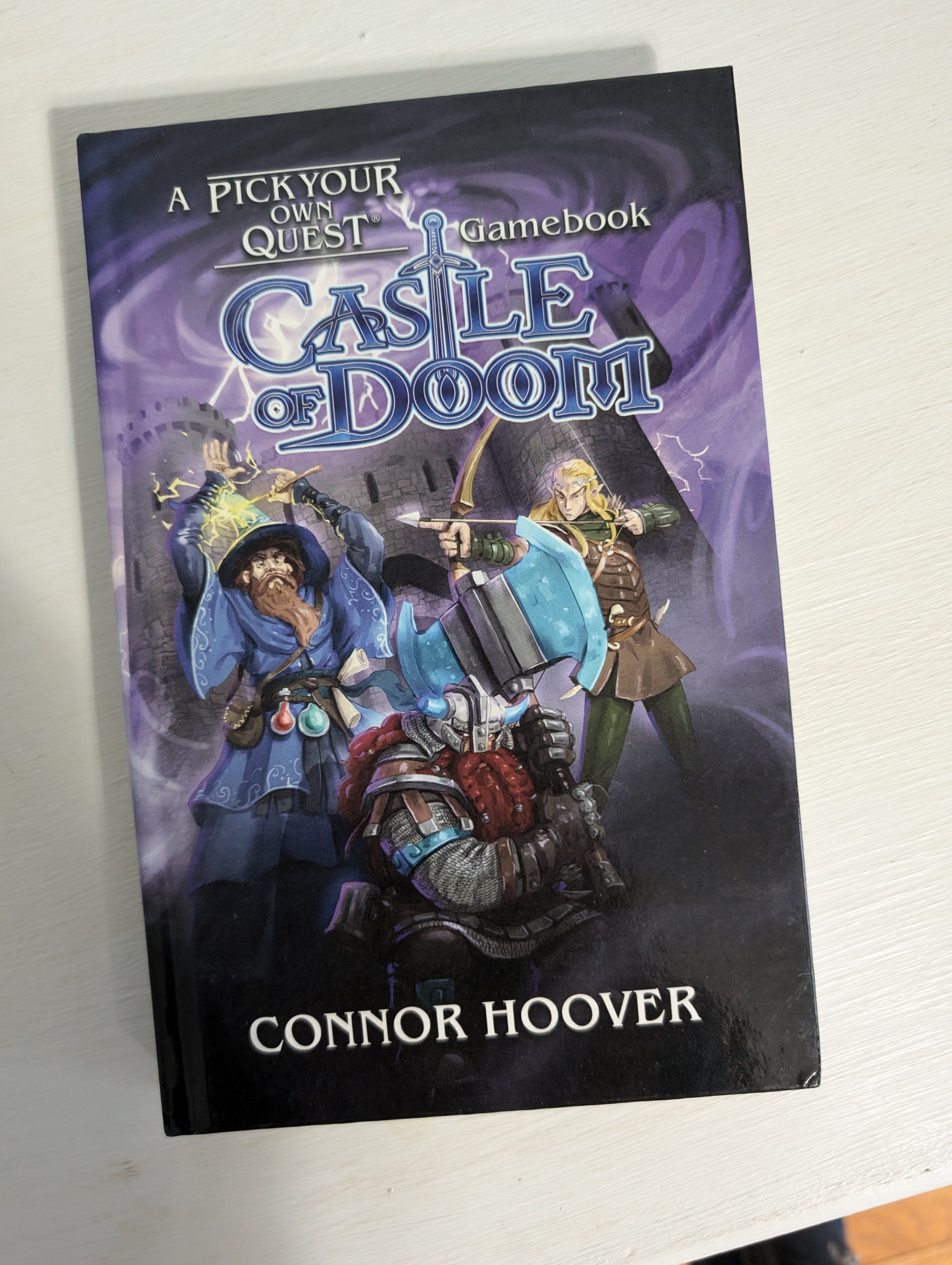
Based on a Pascal computer game I wrote in 1990, this one has more than 75 rooms to explore, artifacts to discover, companions who can join you, and more than fifteen ways to meet your demise.
It’s also the biggest (and most complicated to write) of the Pick Your Own Quest series. Each room has up to four different ways to enter/exit. This leads to a lot of branching choices. You explore, you find things, and you choose different routes through the castle.
Looking at these books, to me, the more interesting question is how many different ways are there to make an interactive story feel big.
Continue it into another volume. Give readers fifty endings. Package it like a novel. Drop them into an enormous, multi-season existing universe. Add puzzles and illustrations. Or build a castle with 75 rooms and let them wander around until they finally break down and realize they must draw a map.
How do you give readers more story while still letting them choose the story?
With interactive adventures, there isn’t one correct way to make them. The only real requirement is letting the reader be part of the story. Letting them decide what happens next.
Comments
Nothing yet. Say the first thing.
Sign in to join the conversation.