
All it takes is a look at my shelf of interactive adventures to note that publishers were always looking for a gimmick. Something to help them stand out from the myriad of other gamebooks on the market. Dice. Maps. Character sheets. Inventory lists. Puzzles.
Red plastic?
Remember those red decoder screens that used to show up in cereal boxes, kids’ magazines, toys, and various other places in an effort to make every eight-year-old feel like a spy uncovering highly classified information?
The Endless Quest Crimson Crystal Adventures took that idea and built it into an interactive adventure, which is every bit as cool as it sounds. A rare find these days, with careful hunting, I’ve managed to score three of these in the wild.
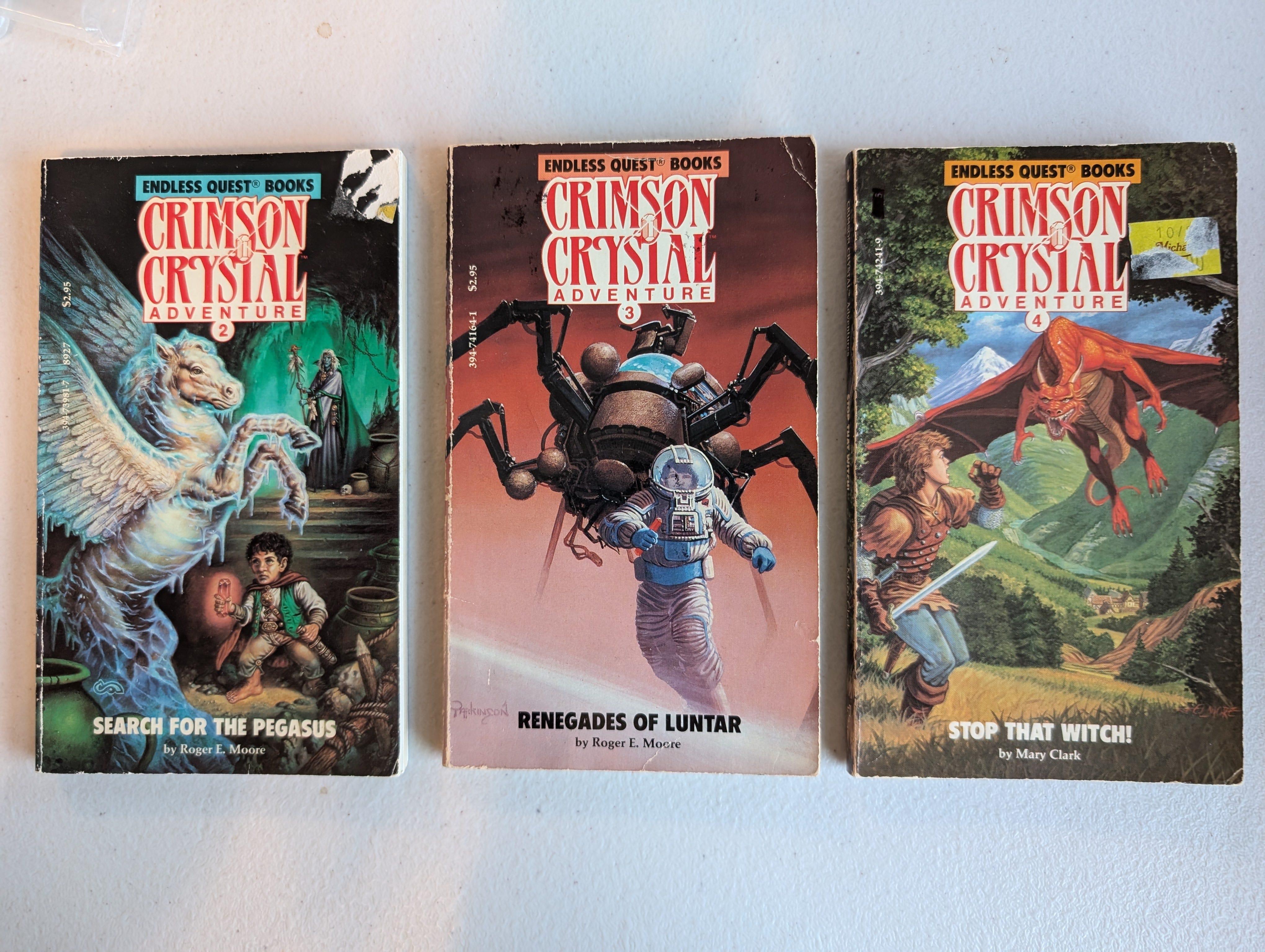
The Crimson Crystal Adventures were part of the Endless Quest line from TSR, the company behind Dungeons & Dragons.
The three I have on my shelves are:
Search for the Pegasus by Roger E. Moore
Renegades of Luntar by Roger E. Moore
Stop That Witch! by Mary Clark
Though I am always looking for more, these three give you a pretty good idea of the range. I love that all three have “flying things” on the covers, and all three “flying things” are different.
In Search for the Pegasus, you’re a halfling trying to rescue a pegasus from an evil witch. Renegades of Luntar sends you to Mars in 2085. And in Stop That Witch!, you’re a ranger trying to save your village from a sorceress and a red dragon.
The stories are filled with dragons, magic, robots, and enough choices to keep you turning pages when you should be figuring out how algebra works. Pretty much exactly what every kid wanted from 1980s interactive adventures.
Sidenote: Okay, I actually really liked algebra, but there was room in my life for both.
But the thing that really made this series stand out was the “gimmick.”
Inside the book is a transparent red screen—the “Crimson Crystal.”
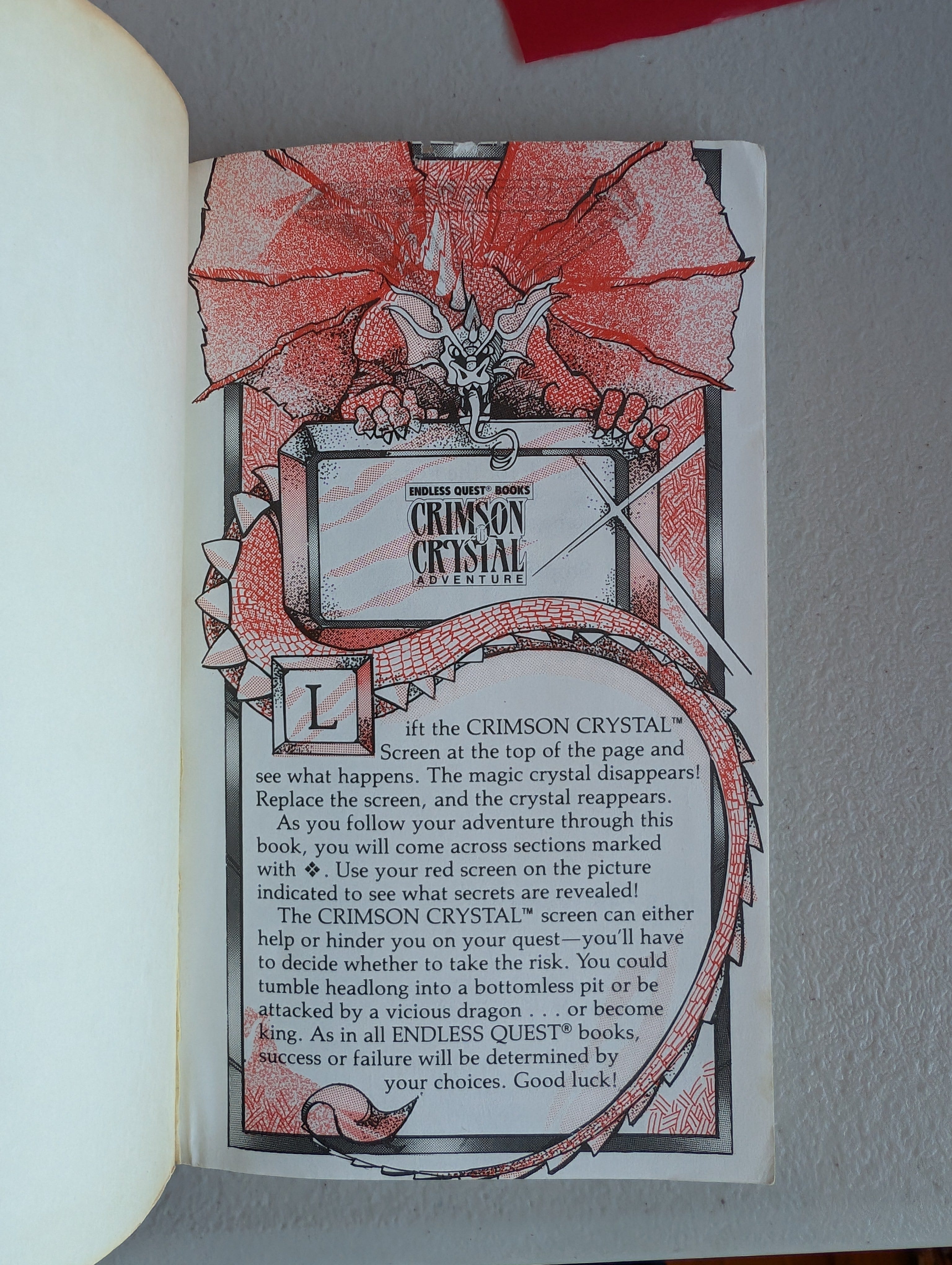
The opening instructions invite you to try out the gimmick immediately.
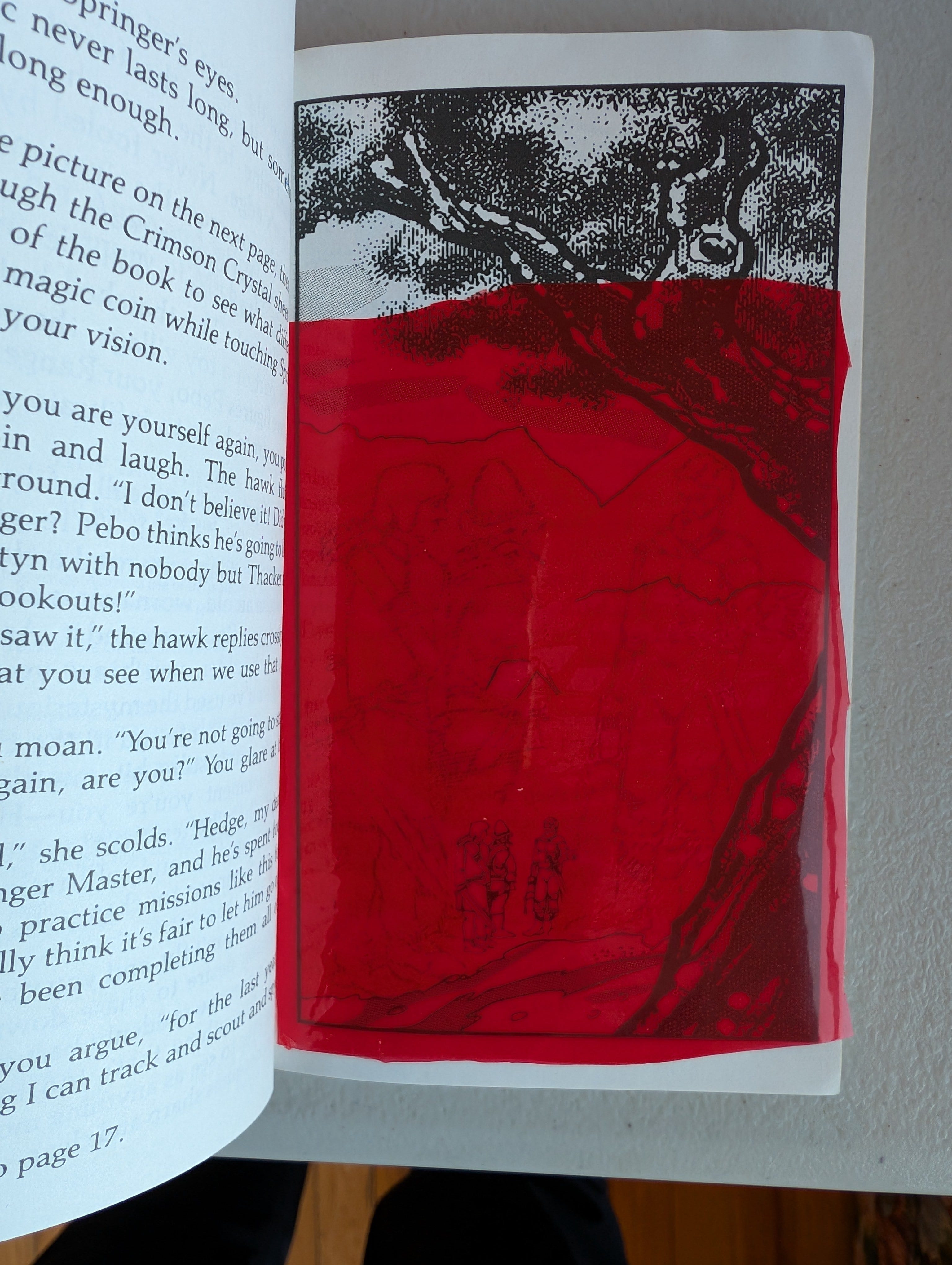
Place the red screen over the illustration and something hidden appears.
Remove it, and it’s gone.
This was low-tech. It was also magic to a ten-year-old. And one of the best parts (and possibly most genius from a marketing standpoint)? This was exactly the kind of thing you’d bring to school to show your also-nerdy friends, immediately making them want one of their own. Sure, this probably cost the publishers a bit extra when it came to printing, but it was well worth it.
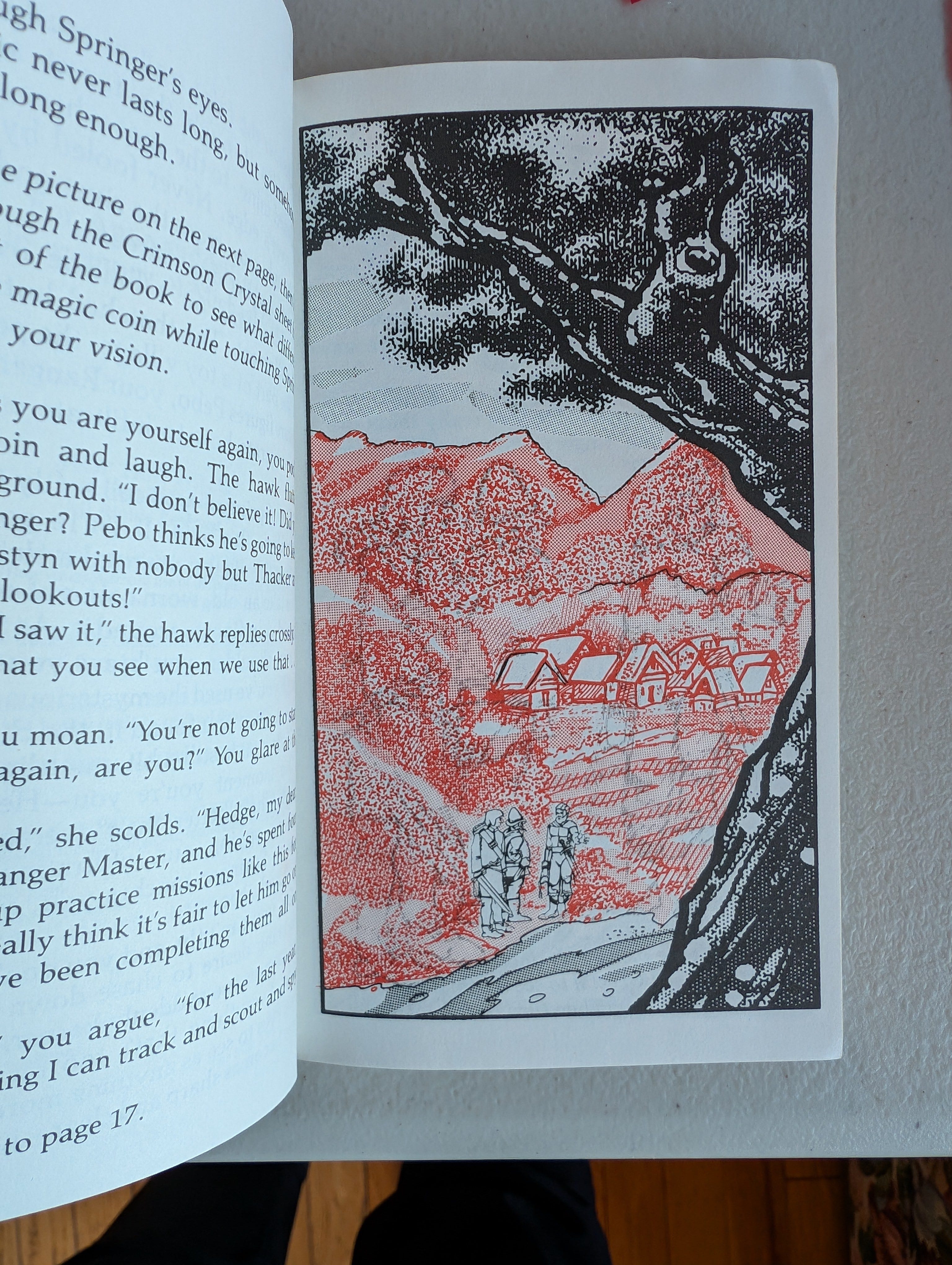
As you make your way through the adventure, you come across specially printed illustrations. When prompted, you can place the Crimson Crystal over them and reveal information you couldn’t see before. But there is a catch…
You may not want to.
The instructions warn that the Crimson Crystal can “help or hinder you on your quest.” This is one more choice for you to make as you’re reading through the interactive adventure. Maybe what is revealed will help you make the right decision. Maybe it will lead to your untimely demise. This is a fun way to up the “interactive” in interactive adventure.
But not to worry. The book still functions as normal. We still have our familiar branching adventure. You read the story until you reach a decision. Then you choose what to do and turn to the corresponding page.
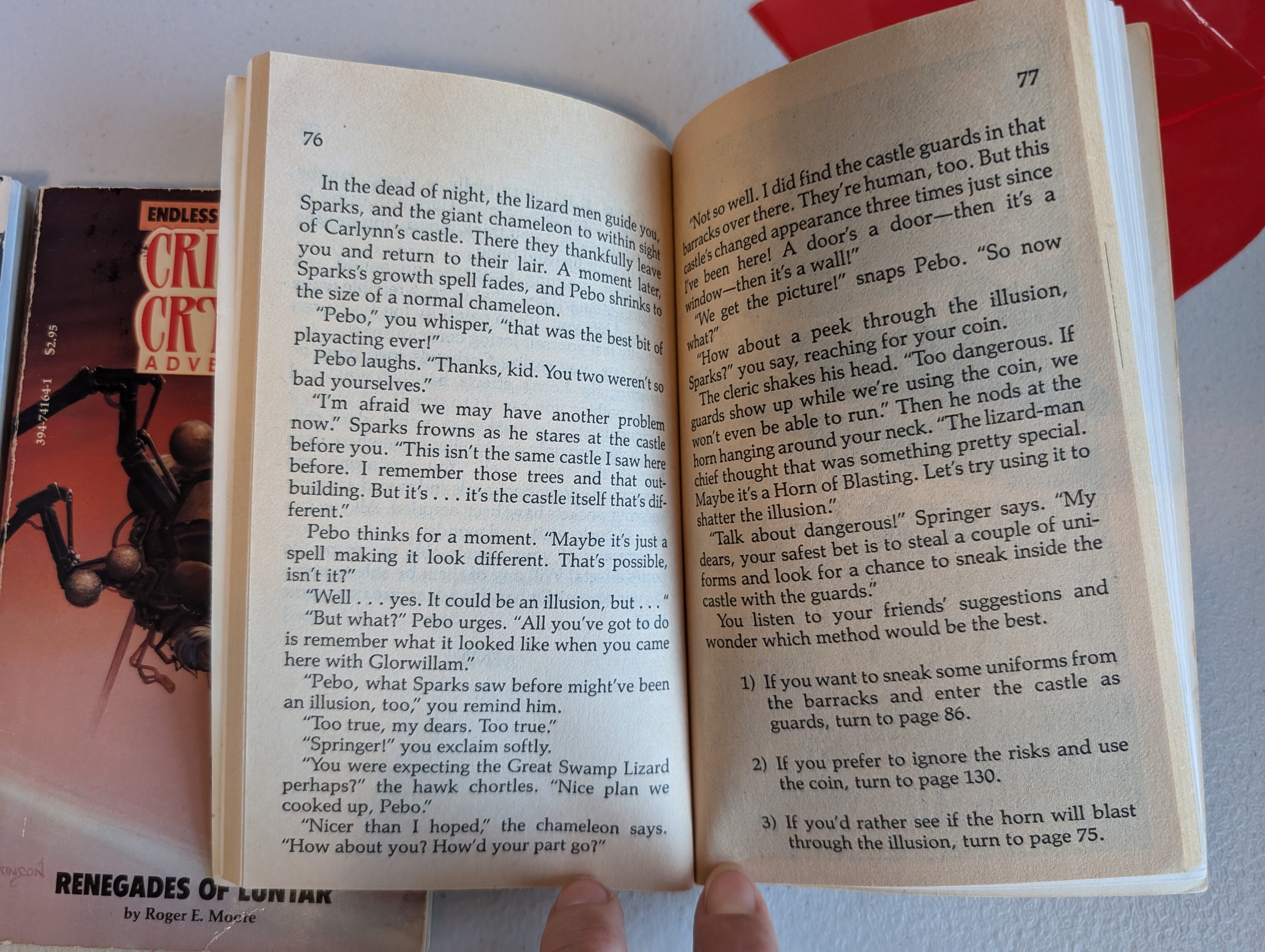
Sneak into the castle disguised as guards?
Use the magic coin even though your companions think it’s too dangerous?
Try blasting through an illusion with a magical horn?
Quick. Turn to page 86 (but make sure to keep your finger in page 77, just in case something horrible happens).
What’s cool about interactive adventures is that they blur the line between books and games. And in the case of Endless Quest Crimson Crystal and other books with “gimmicks,” the publishers took them to the next level.
They didn’t just get kids reading. They got them:
drawing maps
rolling dice
keeping track of inventory
solving puzzles
pulling out a piece of crinkled transparent red plastic and laying it across an illustration to uncover a secret
I’m not going to lie. When I found these books in the wild and saw that they still had the red plastic inside, the ten-year-old inside of me smiled. Even taking these pictures the other day for the post, I got giddy seeing what image was going to be revealed.
That’s the magic of the “gimmick.” It doesn’t have to be fancy or high-tech. It just has to make a kid curious enough to turn the page.
Comments
Nothing yet. Say the first thing.
Sign in to join the conversation.