
April didn’t have one defining headline, but a pattern started to emerge across film and television. Attention feels harder to earn, awards momentum is harder to sustain, and the places that used to control cultural conversation don’t hold that power in the same way anymore.
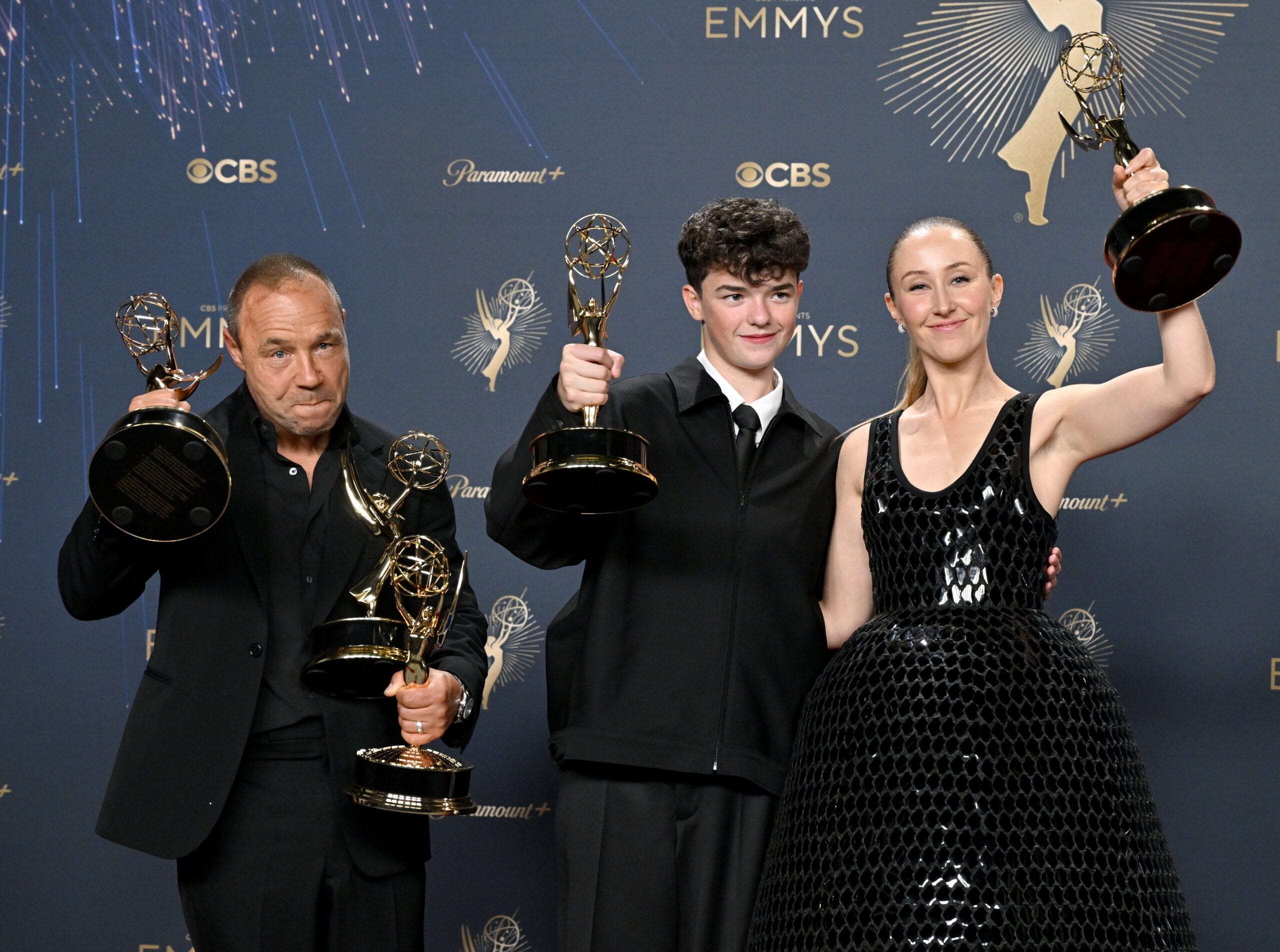
With submissions closing on 7 May, the limited series category feels unusually flat this year. It’s not that the work isn’t strong, it’s that very little of it has broken through in a meaningful way. Even a show like Death by Lightning, widely considered one of the strongest creatively, hasn’t translated that into sustained audience engagement or conversation.
There’s also a noticeable gap left by globally titles like Squid Game and Pachinko. Those shows carried the category beyond the industry and into wider cultural conversation. Right now, nothing has quite replaced that.
At the same time, Netflix’s dominance in this category is reshaping the landscape. With three consecutive wins, the strategy is becoming clearer: the platform that decides to prioritise a title properly often sets the tone for the entire race.
The campaigns that cut through are the ones people are actually talking about, not just the ones being pushed through screenings and trade coverage. That requires a very different kind of PR approach, one that starts much earlier and builds outward, rather than relying on traditional industry pathways.

HBO’s decision to premiere Euphoria Season 3 at Coachella was less about marketing and more about positioning. The audience attending that screening was already made up of the show’s core viewers, so it wasn’t designed to expand reach.
What it did do was re-establish the show as part of youth culture. By placing it in a live music environment rather than a traditional premiere setting, it framed Euphoria as a cultural moment rather than just a returning series.
The scale was already there. The Season 3 trailer had already set a record: 157 million views in 48 hours, the most-watched trailer for a returning HBO show in history, which tells you the audience hadn’t gone anywhere.
The Coachella activation simply reinforced that this is still a show people should be paying attention to.
But there’s a difference between attention and awards traction. Cultural visibility can open the door, but it doesn’t automatically convert into nominations. For that, the campaign still needs to bring the focus back to performance, writing and craft if it is to hold weight with voters.
A study released this month by the Next Narrative Africa Fund and Parrot Analytics shows that African storytelling is still undervalued globally, even though there is clear demand in markets like the US, UK and beyond. The issue isn’t a lack of audience interest, it’s that the industry hasn’t built the systems, funding, and support needed to properly meet that demand.
You can already see this gap playing out in real time. Lagos-based Trino Motion Pictures recently secured an HBO Max deal across Central and Eastern Europe, alongside a Canal+ rollout across more than 60 Francophone territories for The Weekend. Those deals didn’t come from a fully developed system, they came from a strong film navigating a fragmented market and finding buyers territory by territory.
The framing of African content as “emerging” has become increasingly unhelpful, because it implies that demand is still developing, when in reality it is already present and measurable. What is lagging behind is development capacity, production financing and international distribution strategy, which creates a gap between audience appetite and the work that is actually being made and exported.
The audience is there, and the demand is proven, but the infrastructure is still catching up. The companies that recognise that early, and invest properly in development and international positioning, are the ones most likely to benefit from where this is heading.
There is also a question around how demand is being interpreted. Engagement metrics can be inflated by diaspora audiences and social media visibility, which does not always translate cleanly into commissioning budgets or sustained platform investment. The next phase of growth will depend on whether platforms are willing to invest in long-term development rather than one-off acquisitions.
The companies that treat African storytelling as a long-term category, rather than a short-term play, are the ones most likely to benefit.
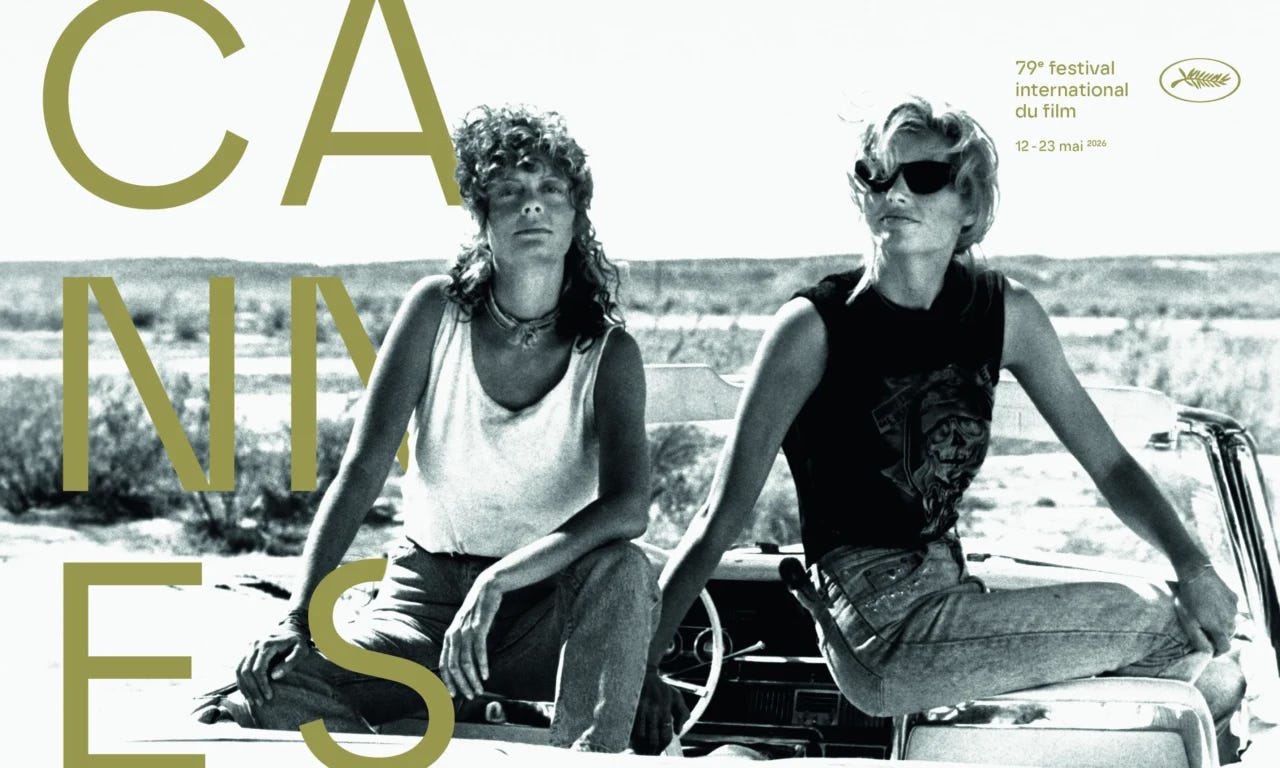
The 79th Cannes competition, announced on 9 April, makes a very clear statement about where the festival sees its role. The lineup leans heavily toward established international auteurs — Pedro Almodóvar, Ryusuke Hamaguchi, Asghar Farhadi, Hirokazu Kore-eda — with around two-thirds of the films coming from France, Japan and Spain.
There is effectively one American filmmaker in competition — Ira Sachs with The Man I Love, which sits firmly outside the studio system. James Gray’s Paper Tiger, despite its cast, was added late, reinforcing how little US studio presence there is overall. There are no studio tentpoles, no streaming platforms using Cannes as a prestige showcase, and no sense that Hollywood needs the festival in the way it once did.
Thierry Frémaux’s comment that studios are producing “fewer auteur films”, and that gap is now being filled by European and Asian cinema. This isn’t a critsm as such, but a reflection on what studios are spending money on.
Studios have stepped away from mid-budget auteur filmmaking and have also proven they can run successful awards campaigns without a festival launch - using One battle After Another and Sinners as examples.
The appointment of Park Chan-wook as jury president reinforces this direction. The competition is likely to favour formal, precise filmmaking over broad accessibility, further shifting the festival away from an Anglophone lens.
At the same time, record submission numbers show how competitive the pipeline has become, while the sidebars, such as Critics’ Week and Directors’ Fortnight, are increasingly where real discovery happens. For many filmmakers, breaking out from a sidebar is now more strategic than being lost in Competition.
Cannes isn’t losing relevance, it’s becoming more defined, less focused on Hollywood, but more influential in shaping international prestige and the early stages of the awards conversation.
I saw One Flew Over the Cuckoo’s Nest at The Old Vic this month, and really enjoyed it. It’s very stripped back and performance-led, which makes it feel much more intimate than expected.
I also spent time at the Nigerian Modernism exhibition at Tate Modern, which quietly reframes how we think about artistic influence and authorship. The exhibition looks at how modern art developed in Nigeria on its own terms, rather than as an extension of European movements. It focuses on artists working from the 1940s through to the 1970s, around the time Nigeria was moving toward and then gaining independence in 1960, and shows how they were shaping a new visual language that reflected Nigerian identity, culture, and politics in a modern way. This exhibition is essentially about how modern art developed in Nigeria on its own terms, rather than as a copy of European movements. It felt very personal and connected with it on many levels whilst also inspiring me and encouraging me to create something that may not be this or that, but is entirely my own thing.
I went to Nicer Tuesdays, which was just refreshing. It’s rare to be in a space where people are sharing ideas and experimenting without thoughts and ideas. Marina Willer spoke about instinct and experimentation in an AI-heavy moment, Lizzy Stewart shared her work on The Wreck, and Ollie Babajide Tikare presented Èkó, a photographic portrait of Lagos. Different practices, but all rooted in doing something on their own terms.
And then, in a completely different mood, was the release of Michael, not just the film itself, but how it’s been positioned, leaning into nostalgia, scale and global recognition in a very deliberate way.
No posts
Comments
Nothing yet. Say the first thing.
Sign in to join the conversation.