
I have been thinking lately about how we look at familiar places.
When somewhere is famous, we often arrive already knowing what we are supposed to see.
But a small change of angle can reveal something quite different — a detail under a lantern, trees outside their famous season, or a view from the back instead of the front.
And sometimes, what you find there is more memorable than the view you came for.
At Meiji Jingu, most people photograph a gate before walking through it.
I do too.
But after passing through this one, I turned around.
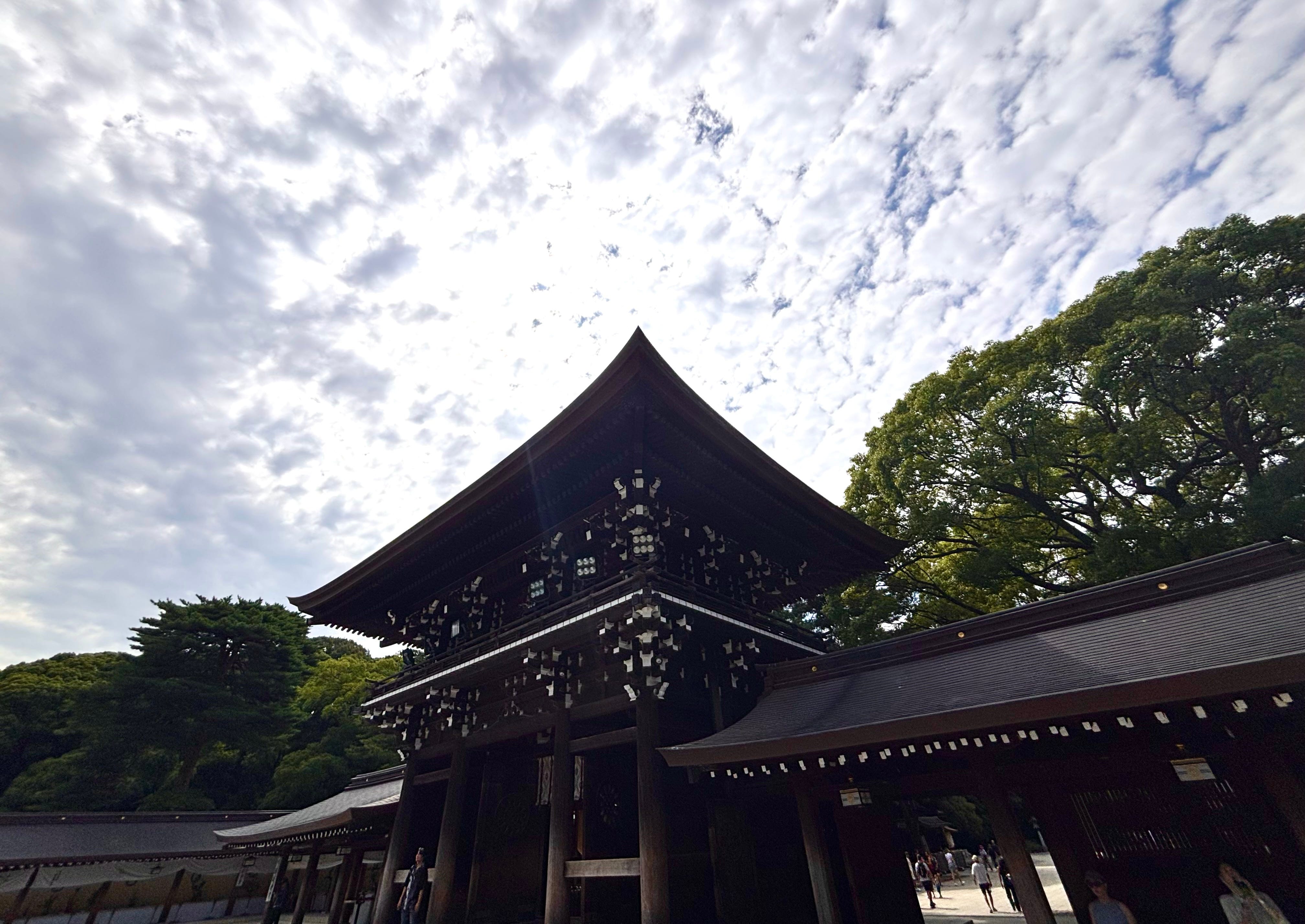
The dark roof, the trees, the changing sky, and the people moving through the gate suddenly made a different picture.
Nothing about the place had changed. I had simply changed sides.
Sometimes the other side is worth a look.
Kaminarimon in Asakusa is one of Tokyo’s most photographed sights.
Almost everyone looks at the giant red lantern from the front. It is hard not to.
But how many people stop underneath it?
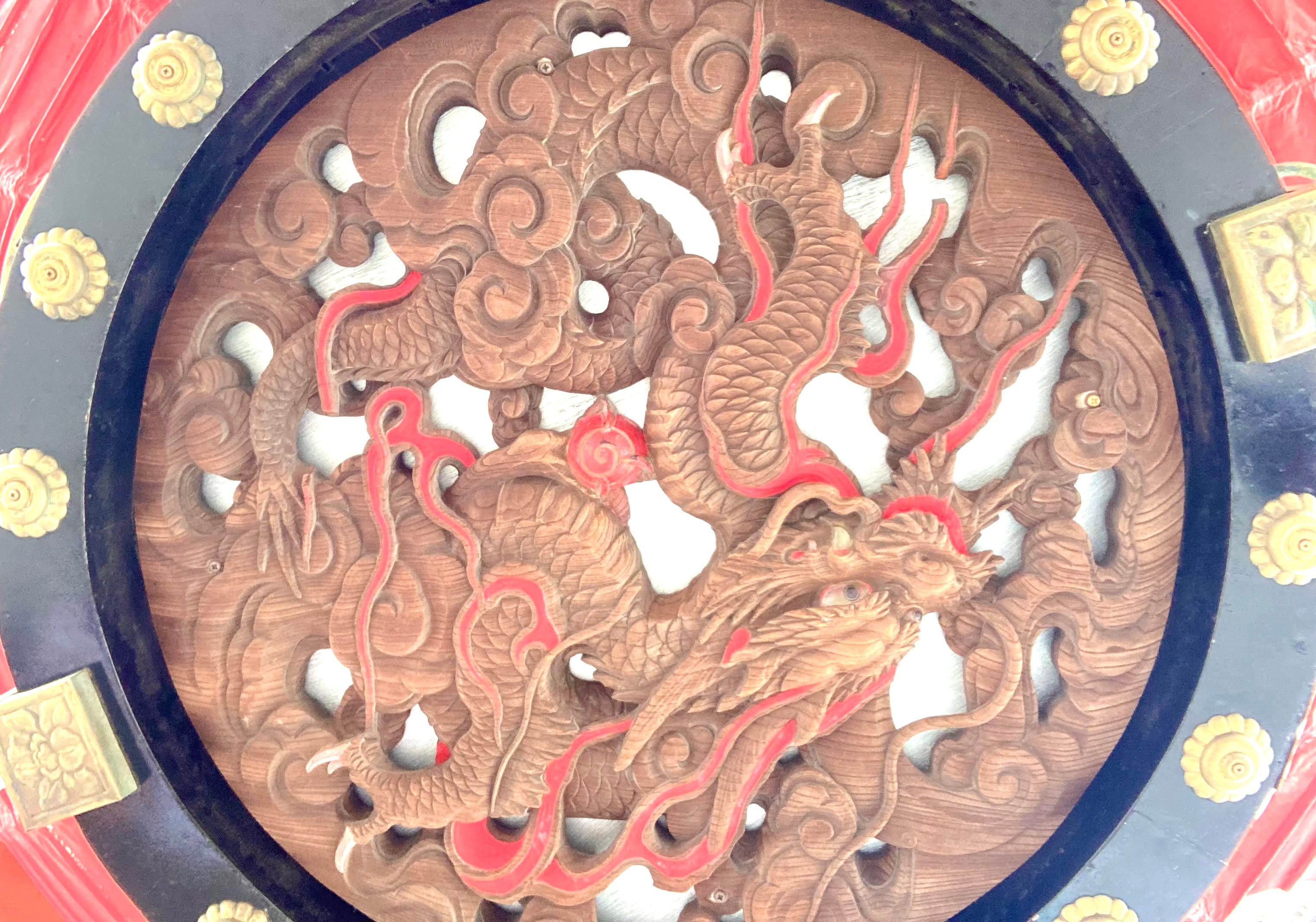
A beautifully carved dragon is there, just above the heads of the crowds passing below.
It is not hidden. You do not need special access to find it. You only have to stand in a slightly different place and look in a different direction.
That may be why discovering something like this feels so satisfying.
It was there all along, waiting to be noticed.
The ginkgo avenue at Meiji Jingu Gaien is famous for autumn.
People come to see the long rows of trees turn golden. That image is so familiar that it is easy to forget the avenue has other seasons.
But I was there recently, in the middle of summer.
No gold. Just green leaves, blue sky and summer clouds.
Then I looked straight up.
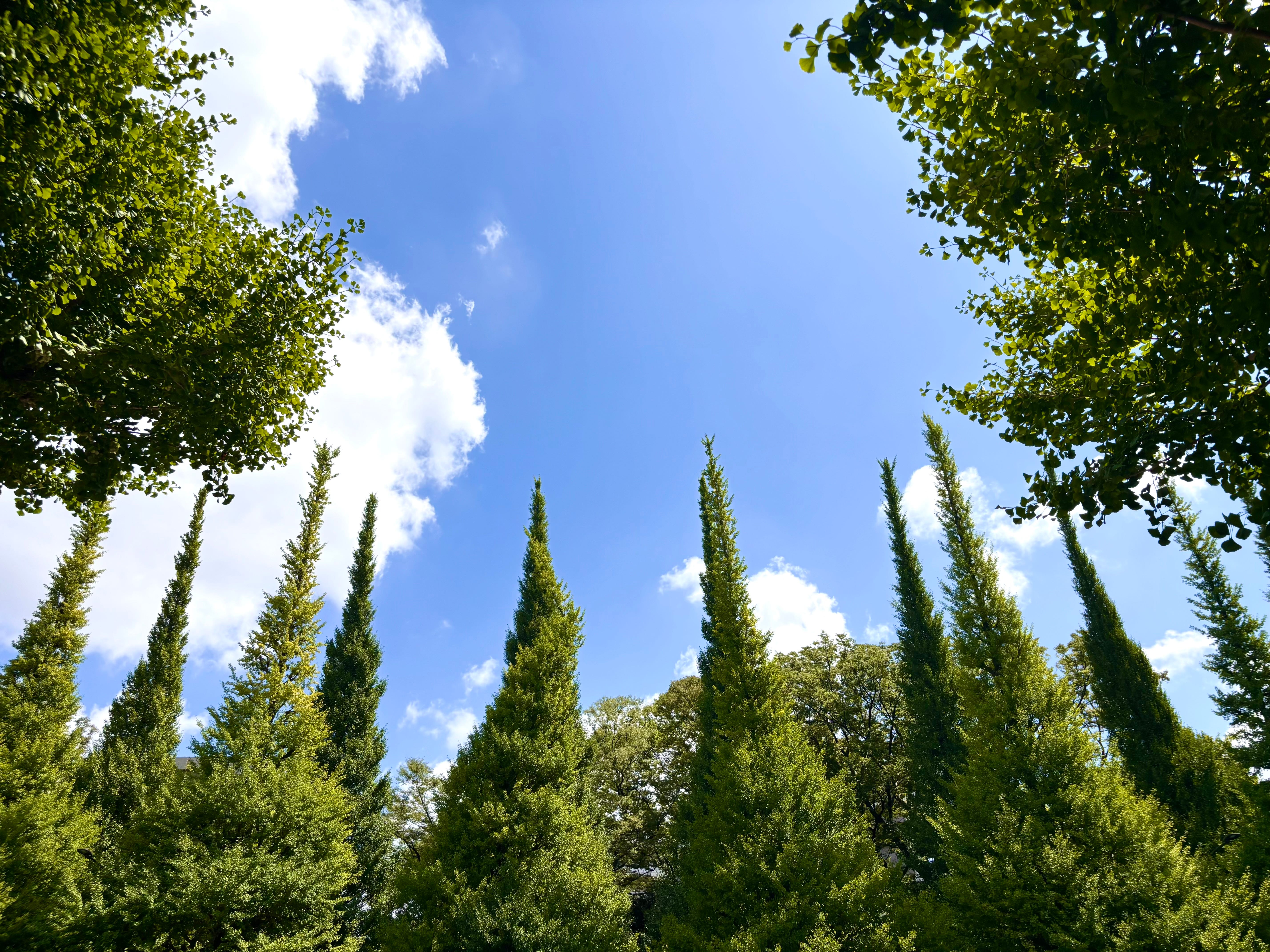
From below, the trees created shapes I had never really noticed before. The pointed tops and the open sky between them seemed almost geometric.
The same famous avenue, but a completely different view.
Cherry blossoms are photographed endlessly when they are on the trees.
For a short period each spring, people gather beneath them, follow the forecasts and search for the moment when the blossoms are at their best.
A few days later, most people have moved on.
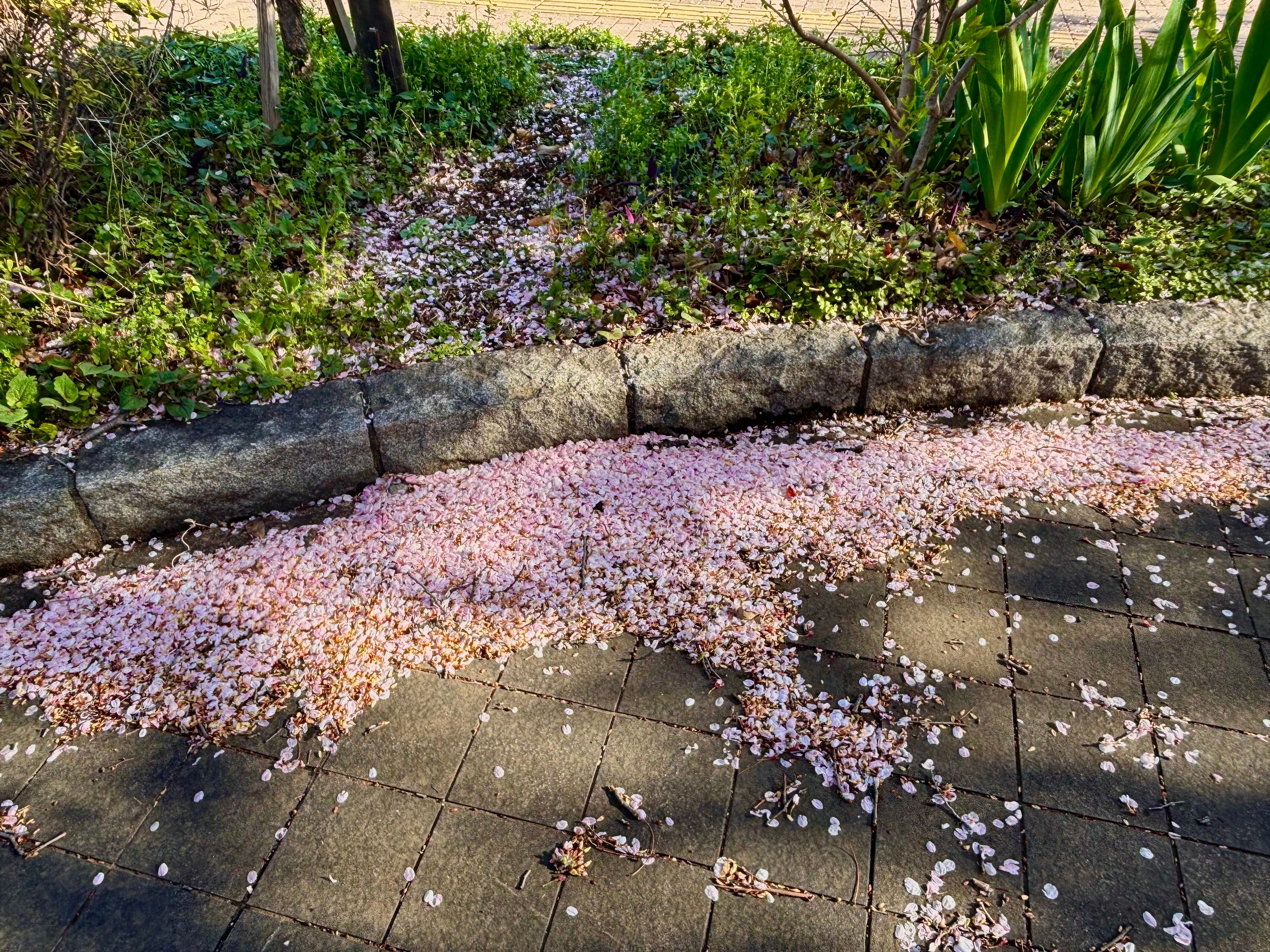
These petals had simply been blown together along the edge of a path. There was nothing arranged about them.
But to me, this is also part of the cherry blossom season.
In Japan, fallen cherry petals can create another kind of landscape. When they cover the surface of a moat or pond, we sometimes call it hanaikada — literally, a “flower raft.” The blossoms are no longer at their peak, yet the sight can be just as moving.
Perhaps that is because cherry blossoms are not only about beauty at its fullest.
Their disappearance is part of what makes them beautiful — and perhaps why they stay with us long after they are gone.
That feeling is not limited to the seasons.
Sometimes a familiar part of a city can begin to feel different simply because we know it will not always be there.
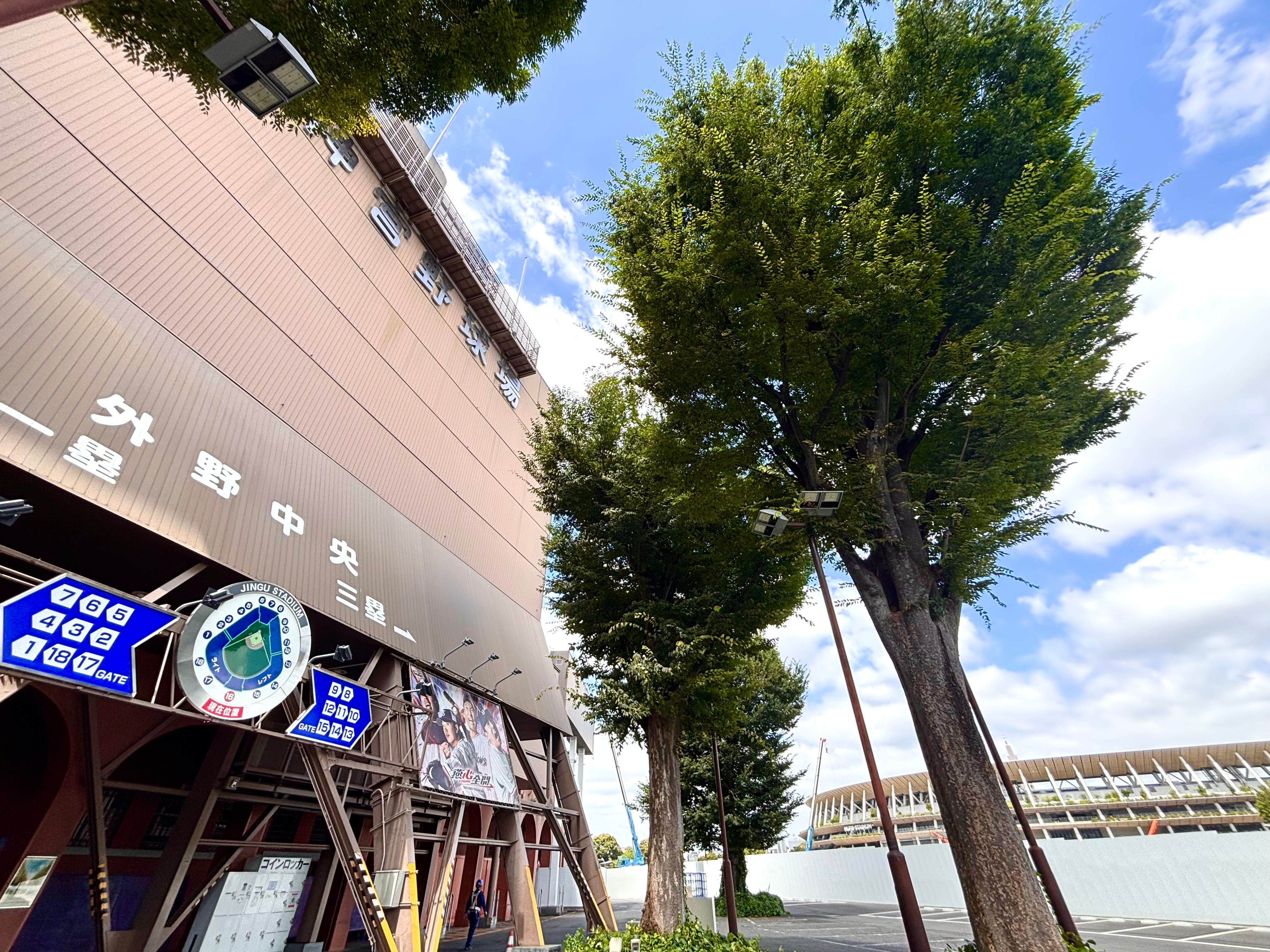
Meiji Jingu Stadium has stood here for almost a century.
It is not a shiny new stadium. That may be part of its charm. There is something unmistakably old-fashioned about its shape and atmosphere, especially when compared with the newer buildings around it.
The wider Jingu Gaien area is now going through a long redevelopment, and the present stadium will eventually disappear and be replaced.
I am not sure you have to be a baseball fan to feel something about that.
For me, simply knowing that makes this ordinary view feel a little less ordinary.
Once you know a familiar place will disappear, you begin to look at it differently. Its age, its imperfections, even the ordinary sight of it against the Tokyo sky suddenly seem worth remembering.
Perhaps places, like cherry blossoms, become a little more precious when we realize they will not last forever.
And sometimes, there is no famous place at all.
Just an evening sky, a setting sun, and an airplane passing through.
When I took this photograph, I was not quite sure what I was photographing.
Was it the sunset?
The airplane?
Or simply the few seconds when they happened to share the same sky?
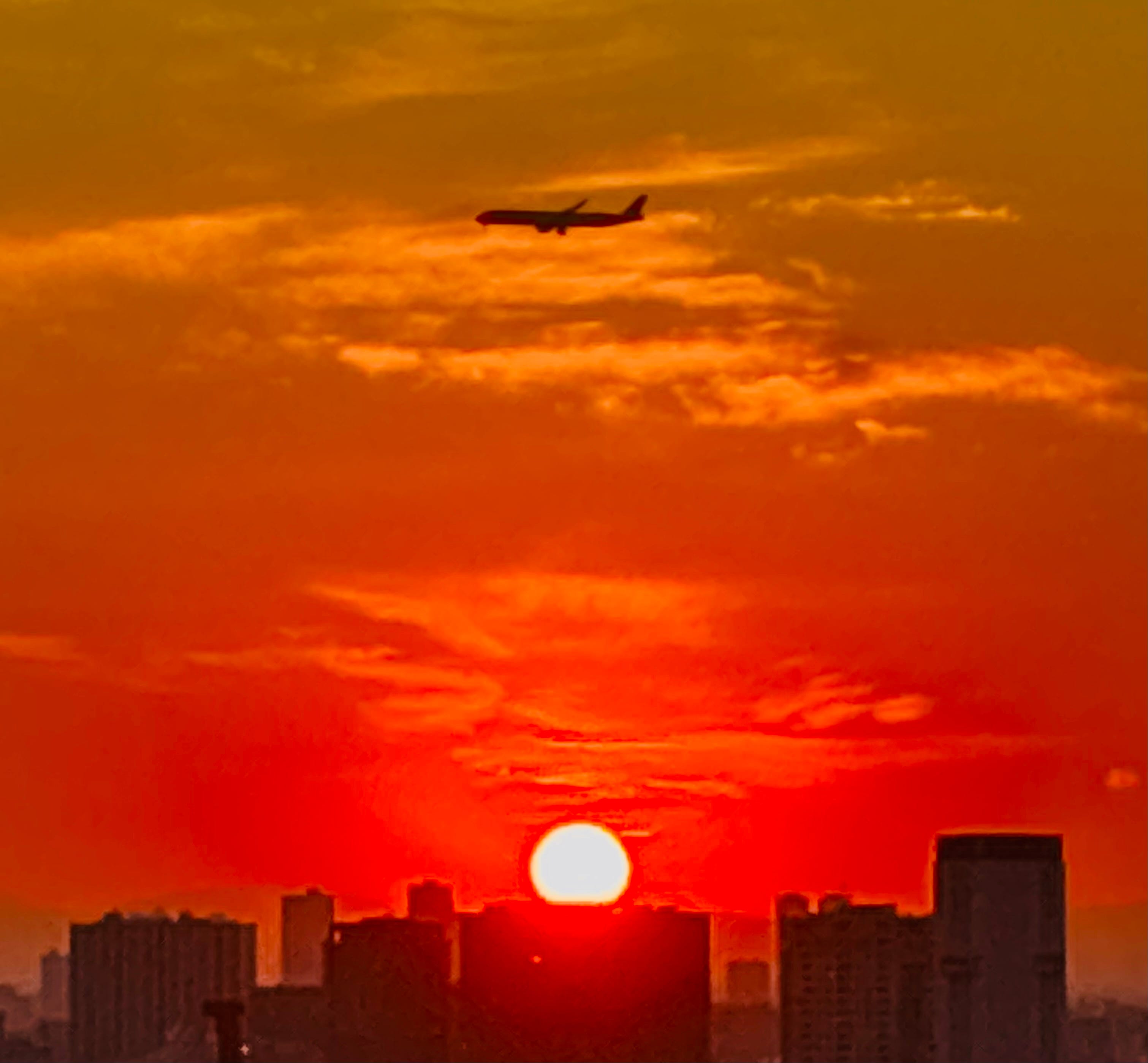
Maybe that is one of the quiet pleasures of travel. A slight shift in where we look can leave us with something we did not know we were looking for.
And sometimes, only much later, a photograph brings back not just the place, but the feeling of having discovered it for ourselves.
Comments
Nothing yet. Say the first thing.
Sign in to join the conversation.