
Tokyo’s extreme heat continues day after day. There is little point in wishing the weather were different. The weather may be discouraging, but the number of days you have in Tokyo is already fixed.
The more useful question is how to choose the right hours: times that ask less of the body while allowing the landscape and atmosphere to offer more.
Once time becomes part of the itinerary, the city begins to organize itself. Some places naturally belong to the early morning. Others reveal more toward evening.
Last week, I wrote about the morning as the time when Tokyo often shows its most natural face during the summer heat. This week, I want to take that idea one step further and turn it into a practical decision: where to go, and when.
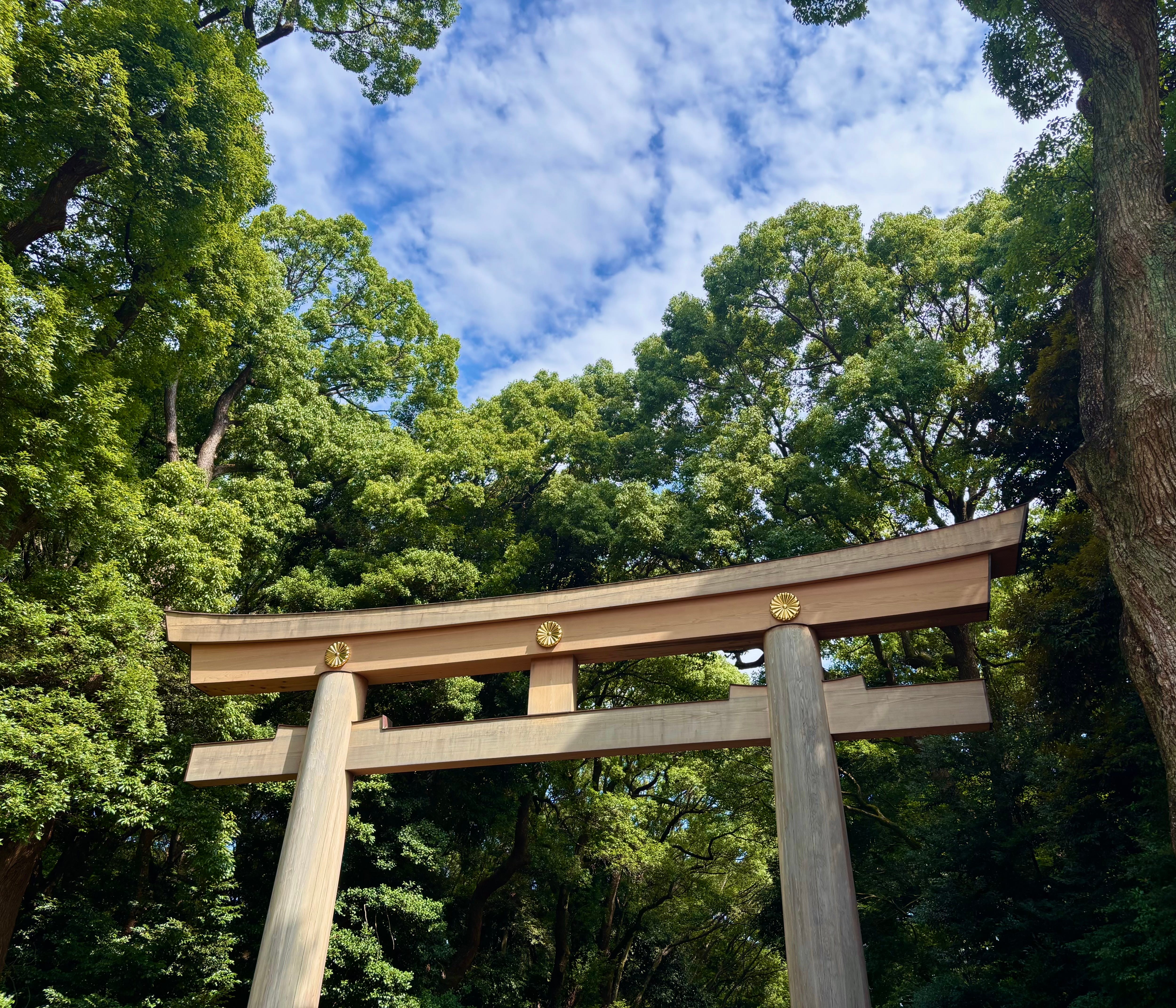
At Meiji Jingu, what changes in the early morning is not only the number of people.
The light is softer. The air has not yet become heavy with heat. Even the humidity feels less demanding before the temperature begins to climb.
For a short while, the different elements seem to fall into balance: the light through the trees, the air along the path, the sound of birds, and the pace of the people walking beneath them.
There is also a valuable space in the day before the heat begins to dictate what you can and cannot do. You do not yet feel chased by the temperature. You can stop, look around, and allow the place to set the rhythm.
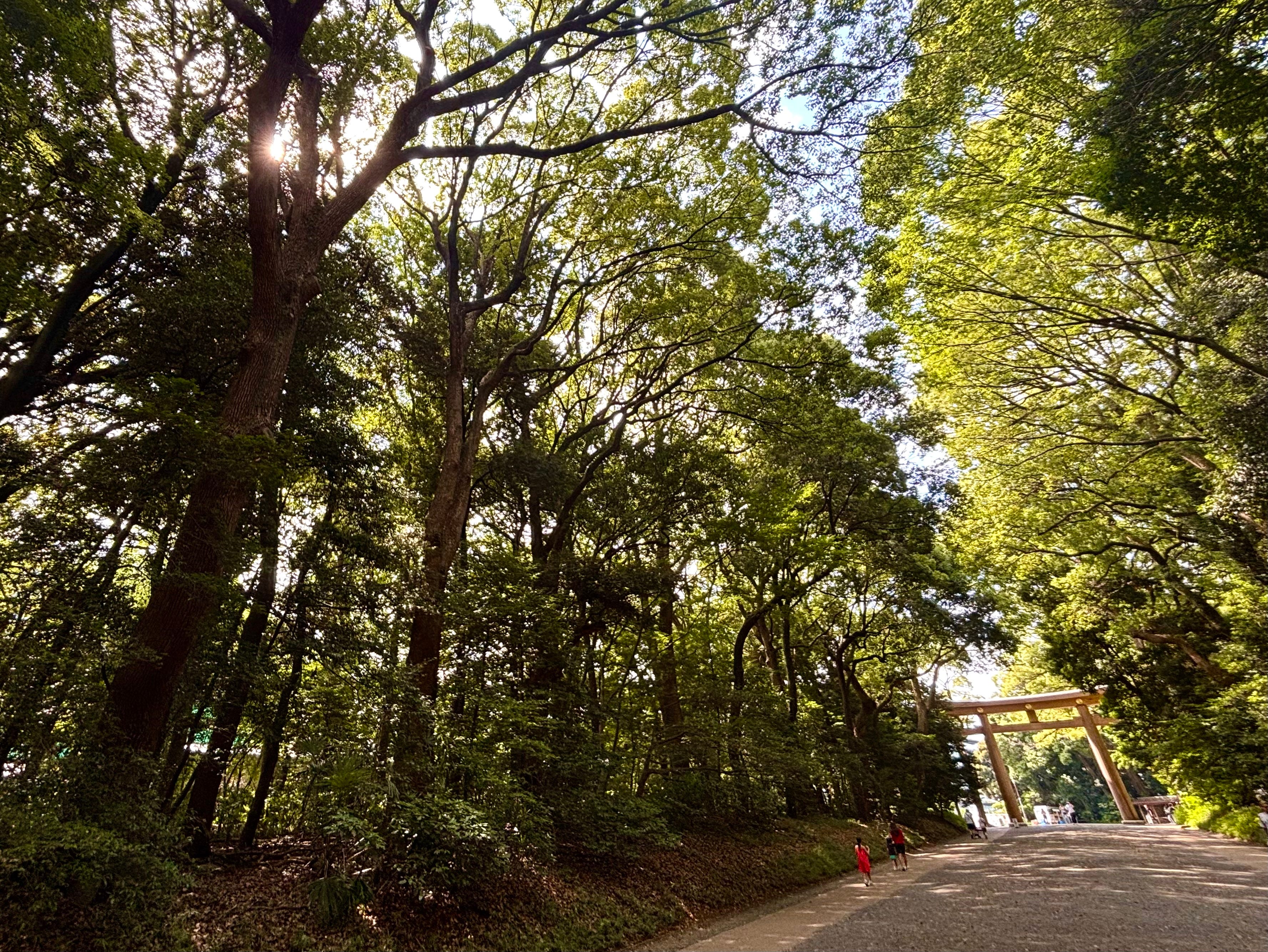
Then come the small rewards that belong almost entirely to the morning: birdsong above the path, light filtering gently through the leaves, air that still feels fresh enough to breathe deeply, and a pace slow enough to notice it all.
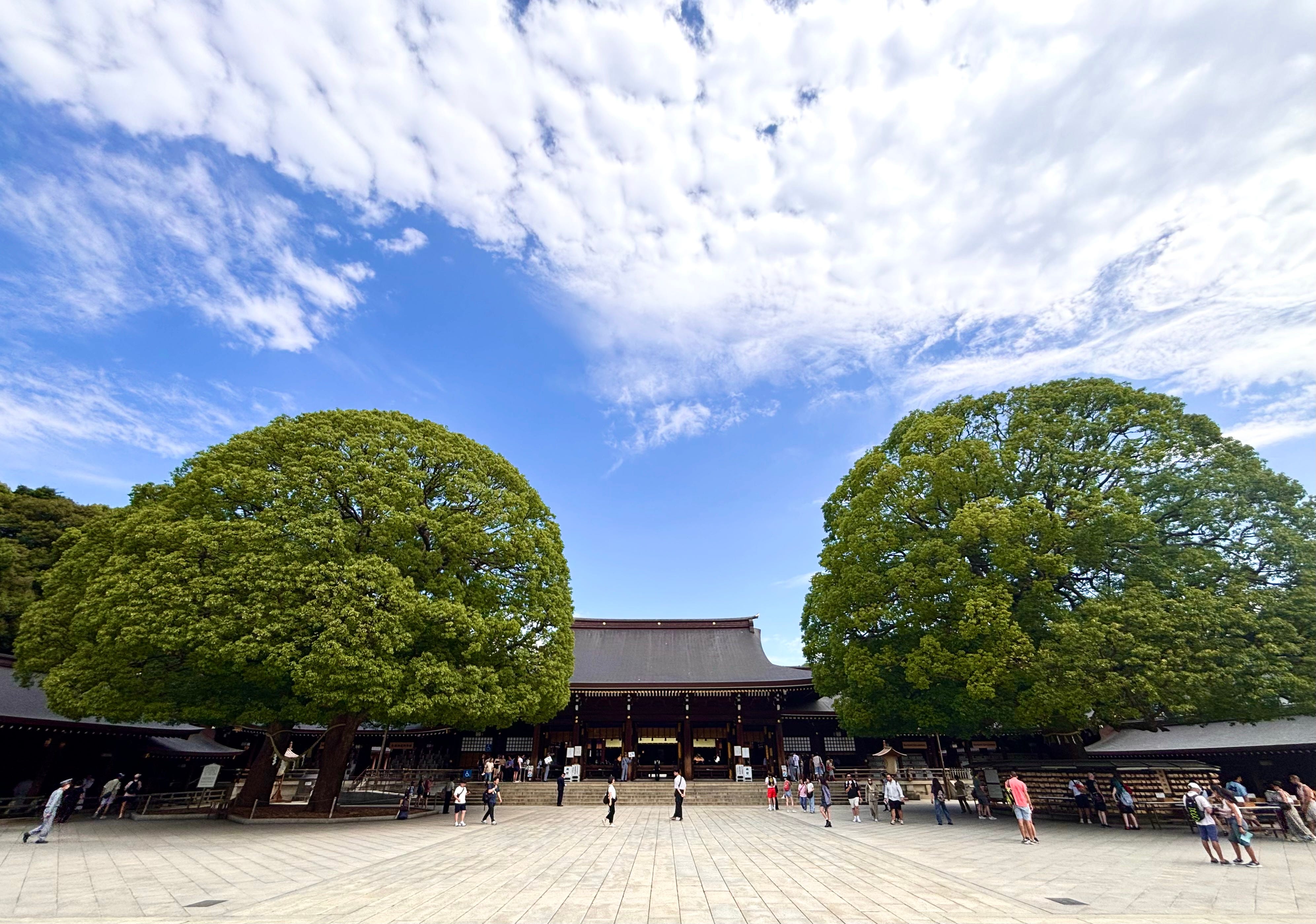
Meiji Jingu opens with sunrise and closes with sunset, so its hours change through the year. In August, the gates open at 5:00 a.m. and close at 6:00 p.m. Some facilities inside keep shorter hours.
Because the times change by month, it is worth checking the official Meiji Jingu website shortly before visiting.
By mid-morning, Meiji Jingu is still beautiful. But it is no longer offering quite the same experience.
Paid readers can also see the arrival time, entrance and pace I would personally choose for a midsummer visit to Meiji Jingu.
A guide’s work is not simply to avoid crowds or explain what stands in front of you.
It is also about choosing the hour when a place can offer its best atmosphere.
For me, morning and evening are especially important. That is not only because they are easier on the body. These hours can change the quality of what a guest sees, hears and feels.
The aim is not merely to make a visit more comfortable. It is to bring someone to a place when the light, air and rhythm are working together.
At heart, sightseeing is a form of observation. And observation always depends on timing.
The question is not only where to go, but when a place is most ready to be noticed.
The hours between morning and evening do not have to be filled with another major destination.
In midsummer, the hottest part of the day can be treated as useful space: time to sit down, cool the body, eat slowly and allow the morning to settle before beginning again.
This is not wasted time. It is what makes the rest of the day possible.
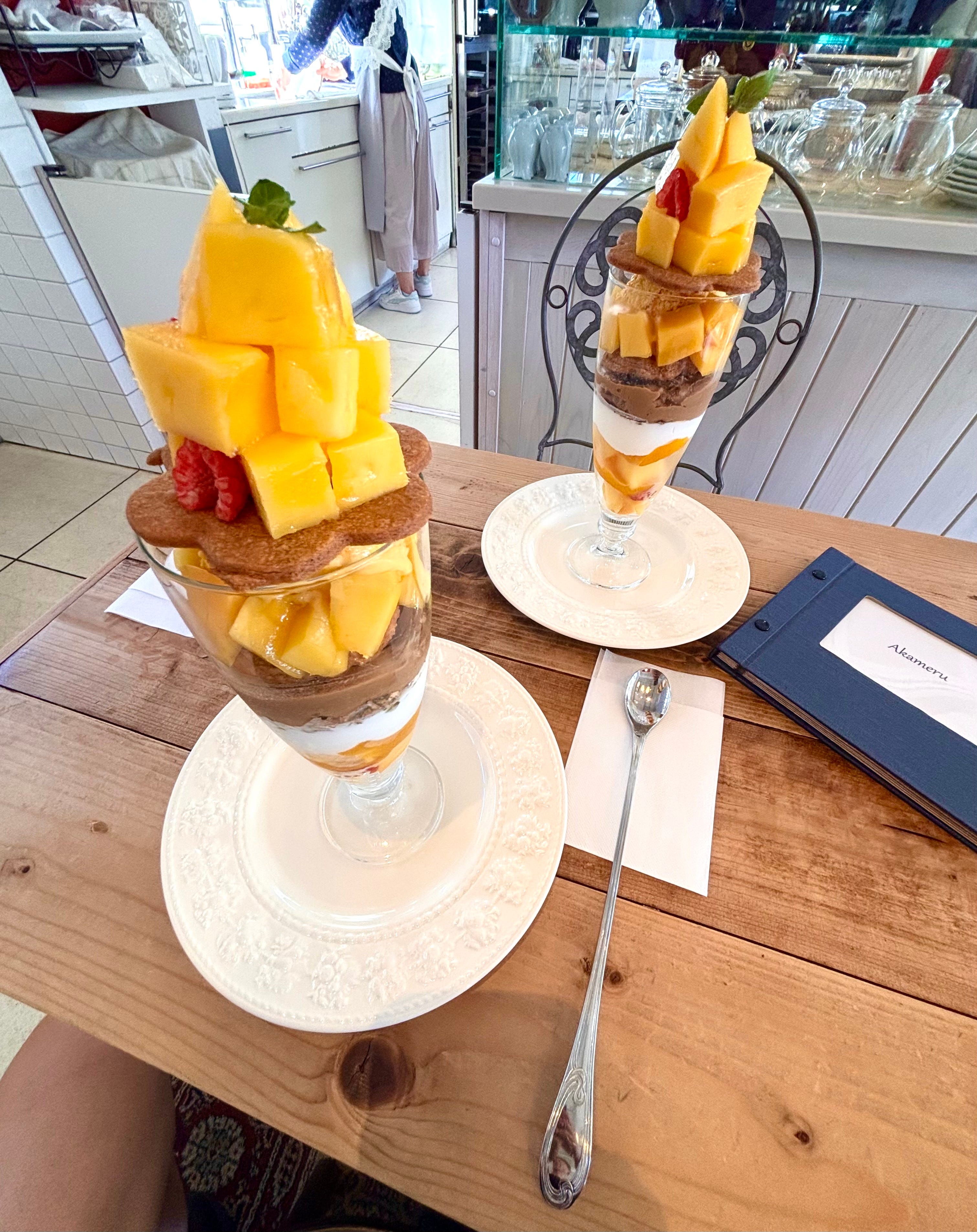
A café, a museum, a long lunch or even a remarkably tall parfait can serve the same purpose.
The exact choice matters less than the decision not to keep moving simply because the itinerary still has room.
Leaving the middle of the day open creates both physical and mental space. You are no longer measuring the trip only by how many places you can fit into it. You are protecting the hours when the city has more to offer.
When the heat begins to loosen its grip, the day can start again.
This is one reason I like Odaiba in the evening.
The area is open to the sky and water, and the change in light is easy to follow. The hard afternoon glare begins to soften. Shadows lengthen. The surface of Tokyo Bay starts to reflect the sky rather than simply return the heat.
And across the water stands the Rainbow Bridge.
Before crossing, I like to begin near the Odaiba waterfront and look at the bridge as a whole. From the beach, it is still part of the wider landscape: a long white structure joining the city across the water.
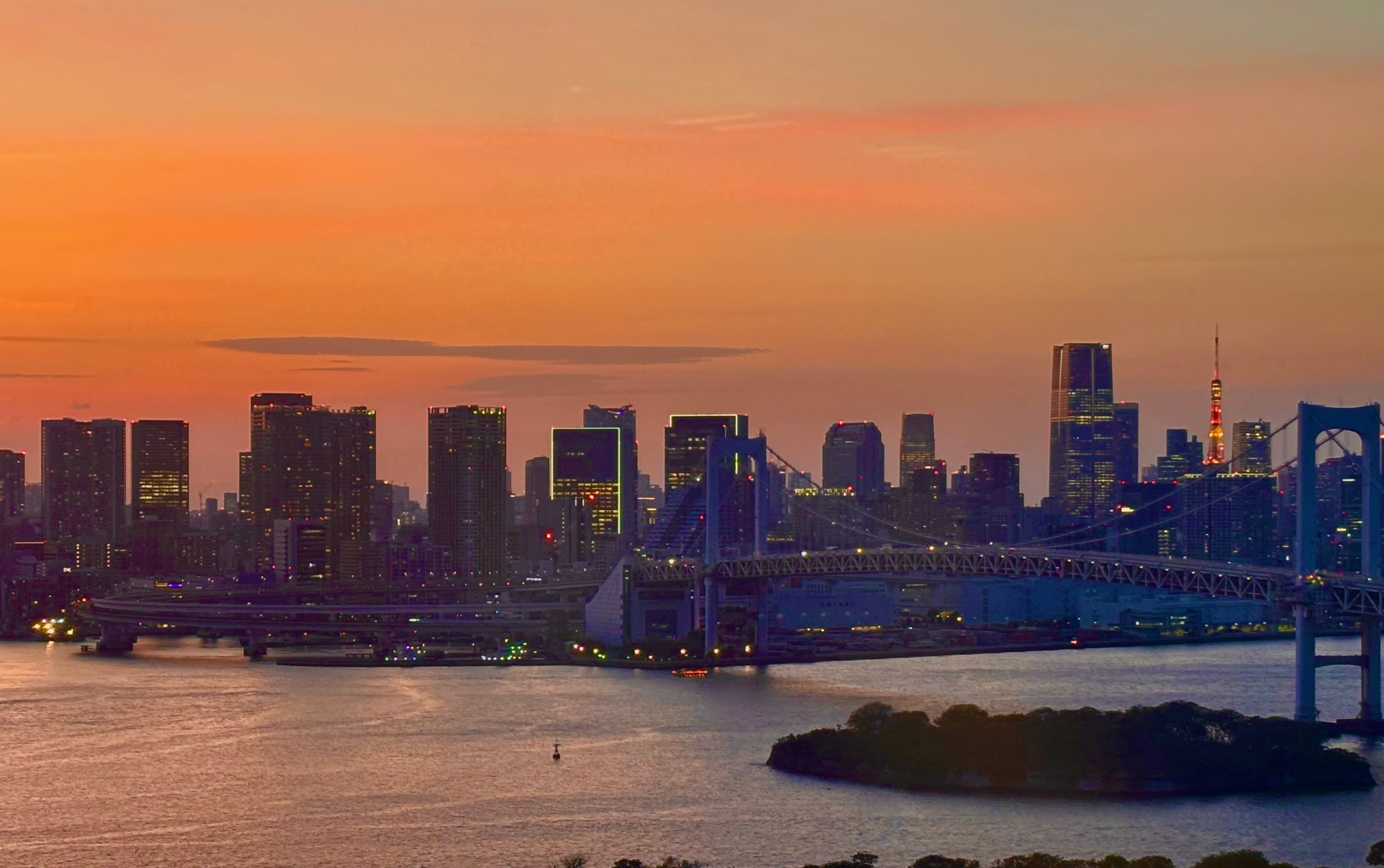
The view is especially effective before sunset, while there is still enough daylight to see the shape of the bridge clearly. The sky is beginning to change, but the structure has not yet disappeared into silhouette.
For a while, the bridge belongs equally to the day and the evening.
The exact sunset time is only one part of the calculation.
The direction of the setting sun also changes through the year. A viewpoint or walkway that works well in August may create a very different relationship between the sun and the bridge in winter.
It is therefore worth checking not only when the sun will set, but where it will set in relation to the bridge.
The aim does not always have to be placing the sun perfectly behind the structure. Sometimes the stronger photograph comes from the way evening light reaches the steel, cables and water from the side.
Most visitors experience the Rainbow Bridge without really seeing it.
They cross it by car or on the Yurikamome Line, perhaps noticing the view for a few seconds before the train enters the next curve.
Walking changes that relationship.
From the beach, the bridge is an object in the landscape. Once you step onto it, the landscape begins to move around you.
The water is no longer a distant foreground. It lies directly below. The towers and cables that looked delicate from Odaiba become large pieces of engineering around your body. Traffic moves beside you while ships, buildings and artificial islands appear at different distances across the bay.
The experience is less polished than the distant view, and that is part of its appeal.
You feel the wind. You hear the traffic. The metal structure interrupts the view. At times, the bridge itself blocks the sunset you came to see.
But this is not a failure of the scenery.
It is the scenery.
The bridge has two pedestrian routes, and they frame the evening differently. One opens toward Tokyo Bay and Odaiba. The other faces the denser city and, from some points, Tokyo Tower.
Neither route is automatically better. The useful question is what kind of evening you want to see.
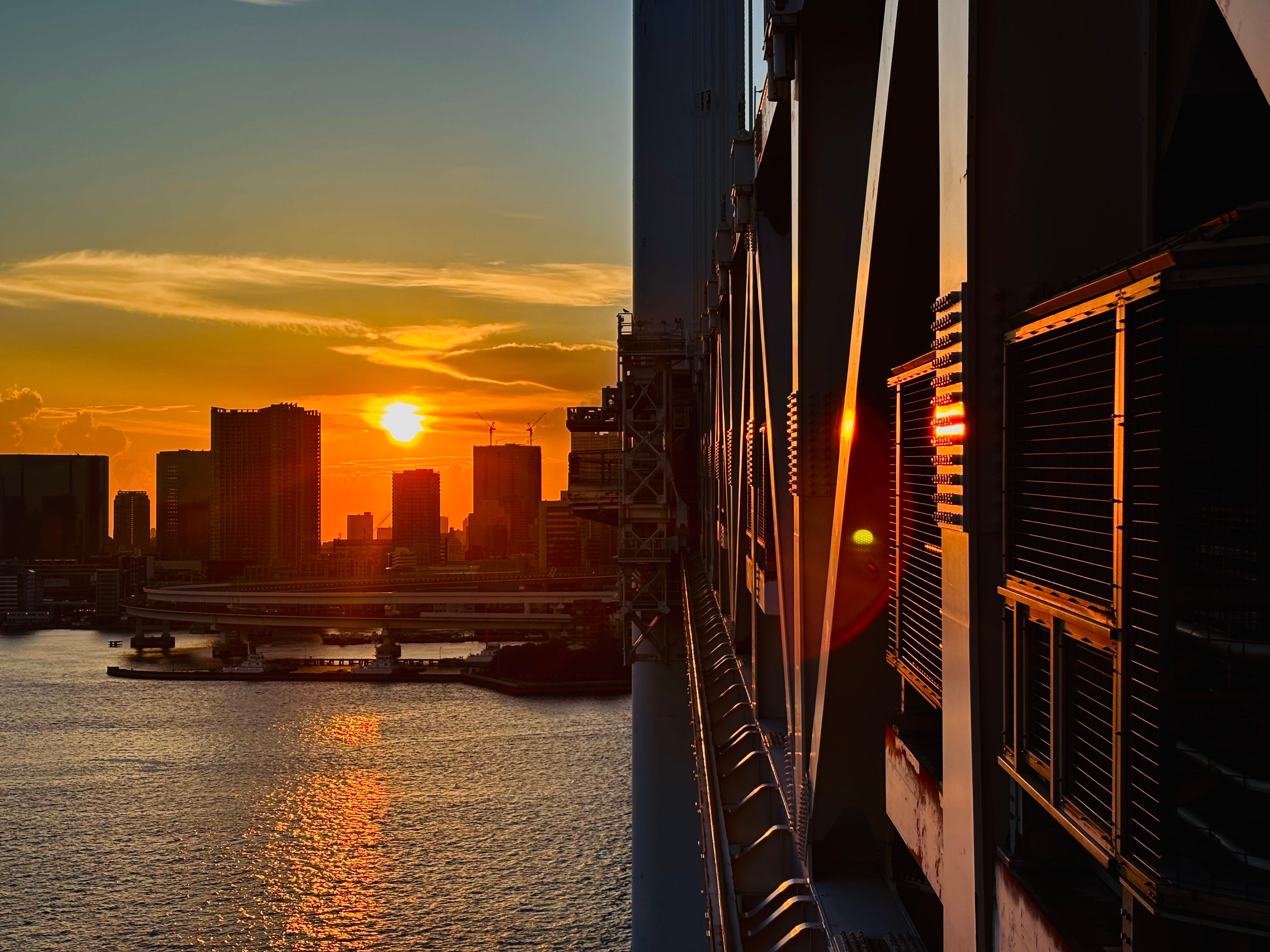
The photograph above was taken from the South Route on August 19, 2025.
The sun does not appear over an empty horizon. It is framed by buildings, cables, metal and the edge of the bridge. The light also reaches the structure itself.
That mixture feels truthful to Tokyo.
A bridge is not a viewing platform placed outside the city. It is working infrastructure. Walking across it allows you to observe Tokyo while remaining inside one of the structures that keeps Tokyo moving.
Paid readers can see the exact timing, route choice, crossing time and the way I would end the evening in Tamachi.
As daylight fades, Tokyo begins to simplify.
Individual details become harder to see, but the larger relationships become clearer: bridge and bay, tower and skyline, light and reflection.
From certain angles, the Rainbow Bridge and Tokyo Tower appear together. They are familiar symbols, but the evening allows them to feel less like separate landmarks and more like parts of one city.
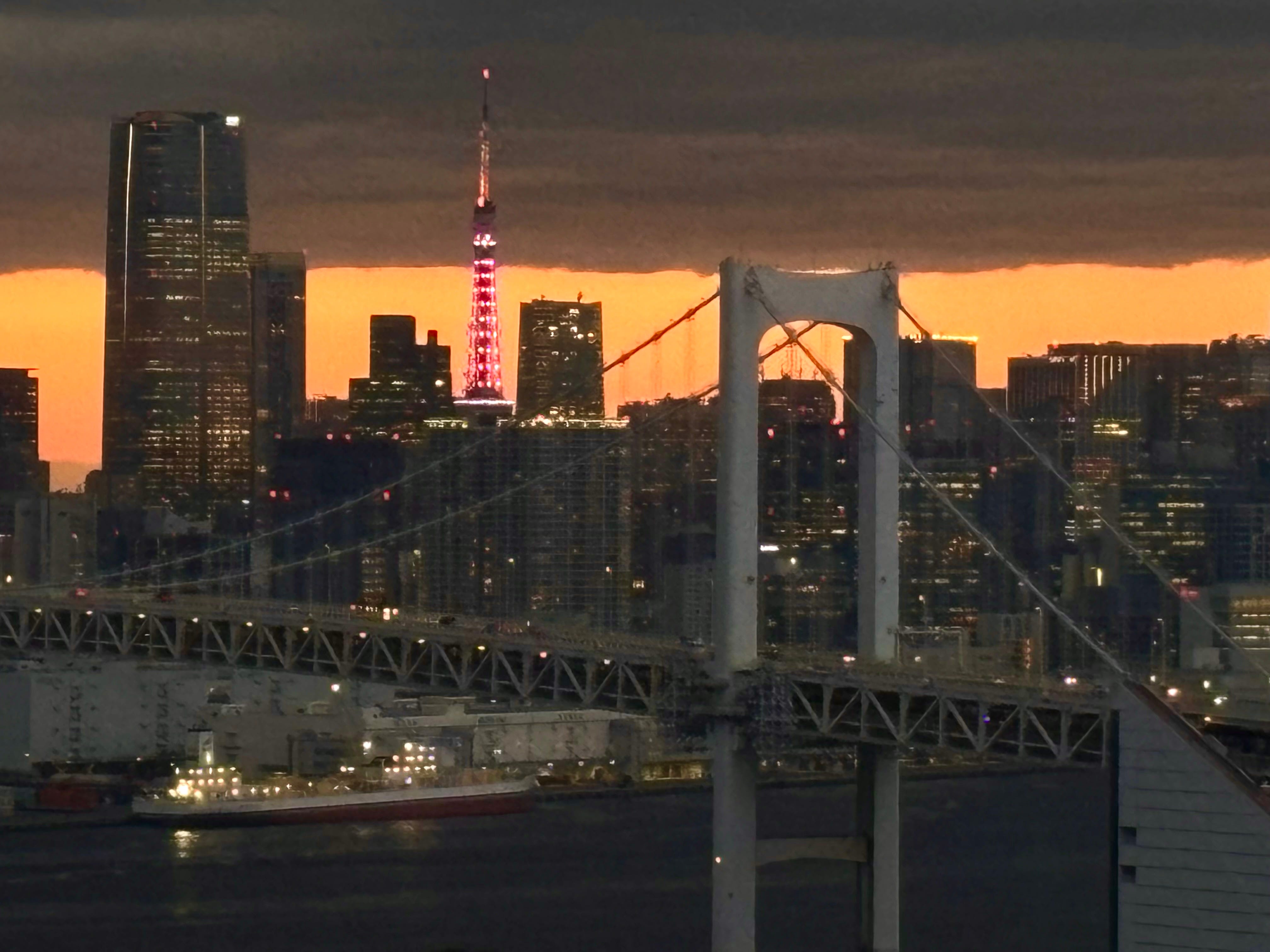
This is the final visual reward of choosing the hour carefully.
The Rainbow Promenade keeps seasonal hours:
April 1 to October 31: 9:00 a.m. to 9:00 p.m.
November 1 to March 31: 10:00 a.m. to 6:00 p.m.
Last entry is 30 minutes before closing.
The promenade is normally closed on the third Monday of each month, or the following day when that Monday is a public holiday. Entry may also be suspended because of weather or maintenance.
Check the official Tokyo Metropolitan Government information before setting out.
The seasonal hours matter especially in winter. Sunset comes earlier, but the promenade also closes much earlier than it does in summer.
Check both the sunset time and the direction of the setting sun before deciding when to arrive and which route to walk.
The bridge is exposed to wind and offers little shelter. In summer, carry water even if the evening feels cooler than the afternoon.
In the morning, Meiji Jingu offers birdsong, filtered light and a slower rhythm beneath the trees.
In the evening, Odaiba and the Rainbow Bridge offer wind, open water and the gradual appearance of the city’s lights.
Between them, the middle of the day is deliberately left open.
The settings could hardly be more different, yet the principle is the same.
A place does not offer exactly the same experience throughout the day. Sometimes the difference is practical: less heat, less strain and fewer people.
But sometimes it is more than that.
Light changes what we notice. Air changes how long we are willing to stay. A slower rhythm gives the mind enough space to receive what is in front of it.
That is why I do not think of morning and evening simply as ways to avoid the worst part of a Tokyo summer.
They are often the hours when the city gives the most in return.
Comments
Nothing yet. Say the first thing.
Sign in to join the conversation.