
When hunger catches up with you while traveling in Japan, what do you want to eat?
Ramen, sushi, soba—there are many possible answers. But for some people, tonkatsu would be high on the list.
It is filling, satisfying, and deeply familiar in everyday Japan.
On the surface, it could hardly be simpler: pork coated in breadcrumbs and deep-fried. But behind that simplicity is a surprisingly deep world. This week, I want to look at that world through one very ordinary meal.
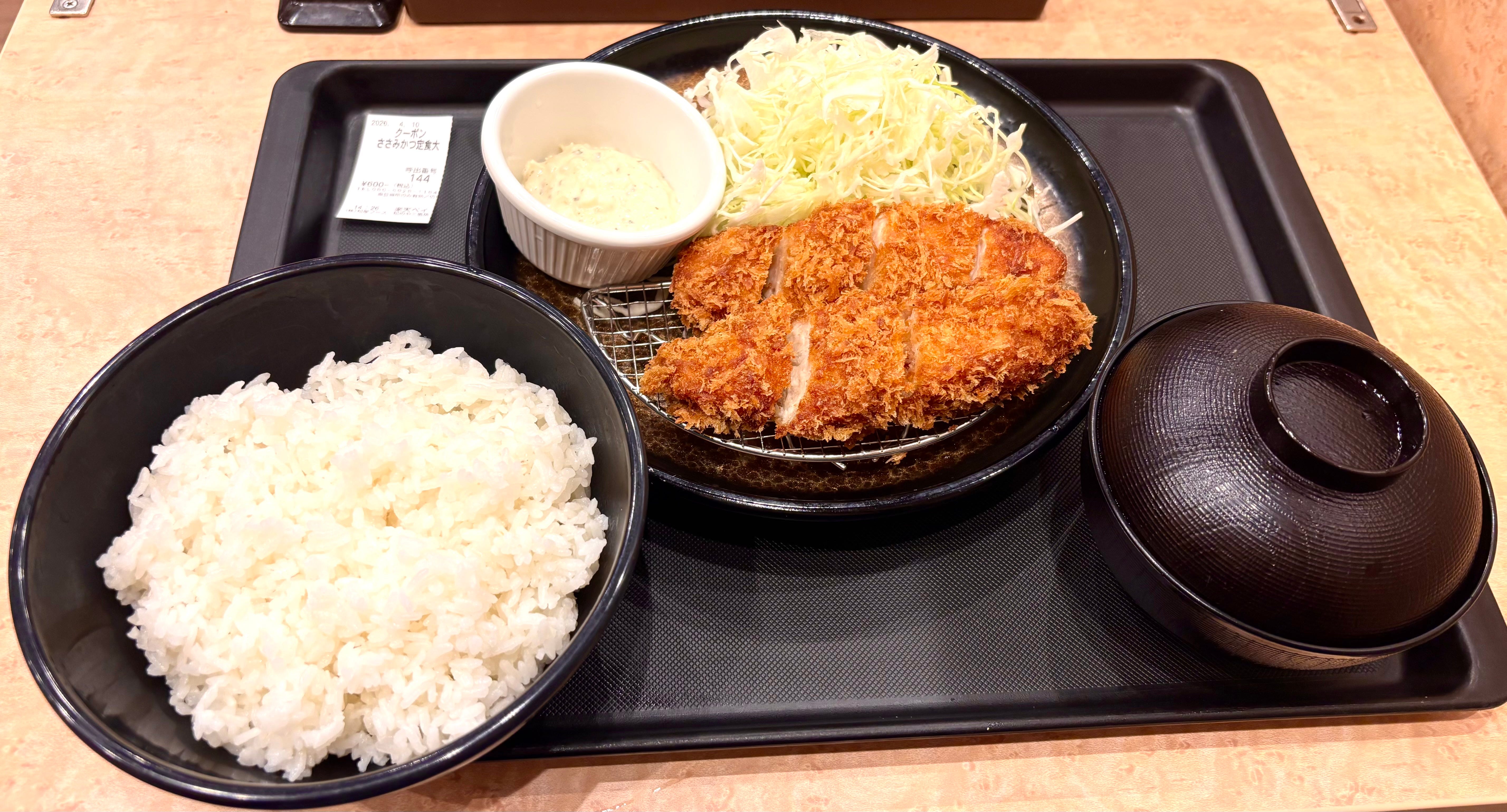
A tonkatsu meal can look almost fixed.
A breaded pork cutlet. Finely shredded cabbage. Rice. Miso soup. Pickles. Sauce and a little karashi mustard.
That familiar shape is part of its appeal. You can walk into a tonkatsu restaurant almost anywhere in Japan and have a good idea of what will arrive in front of you.
And yet, change the restaurant, and almost everything can change.
The pork may be modest or thick, lean or rich with fat. The crust may be light and delicate, or deeply crisp. One restaurant may talk proudly about the type of pork. Another may say almost nothing about the meat and serve a satisfying set meal at a remarkably low price.
The atmosphere changes too.
A large chain restaurant can be quick, comfortable, and dependable. A small local favorite may ask you to wait outside on a row of simple chairs before stepping through an old noren curtain.
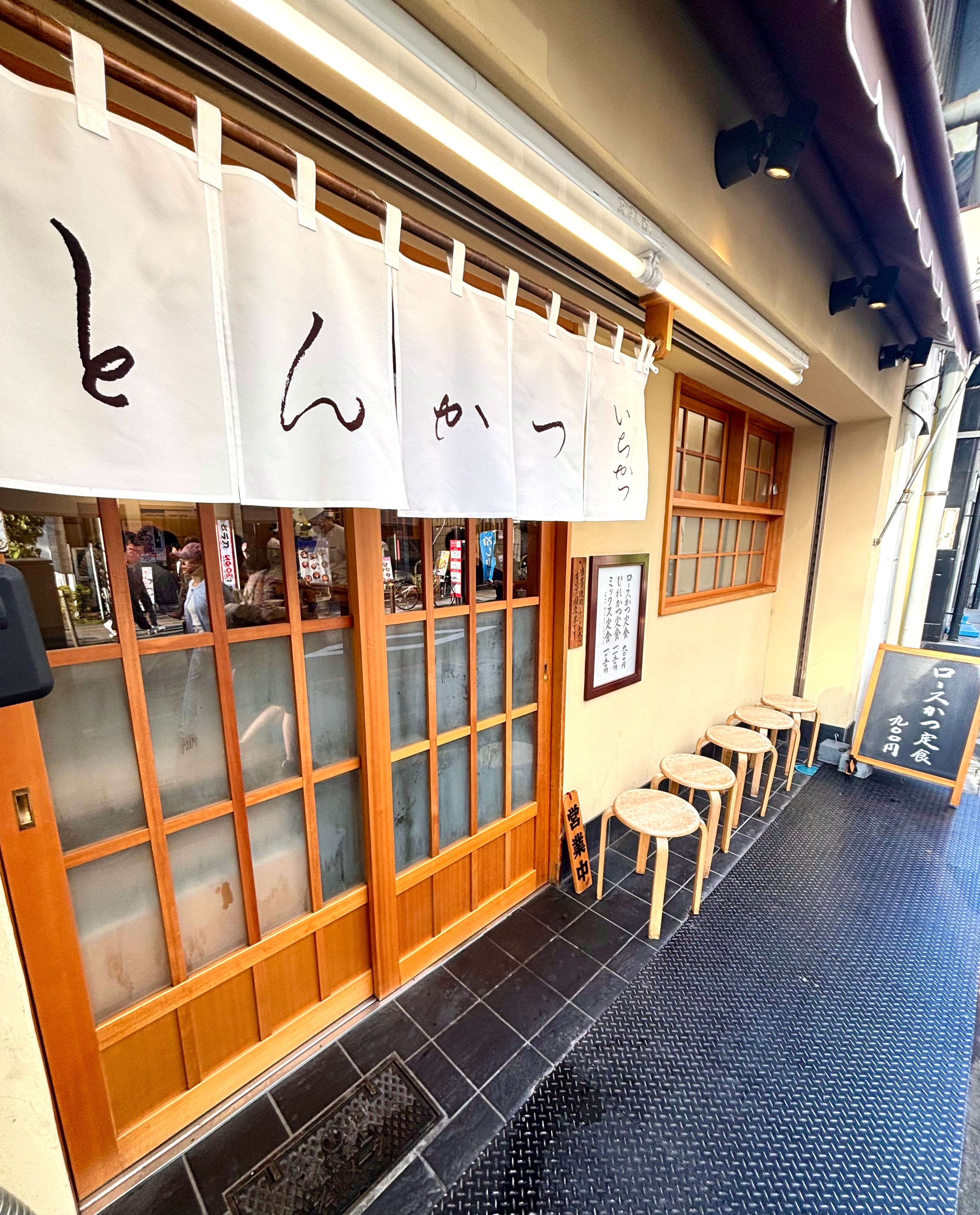
I have enjoyed a tonkatsu set meal for around 600 yen at a chain restaurant, and another for around 900 yen at one of my favorite local shops.
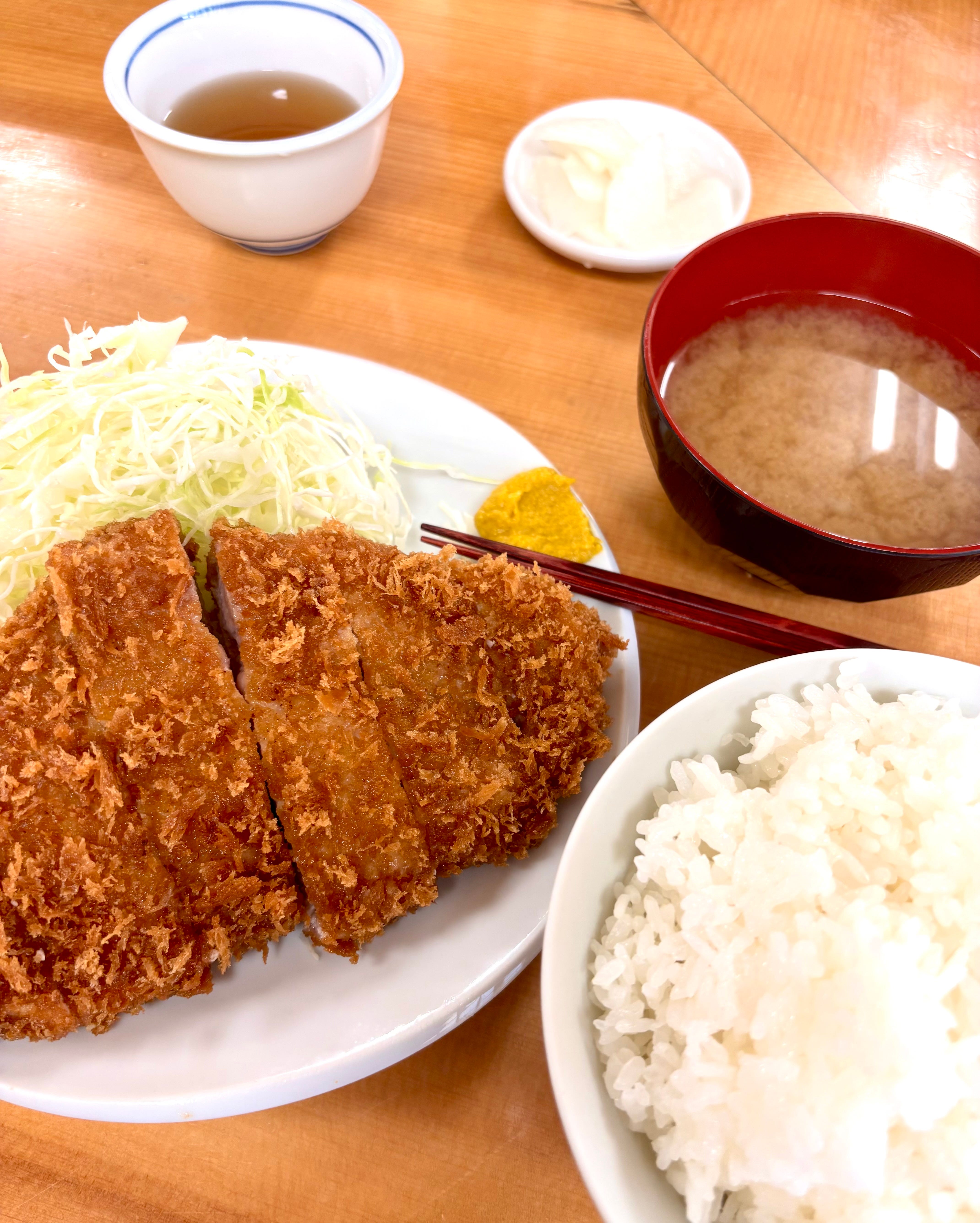
Both were inexpensive. Both were satisfying. But they belonged to different worlds.
This is why I am not sure that asking for “the best tonkatsu” is very useful.
A better question may be:
What kind of experience are you looking for when you sit down for tonkatsu?
Perhaps you want the pork itself to be the main event.
In that case, you may look for a restaurant that talks about the breed, the cut, the fat, or the way the meat is fried. Some places encourage you to begin with salt, so that you notice the flavor of the pork first.
Or perhaps that is not what you need at all.
You may simply want a generous, satisfying meal at a good price. In Japan, that can be a perfectly good reason to choose a chain restaurant. A chain is not necessarily a compromise. Speed, comfort, consistency, and a complete set meal may be exactly what you need.
On another day, the restaurant itself may matter more.
You may want to step through an old noren curtain, sit in a small room, hear the sound of frying from the kitchen, and eat in a place loved by local people for years. The pork may not come with a long story. The story may be the restaurant itself.
And for a traveler, there is another possibility.
You may want to experience tonkatsu not simply as fried pork, but as a Japanese meal: rice, miso soup, pickles, sauce, mustard, and everything arriving together on one tray.
None of these experiences is more authentic than the others.
The best tonkatsu for you may depend less on the ranking of the restaurant than on what you hope to find there.
The pork changes. The price changes. The atmosphere changes.
Even the experience you are looking for can change.
But one thing seems to follow almost every version of tonkatsu.
It is so ordinary that most restaurants barely need to explain it.
And yet, take it away, and the whole meal begins to feel different.
It is not the quality of the pork.
It is not the price.
It is not the atmosphere of the restaurant.
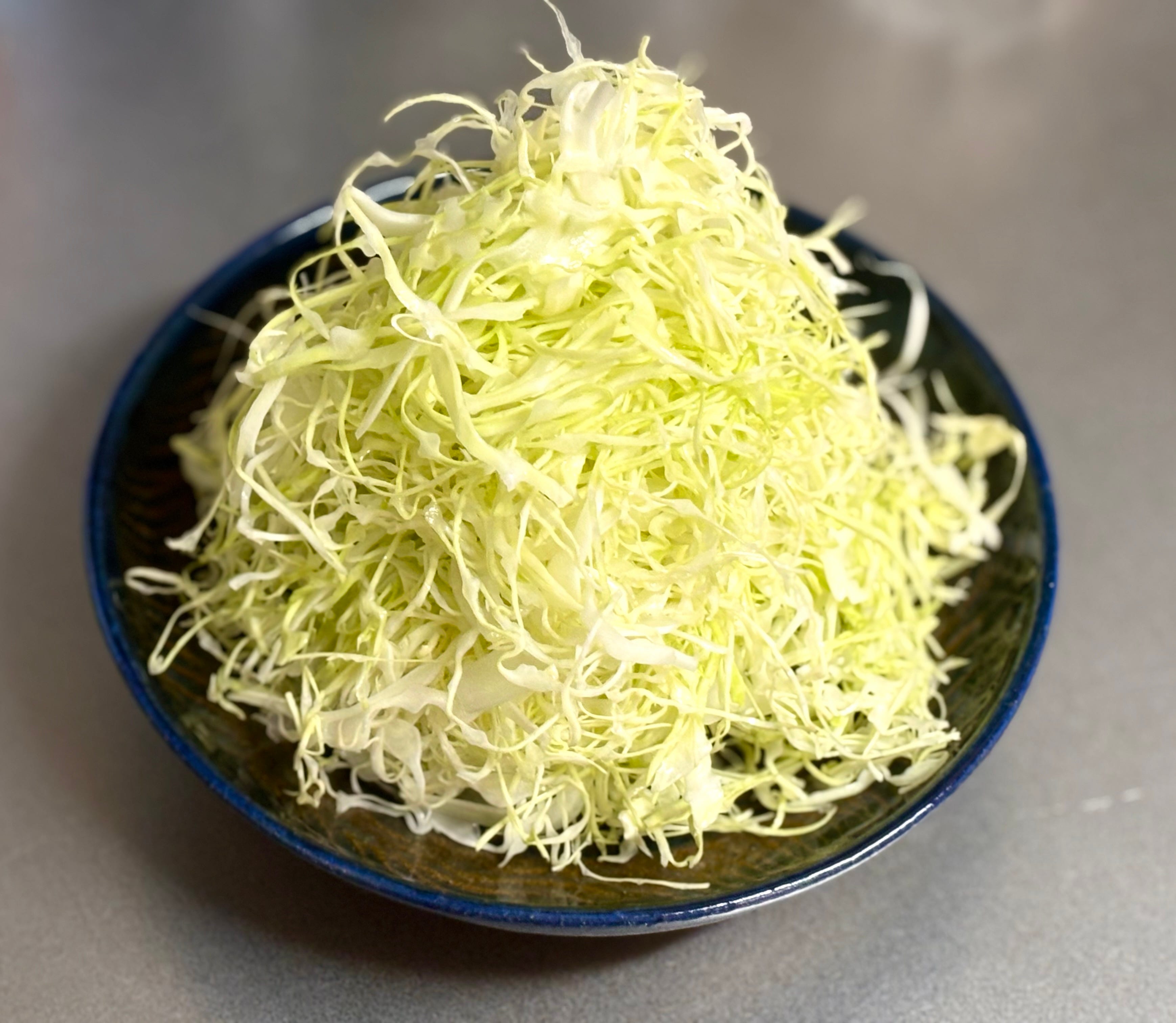
It is the cabbage.
And once you begin to notice the cabbage, tonkatsu starts to look like a different meal.
Comments
Nothing yet. Say the first thing.
Sign in to join the conversation.