
We know that our environment shapes our behavior. If you want to be more physically active, then cultivating active friends is a game changer. But have you ever stopped to consider that your garden environment - specifically it’s layout - is shaping your food habits?
Last week I wrote about the kitchen radius - that invisible distance within which food gets eaten instead of just admired. This was a follow up to my grazing garden post that shifts your landscape towards daily food instead of waiting for the “big harvest”. This week I want to take these ideas further.
Most gardens are planted for harvesting. But daily eating is different.
We’ve been conditioned to plant in long rows grouped by crop type. That’s how the big producers do it. That maximizes efficiency. That reduces handling time. That keeps you focused on one crop, one harvest.
But none of that reflects nature . . . . or human behavior.
When you plant in long rows grouped by crop type, you create a system optimized for machines and waiting for that big harvest. It’s not supporting your daily food habits.
If you have to think too hard to eat from your garden, the design failed.
Let’s take a look at what happens when you shift your garden layout to support daily eating.
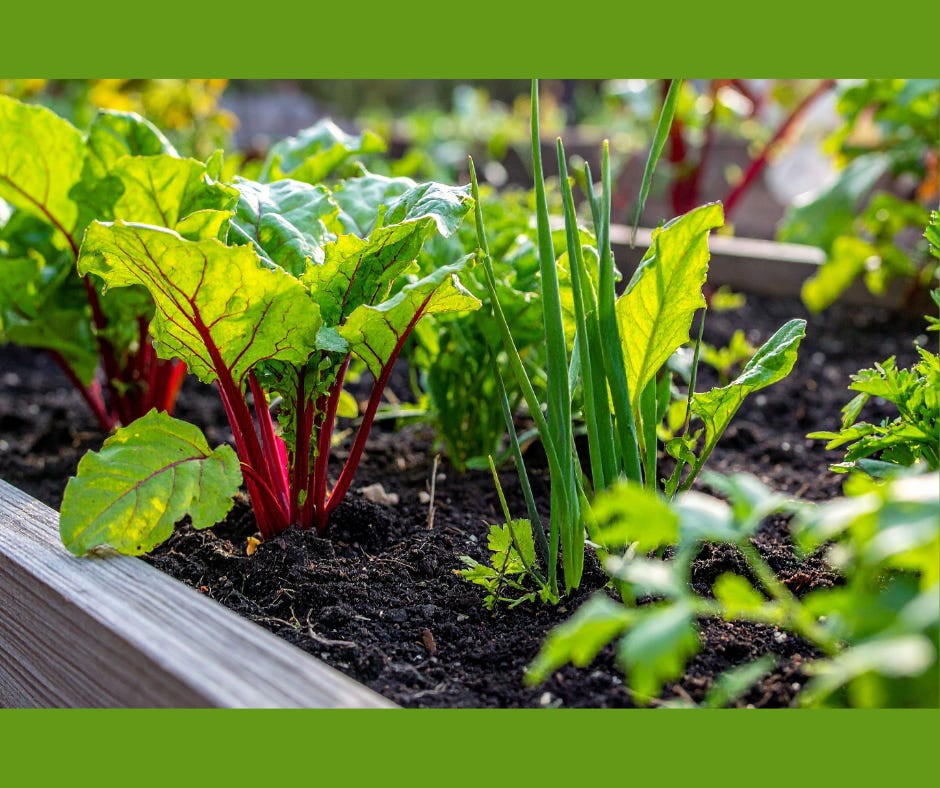
If you take a look in nature, there are very few examples of plants that grow in single file in a long row. Exceptions might include some plants that reproduce via long vegetative runners (rhizomes, stolons), and yet even these tend to produce clusters over time. Rows are not a natural design.
Planting in rows dates back to the Egyptians, with paintings depicting gardens arranged in systematic rows.
Rows exist because they represents a solution to an efficiency problem: how to get the food you want off the land which would otherwise be growing something else.
Rows work particularly well for industrial production where planting, weeding, watering and harvests are done by machines. The bigger the scale, the more efficient rows become.
When you are growing food at home, you are not focusing on what is efficient for a mass-production operation.
Ideally you are focusing on creating healthy soil and high quality food, while reducing weeds and pests without chemicals. Rows fail miserably at achieving these objectives.
Alternatives that outperform rows include wide rows (square foot gardening), raised beds, and vertical designs that grow more food in less space, keep you from stepping in or compacting growing beds, and crowd out weeds more easily while supporting a wide range of natural pest control allies.
Here’s the bottom line:
Rows organize plants beautifully.
They don’t always organize human behavior very well.
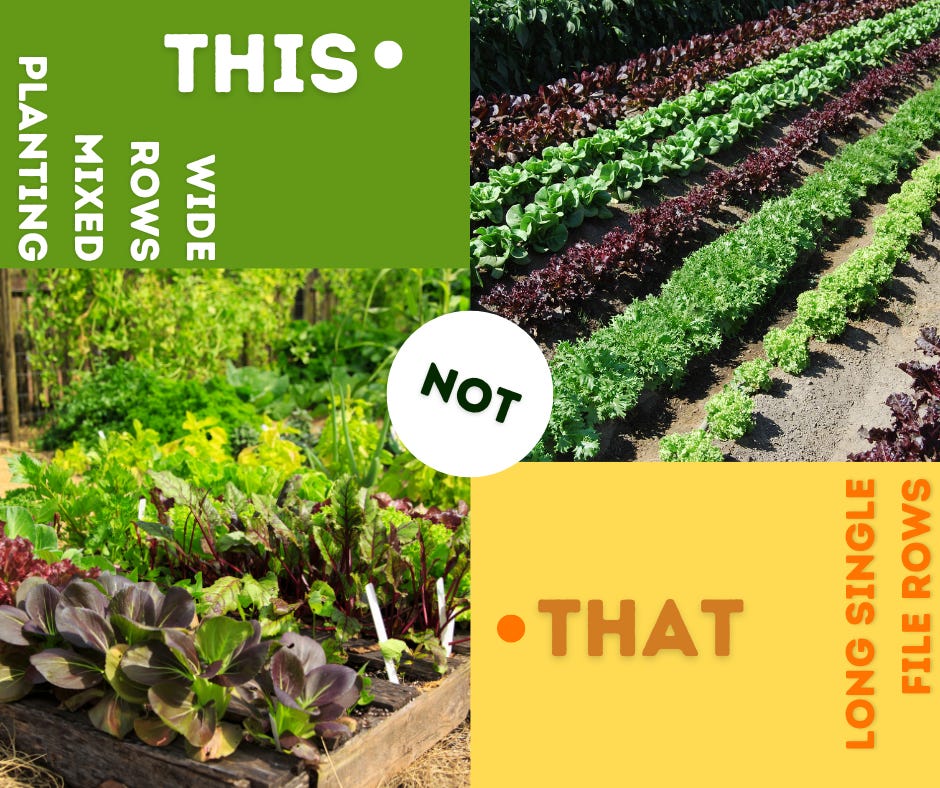
Rows can make basic garden tasks more challenging at home. It can be daunting to weed an entire row, but quite simple to weed one patch or one section of a raised bed.
Rows of the same plant make it easier for pests and disease to spread, and often harder for natural predators and parasitoids to gain a stronghold.
Row planting tends to support large-scale tilling, which is exceptionally hard on the soil, predators, and allies that would otherwise be supporting our gardens.
Even if your gardening goal is big harvests for winter supplies, a garden design that works with human behavior changes everything. You can balance big harvests with daily eating . . . . because if the garden isn’t rewarding you for visiting, will you keep doing this long term?
Garden layouts shape your food habits.
Your food system should fit your real life. That means planting your garden more in line with the way you eat on a daily or weekly basis.
If your salads have more than lettuce, then your salad garden should have all the parts you need growing close at hand. Why not have a wide row with patches of mixed greens, carrots, beets, cherry tomatoes and onions or chives all close at hand? Basil growing with tomatoes is a no-brainer.
Plant in the combinations you love to eat and watch your good food habits thrive. Because we really do eat out of convenience every chance we get. And the easier we make a good habit, the more likely it is we will repeat it.
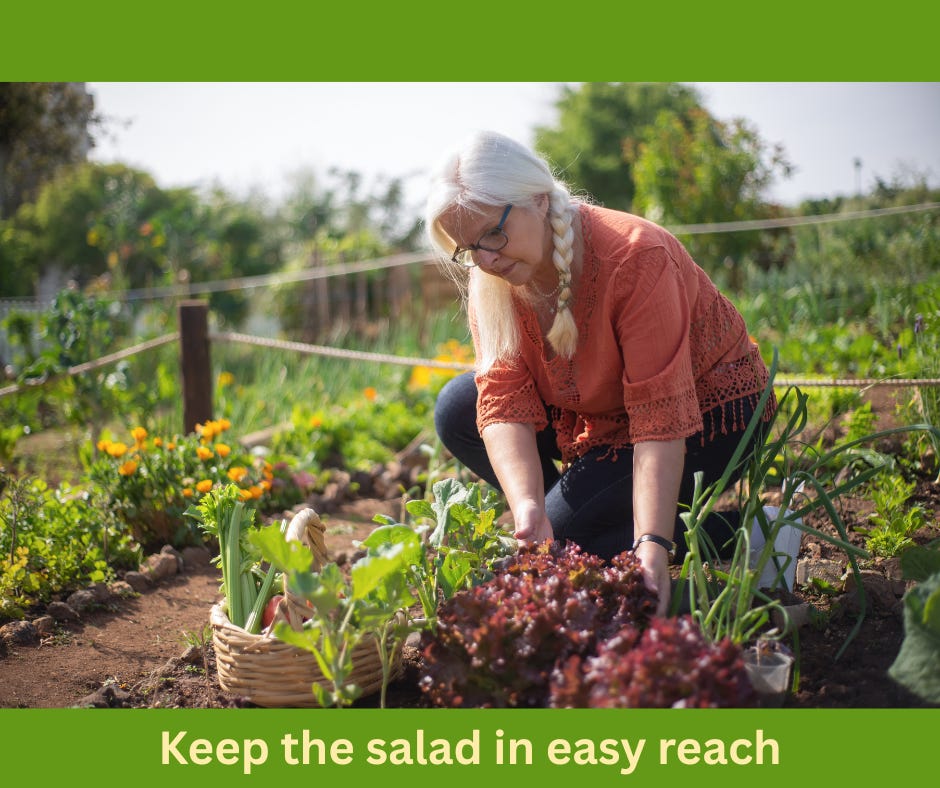
Combine this with the grazing garden (edible pathways) and you can have food for dinner gathered by the time you’ve gone out to complete a garden chore like weeding or watering.
Edible flowers and herbs integrated into patches of food not only bring welcomed sight and scent benefits that lift your mood, they also support your personal army of pest control agents. (You can read more about creating garden biodiversity and planting for pest control success with these links).
You can change your eating habits, by changing your garden design. . . . and as an added bonus, that better design creates a healthier garden which also means a healthier you!
You garden should literally interrupt you with food.
Snackables on the way in.
Greens along the row ends.
Meal combos in ready-made proximity to each other.
Berries nearest the biggest chores.
Herbs closest to the veggies they belong in the pot with.
Let your garden make healthy eating the easiest choice available.
Then watch what happens next!
Happy growing
S

As we work with plants, soil, and seasons, we begin to notice something deeper: environments shape our behavior. Tiny design choices quietly influence how we move, eat, pause, and care for ourselves.
This week, I invite you to walk slowly through your garden and notice what naturally draws your attention.
Where do you pause?
What do you reach for without thinking?
Which foods feel inviting?
Which areas feel forgotten or difficult to access?
Instead of asking “What should I grow?” ask:
“What makes healthy choices feel easy here?”
What is growing:
beside the garden gate?
nearest to the kitchen door?
along the path you walk each day?
near where you turn the water on?
beside where your tools are kep?
Are these areas serving you with easy snacks and meals?
What could they be growing?
The garden is always teaching us something about ourselves. If you want to eat healthier, then make healthy choices the easiest part of your gardening day.
What will you change?

Your garden is already shaping your habits. The question is: what habits is it encouraging?
If this way of thinking about gardens, food, and daily life resonates with you, subscribe and join me each week as we explore how growing changes not just our landscapes . . . but ourselves.
Comments
Nothing yet. Say the first thing.
Sign in to join the conversation.