
When I talk about gardening and growing food, one common response I get is: “Oh I’d love to garden, but I just don’t have time”. Most people imagine gardening like it’s a full time job. Huge spring start up. Row upon row, bed upon bed of plants to water and weed. Pests and diseases to manage. And then food ready when it’s ready demanding your time. . . . oh the inconvenience of it all.
Most of this comes from the world of maximization and efficiency thinking that we’ve been talking about these last few weeks. It’s the idea that gardens should be as big as possible, utilize all the space, and produce as much as possible. But most gardens don’t fail because people are lazy. They fail because the system requires too much effort all at once.
Growing your own food doesn’t have to consume your every waking hour and weekend.
Food systems survive when they fit into your ordinary daily life.
This week, let’s unravel this idea: “I’d garden if I had more time” and see how we can build a system, a garden, that can be low maintenance and still produce food.
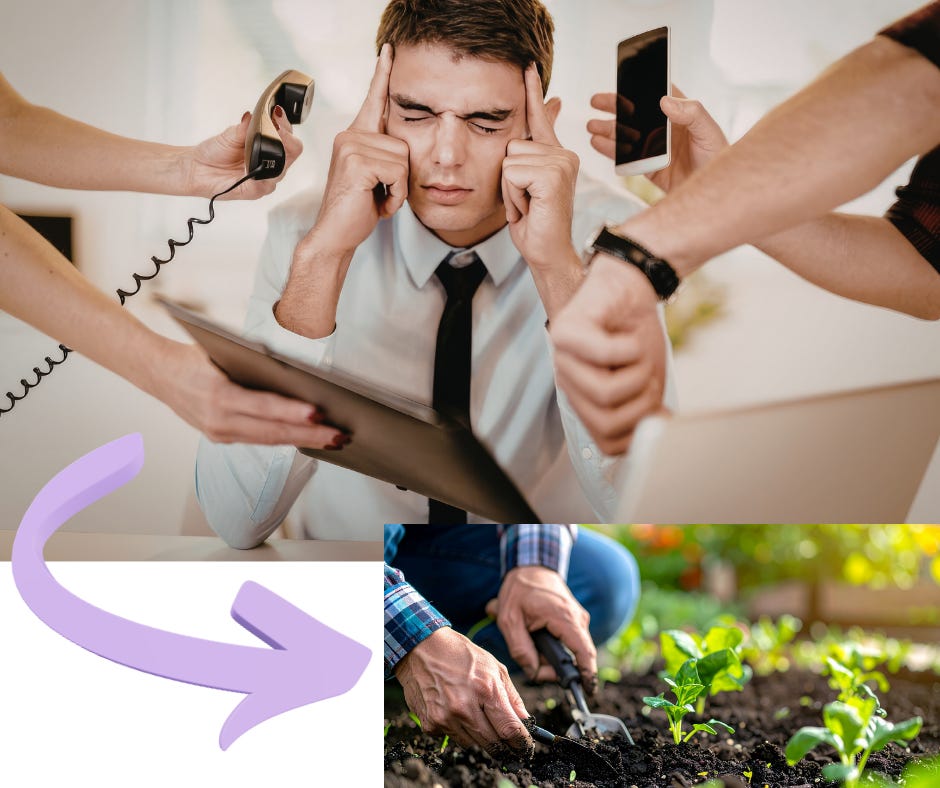
Large gardens require large blocks of time and energy. There is no way around this one. Your time belongs to the garden to keep the system running.
Miss one weekend and the exponential “catch-up” cycle begins. Weeds explode. Plants start to bolt. You miss some harvests. The drip irrigation has become spotty and you don’t know why (something is plugged somewhere . . . . ).
The larger the system becomes the easier it is to disengage from it emotionally. I’m behind becomes why bother.
Productive food systems don’t thrive on “catch-up” energy.
While big gardens can fail from neglect, small gardens succeed from consistency.
The real goal is to create the food system that can thrive inside your ordinary life, and without extraordinary effort.
When you right-size your garden to fit your life, there is far less of the “working in the garden” mindset, and far more of the “moving through your garden”. This fits with the grazing garden concept and planting in patches instead of rows.
A garden that invites you in but doesn’t demand that you stay creates a refuge for you.
Your time in the garden becomes much more the energy of a grazing animal, than that of an industrial operation. Proximity reduces friction. The kitchen radius helps keep your most used foods close at hand. Good garden design keeps snackables ready along the way. You can let go of the idea of intensity and focus brief, repeatable interactions.
Food systems thrive under daily observation. You notice the small changes and can act before something explodes into a big problem. In this garden frequency matters more than duration. Just 10 minutes a day can make the difference to the amount of food you harvest, and to your own mental wellbeing.
10-minutes a day of consistent attention beats a whole weekend of catch-up.
harvest your salad greens
check the irrigation timer
feed the chickens
pull a handful of weeds
seed the area you harvested yesterday with a new crop
pick a few herbs
toss some mulch around the cucumbers
notice the cabbage moths are flying and pull a cover over the broccoli
water the plants in containers
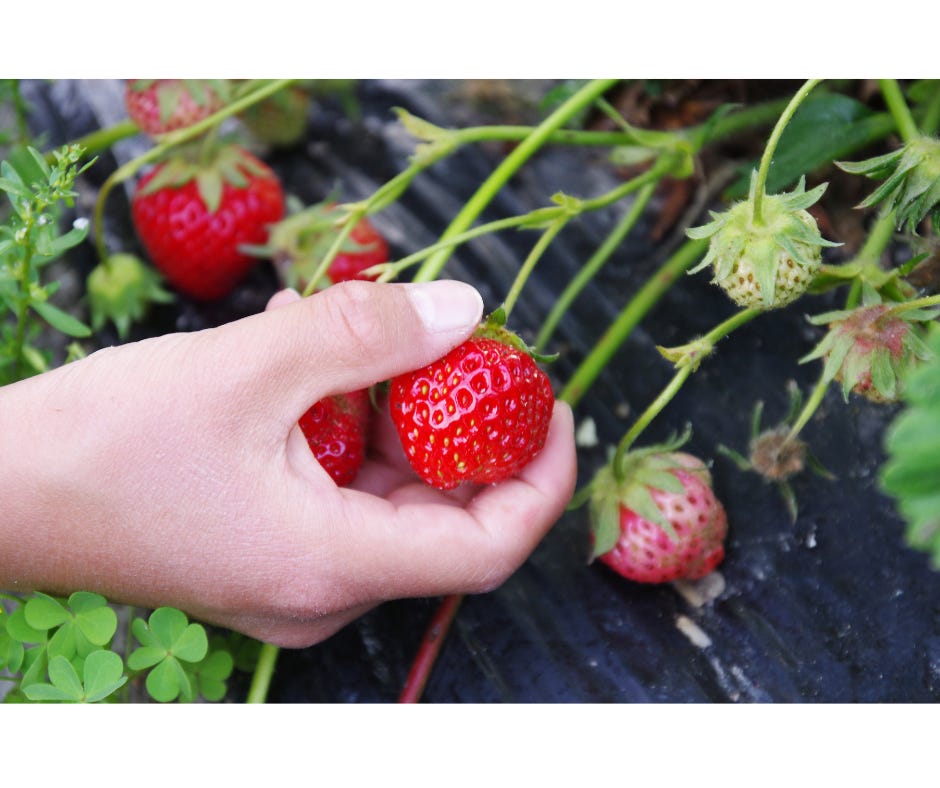
Not all of these every day. Just what fits into today, and the rest move over for tomorrow.
Simple. Consistent. Productive. And without the stress and catch-up energy.
The best options are to break it into smaller garden subsets. Even though I have a large garden (for one person), I like to create mini-gardens within it.
I still plant by the square foot, no matter the garden size. You get more food with less weeding every time
I create patches based on food groups within the garden.
And when I see that there is too much garden for my time, then I look to convert the space over to perennial crops like berries or vines that don’t need my supervision to do their thing.
And there is always the option for more flowers. Edible flowers are an underrated food source!
Summer time is packed with things to do and enjoy. A good food system works even when life gets busy. That’s why consistency is going to succeed where all-weekend marathons can fail.
A 10-minute daily garden ritual can help you create food even when there is:
a pending work deadline
a heat wave
an illness
family obligations
sports practice
and when you just plainly lack motivation
The best garden isn’t the most impressive one. It’s the one you are still looking after in September.
Sustainability applies to people too, not just gardens.
If you have tried gardening and failed before, given up, then perhaps try again smaller and with a design that respects the time you have available each day.
Modern life has carried us far from the world in which humans evolved. But our bodies are still driven by those ancient patterns and needs.
Food security is not built from maximum production. It’s built from repeatable production. Creating a stable supply of even one food does more for your mental health than you realize, especially in uncertain times.
You don’t actually need more time to garden, you need less resistance.
A resilient garden doesn’t demand the most from you. It invites you to connect with the real world, daily.
Happy growing!
S

As we work with plants, soil, and seasons, we begin to notice something deeper: environments shape our behavior. Tiny design choices quietly influence how we move, eat, pause, and care for ourselves.
This week, I invite you to notice where friction exists between you and the food you want to grow.
Spend just 10 quiet minutes in your garden each day.
Not working hard.
Not catching up.
Just observing, harvesting, tending one small thing.
How does a daily rhythm affect you?
And the garden?
What is one small thing you can change to make daily gardening easier?
Move some pots closer to the house
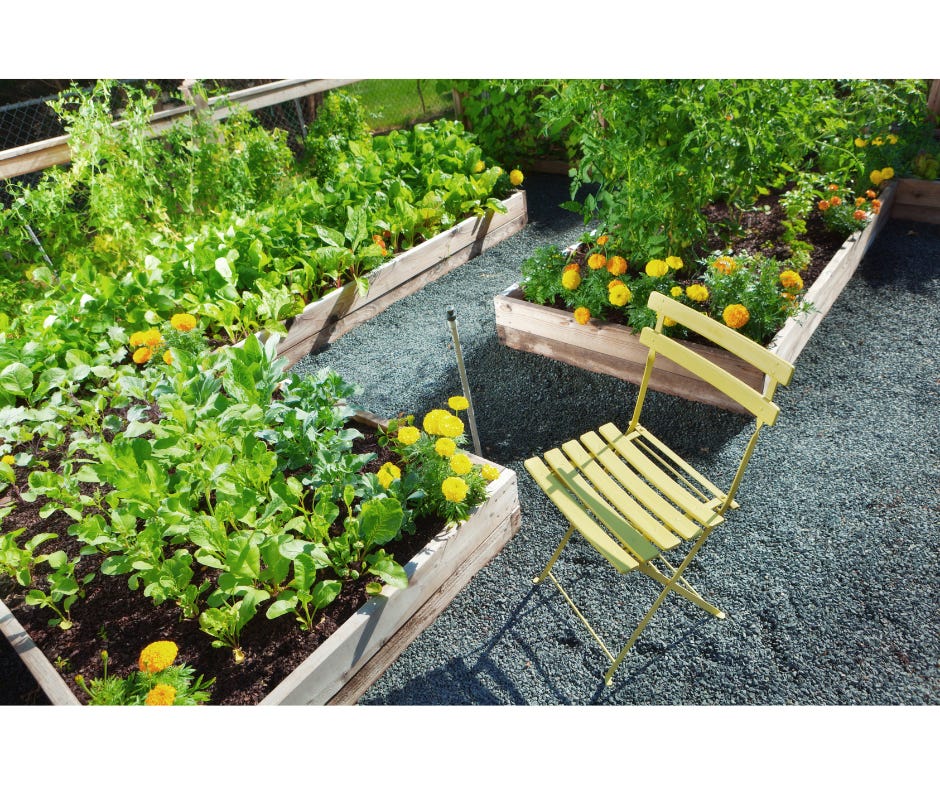
Place a chair in the garden so resting becomes part of the experience
Change one overwhelming bed into something smaller and more manageable
Let the slower rhythm of daily gardening influence what comes next.
Carry that feeling with you from the garden into the rest of your week.

Your food system is shaping your daily rhythms.
The question is: does it invite connection . . . or overwhelm?
The most resilient food systems are rarely built through intensity.
They are built through small daily interactions with the natural world.
If you’re interested in creating a more connected, grounded, and resilient way of living, subscribe and join me each week as we explore how gardens and food systems quietly reshape the way we live.
Comments
Nothing yet. Say the first thing.
Sign in to join the conversation.