

In modern high-performance environments, load management is not a passive means of “injury avoidance.” We must define load as a strategic parameter directly linked to performance maximization and team success.
According to PubMed data, studies on “training load” and “injury” surged from 9 in 2000 to 145 in 2017. Faced with this empirical evidence, instructors can no longer rely on intuition or cognitive biases. We are at a stage where we must fully transition from subjective rules of thumb to scientific protocols.
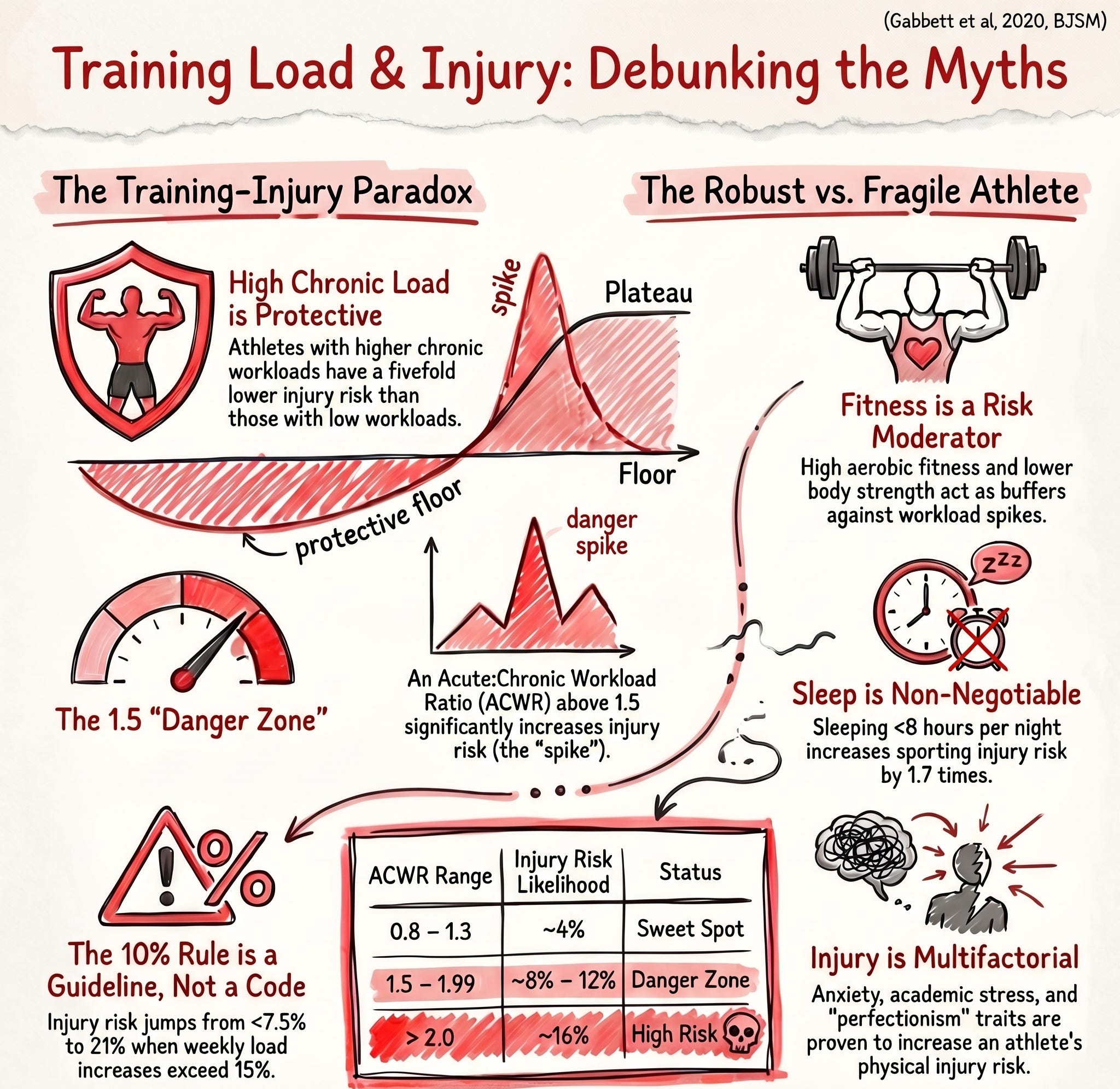
Injuries do not result from “load” alone. It is essential to manage multifactorial variables based on the biopsychosocial model.
An athlete’s load tolerance is dramatically modified by the following:
Synergistic Risk of Sleep and Intensity:
Athletes sleeping less than 8 hours have a 1.7x higher injury risk. When combined with increased intensity and volume, this risk jumps to 2.3x (HR=2.3).
Psychological Biomarkers:
Academic/emotional stress, anxiety, and personality traits like “self-blame” or “perfectionism” delay physiological recovery and directly increase injury risk.
Strategic check-ins regarding well-being are the front line of risk avoidance. If poor sleep or high stress is confirmed, the training intensity must be strategically reduced, even if the external load plan appears valid.
The “10% rule” (limiting weekly load increases to 10%) should be redefined as a guideline, not an absolute code.
Increments must be adjusted dynamically based on the athlete’s Chronic Load:
Below the “Safety Floor”:
For athletes with very low chronic load (early rehab or post-offseason), strictly adhering to the 10% rule is a strategic error that unnecessarily delays return to performance. Increases exceeding 10% may be permissible.
Near the “Safety Ceiling”:
For elite athletes already maintaining high chronic loads, even an increase of less than 10% can be a fatal spike that breaks through the safety ceiling.
In team sports, risks rise to 21% with a 15% weekly increase and reach 38% with a 50% increase.
Comments
Nothing yet. Say the first thing.
Sign in to join the conversation.