

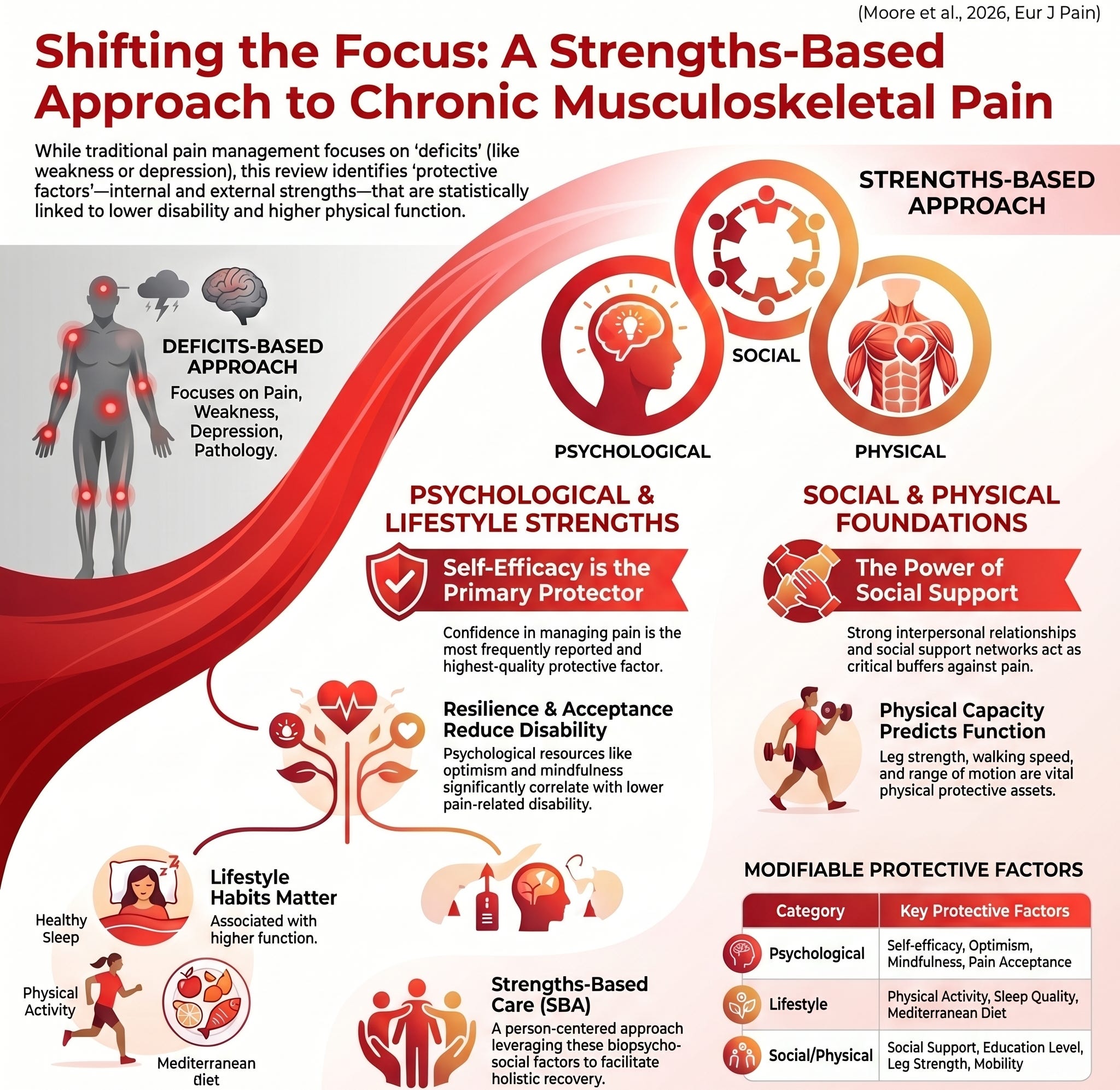
Currently, Chronic Musculoskeletal Pain (CMP) affects 171 million people worldwide and is the leading driver of rehabilitation demand. However, conventional interventions based on the biopsychosocial model have focused excessively on correcting “deficits” such as muscle weakness, catastrophizing, and depression, resulting in generally small effect sizes.
The Strengths-Based Approach (SBA) proposed in this study goes beyond mere patient-centered care; it is a “critical market differentiator” to break through stagnant clinical outcomes. This aligns with the Salutogenic Model, which seeks the essence of health in “promoters of well-being” rather than the “absence of disease,” and the concept of “Positive Health.” By identifying the “protective factors” patients already possess and leveraging them as strategic assets, we enable a transition to Value-Based Healthcare (VBHC) that simultaneously maximizes functional recovery and optimizes medical costs.
As a rehabilitation strategist, we evaluate and identify “functional baseline assets” instead of patient “limitations” across the following four hierarchical domains:
Psychological resources form the most robust foundation.
Cognitive Factors:
Self-efficacy is the only factor in this domain with established “high-quality evidence” and must be prioritized as the strategic anchor.
Psychological Resources:
Identify advanced protective factors such as resilience, optimism, mindfulness, “personal belief in a just world,” and the “implicit theory of pain” (viewing pain as changeable).
Psychological Health:
Evaluate Positive Affect and utilize it as a psychological buffer to reduce disability levels.
Comments
Nothing yet. Say the first thing.
Sign in to join the conversation.