
Since I moved to the Netherlands, I’ve been teaching cooking workshops. Most of the time, people who sign up are there for a company team bonding session, a bachelorette party, or celebrating a family member’s birthday. The focus is not so much about the food, and more about allowing food and cooking to be the conduit to having a wonderful time. I really enjoy the social element of it, but recently, I went for a few events that made me realise how much I miss grounding food in stories, personal histories, and cultural exploration.
Late July, I was invited by a chef friend Leow Shichao for a very special private dinner. For years, he’s been on a journey of rediscovering his Hakka roots through food (you can follow along here), and this time, he was in the Netherlands for a few events. This dinner was a collaboration between him and a Surinamese Hakka Pearl Tjin, author of Thuis in de Hakka Chinese Keuken. Prior to the dinner, I was frankly unaware that a Surinamese Hakka community existed!
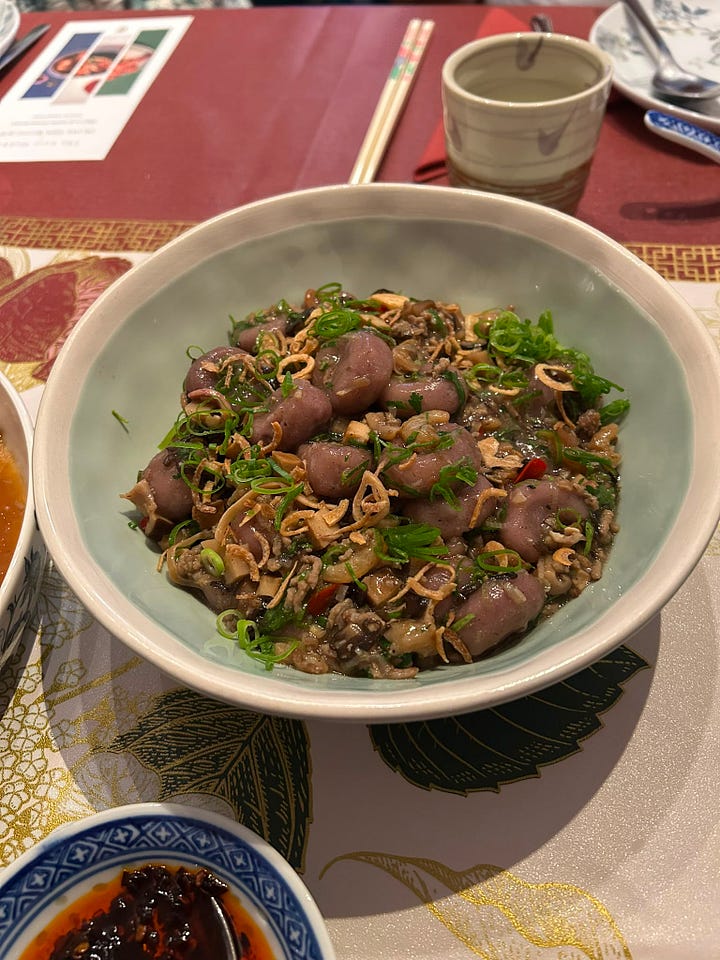
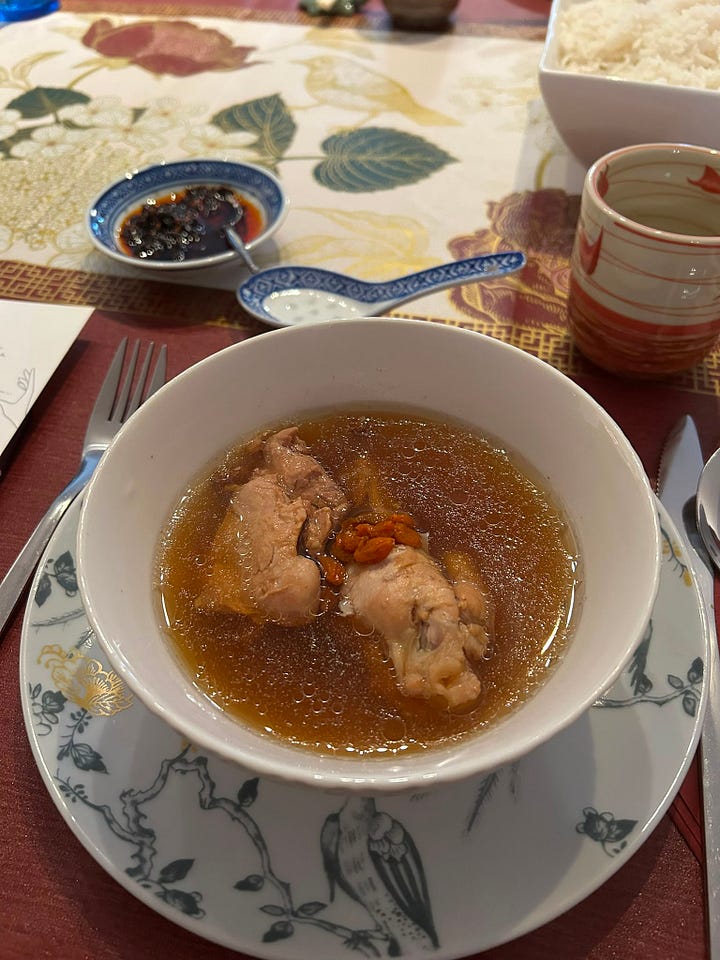
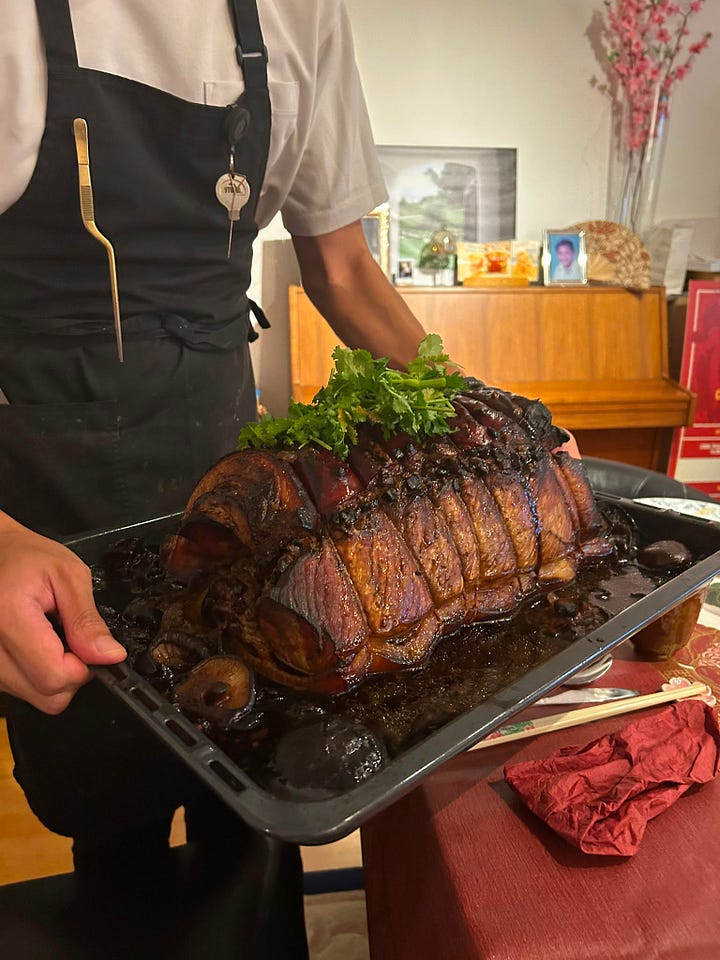
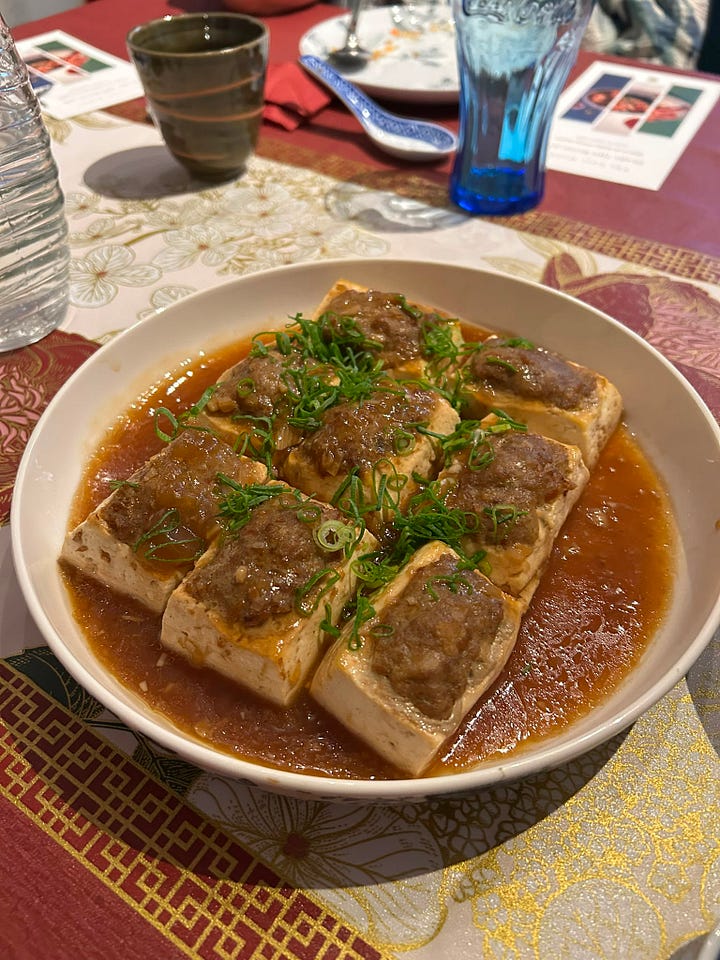
Some of what we enjoyed:
Abacus seeds: An emblematic Hakka dish where taro is steamed and formed into a dough with tapioca starch, before being shaped individually to resemble the seeds of an abacus. A popular dish to serve for Lunar New Year as the auspicious shape of the abacus seeds symbolises good fortune.
Salt-baked chicken: A whole bird is wrapped and buried beneath a heap of scalding hot coarse salt. Apart from the cooking technique, what makes the dish special is the use of sand ginger. Once cooked, the bird is chopped up, but here it was reimagined: shredded then served atop a lettuce cup with garnishes of Surinamese pickles, fried shallots, and fried garlic.
Hakka chicken soup: Made with home-fermented glutinous rice wine in the Singaporean context, but we enjoyed it with Madeira wine this time, as per Surinamese Hakka tradition.
Stuffed pork belly: A show-stopper of a dish, this was a whole roulade of pork belly stuffed with dried goodies such as lap cheong and dried shrimp, and slow-roasted.
Hakka yong tau foo: Meaning “stuffed tofu”, the stuffing for Hakka yong tau foo is usually pork mince. However, since mince of half pork and half beef is more common in Dutch supermarkets, that’s what Pearl and Shichao used to make their version.
Beyond the food, what I especially loved was the intimate setting and how it allowed for stories to be shared — not only from Shichao and Pearl, but also among guests.
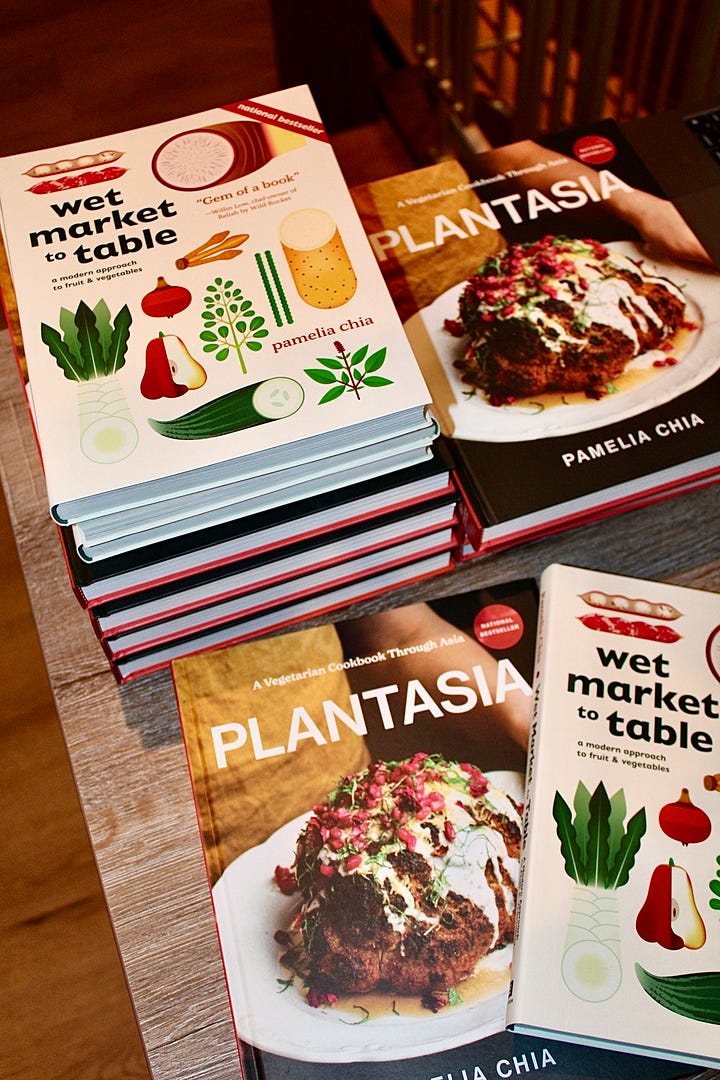
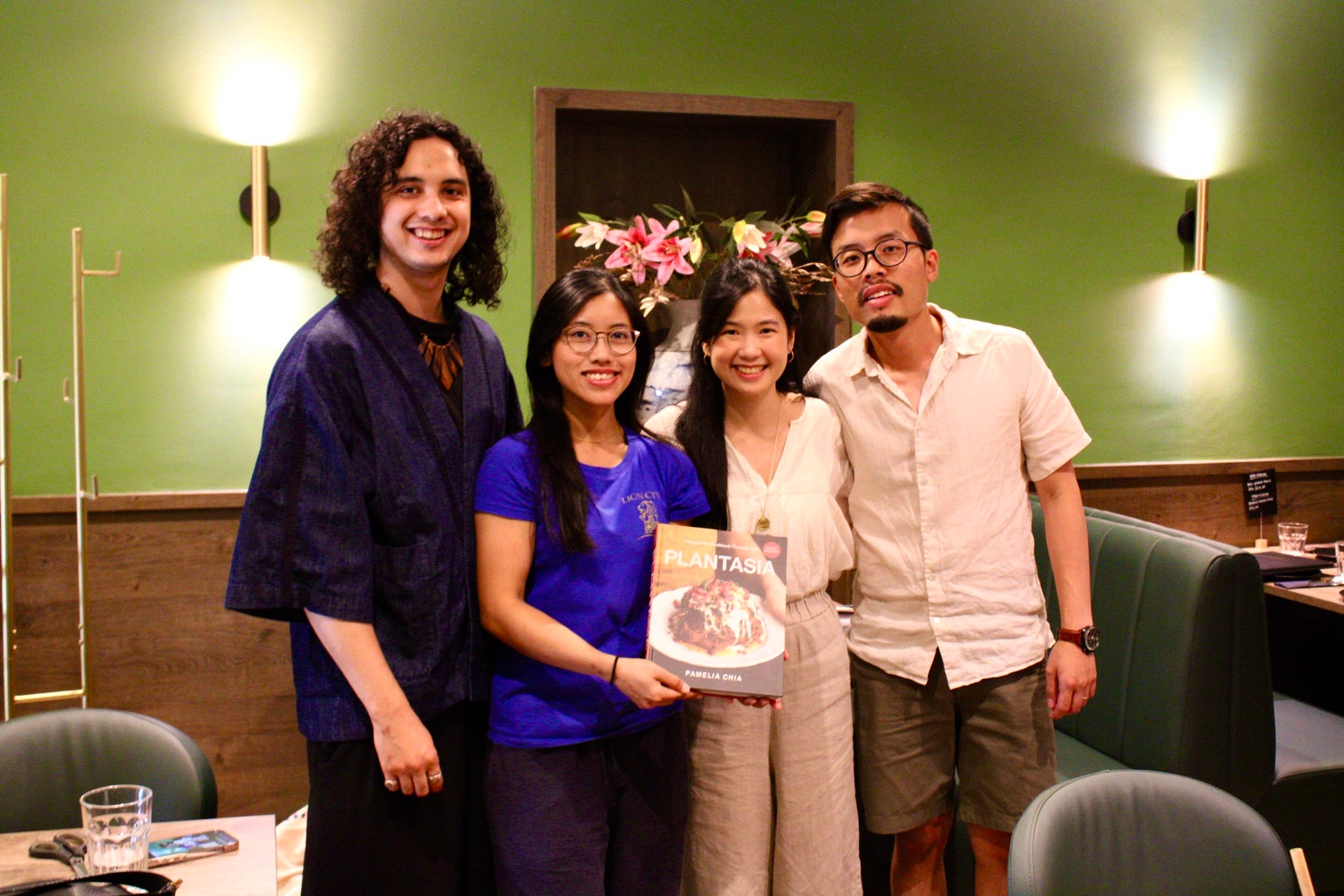
A few days later, I had my book signing event at Lion City restaurant in Rotterdam. It was a Q&A session centered on food traditions, migration, and identity. It’s been awhile since I’ve done a book event, and it was lovely getting to meet so many from the diasporic community who share similar experiences. Thanks for everybody who turned up for the event!

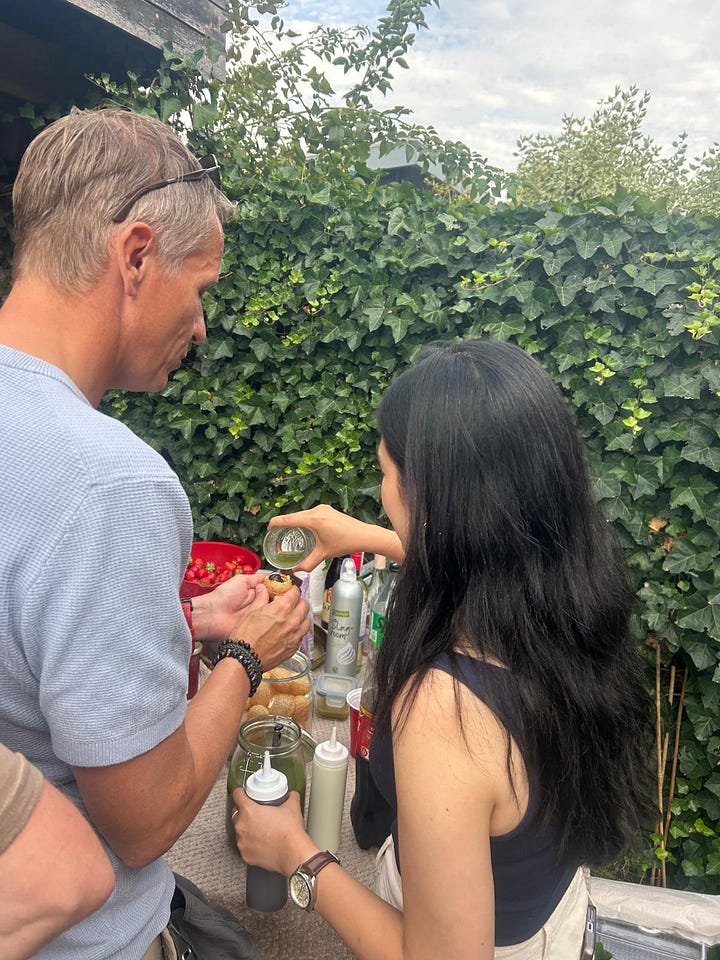
I picked up salsa dancing as a hobby at the start of the year, and my friends decided to organise a potluck party yesterday. The weather’s beautiful, so it was a great time to spend time in the balcony and share some finger food.
I brought pani puri which is, in my mind, the perfect party food. The two words that make up the name of the dish refer to the two core components: “puri” is the vessel, and “pani” (or “water”) refers to the fragrant herb water that you’re meant to fill the puri with. Alongside the herb water, I also prepared a boiled potato filling seasoned with chaat masala, a tamarind date chutney, and yoghurt thinned with water to a runnier consistency.
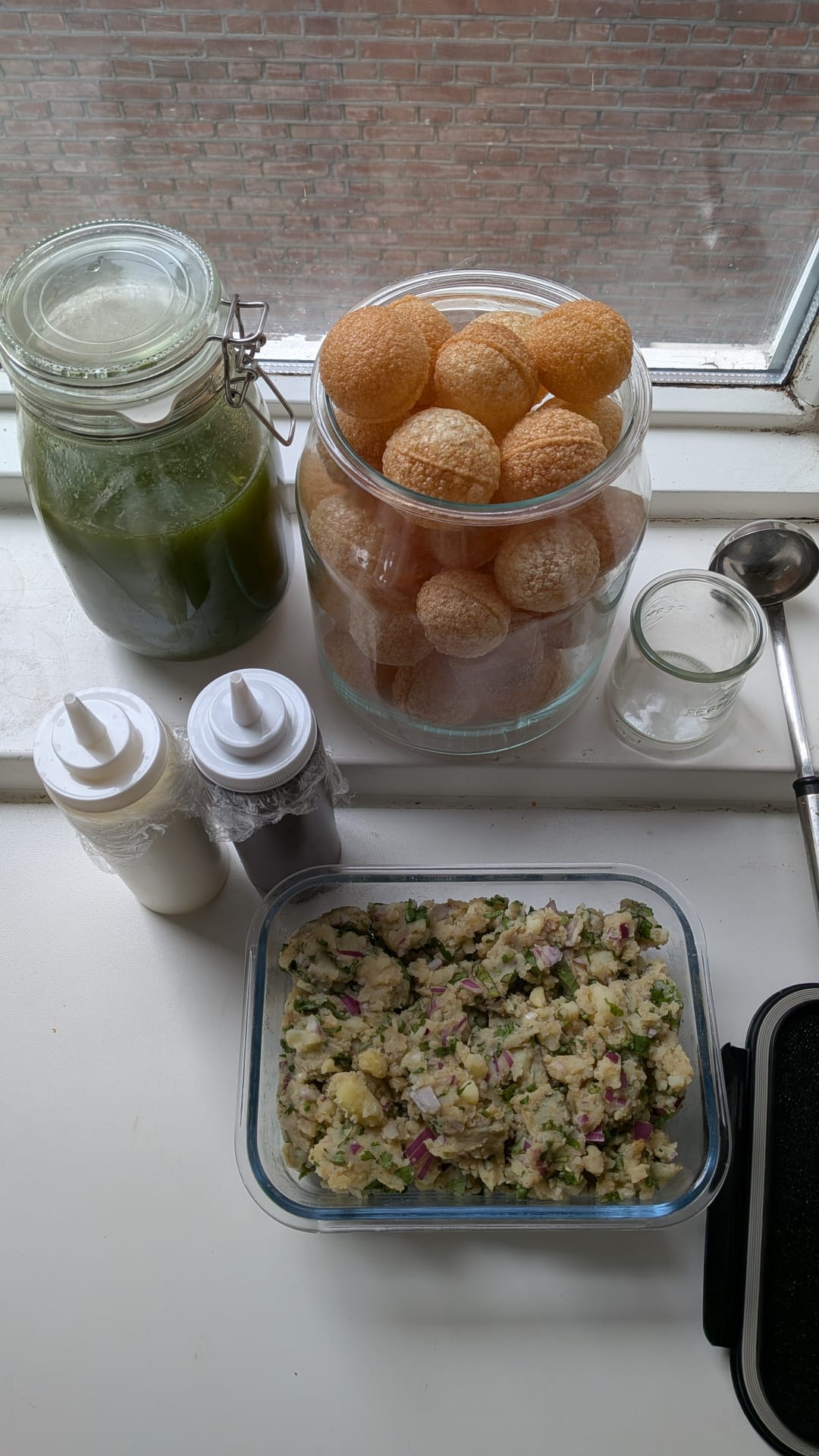
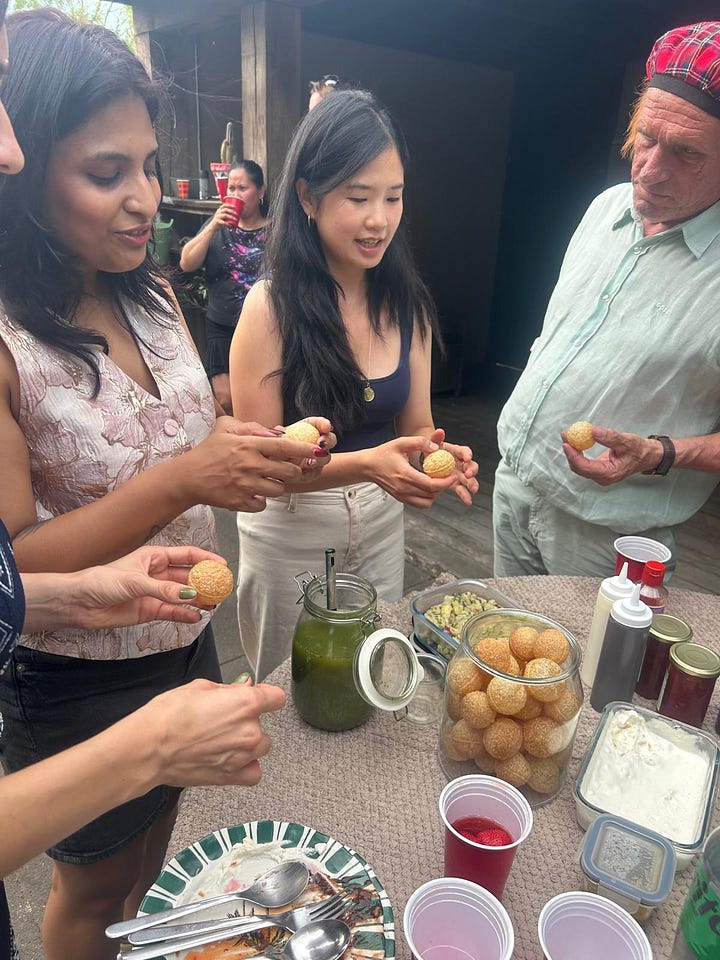
The idea is to crack a hole with your thumb in the crisp shell, fill it with potato, spoon (or squeeze if you use a squeeze bottle like me) in some chutney and yogurt, saturate the puri with the herb water, then pop the whole thing in your mouth in one bite.
It is vegetarian, or vegan without the yogurt — so it’s perfect for those with dietary restrictions. As for the prep, it does take a bit of work, but everything can be prepared in advance, including the puri shells. I bought the dehydrated coins of dough from the Indian grocer and once fried, these stay crisp for a long time. It is such a fun and interactive dish, where everyone gets to assemble it together and, in so doing, break the ice.


Pani puri
Serves 6 | Vegan option
For the date chutney:
80g tamarind pulp + 160ml water
100g date paste (**you can also use dried dates; just soak them in boiling water till soft, before removing the pits. Discard the soaking liquid.)
1 teaspoon chilli powder, or to taste
1/2 teaspoon cumin powder
2 tablespoons lemon juice
Salt and honey to taste
For the herb water:
500ml water
2 green chillies, deseeded and roughly chopped
2.5cm piece of ginger, peeled and roughly chopped
1 lemon’s juice
1/2 tablespoon honey
1 large handful of mint leaves
1 bunch of coriander (stems and leaves)
1/2 teaspoon salt
For the filling:
4 large potatoes, peeled and boiled
1/2 red onion, chopped
1 bunch of coriander (stems and leaves), chopped
2 tablespoons chaat masala, or to taste
Salt to taste
For the assembly:
Oil for deep-frying
A packet of dried puri (if you prefer to make this from scratch, there’s a recipe in my cookbook Wet Market to Table)
200g yoghurt, thinned with water if necessary to a pouring consistency (optional)
Make the date chutney: In a bowl, combine the tamarind pulp and water and knead the pulp with your fingers to dissolve. Pass it through a sieve set over a small blender and discard the seeds. Add the date paste, chilli powder, cumin powder, and lemon juice. Blend until smooth. Taste and add salt and honey to taste.
Make the herb water: Place all the ingredients in a blender and blend until smooth. Transfer to a pitcher.
Make the filling: In a large bowl, mash the potatoes. Mix in the onion, coriander, chaat masala, and salt to taste.
Fry the puri: Heat the oil for deep-frying in a pan. Test the oil by adding one puri; it should float and puff almost instantly. Fry the puri in batches, submerging them into the oil with a kitchen spider from time to time. When they are puffed and golden, transfer them to a paper towel-lined dish.
Assemble the pani puri: To serve, crack a hole in each puri with your thumb. Stuff the cavity with the filling three-quarters of the way up. Spoon in a bit of date chutney and yogurt as desired, then pour some herb water into the cavity. Pop the whole thing in your mouth immediately and enjoy!
No posts
Comments
Nothing yet. Say the first thing.
Sign in to join the conversation.