
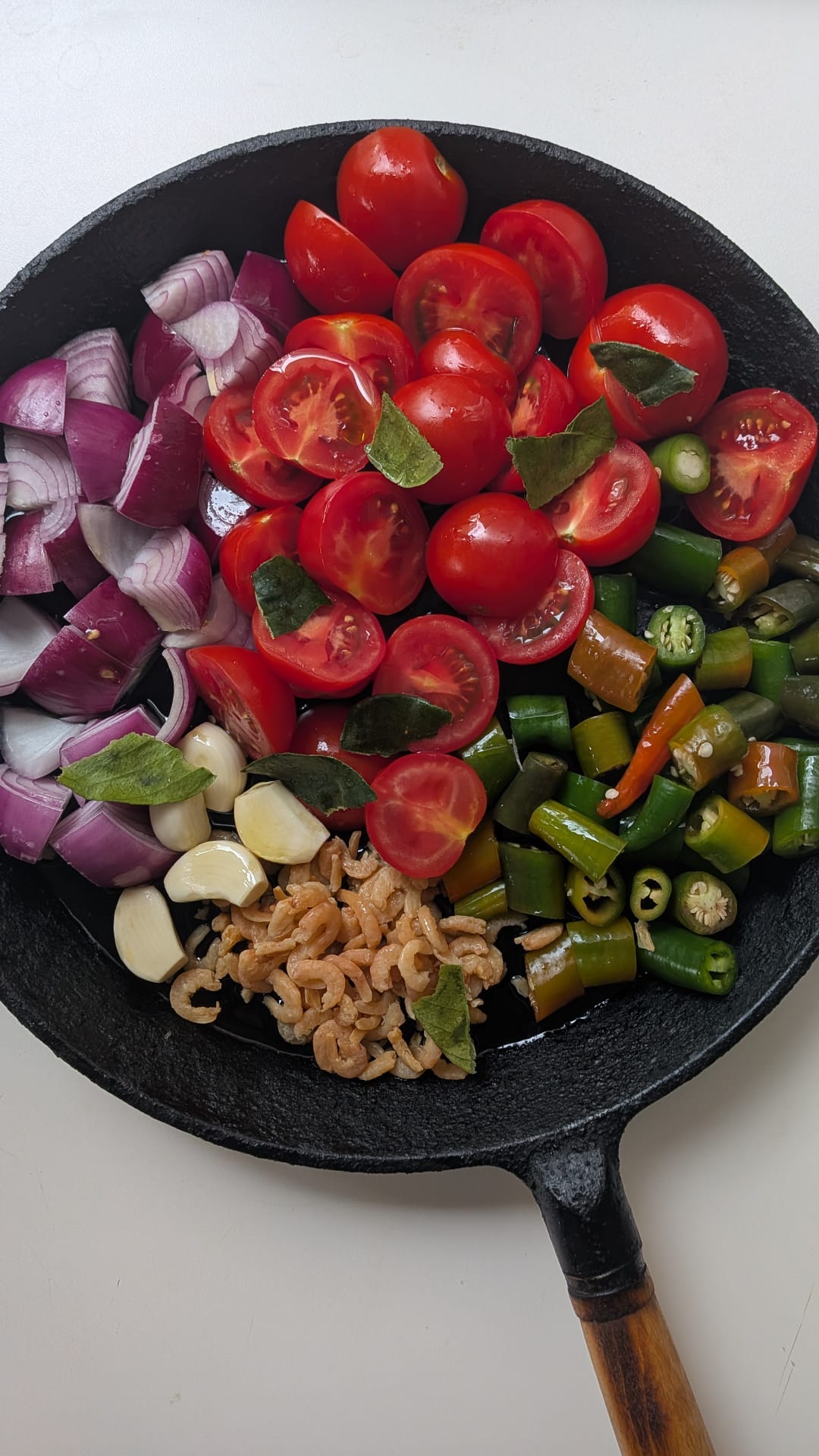
We’re on the last leg of summer — it’s still beautiful and sunny, but the weather’s definitely cooling down now. I want to make the most of summer while we can, so I’ve been buying the best-looking cherry tomatoes I can get my hands on whenever I make a trip to the supermarket. And when you have tomatoes so sweet, one of the best things to do with them is make tomato sambal. Unlike other types of sambal that I typically make at home, you don’t need a blender to make tomato sambal. It is, after all, a rustic sambal whose allure lies, at least in part, in its texture.
The idea is that, rather than rendering the vegetables and aromatics to a smooth paste in a blender, you cut everything roughly — small enough that they soften easily, but not so small that you lose textural interest. After cutting, I place the ingredients in a pan wide enough to accomodate them in a single layer and drizzle in some olive oil. A few years ago, I would have shuddered at the thought of olive oil in sambal, but ever since my trip to Croatia last year, where I learned that olive oil isn’t nearly as delicate as I’d imagined, I’ve been replacing my usual vegetable oil with it. It’s better for you (not inconsequential, given the abundance of oil in sambals) and the flavour of the olive oil is surprisingly unobtrusive.
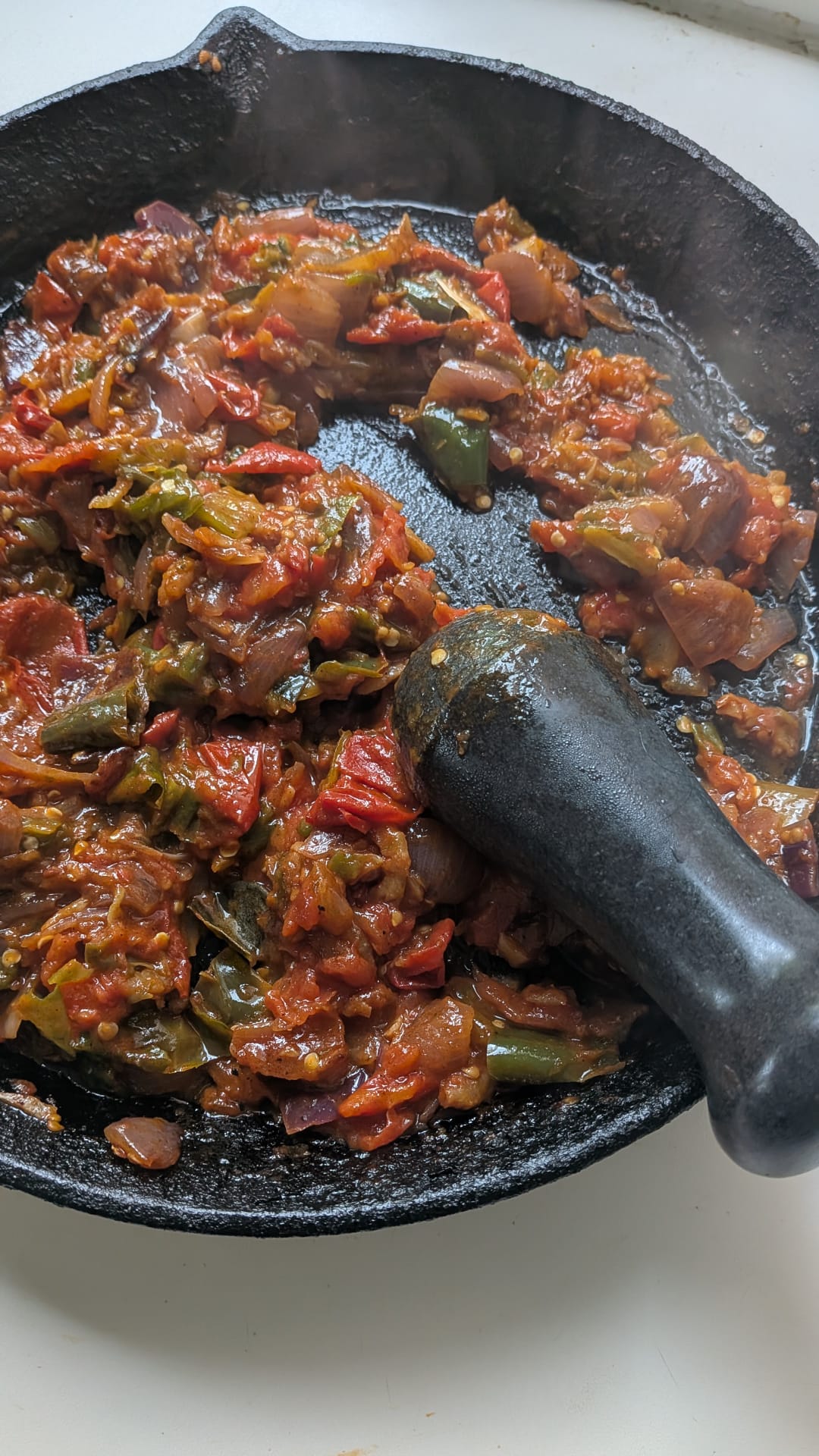
After 10 minutes of stir-frying, the tomatoes burst and give up their juices, while the onions and chillies become tender. I take the pan off the heat and start grinding the vegetables with a pestle until I arrive at a consistency that I like. This was easy because my pan, being made of cast-iron, is textured. You could also use a cobek and ulekan (pestle and mortar that is shallow and wide enough to facilitate this type of grinding). You don’t want everything to be a smooth homogenous mixture, but a sort of chunky relish that you can spoon over everything.
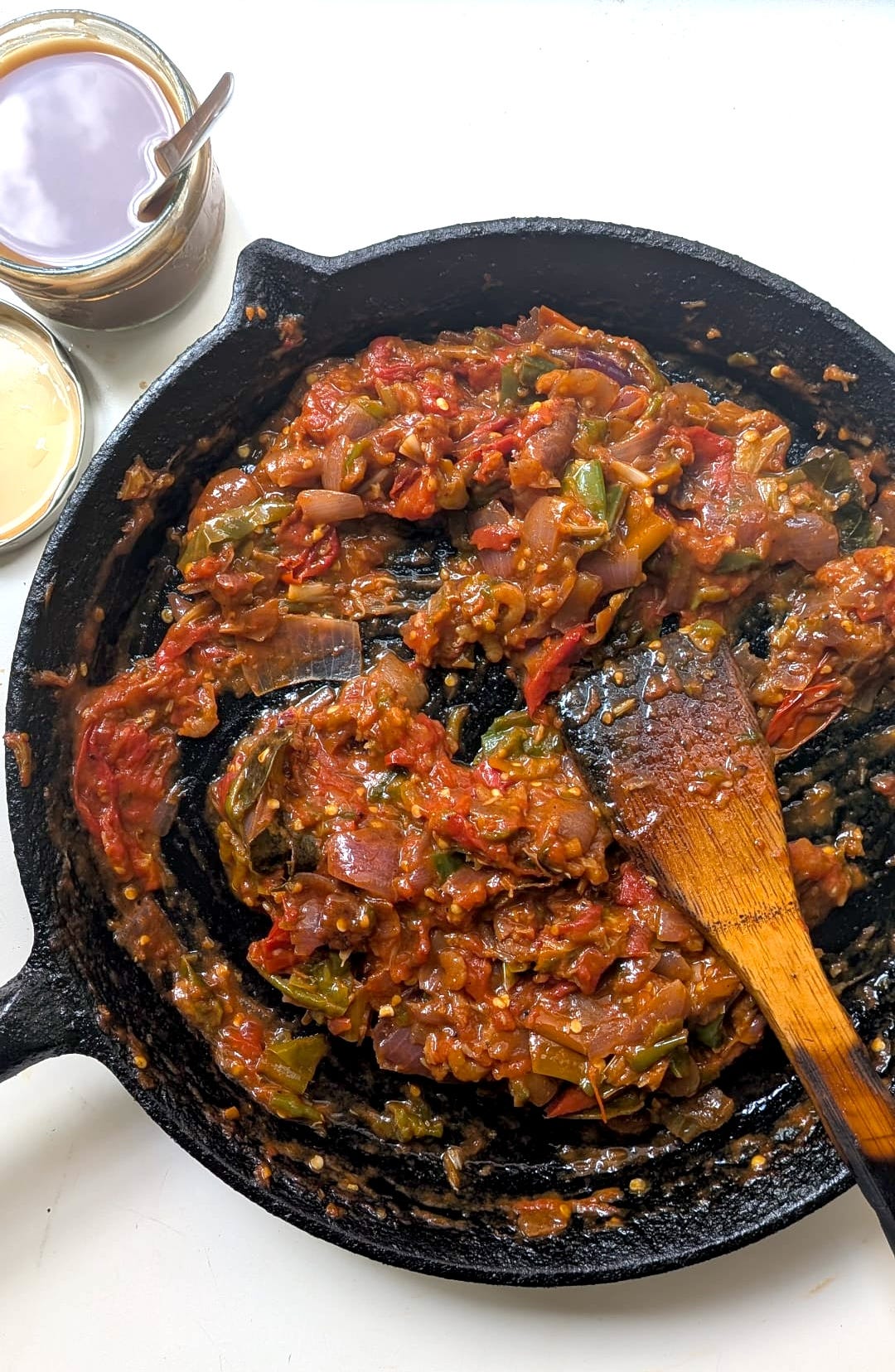
Once the texture is to your liking, all that’s left to do is season the sambal. Because the tomatoes I had were so naturally sweet, the only seasonings required for mine were tamarind pulp for tanginess, and salt. At this stage, I also taste to see if the sambal is spicy enough for my liking. If it isn’t, I stir in some finely sliced bird’s eye chilli. To me, that’s a more sensible approach than starting a sambal off with bird’s eye chillies and then realising after cooking that the resulting sambal is too spicy.
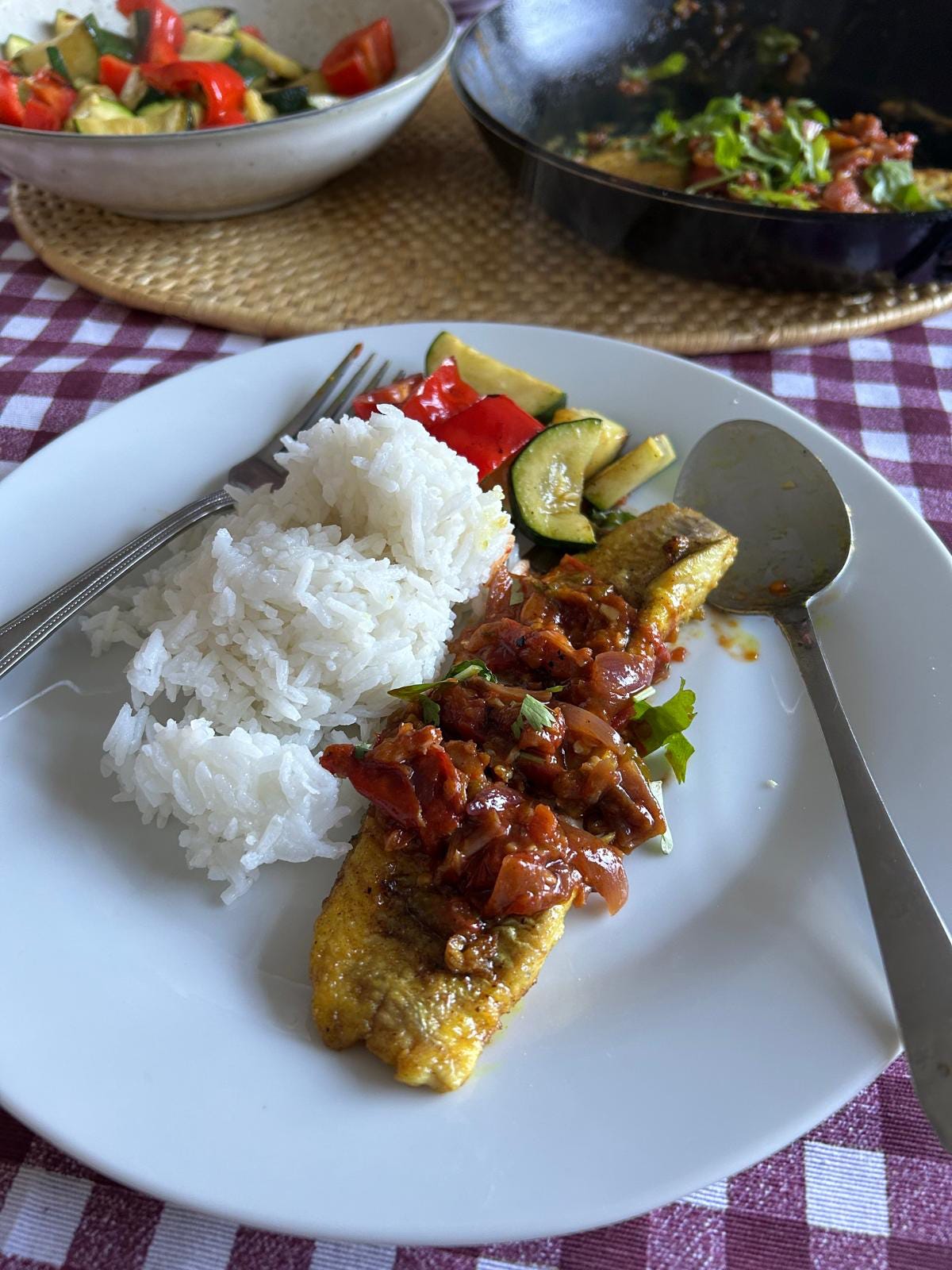
There are many ways to enjoy tomato sambal: as a dip for raw crunchy vegetables like cucumber, spooned over boiled or grilled vegetables, or as a condiment for meat and fish. I coated some fish fillets in flour, fried them in a bit of olive oil until golden brown on both sides. I then added salted butter and curry powder to the pan (spice blends like ras el hanout also work well) and basted the fish with this fragrant butter. Spooned the tomato sambal over and topped with a handful of chopped coriander. Delicious with rice.
Tomato sambal
Makes a jam jar’s worth | Vegan option
Comments
Nothing yet. Say the first thing.
Sign in to join the conversation.