
Welcome back to the Singapore Noodles newsletter! Before we get to this week’s recipe, two small announcements:
Book event in Rotterdam: I’ll be signing books and speaking about food heritage at Lion City in Rotterdam on 2 August 2026 (12:00-15:30). The event is free — to sign up, reserve your spot via the Lion City website. I’ll have my cookbooks Wet Market to Table and PlantAsia available for purchase.

Final copies of PlantAsia in Singapore: If you’ve been enjoying these weekly newsletters, you’ll probably enjoy my second cookbook PlantAsia: A Vegetarian Journey Through Asia as well. The original edition is still available for purchase and won’t be reprinted once the current stock is sold. Order your copy here.
Thank you for reading, and now onto this week’s recipe.
NAAN
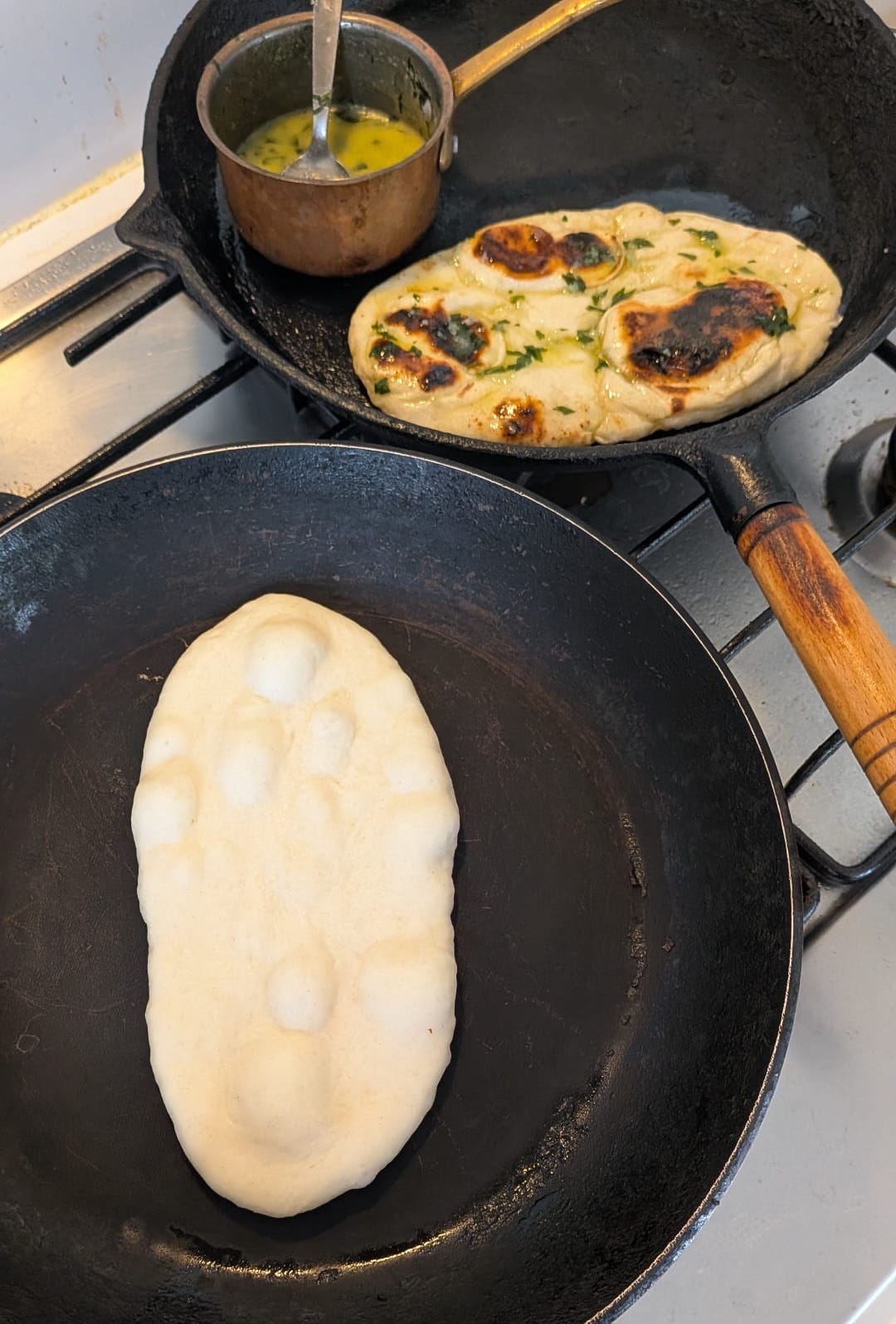
Derived from the Persian word for bread (nān), naan is a flatbread that is spotted with smoky blisters, and slathered all over with melted ghee fresh from the oven. According to Preena Chauhan and Arvinda Chauhan’s New Indian Basics, naan was brought to India by the Moghuls from Central Asia. The locals bake the bread in a tandoor oven, a traditional piece of cooking vessel in Indian cooking which can reach incredibly high temperatures. The dough is stretched then slapped along the inner wall of this ferociously hot clay container, resulting in rapid puffing and charring. When torn into, it boasts a crumb that is pillowy yet chewy, blistered yet tender.
THE DOUGH
Naan is made with maida, which is a refined wheat flour. The closest supermarket substitute is plain flour. This is ideal compared to bread flour because for naan, you’re looking for enough gluten for stretch and structure, but not so much that it becomes tough. I use all-purpose flour of 10% protein content.
The next ingredient comes as no surprise: yeast. Naan is leavened bread, and it is the fermentation which gives naan its characteristic soft, airy texture and complex flavour.
Beyond the usual flour, yeast, salt, and water that you’ll encounter in almost all bread recipes, naan is notable for containing dairy. Yogurt is a common ingredient in many recipes, contributing mild tanginess and complexity, but more importantly fat. Fat coats flour proteins, weakening gluten formation and resulting in a more tender flatbread.
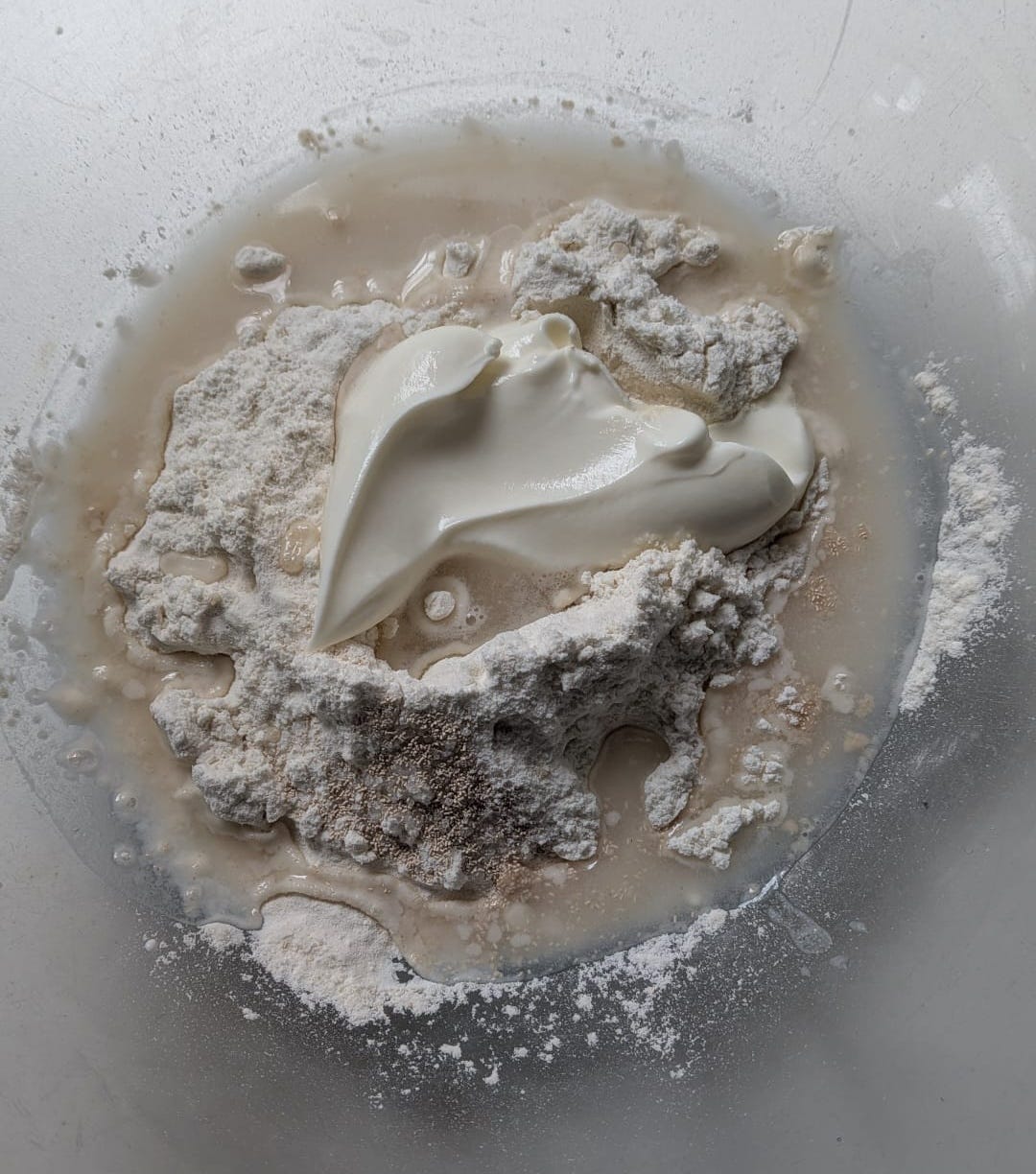
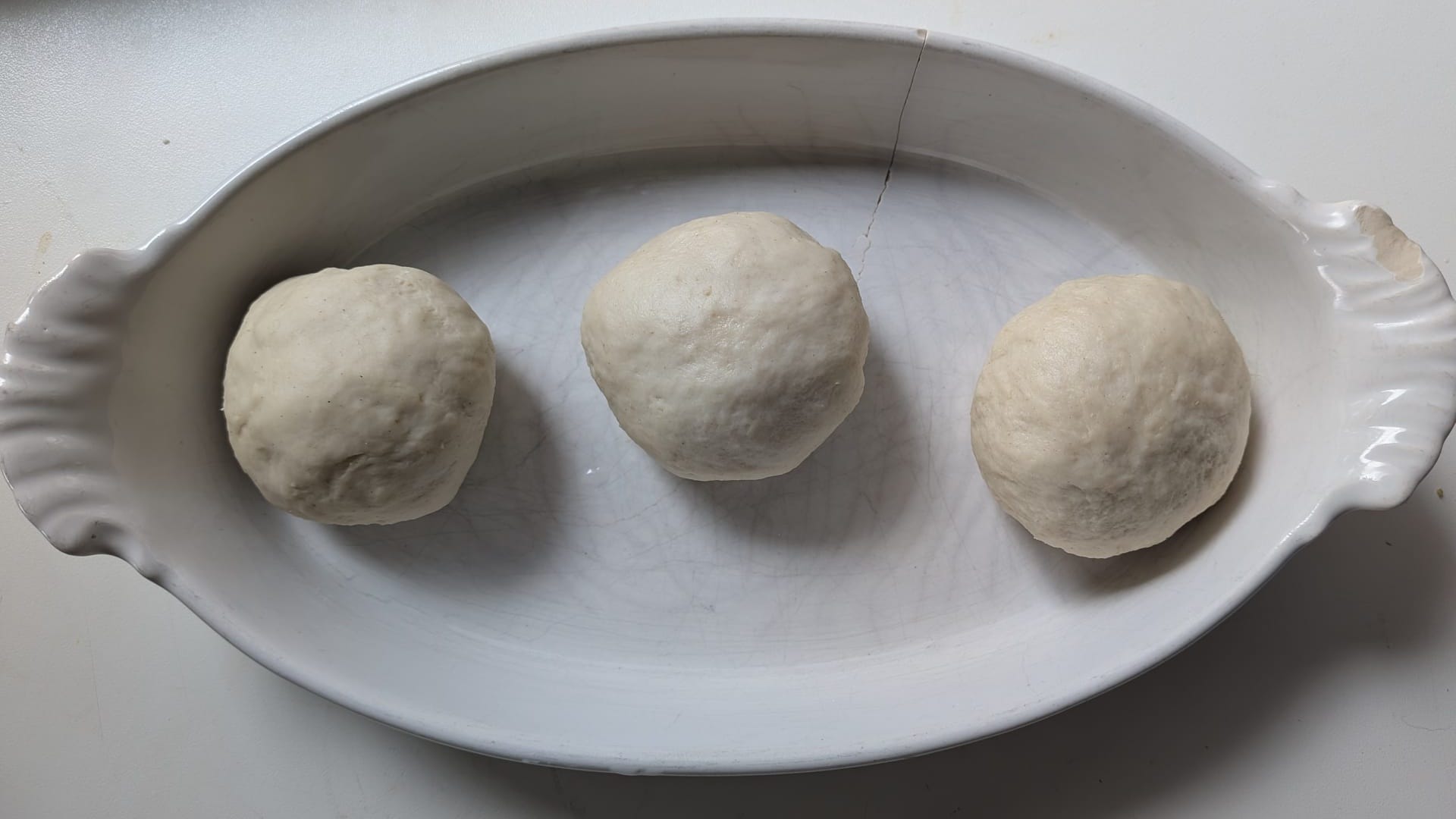
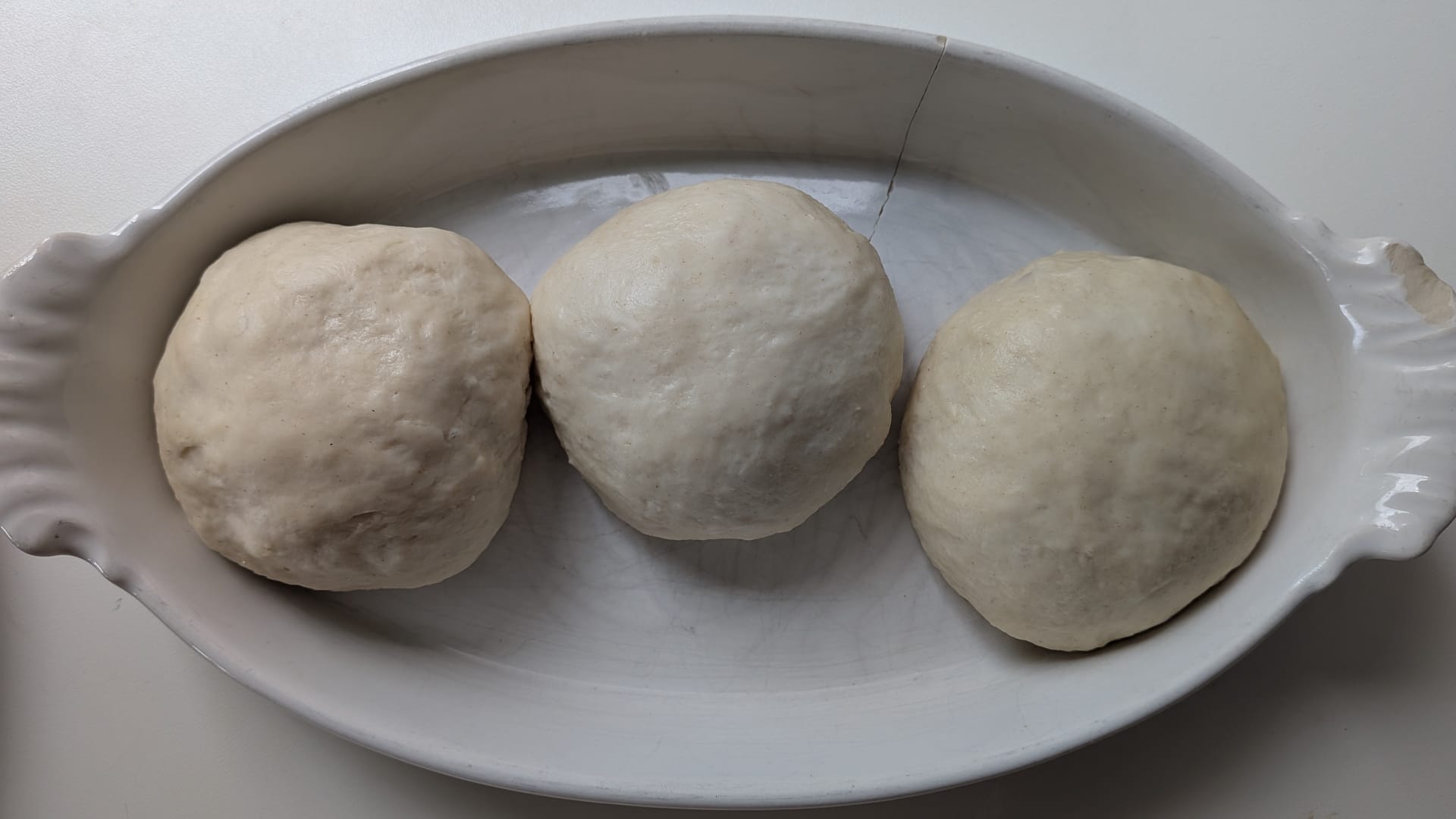
As an experiment, I made three different doughs:
Dough 1 (Flour, water, Greek yogurt, salt, sugar, dry yeast): A fairly lean dough that serves as the baseline.
Dough 2 (With oil added): Fat helps keep naan soft and pliable rather than stiff and crisp. By adding oil alongside the yogurt, I wanted to see how much I could inhibit gluten development and produce an even softer dough.
Dough 3 (With oil and baking soda added): Although traditional naan is leavened with yeast, baking soda appears in many modern recipes. It reacts with the acidic yogurt to release carbon dioxide, creating additional bubbles that contribute to a lighter, airier texture. It also partially neutralises the yogurt’s acidity. By raising the pH, baking soda can reduce some of the tightening effect that acidity has on gluten.
COOKING
A tandoor cooks naan at extremely high temperatures — this intense heat is what creates oven spring and blistering. I’ve seen some home recipes that try to replicate this with a regular oven, but a domestic oven simply doesn’t get hot enough to achieve the same effect. A thoroughly preheated pan is a better option. It is essential to heat the pan thoroughly so that you get maximum blisters and puffing. A hot pan also means that you prevent overcooking and thus dryness as much as possible, while maximising char.
I’ve seen a method on Youtube, where the dough is moistened on one side so that it sticks to the pan and cooked until the dough bubbles and puffs. The pan is then flipped upside down over the flame so that you get nice colouring all over the flatbread rather than only on the blisters. I find this method overly complicated and not effective when using a non-stick pan because the dough slides off. A cast-iron pan works better, but the pan is too heavy and unwieldy to flip. I much prefer cooking the naan on both sides in the pan, then swiping the flatbread over a flame to replicate the tandoor naan look.
The most delicious part of naan is the butter that’s slathered all over it while it is still piping hot. You could use regular melted butter, but a compound butter makes it ten times more delicious. I went with finely grated garlic and chopped coriander leaves. Using a butter you love is also key — mine is Kerrygold.
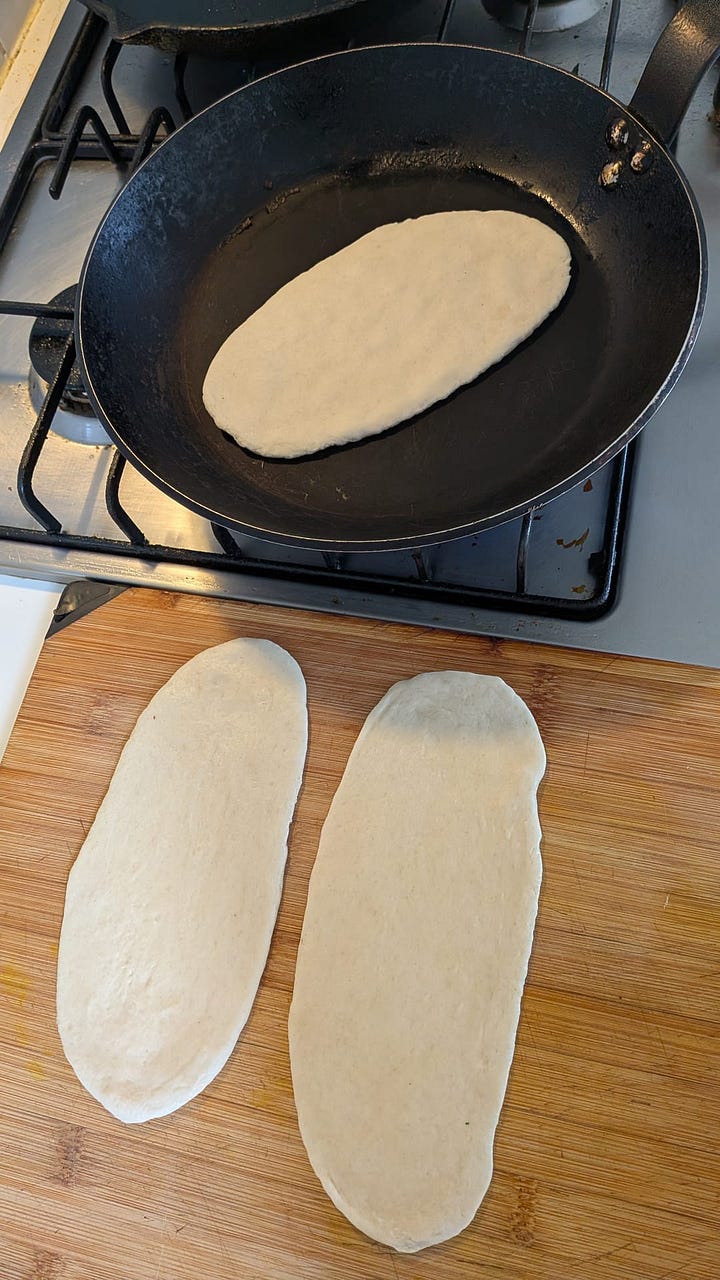
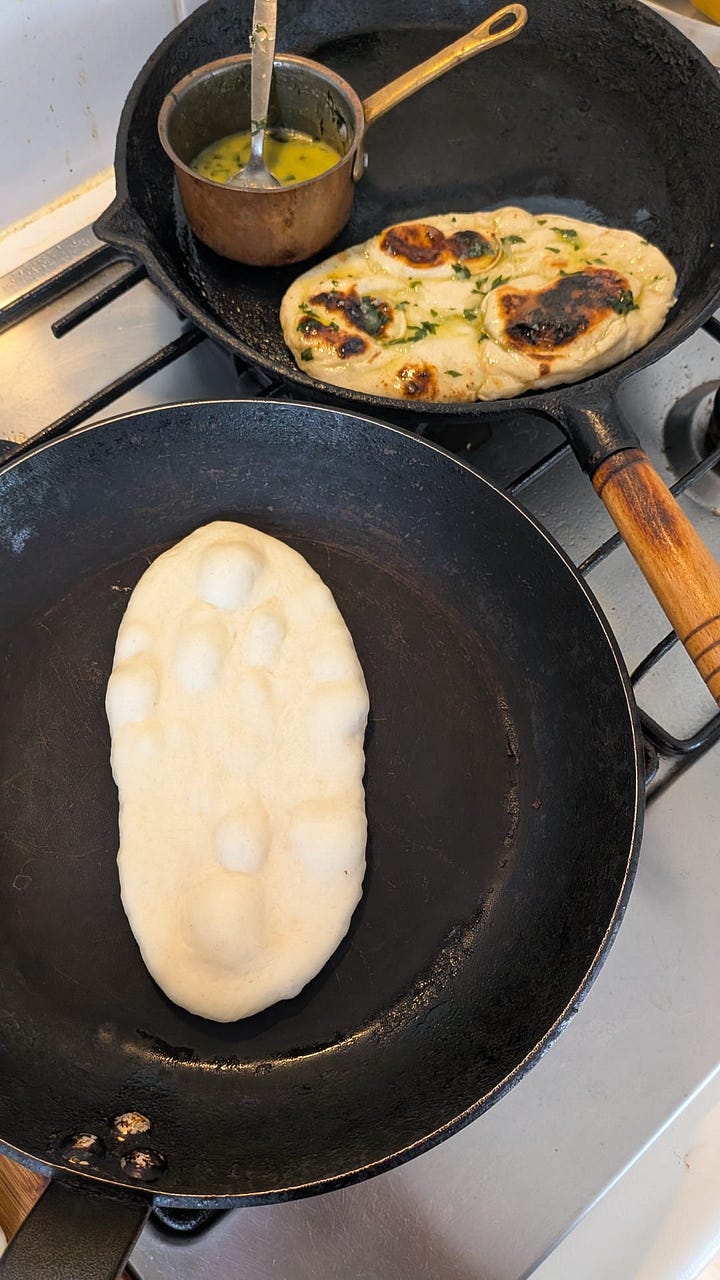
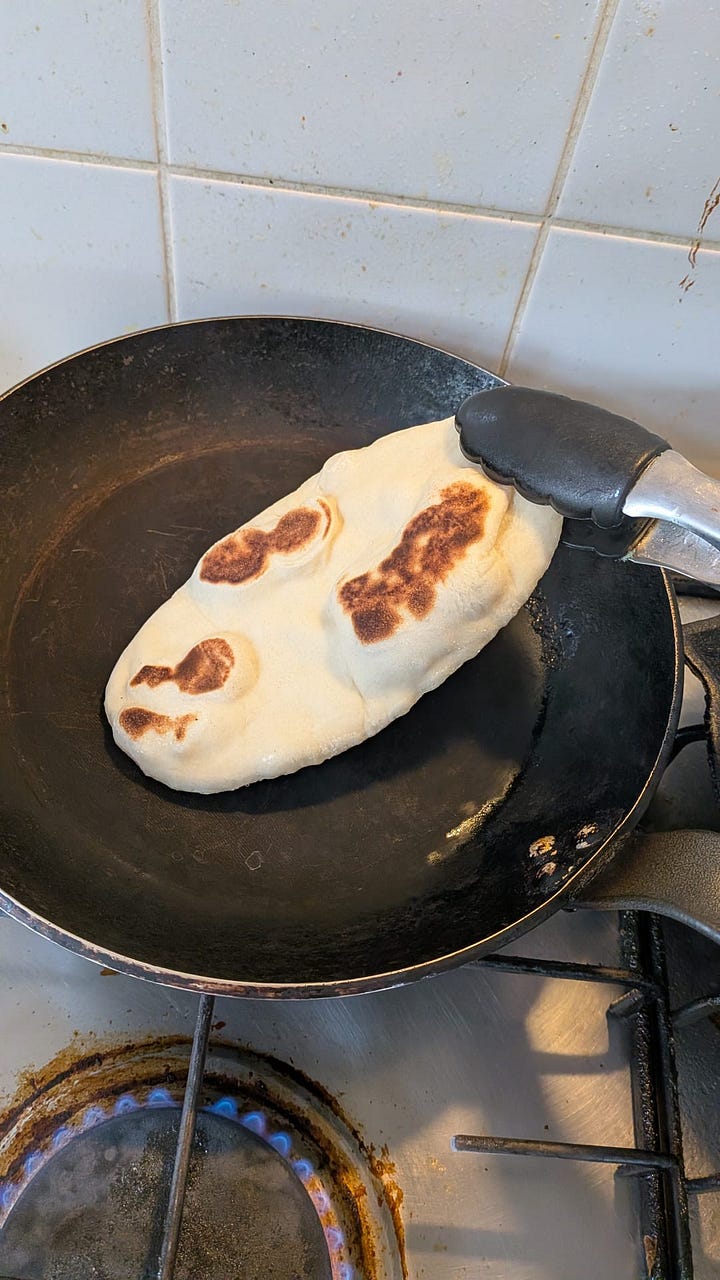
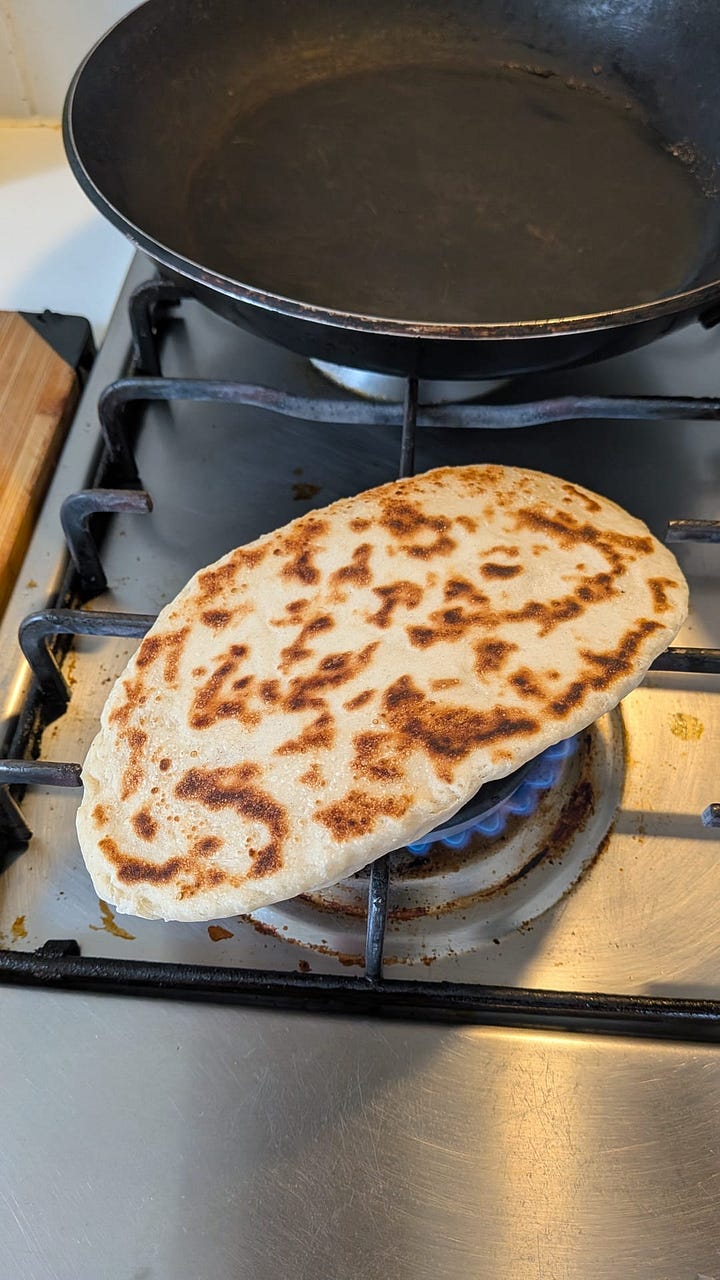
THE RESULTS
All three doughs tasted great, reminding me of restaurant naan flavour-wise. I loved that so much flavour was present in the naan with so little effort. That said, there were noticeable differences in texture between the three doughs:
Dough 1 was chewy, almost dry.
Dough 2 had a good balance of tenderness and chew. Wex’s favourite.
Dough 3 was the softest, almost shreddy and cake-like. My favourite.
I also experimented with allowing the doughs to ferment overnight in the refrigerator instead of at room temperature. They did not taste much more complex from the overnight rise, but it is nice to have that option of cooking the naan on another day if you don’t have the time for it. We enjoyed the naan for dinner with butter chicken and roasted vegetables and it was a cracking meal.
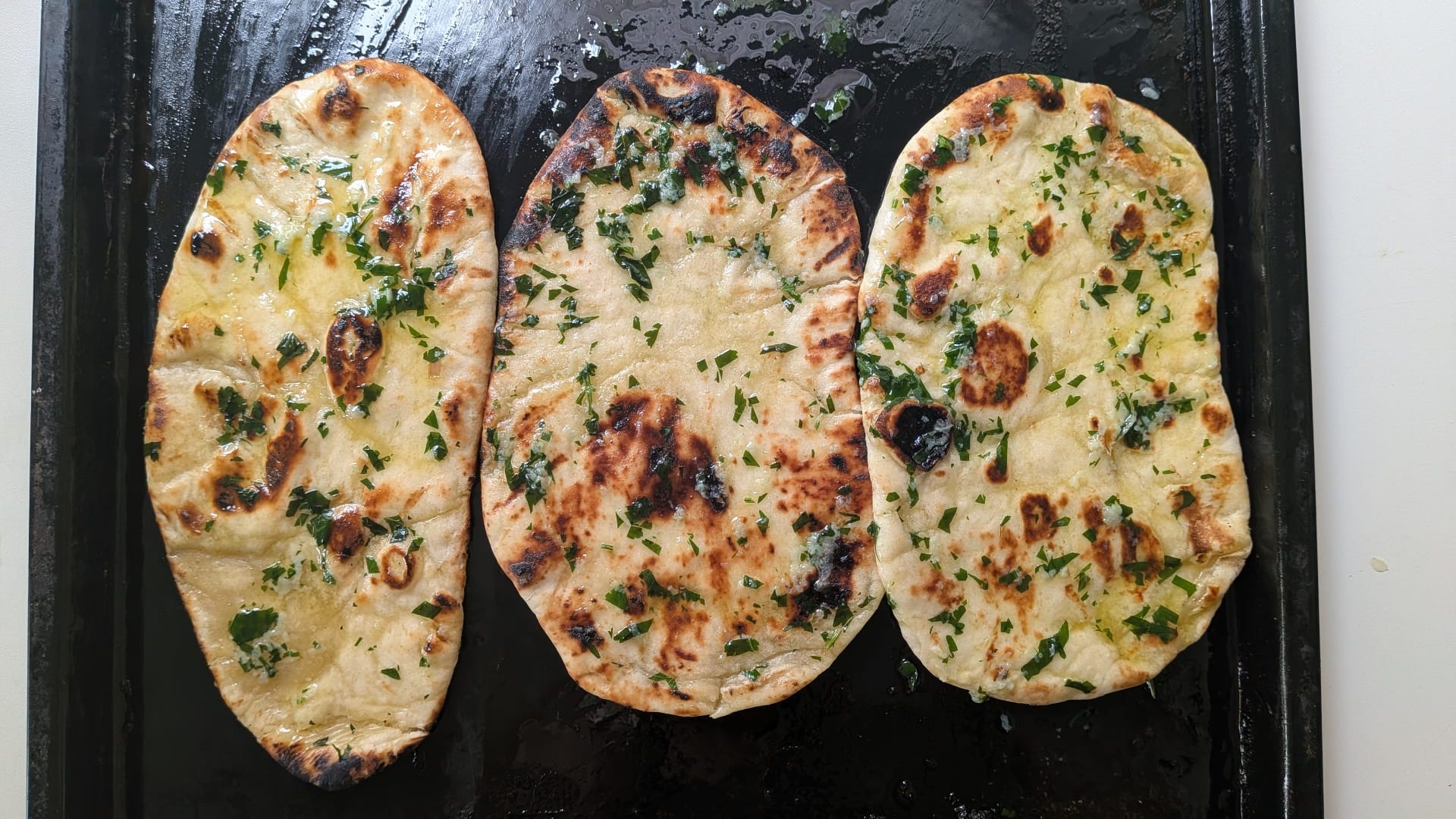
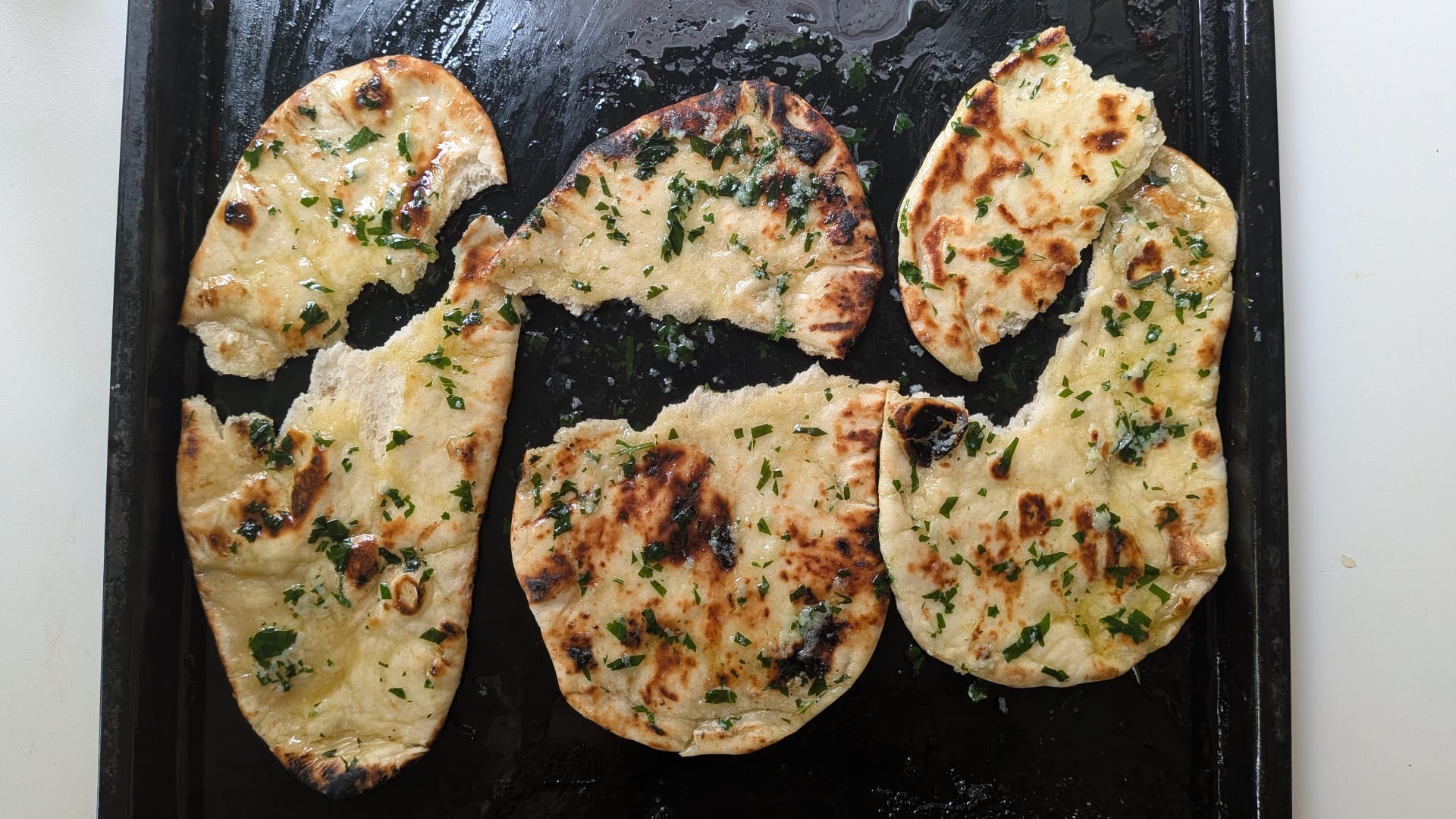
Naan
Makes 10 naan
Comments
Nothing yet. Say the first thing.
Sign in to join the conversation.