
The fire cracked in front of us, sending sparks up into a sky so full of stars it felt like you could reach up and run your hand through them. I leaned back on my hands, staring up longer than usual, like my brain was trying to take a mental snapshot of our last night in Africa before everything went back to normal.
Then someone said, “Let’s go around and share one big dream for our lives.”
My chest tightened. People started going, and their answers came out steady and clear, like they had already decided who they were going to be. I did that thing where you pretend to listen, but you’re actually scanning your own brain for something—anything—that sounds like a real answer.
Nothing came.
My turn got closer. My leg started bouncing. I pressed my hands together to try to stop it. Still nothing.
Then it was my turn.
“I want to get a book published.”
The words landed, and the circle kept moving. But they followed me home.
A few weeks later, I sat on my deck back in Minnesota with my laptop open. I opened a blank document and stared at it longer than I want to admit. Then I typed, “Untitled manuscript — Sam Eaton,” and stopped.
My hands stayed on the keyboard, but nothing else happened. You know that moment when you realize you’ve committed to something you don’t understand at all? I had no idea how to write a book.
That first chapter came out fast. It was about my decision to try tandem skydiving, except our first parachute didn’t open, and we had to rely on our emergency, if-this-one-doesn’t-open-we’re-going-to-go-splat chute.
Somewhere in that draft, two words showed up: Recklessly Alive. They didn’t feel important at the time, just something that sounded right in the moment. I saved the document, closed my laptop, and went back inside, fully convinced that any day now my book would be a New York Times bestseller.
And then, just a quick seven years, three full drafts, and a failed publishing contract later, that first book, Recklessly Alive: What My Suicide Attempt Taught Me About God and Living Life to the Fullest, was published on Amazon.
Look, I have almost never felt like I knew what I was doing. I still don’t. I’ve wanted to quit a lot, including as recently as last week. But if you have a dream tucked inside you, like that campfire dream, here are a few things I’ve learned.
While I definitely wasn’t insightful enough to know what I was doing that first day on the deck, opening that Word document was a massive step.
It helped me move from, “I want to write a book someday,” to, “I am writing a book.”
Instead of identifying as someone with big dreams who never moved toward them, I accidentally became an aspiring author.
Takeaway: Start identifying today with the version of you you’re becoming.
That moment in Zimbabwe wasn’t polished or well thought through. I said it anyway.
Once it was spoken, it stuck. It created a kind of pressure—in the best way—like I had stepped into something I couldn’t quietly walk away from.
That’s part of bold action. It doesn’t make things easier. It makes them harder to ignore.
Takeaway: Tell one safe person about your dream this week.
Chasing a big dream gets lonely faster than you expect. You spend a lot of time in your own head, wondering if you’re the only one trying to do this.
At some point, I got tired of guessing and went looking for people who were already doing the work. I joined a ragtag group called the Minnesota Christian Writers Guild. It was made up almost entirely of people in their 70s. But they had a speaker and store-bought cookies.
And honestly, being around them every month helped me grow in my craft, stay on track, and carve out time to pursue the dream.
Takeaway: Find people who are doing the work, and learn from them.
Not everyone will see what you see. Not everyone will match your excitement. And those voices get louder when you already have doubts of your own.
Sometimes it’s direct: “Be realistic.” “That’s a long shot.” “Have you thought about something more stable?”
Other times it’s quieter. A shift in tone. A lack of enthusiasm. A conversation that moves on from what matters to you.
Most people aren’t trying to shut you down. They’re trying to understand something that doesn’t fit their experience. But if you’re not careful, their reaction can pull you back toward something safer.
Takeaway: Your dream does not have to make sense to anyone else.
I reached out to a few authors I knew to ask if we could meet up so I could get their advice. Some didn’t respond. Others said they would help and never followed through. For a while, I took that personally.
Now I’m on the other side of it, and I see it differently. I wish I had time to sit down with every person who emails me about writing a book and read their drafts, but to be honest, I barely have enough time to get my own work done most days.
I know what it feels like to want someone to sit down with you and help you figure it out. I wanted that too. But most of this, you end up learning by doing it yourself—by trying, adjusting, and sticking with it longer than you want to.
Takeaway: Let people help when they can, but don’t wait on them to begin.
For a long stretch, my process looked the same: Sunday afternoons, around 3 p.m., at Barnes & Noble. I’d sit in the café with my laptop open, coffee next to me, people talking in the background. Nothing about it felt special.
Then I’d walk the store. One lap, every time. I’d stop at the same shelf and run my hand along the edge where I thought my book would go.
Most days didn’t feel productive. But I kept showing up, and that’s what moved it forward.
Takeaway: Stop waiting for a big moment. Pick a time, pick a place, and keep showing up.
At some point, the same thoughts show up. This isn’t working. This isn’t good enough. This is taking too long.
They usually don’t come in loud. They show up in a way that makes stopping feel reasonable.
I didn’t get rid of those thoughts. I still have them. I just stopped letting them decide what I did next. I learned to notice them and keep going anyway.
Takeaway: Notice the thought, but don’t let it make the decision.
I spent seven years trying to get traditionally published. I wrote three full drafts. I got close to a deal, then lost it. I kept clinging to that path because I thought it was the only one that counted.
Eventually, I let it go and self-published.
Five months later, the book reached the top 200 on all of Amazon for more than a week.
Letting go did not feel great in the moment. But it moved things forward.
Takeaway: Let go of the version of success you thought it had to be.
This did not move in a straight line. There were long stretches where writing wasn’t the focus. Life took over. Other priorities filled the space.
What mattered was that I kept coming back. Not perfectly. Not on a strict schedule. I just didn’t let it disappear.
Takeaway: Keep coming back to it.
Maybe you’re still sitting around your own version of that campfire, and the dream hasn’t fully formed yet.
Maybe it’s there, but you haven’t said it out loud.
Maybe you said it recently, and now you’re staring at a blank page wondering what you just got yourself into.
Or maybe you’re in the middle of it—the part where it’s quiet, repetitive, and not very exciting. The part where it doesn’t look like progress, but it is.
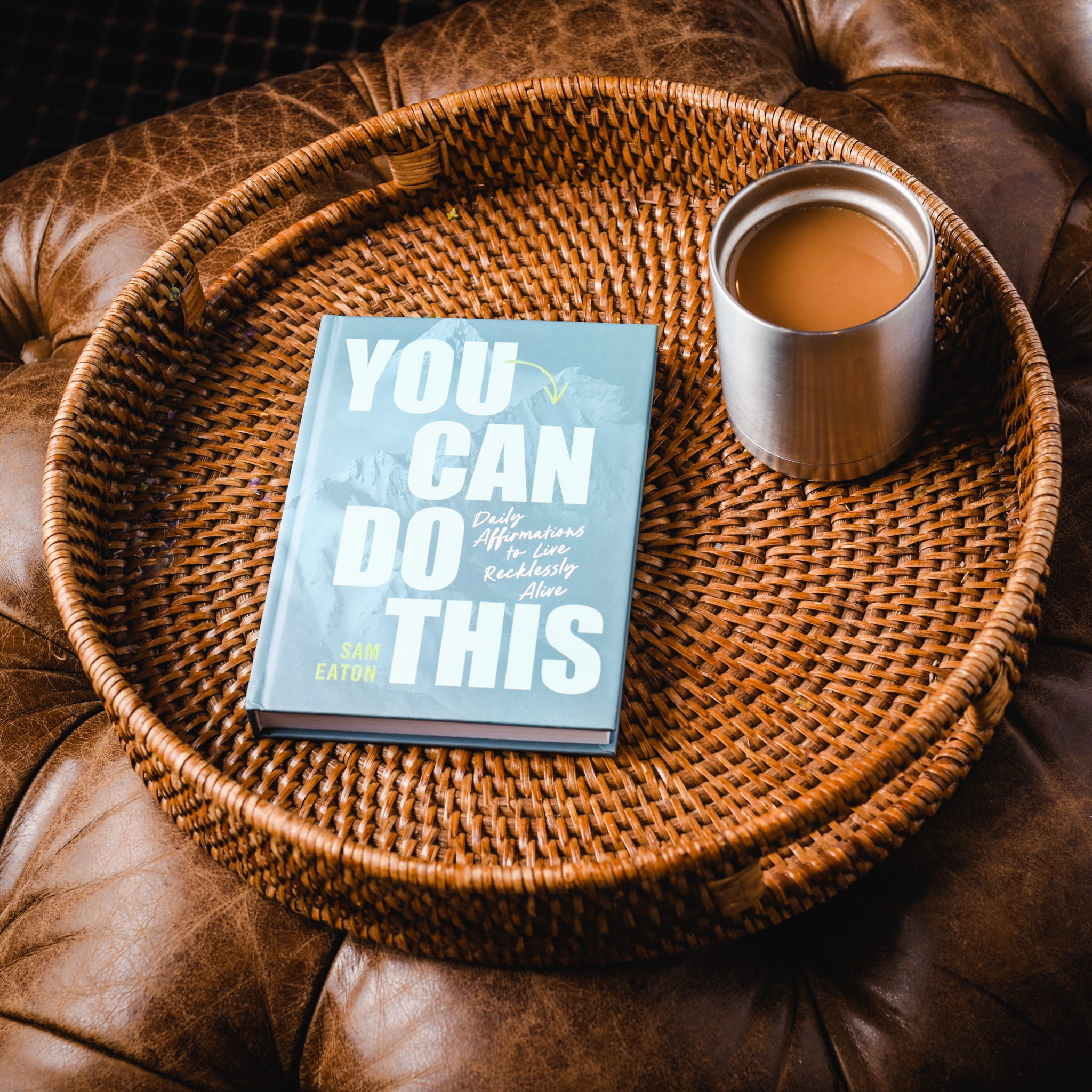
On April 28, 2026, I’ll walk into a bookstore and see this book sitting on a shelf. I’ll reach out, pick it up, and stand there for a second, taking it in.
I hope I’m wise enough to stop and enjoy that moment. To let myself feel proud. To thank God for carrying me through the long, hard fight it took to get there. And to pray that the words in that book find the people who need them.
So speak the dream out loud, my friend.
Take the bold action.
Not because you know exactly what you’re doing, but because some things only become real once you begin.
If this resonated with you, this is exactly what I’ve been building behind the scenes. You Can Do This: Daily Affirmations to Live Recklessly Alive is a 13-week daily reader built around the seven practices that have helped me get through the hard days and keep moving forward:
Bold Action
Self-Talk
Self-Worth
Resilience
Purpose
Self-Care
Connection
You can preorder it here.
Comments
Nothing yet. Say the first thing.
Sign in to join the conversation.