
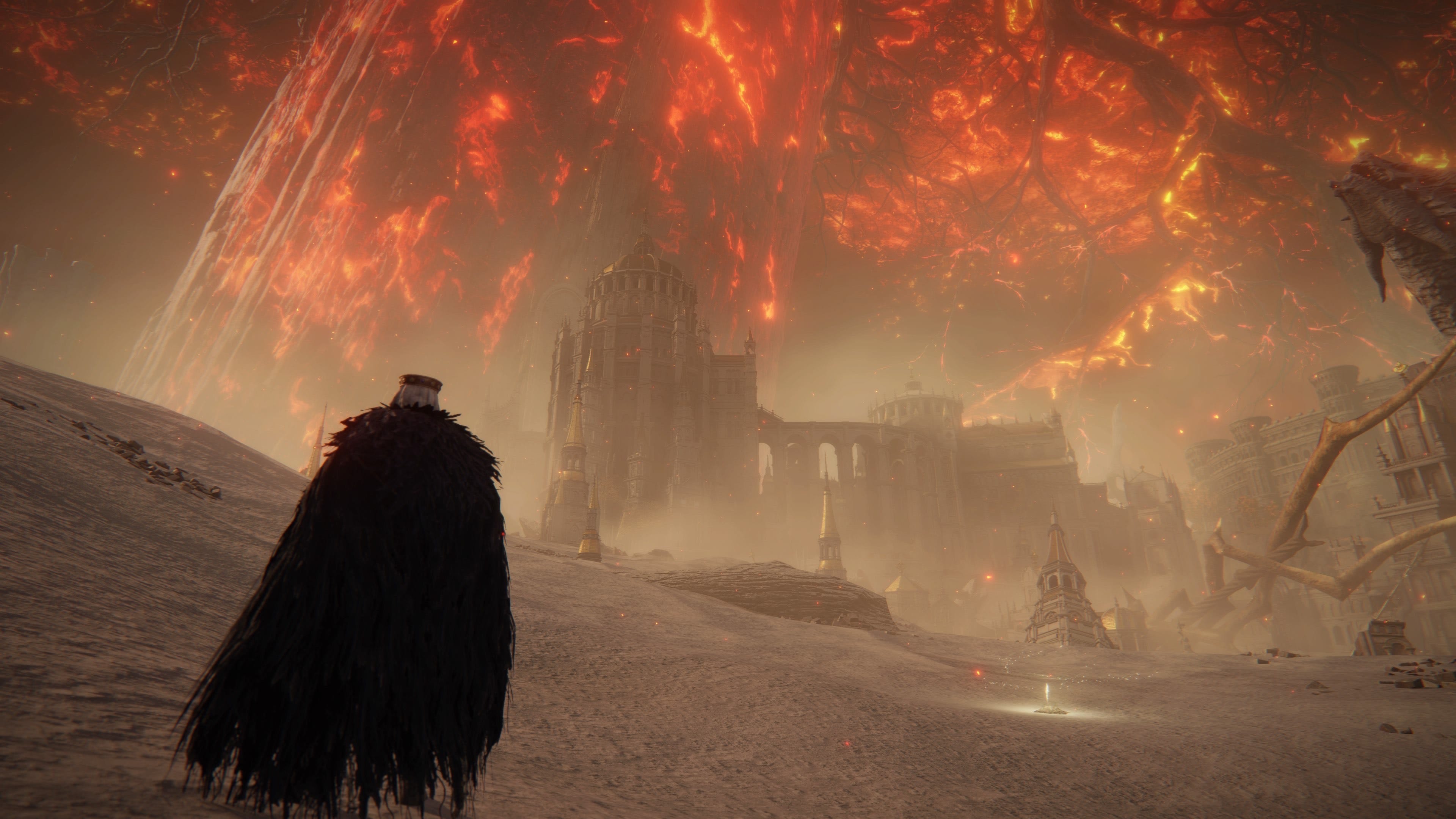
kegare 穢 — ritual defilement or pollution
In the previous post, I explored how Elden Ring’s two original factions position themselves as the guardians of the Sacred.
The Golden Order and the Hornsent both legitimized their regimes by claiming they had a special connection to the source of the Cosmos. For the Golden Order, this was their veneration of the Erdtree and the Elden Ring. For the Hornsent, it was their quest to build Enir-Ilim and harness the power of the Crucible. The two regimes’ beliefs formed the central worldviews of the setting.
But a wide variety of “profane” factions occupy the Lands Between as well. According to the Golden Order, these factions lie beyond the boundaries of the Sacred. They defy the Elden Ring’s Order and therefore have no place in the Cosmos. To the dominant powers, they occupy the profane space of monstrous chaos.
Despite the monstrous imagery, I want to argue that Elden Ring does not position these “profane” beings as objectively outside the Sacred. On the contrary, their supposed “profanity” is more of a rhetorical strategy than an objective fact.
In reality, all of Elden Ring’s main factions have their own vision of the Sacred and the Profane. This vision is embodied in key characters and important places. These places are “cosmic pillars,” to borrow Eliade’s term, that serve as the center of the world order they wish to found.
Victory in this conflict of visions boils down to who can declare the others unclean. The one who succeeds will inherit the earth. Everyone else will suffer the shame of profanity.
First, what does it mean for something to be “profane”? The religion scholar Mircea Eliade defined profanity as a state of homogeneity: Everything is the same. Nothing marks out one place as more special than another, or one time as particularly important. The profane is without order, and thus without meaning.
If you have ever gone a long time without a job or something to do, you know something about the experience of profanity. One day fades into the next. You have no agenda, nothing important to invest in, nothing ordering your life beyond momentary whims. Every direction leads to nowhere. It is a thoroughly demoralizing experience.
Now, imagine applying that sense of aimlessness to the entire universe. To the religious person, a wholly profane world is unbearable. The structures that make up the world give meaning to life. Their disappearance would mean disaster. Hence, the religious man must regularly make contact with the Sacred to maintain contact with cosmic meaning.
This is where the concept of “uncleanness” comes in. Profanity is sticky. It clings to a person as they go about daily life, especially when they encounter cosmic breakdown. Death, disease, excrement, even childbirth—events like these exposes someone to entropy. That entropy sticks to the person, rendering them unfit for an experience of the Sacred—in a word, unclean. Disorder cannot exist in the presence of Order. Getting rid of the uncleanness requires some sort of cleansing ritual.
To the Western mind, the most obvious example of uncleanness is the Mosaic Law’s many prohibitions on food, touching corpses, dealing with lepers, etc. These were not exactly the same as moral violations; a leper was not sinning by having leprosy. They were simply tainted by cosmic disorder.
Japan is also quite familiar with ritual cleanliness through the concept of kegare. It is a key element of Shintoism.1 Like in other religions, it is possible to pass out of cosmic harmony by becoming polluted with profanity, which requires ritual purification to remove.
I am far from the first person to discuss kegare in the context of Fromsoftware games.2 However, I think I am the first to point out that kegare exists in two levels in Elden Ring. It first exists on an objective, Cosmic level. It second exists on a subjective, rhetorical level. While the world of Elden Ring does objectively become full of ritual pollution, the game’s factions also see each other as embodying that pollution.
My focus is on the second level of kegare—the subjective level. The Golden Order, the dominant power of The Lands Between, tries to delegitimize competing factions by describing them as unclean. But this is a rhetorical strategy, not objective reality. The truth is that these non-human factions are only “profane” in the eyes of the Leyndell elite.
In reality, the “monstrous” factions have their own vision of the world, their own center of the universe, their own ideas about purity and cleanliness. They seek to establish their own axis mundi—their “cosmic pillar,” in Eliade’s terms. And as the Golden Order crumbles, they rise to take its place.
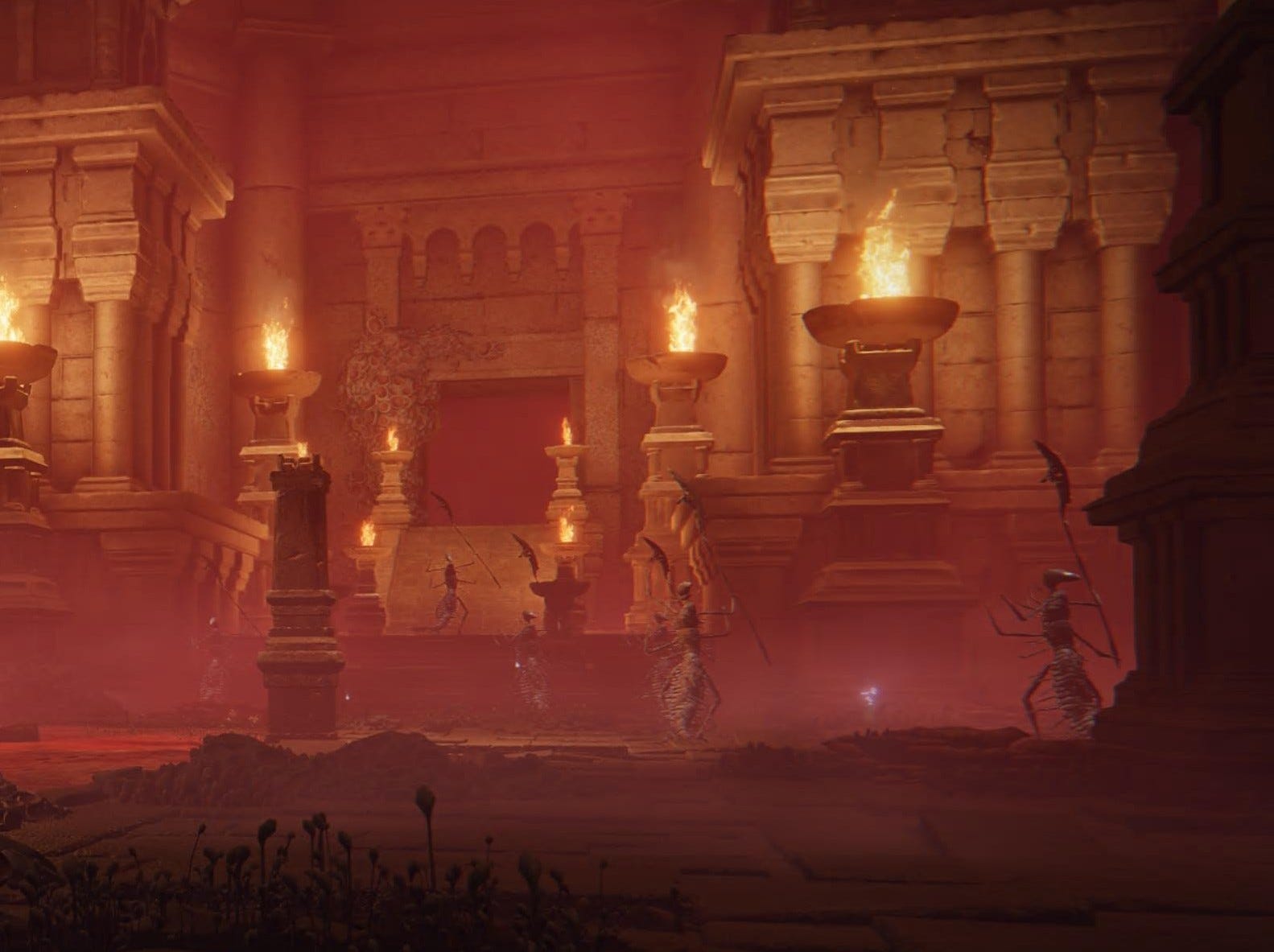
The Scarlet Rot is an Outer God, a spirit of nature, that has afflicted the world since time immemorial. Once confined to the Lake of Rot, its influence has recently spread into the wild swamps of Aeonia.
It would be easy to mistake the Rot for pure kegare, and the Golden Order certainly would. But the Scarlet Rot is not antithetical to life. Far from it, for it is the source of a whole host of new lifeforms. These creatures are bound in essence to the Outer God and are champions for its vision of the cosmos.
The foot soldiers of Rot are the Kindred. These insectoid halberdiers patrol places where the Rot has invested itself, such as the Swamp of Aeonia and the Lake of Rot. They can even be found worshipping the Rot (see the previous picture).
The Scarlet Rot’s true champion, however, is Malenia.
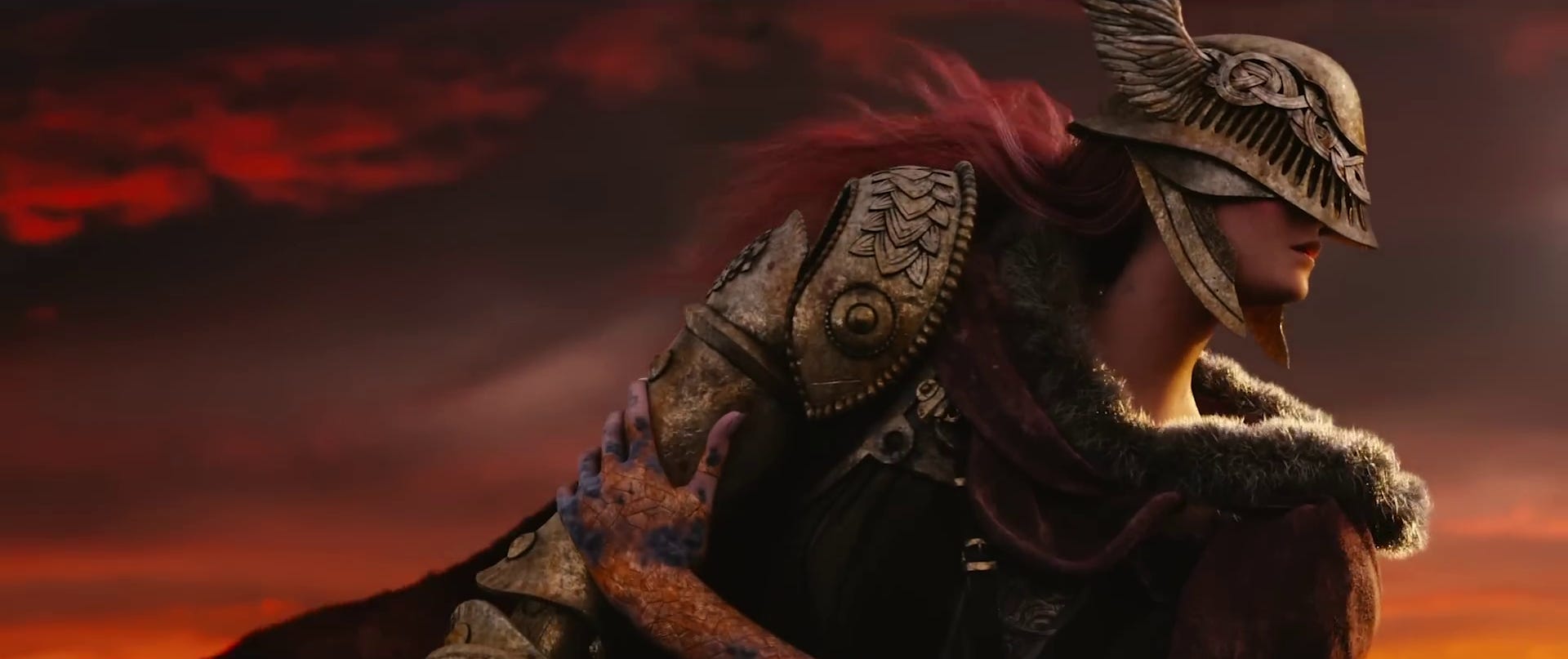
She was born an Empyrean, carrying the scarlet rot. An Empyrean...is no mere demigod. In the age of the Elden Ring, and Queen Marika, the precious Empyrean was born. A new god to forge a new Order.
Since Malenia fought Radahn, and the great scarlet flower blossomed in Aeonia, I have dedicated myself to her. And to the resplendence of the Order of Rot. The cycle of decay and rebirth.
— Sage Gowry
Malenia is unusual among the demigods in that she can become a true god. In Elden Ring terminology, that means she can embody a new order for the cosmos. Just as Marika embodied the Golden Order, Malenia may embody the Order of Rot.
In this new Order, the unrestrained process of “decay and rebirth” would be held Sacred. The Golden Order sought to arrest this cycle through manipulation of the Elden Ring. The Scarlet Rot wants it to run free. It wants the carrion bird, the scavenger, and the sickly to be the pre-eminent beings in the Lands Between. The Golden Order and its stifling cleanliness would be profane.
Malenia is not a willing participant in this plan, but she is an effective one. She spreads the Rot wherever she goes. Her actions brought the entire region of Aeonia under the Rot’s influence.
She even created a new axis mundi for the Order of Rot. During her legendary battle with General Radahn, she embraced the Scarlet Rot’s power and bloomed a new cosmic pillar into existence: The Heart of Aeonia.
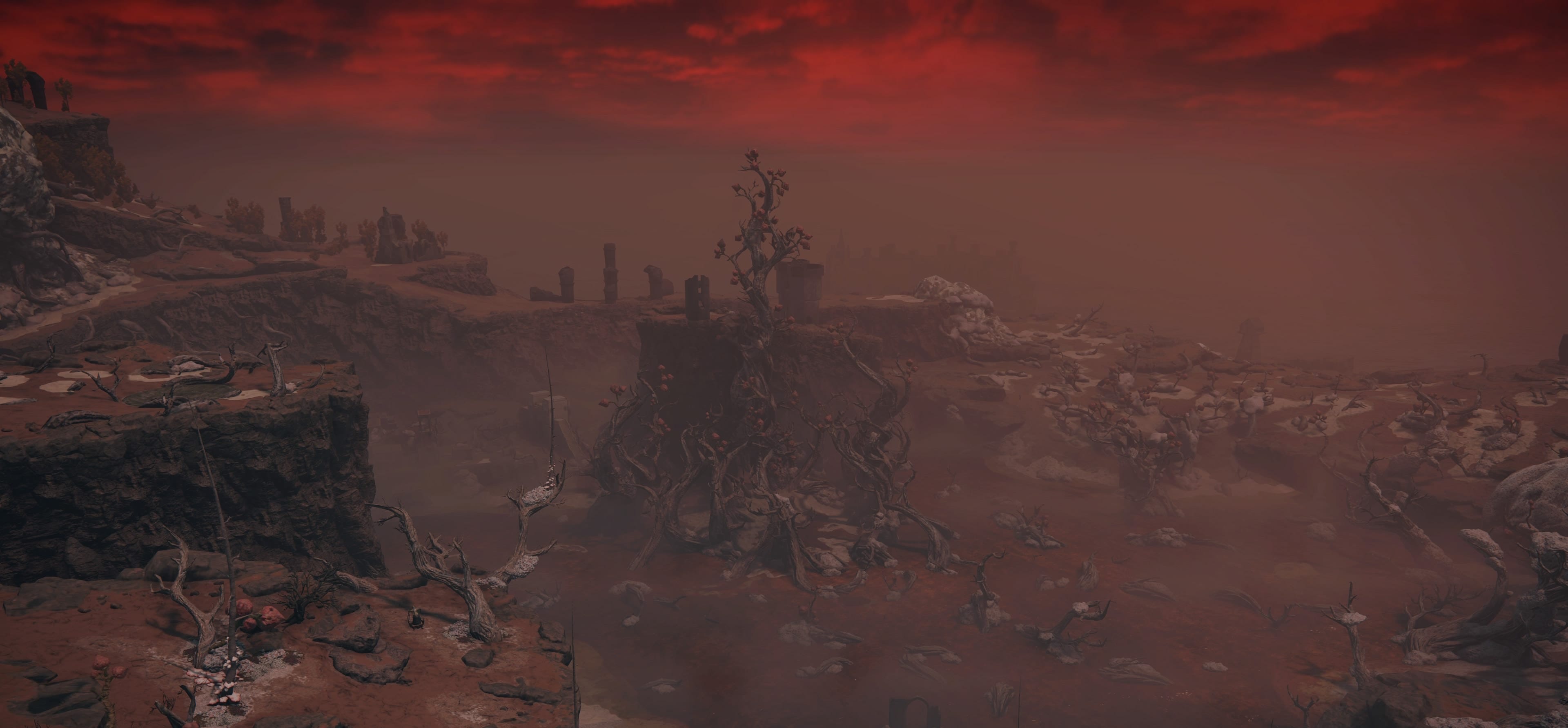
This withered bloom is the Scarlet Rot’s equivalent of the Erdtree. For the Kindred, the Cleanrot Knights, and the other Rot-blighted creatures, it is the center of the world. It is a throne waiting for the Goddess of Rot to return.
From this new cosmic pillar, the Servants of Rot might free the entire Lands Between of the Elden Ring and restore the cycle of decay and rebirth. This would not be the end of the world. It would be the beginning of a new one—a world where “vermin” are no longer hunted.
The Scarlet Rot, therefore, does not necessarily represent the dissolution of the cosmos entirely. It is not an embrace of the profane. Instead, it represents an alternative vision of what is Sacred and what is Profane. To the Golden Order, the Servants of Rot are the epitome of kegare. But to the Scarlet Rot, it is the Golden Order that is unclean.
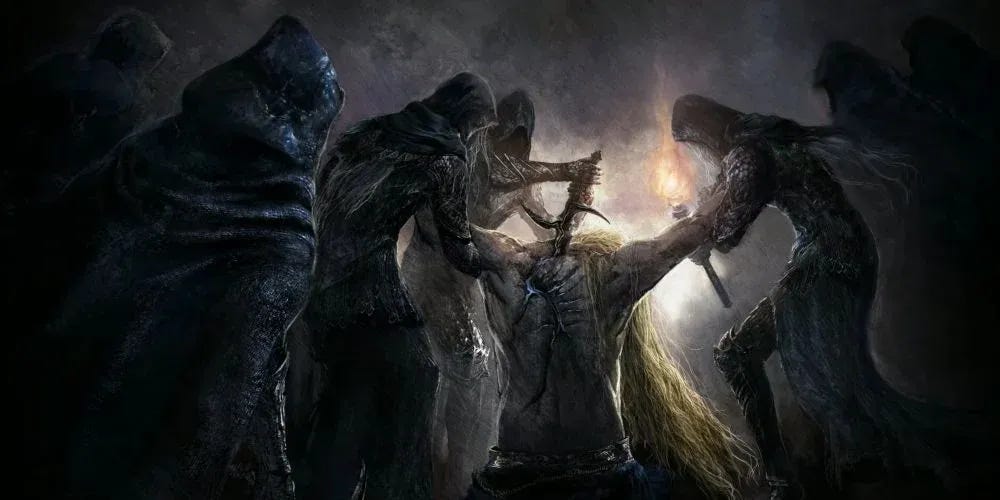
Godwyn the Golden, most beloved of Marika’s children, was betrayed. The Black Knife Assassins used the power of Destined Death to murder the immortal demigod.
But Godwyn’s was not a true death. The assassins killed his soul, but his body lingered. The undead corpse warped into a monstrous creature who spread death throughout the Lands Between. All who came into contact with Godwyn’s Deathroot were inflicted with his condition. Unable to rest, the dead returned to haunt the living.
These are Those Who Live in Death.
At first glance, these skeletal creatures seem like a good candidate for an unclean faction. And from the Golden Order’s perspective, they certainly are. However, just like the Servants of Rot, Those Who Live in Death simply reflect a different ideal of the Sacred.
The player learns what Those Who Live in Death stand for through Fia, the Deathbed Companion. She is their unofficial spokeswoman.
The best articulation of the Dead’s view of the Sacred comes from the Baldachin’s Blessing Fia provides.
Favor bestowed by a deathbed companion. Protection of a hidden temple in the guise of a bedchamber.
Uses FP to temporarily boost poise.
The favor allows one to forget any aches and pains. In Death, there is only peace, for in Death, there can be no sensation.
This Blessing articulates an ideal that is precisely the opposite of both the Scarlet Rot and the Golden Order. The Scarlet Rot desires a wholly unrestrained cycle of rebirth driven by decay. The Golden Order also wants a cycle of rebirth, but bound to the Erdtree.
In contrast, Those Who Live in Death desire to end the cycle altogether. They want to usher in a world where everyone is blissfully unconscious, as though in a dreamless sleep. Godwyn was the first to achieve this ideal but the rest of the Dead follow in his footsteps. Though their bodies may be restless, their soul has entered an eternal rest.
It is hard to miss the Buddhist connotations lurking behind Those Who Live in Death. The standard Buddhist story is that everything is trapped by their ego in a cycle of rebirth—samsara. Escaping the cycle requires transcending the ego by recognizing there is no essential “you.” By liberating oneself from the ego, one fades back into the whole, free of all sensation and thus free of pain. This is enlightenment, or nirvana.
It would be a mistake to equate nirvana with nonexistence in the Western sense of the term. Rather, it is often compared to the snuffing out of a flame. The ancient Indians theorized that fire sprang forth from some mysterious, unseen substance. When the fire goes out, it does not cease to exist. It returns to its original, peaceful state.
For the same reason, Those Who Live in Death should not be thought of as mindless corpses. They are not dead; they are undead. This vague state between life and death is an excellent metaphor for the quasi-nonexistence of nirvana.
The behavior of Those Who Live in Death also suggests they have not quite achieved the complete cessation of desire. Fia describes them as suffering from persecution and longing for a Lord.
Only Godwyn has achieved the ideal of liberation. Only he has achieved total end of sensation. He cannot be harmed any longer by the cruel world.
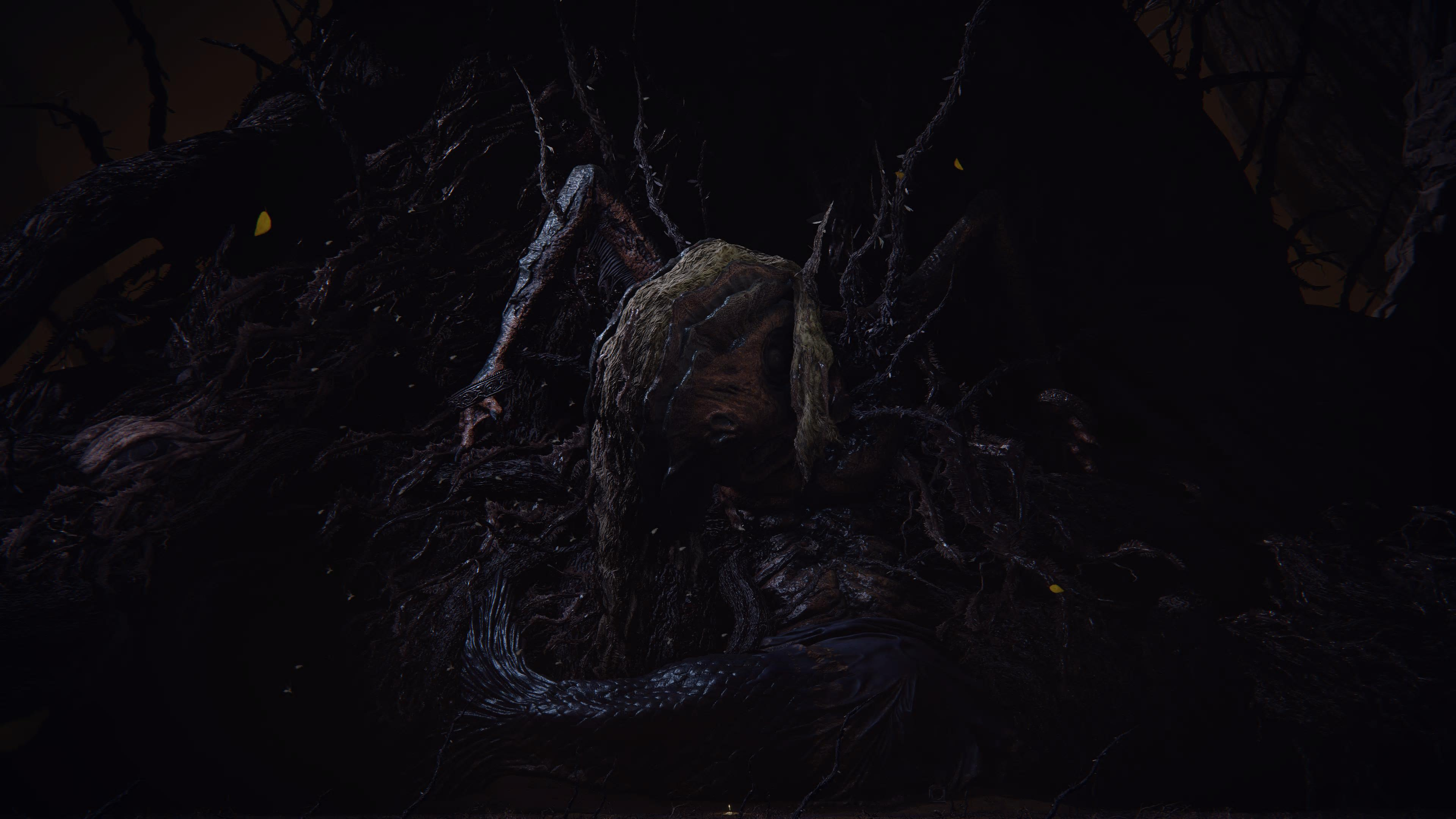
For this reason, Godwyn’s warped body has become a cosmic pillar for Those Who Live in Death. It represents all that they wish the world to be. If Fia and the Dead achieve their Age of the Duskborn, it will mean all will become as Godwyn is: Enlightened.
Again, this is not the total dissolution of the Cosmos. Despite their monstrous appearance, Those Who Live in Death do have a vision of the Sacred and the Profane. It simply differs from the Golden Order’s ideal of deathlessness.
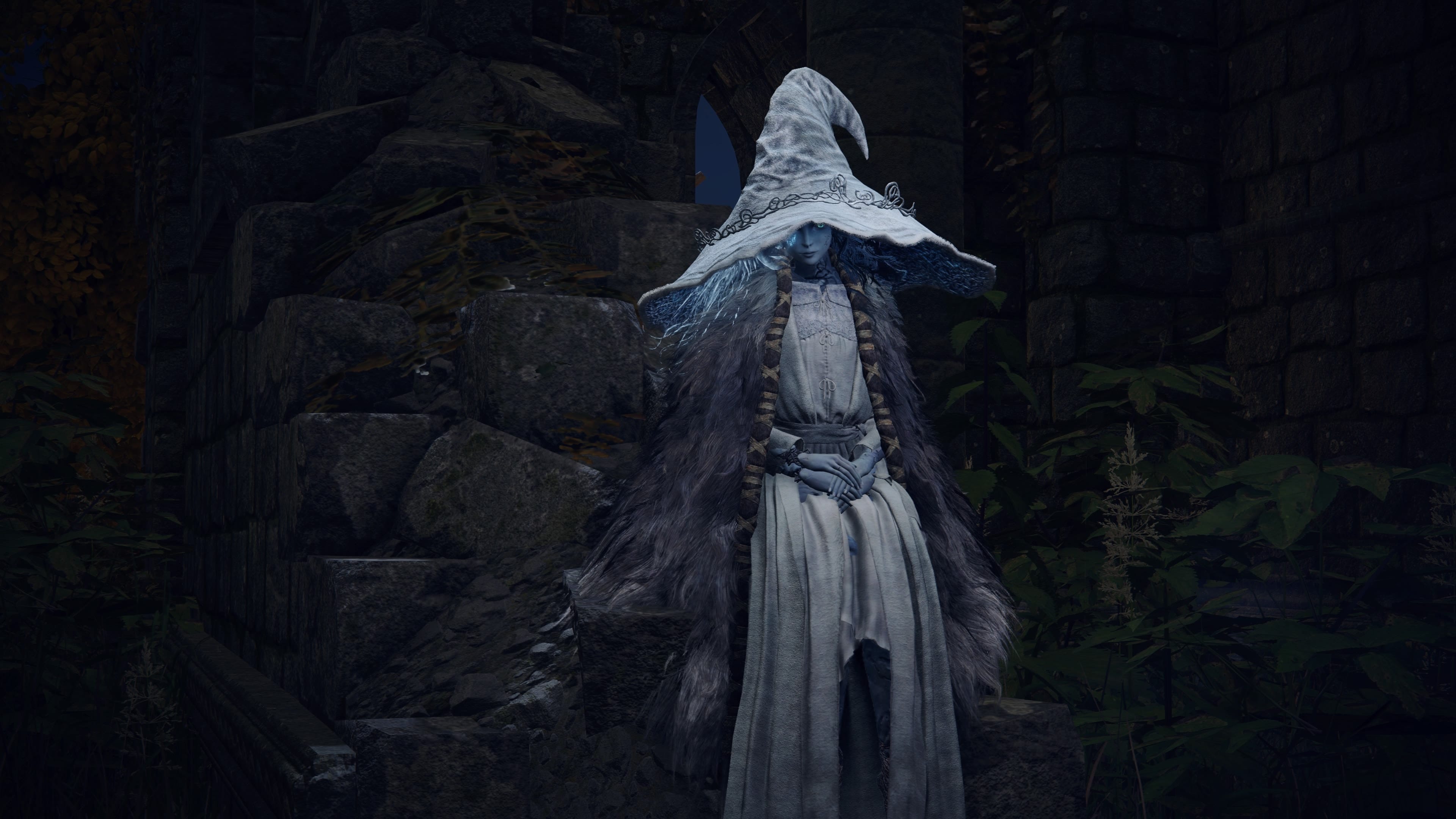
The last “profane” faction I will cover is Ranni’s Court, and I will cover it all too briefly.
Ranni is the unseen agent behind many events in the Lands Between. The daughter of Radagon and Rennala, Queen of Caria, Ranni was blessed with a special connection to the stars. She is fated to alter the world forever, if the night sky has its way.
Like Malenia, Ranni was also born an Empyrean. She is capable of taking Marika’s place by embodying a new order for the Cosmos. This fact has driven her entire life.
The gods of the Lands Between are not the supreme power. That is supposedly the Greater Will, an unseen cosmic deity who rules through the Two Fingers. The Two Fingers carefully keep their grip on whoever becomes a god. When Marika’s time ended and Ranni’s reign began, they would be the ones controlling her destiny.
Ranni sacrificed everything to free herself from their control. She murdered Godwyn’s soul so she could escape her own flesh. She plunged the Lands Between into civil war to escape their power.
Most importantly, she forged a pact between herself and the Nox, a subterranean people considered unholy by the Golden Order. The Nox were star-worshippers who envisioned an alternative not merely to the Golden Order, but to the entire system the Two Fingers created.
Their equipment tells some of their story.
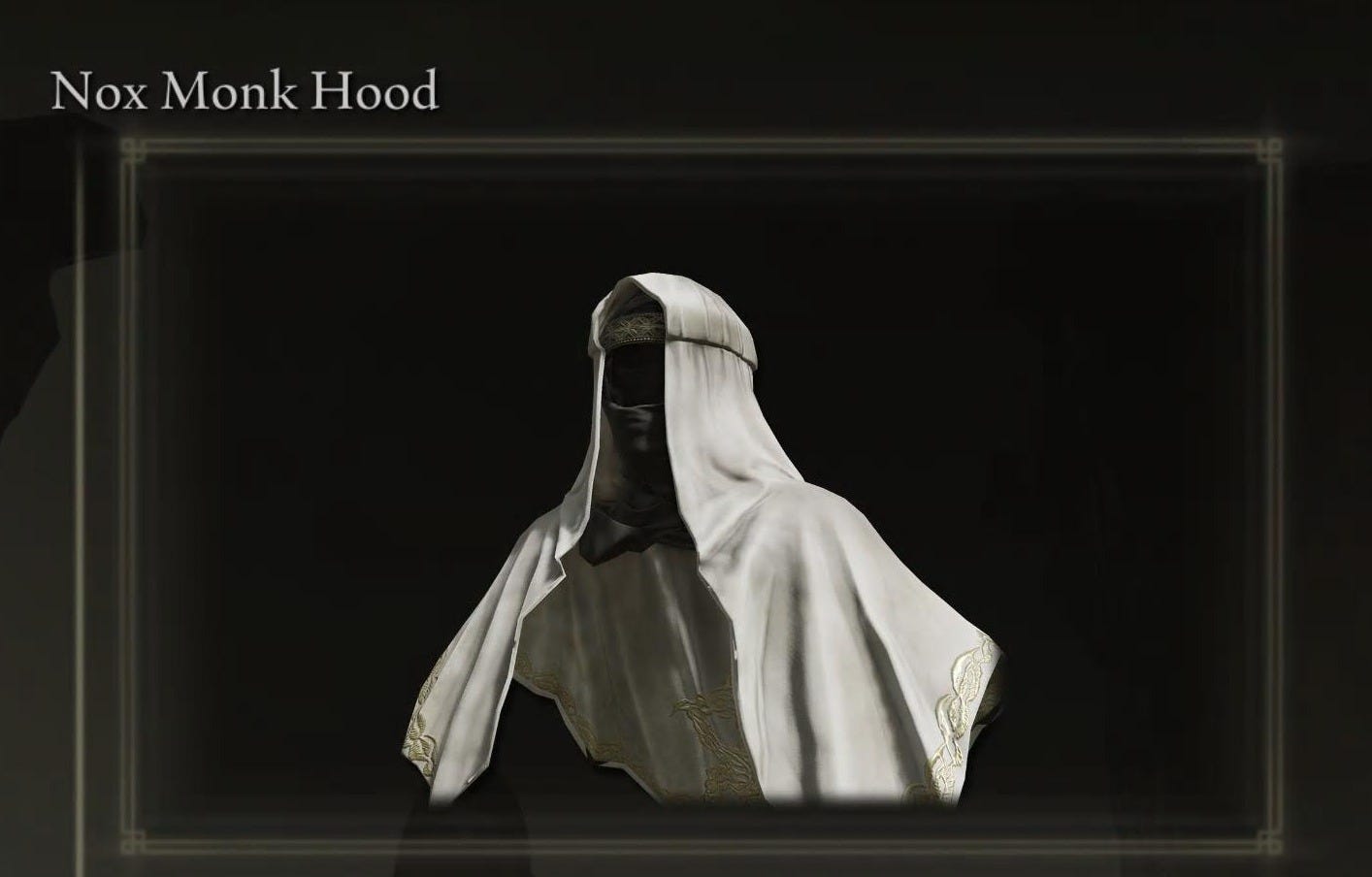
Silk hood worn by the monks of the Eternal City.
Long ago, the Nox invoked the ire of the Greater Will, and were banished deep underground. Now they live under a false night sky, in eternal anticipation of their liege. Of the coming age of the stars. And their Lord of Night.
The Nox wish to usher in an epoch free of the Greater Will’s control. Their agent for achieving this is the “Lord of Night.” They tried various experiments to artificially create this Lord, but none succeeded.
Ranni presented an alternative. Her hatred of the Two Fingers made her a natural ally of the Nox, who helped her perform the Night of Black Knives and kill Godwyn. But it was not to last. Ranni would be no one’s pawn—not even for the Nox.
Despite her independent spirit, Ranni still bears the hopes and dreams of the Nox. She remains aligned with them on what the Lands Between should regard as Sacred, and what should be considered Profane. That is, she still believes in an Age of Stars.
Ranni explains what she aims to achieve with the Age of Stars. She begins with her introduction:
I am the witch Ranni.
I stole Death long ago,
and search now for the dark path.
That I might one day upend the whole of it,
and rid the world of all that came before.
For Ranni, it is not enough to merely tweak the Elden Ring to fit her vision. The Elden Ring, the source of the Two Fingers’ power, is the problem. She seeks total revolution.
What will her revolution achieve? She explains again:
Mine will be an order not of gold,
but the stars and moon of the chill night.I would keep them far
from the earth beneath our feet.
As it is now, life,
and souls,
and order
are bound tightly together,
but I would have them at great remove.And have the certainties of
sight, emotion, faith, and touch...
All become impossibilities.
The darkness metaphor is key to interpreting this somewhat obscure speech. Ranni is offering the opposite of the Golden Order.
The Golden Order promised an age of light. Through dogmatic faith in the Erdtree, they would provide the world with ironclad knowledge of reality. What you are, why you exist, and what you should do were all answered by the fundamentals. The individual has no real existence; “all things can be conjoined.”
The Age of Stars is a “dark” age in that the questions are not answered for the individual. Like Ranni, everyone is forced to go on a journey of self-determination to find their own meaning. That is not a comfortable path. It is dark, and cold, just as Ranni says. But it is the one she and her companions consider Sacred.
Just like all the other factions, Ranni has her own cosmic pillar to signify her worldview. In this case, it is Ranni’s Rise.

This expertly built tower is in the highlands beyond the lakes of Liurnia. It is a frigid place, revealed by the huge crystals flanking the door. The Glintstone Dragon Adula lurks in the surrounding region. Reaching Ranni’s Rise is far from easy, for it requires passing through the deadly Carian Manor. Only the determined can persevere through the many obstacles—a perfect symbol for self-determination.
Ranni’s Rise is where her court gathers. Together, they join her pursuit of the Age of Stars. Iji and Blaidd both share Ranni’s conviction that the freedom to choose one’s own fate is Sacred. For this reason, they are willing to sacrifice even their lives to ensure her plan succeeds. That is their own act of self-determination.
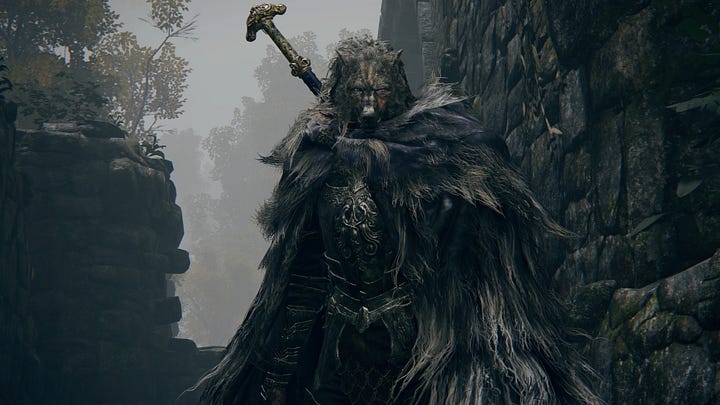

For all members of Ranni’s Court, the influence of the Two Fingers and the Golden Order is loathsome. The Age of Stars is their last, best attempt to cleanse the Lands Between of the Greater Will forever.
There are many more “profane” factions in Elden Ring, but I think these three are sufficient to illustrate the point. The Golden Order portrays the Scarlet Rot, Those Who Live in Death, and the Nox as kegare—unclean. But to these factions, the Golden Order is the one that is unclean. Kegare is used as a rhetorical strategy to denigrate one’s enemies. It is not necessarily an objective state of the world.
Kegare is the product of cosmic breakdown, but what that looks like varies depending on one’s worldview. All the factions have different ideas of what should count as Sacred and Profane, and thus different ideas of kegare (pollution).
For Ranni, kegare is a product of the Golden Order seeking to control everyone’s fate. For Those Who Live in Death, kegare results from the suffering caused by the Golden Order Fundamentalists. And for the Scarlet Rot, kegare comes from the sterile cycle of rebirth promoted by the Erdtree.
The Erdtree is the central pollutant for these rival ideologies. It is the source from which all kegare flows. In order to purify the world, the Erdtree must either be displaced by a new Cosmic Pillar or captured. That, or these rivals must go extinct.
“Their mere existence sullies the guidance of gold. Tainting its truth. And so it is the vermin must be exterminated... Down to the very last.”
— D, Hunter of the Dead
I previously described the Problem of Pluralism as the problem of incompatible worldviews trying to coexist in the same society. This Problem is zero sum—for one side to win, all others must lose. The Golden Order’s massacre of the Hornsent showed the horrific violence that can follow such a victory.
But the contest between the Golden Order and the “profane” factions reveals the rhetorical, symbolic element of the Problem. The ruling power’s enemies must be killed symbolically as well as physically. Their meaning must be erased from the universe.
This symbolic destruction extends even to the physical production of space. The enemy’s center of the world must be replaced with the new regime’s center. The Problem of Pluralism can result in a rhetorical, as well as physical, battle.
In the final analysis, Elden Ring shows how the concepts of Sacred and Profane can be weaponized politically. It shows us how kegare can be deployed to justify horrific cruelty to enemies. The logic is simple: If the enemy is pollution, then we are justified in purifying the world of their presence. Every faction’s atrocity stem from this simple calculation.
My prayer is that weaponizing kegare remains confined to the Lands Between.
Drott’s (2015) article “‘Care Must be Taken’ Defilement, Disgust and the Aged Body in Early Japan” is an interesting exposition of kegare’s relationship to age.
I strongly recommend AesirAesthetics’ YouTube channel if this subject intrigues you. He has made the topic of kegare a pet subject of his and has several excellent videos.
Comments
Nothing yet. Say the first thing.
Sign in to join the conversation.