
I wasn’t supposed to make it.
Born two months premature in 1963, I spent almost my entire first year in a hospital in Milwaukee. That was the first time I cheated death. It wouldn’t be the last.
My parents were young, poor, and struggling. My father tried business after business that never worked out. My mother did her best to hold the family together. By the time I was five, we moved to Wyoming, chasing health for me and a cowboy dream for my dad. That move began a long cycle of poverty, scarcity, and instability that shaped how I saw myself and my worth in the world.
I was the kid in taped-up shoes and a ragged haircut, humiliated on the basketball court for not wearing the right gear. What I had I worked for myself by shoveling snow and mowing lawns. By nine years old I was the “go-to” bicycle repairman of my neighborhood. I went to too many schools, never really felt a sense of belonging and value. I was teased for my hand-me-down clothes. By high school, I knew I was different, and not in the good way.
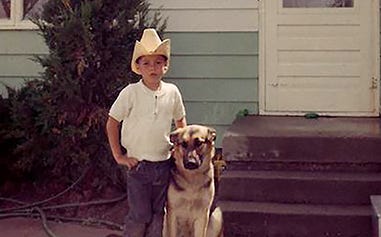
I didn’t know at the time but this situation was programming me to undervalue myself.
At seventeen I mouthed off one too many times and was kicked out of the house. I slept on park benches. I worked fast food jobs and odd jobs. I was a child prodigy playing guitar. I played anywhere someone would pay me. I managed to finish high school while essentially homeless. Survival requires grit, but grit doesn’t cure the belief that you are worth less than others.
From there, music became both my ticket out and my trap. I toured, I hustled, I lived hand to mouth. Addiction followed. I spent more nights sleeping on pool tables than in beds. The grind nearly killed me. Eventually I walked away, went back to Milwaukee, with the goal to go to rehab and complete college. I took the first professional job I could get, as a bank teller.
That job changed how I saw money. I made minimum wage in a suit, while every week I counted hundreds of thousands of dollars in the vault. When a customer deposited $10,000, I thought it was nothing. Handling other people’s wealth while scraping by distorted my sense of the value of money. It proved how elastic our beliefs are around money, and how easily they warp.
Scarcity was my first inheritance. It told me to keep my head down, take what I could get, and never expect more. That programming followed me into adulthood and into business. It shaped how I sold, how I priced, and how I saw myself. Clients could smell it. I was needy, replaceable, and cheap.
This book exists because too many of us carry that programming. Maybe your details are different, but the effect is the same. The voices of poverty, upbringing, and social norms seep into your business belief system, your personal confidence, your sense of value. They convince you that you are less.
In fact I already know that many people will think this is hogwash. They are so firmly entrenched in their thinking that they will never see their way out. They will say things like “That’s how my industry has always worked. This would never work for me.” and “There is so much competition, I can’t afford to raise my fees.”
That’s why only about 2% of consultants operate at the high level this book describes. The other 98% can’t get out of their own way - their preconceived ideas about themselves, their business, their industry, their customers, the market, et. al., keep them chained to a scarcity mindset.
Overcoming that isn’t easy. It takes deliberate effort, study, reflection, and work. This journey is not for the faint of heart. But it is possible. I’ve lived on both ends of the value curve: from benches and pool tables to boardrooms and Fortune 100 clients. From pocket change to being paid for insight.
The first step is this book.
It exists because too many smart people are still trapped in a scarcity mindset. They’re working hard, but their thinking is small. They’re stuck in “vendor mode”.
You don’t have to be. I wrote this book for you.
If you’re underpaid, undervalued, or exhausted by the chase, you’ll recognize yourself in these pages. You’ll also see the path upward. Better clients, higher fees, and a role that earns respect. (I’ve been absolutely sober now for 35 years. If I can do it, you can too.)
No posts
Comments
Nothing yet. Say the first thing.
Sign in to join the conversation.