
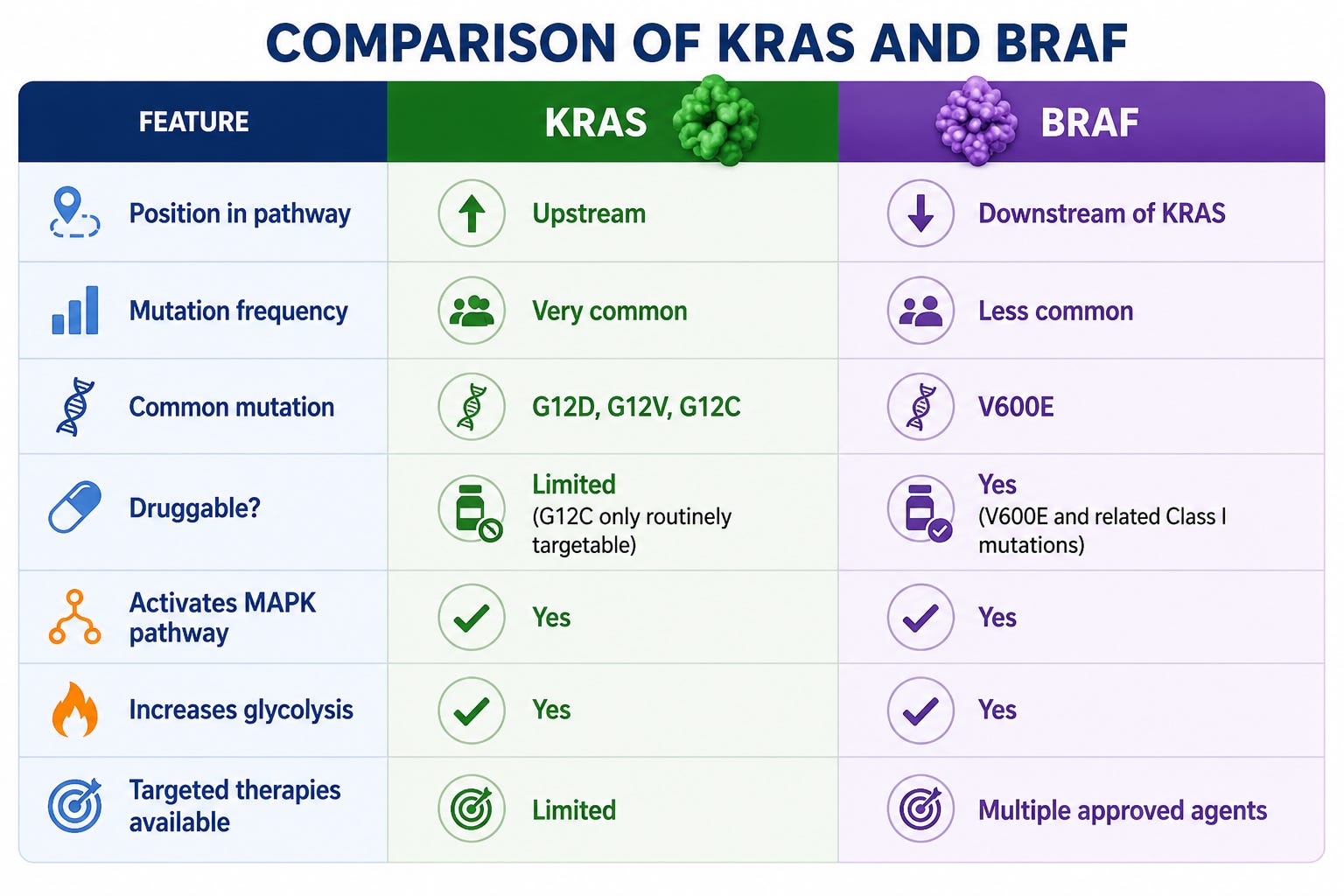
The BRAF mutation is one of the best-characterized cancer-driving (oncogenic) mutations. Like KRAS, BRAF is part of the MAPK signaling pathway, which regulates cell growth, proliferation, differentiation, and survival. When mutated, BRAF becomes permanently activated, continuously sending growth signals to the cell even in the absence of normal external stimuli.
What is BRAF?
BRAF encodes a serine/threonine protein kinase that lies immediately downstream of RAS in the signaling cascade:
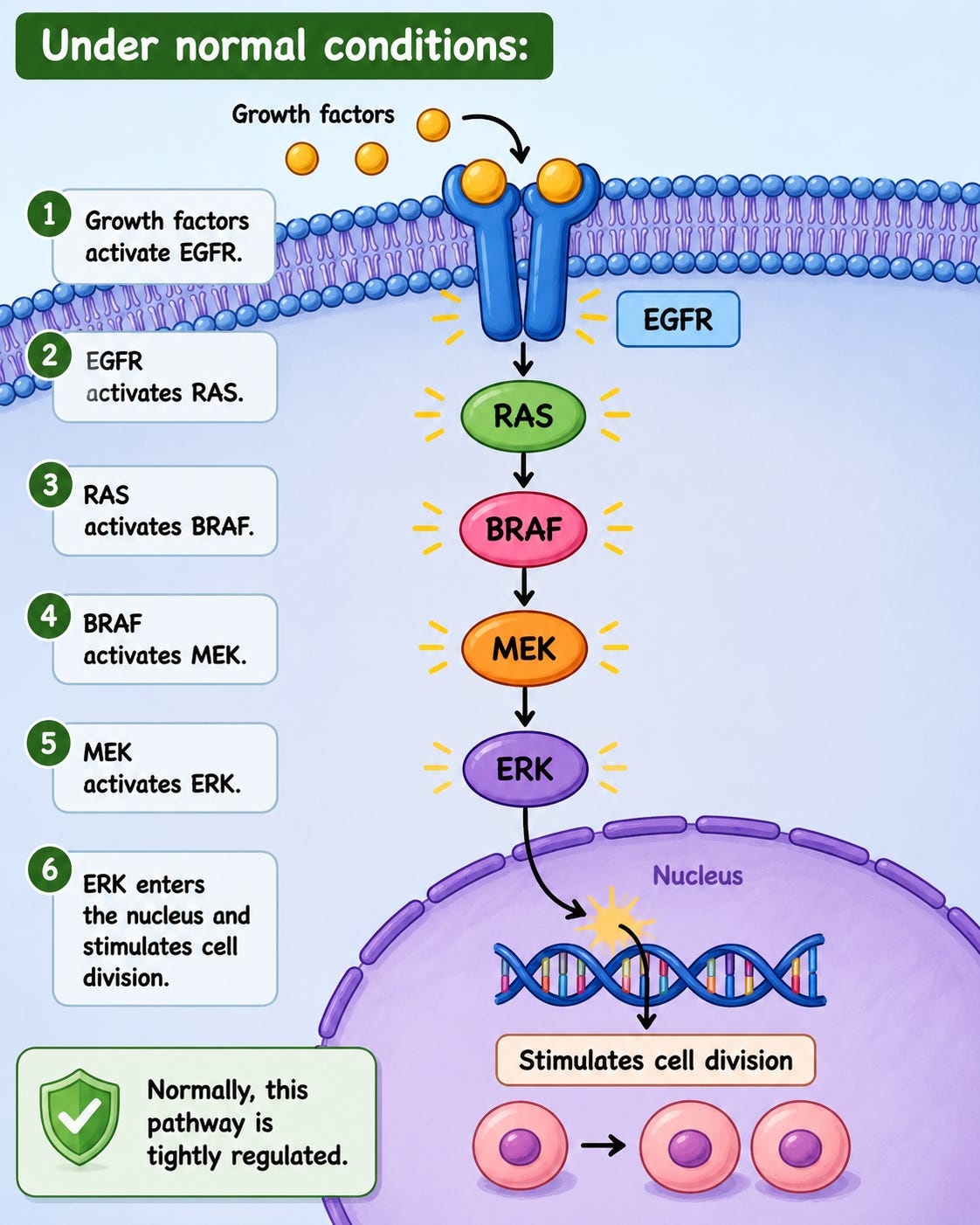
Growth Factor → EGFR → RAS → RAF (BRAF) → MEK → ERK → Cell Growth
Under normal conditions:
Growth factors activate EGFR.
EGFR activates RAS.
RAS activates BRAF.
BRAF activates MEK.
MEK activates ERK.
ERK enters the nucleus and stimulates cell division.
Normally, this pathway is tightly regulated.
What happens when BRAF is mutated?
A mutation in BRAF causes the kinase to remain constitutively active, continuously stimulating:
MEK
ERK
Cell proliferation
Cell survival
The cell essentially behaves as though it is receiving constant growth signals.
The most common mutation: BRAF V600E
Approximately 90% of BRAF mutations are:
BRAF V600E
This mutation substitutes:
Valine (V)
with Glutamic acid (E)
at amino acid position 600.
This single substitution increases BRAF kinase activity by approximately 500-fold, making it one of the most potent activating mutations in cancer.
BRAF and ovarian cancer
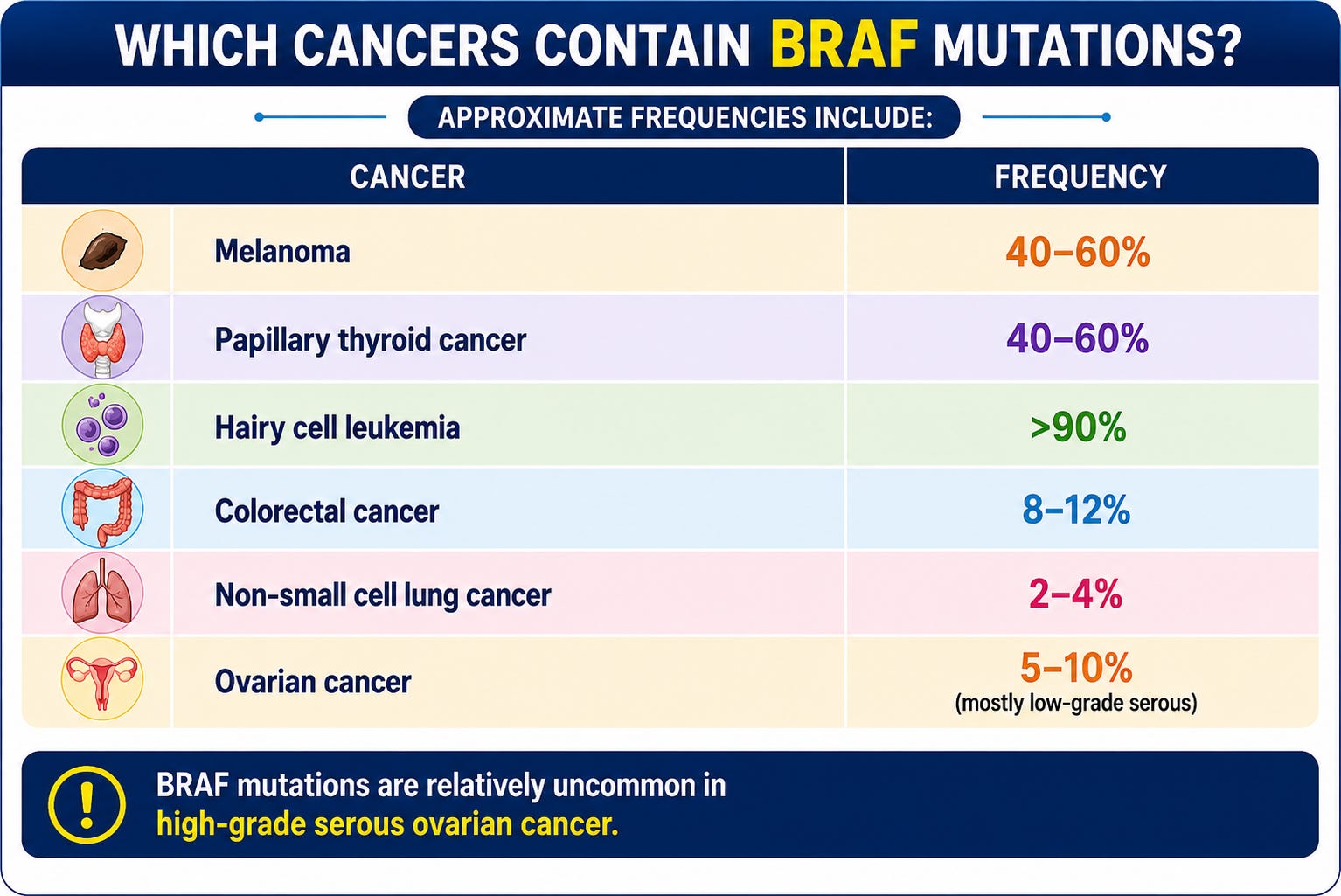
BRAF mutations are most frequently found in:
Low-grade serous ovarian carcinoma (LGSOC)
These tumors often harbor either:
KRAS mutations
or BRAF mutations
but usually not both simultaneously, since both activate the same signaling pathway.
Interestingly, BRAF-mutated LGSOC often behaves less aggressively than KRAS-mutated disease.
BRAF and the Warburg Effect
Although BRAF primarily activates the MAPK pathway, it also induces metabolic changes that support tumor growth.
These include:
increased GLUT1 expression,
enhanced glucose uptake,
activation of HIF-1α,
increased glycolysis,
greater lactate production,
angiogenesis through VEGF induction.
Thus, BRAF-mutant cancers often exhibit features of the Warburg effect, although the extent varies by tumor type.
Why is BRAF clinically important?
Unlike many oncogenic mutations, BRAF V600E is directly targetable.
Several drugs inhibit mutant BRAF, including:
Vemurafenib
Dabrafenib
Encorafenib
These are commonly combined with MEK inhibitors such as:
Trametinib
Binimetinib
Cobimetinib
Combined BRAF and MEK inhibition has dramatically improved outcomes in several cancers, particularly melanoma.
Why combine BRAF and MEK inhibitors?
BRAF inhibitor monotherapy often results in resistance within months.
Adding a MEK inhibitor:
prolongs responses,
delays resistance,
improves overall survival,
reduces some toxicities associated with BRAF inhibitors alone.
This combination has become standard treatment for many BRAF V600E-mutant cancers.
Does every BRAF mutation respond?
No.
There are three major classes:
Class I
V600E
V600K
V600D
These are highly sensitive to current BRAF inhibitors.
Class II
Examples:
K601E
L597Q
These mutations signal as dimers and respond less well to current BRAF inhibitors. Alternative strategies, often involving MEK inhibitors or clinical trials, may be considered.
Class III
These mutations have little intrinsic kinase activity and often depend on upstream RAS activation.
They generally do not respond to standard BRAF inhibitors.
Prognosis
The prognostic impact depends on the type of cancer.
For example:
Melanoma: historically associated with aggressive disease, but outcomes have improved substantially with targeted therapy.
Colorectal cancer: often associated with poorer prognosis and resistance to standard chemotherapy.
Low-grade serous ovarian cancer: BRAF mutations may be associated with a more indolent clinical course compared with KRAS-mutant tumors.
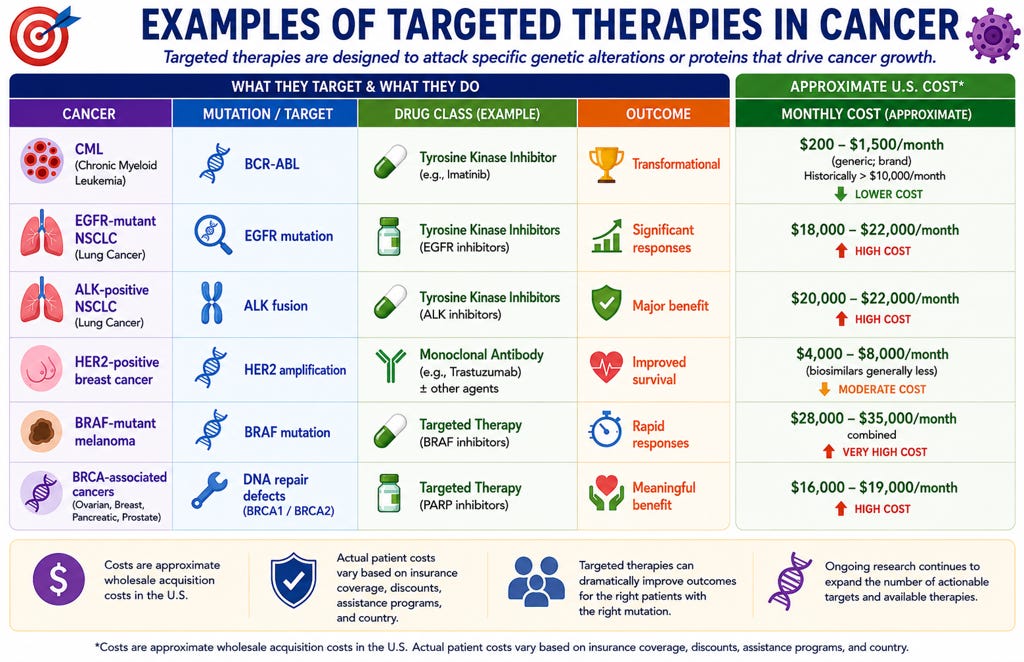
Please note these are wholesale acquisition costs in the USA. BRAF inhibitors can cost a patient up to $50 000 per month.
Bottom line
BRAF is a key driver oncogene in the MAPK signaling pathway. The most common mutation, BRAF V600E, locks the protein into a permanently active state, promoting uncontrolled cell growth, survival, angiogenesis, and metabolic reprogramming. Unlike most KRAS mutations, BRAF V600E is directly targetable with approved BRAF and MEK inhibitors, making it one of the most clinically actionable mutations in oncology. In ovarian cancer, BRAF mutations are found primarily in low-grade serous ovarian carcinoma, where they may influence prognosis and open the door to targeted treatment strategies.

Comments
Nothing yet. Say the first thing.
Sign in to join the conversation.