
Why These Mutations Are Really About DNA Repair, Genomic Stability, and Precision Oncology
Among all inherited cancer susceptibility genes, BRCA1 and BRCA2 are perhaps the best known. For most people, hearing the term BRCA mutation immediately brings breast cancer to mind. This association is understandable—mutations in these genes dramatically increase the lifetime risk of breast cancer and ovarian cancer and have fundamentally changed how these diseases are screened, prevented, and treated.
However, this common perception is incomplete.
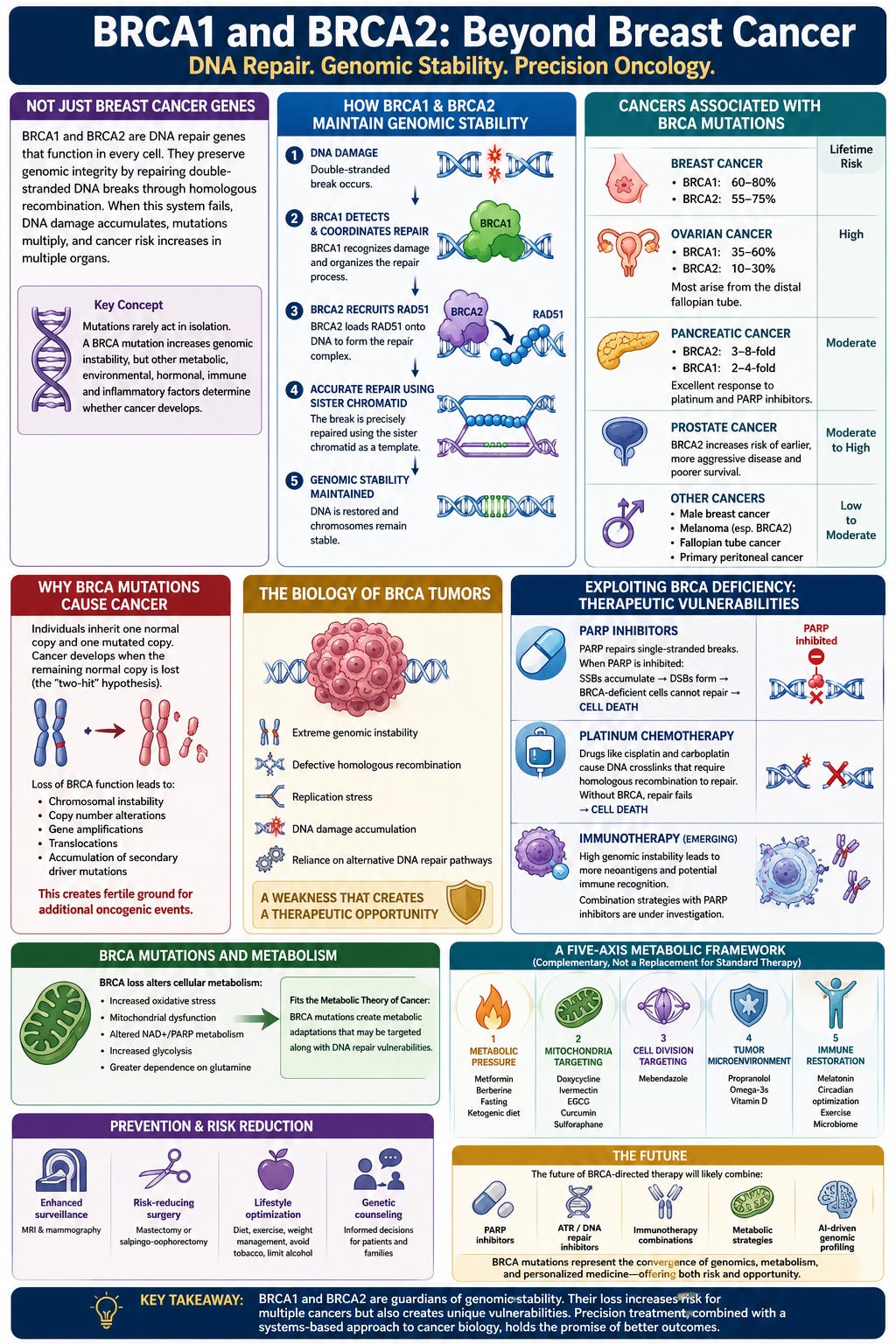
BRCA1 and BRCA2 are not breast cancer genes. They are DNA repair genes that function in virtually every cell of the body. Their normal role is to preserve genomic integrity by repairing double-stranded DNA breaks through the highly accurate process of homologous recombination. When this repair system fails, DNA damage accumulates, mutations multiply, chromosomes become unstable, and cancer risk increases across multiple organs.
Understanding BRCA biology therefore extends far beyond hereditary breast cancer. BRCA mutations increase the risk of ovarian, pancreatic, prostate, fallopian tube, primary peritoneal, and male breast cancers, while also influencing responses to chemotherapy, platinum agents, PARP inhibitors, immunotherapy, and potentially emerging metabolic approaches.
This broader perspective also highlights an important principle that runs throughout this mutation series: mutations rarely act in isolation. Rather than functioning as independent causes of cancer, they reshape the metabolic and evolutionary landscape within which tumors develop. A BRCA mutation increases genomic instability, but additional metabolic, environmental, inflammatory, hormonal, and immune pressures determine whether malignant transformation ultimately occurs.
The Discovery of BRCA
The search for hereditary breast cancer genes began in families in which multiple generations developed breast and ovarian cancer at unusually young ages.
In 1994, BRCA1 was identified on chromosome 17, followed a year later by BRCA2 on chromosome 13.
Their discovery transformed cancer genetics.
For the first time, clinicians could identify individuals carrying inherited mutations decades before cancer developed. This opened the door to genetic counseling, enhanced surveillance, preventive surgery, and eventually targeted therapies.
Importantly, inherited BRCA mutations account for only 5–10% of all breast cancers. Most breast cancers occur sporadically and do not result from inherited BRCA mutations.
What Do BRCA1 and BRCA2 Normally Do?
Every cell experiences thousands of DNA injuries every day.
These arise from:
oxidative stress
normal metabolism
ultraviolet radiation
ionizing radiation
environmental toxins
chronic inflammation
DNA replication errors
Among the most dangerous lesions are double-stranded DNA breaks.
Without repair, chromosomes fragment, rearrange, and acquire mutations capable of driving malignant transformation.
BRCA1 and BRCA2 serve as central components of the homologous recombination repair pathway, one of the most accurate DNA repair mechanisms known.
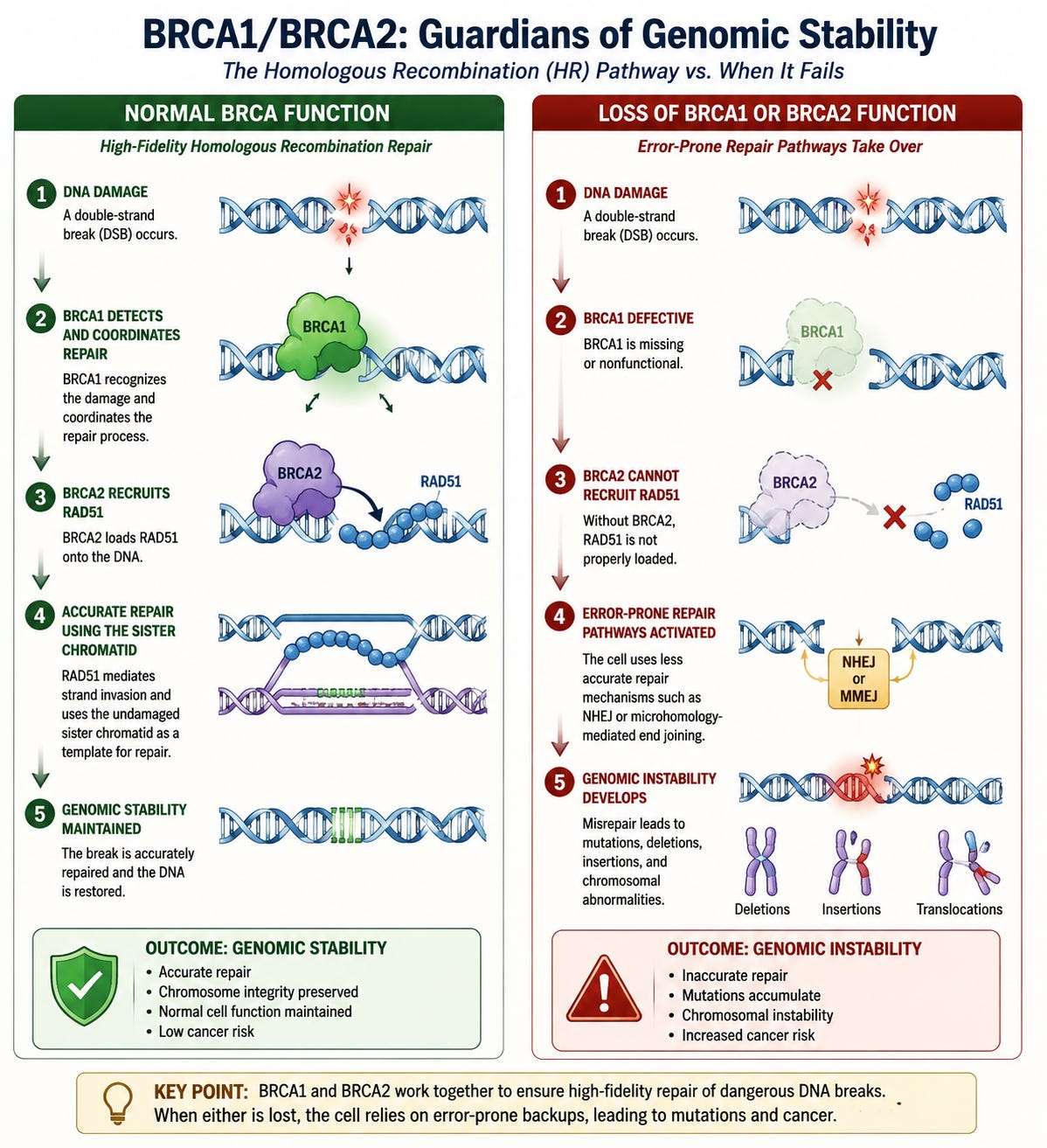
Why BRCA Mutations Cause Cancer
Individuals inherit one normal BRCA copy and one mutated copy.
Cancer generally develops only after the remaining normal copy is lost within an individual cell—the classic two-hit hypothesis first proposed by Alfred Knudson.
Loss of BRCA function produces:
chromosomal instability
copy number alterations
gene amplifications
translocations
accumulation of secondary driver mutations
The mutation therefore creates fertile ground upon which additional oncogenic events accumulate.
Cancers Associated with BRCA Mutations
Breast cancer
Lifetime risk:
BRCA1:
60–80%
BRCA2:
55–75%
BRCA1 tumors are frequently:
triple-negative
high grade
rapidly proliferating
BRCA2 tumors more commonly resemble luminal breast cancers and are often estrogen receptor-positive.
Ovarian cancer
BRCA mutations produce some of the highest hereditary risks known.
Lifetime risk:
BRCA1:
35–60%
BRCA2:
10–30%
Most arise from the distal fallopian tube rather than the ovary itself.
Pancreatic cancer
BRCA mutations increase pancreatic cancer risk approximately:
BRCA2:
3–8-fold
BRCA1:
2–4-fold
Importantly, BRCA-mutated pancreatic cancers respond particularly well to platinum chemotherapy and PARP inhibitors.
Prostate cancer
BRCA2 mutations are among the strongest inherited risk factors.
Affected tumors tend to:
occur earlier
behave more aggressively
metastasize sooner
have poorer survival
Other cancers
Smaller increases occur for:
male breast cancer
melanoma (particularly BRCA2)
fallopian tube cancer
primary peritoneal cancer
The Biology of BRCA Tumors
Loss of BRCA produces characteristic biological features.
These tumors typically demonstrate:
extreme genomic instability
defective homologous recombination
replication stress
DNA damage accumulation
increased reliance on alternative DNA repair pathways
Ironically, this weakness becomes their greatest therapeutic vulnerability.
Synthetic Lethality: Exploiting BRCA Deficiency
The greatest therapeutic breakthrough has been the development of PARP inhibitors.
PARP repairs single-stranded DNA breaks.
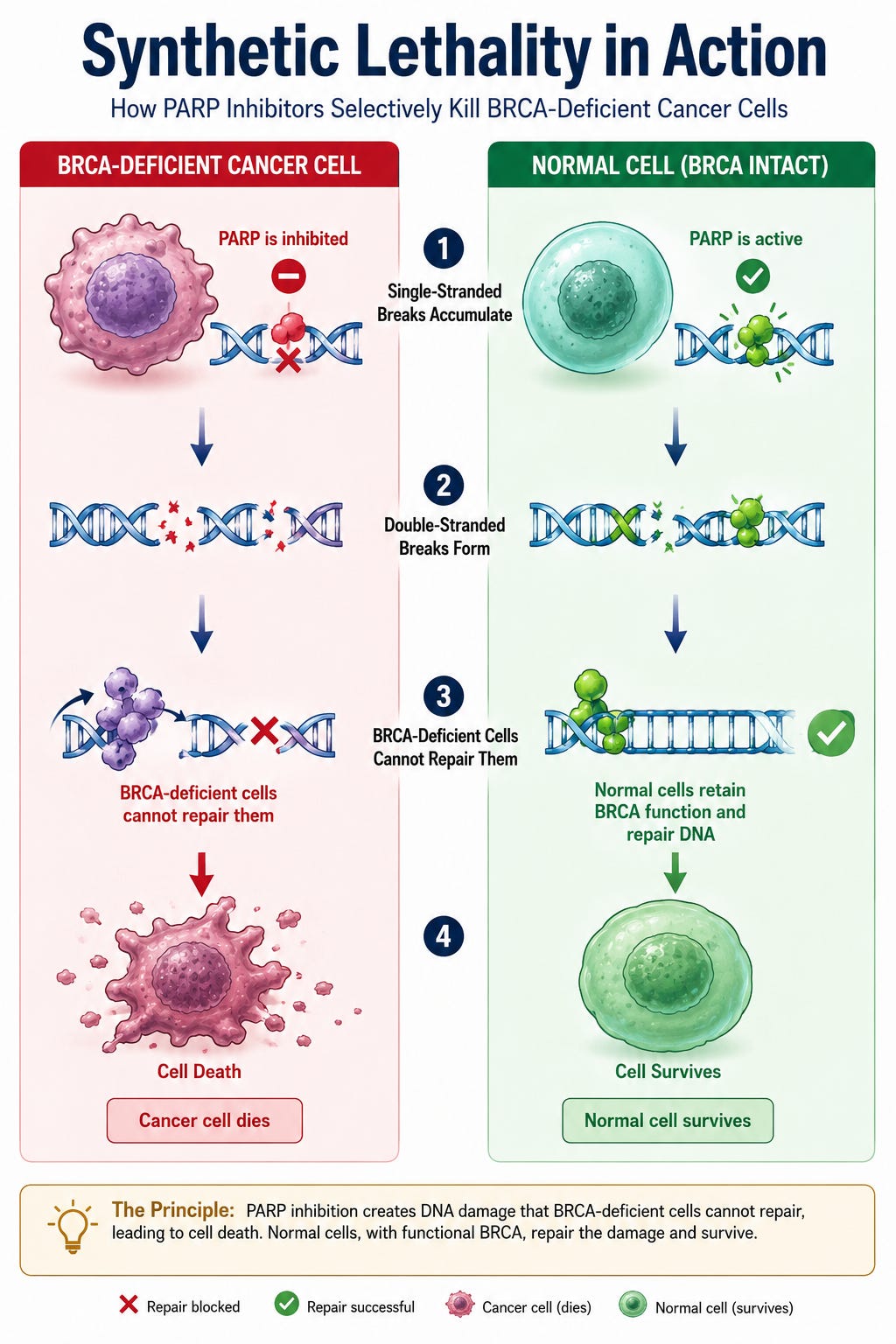
Synthetic lethality is a genetic concept where two things are individually survivable, but combined, they’re fatal to a cell — and PARP inhibitors in BRCA-mutant cancers are the textbook clinical example of it.
Cells have multiple, partially redundant pathways for repairing DNA damage. If you knock out one pathway, the cell usually survives because a backup pathway compensates. If you knock out two pathways that are functionally redundant, the cell can’t repair its DNA at all, accumulates catastrophic damage, and dies. Neither defect alone is lethal — only the combination is. That’s “synthetic lethality”: two non-lethal events becoming lethal together.
This concept—synthetic lethality—has revolutionized treatment.
Right now, PARP inhibitors are used exclusively for established, diagnosed cancers — not prophylactically in healthy BRCA carriers. That’s an important distinction from how BRCA mutations are currently managed for prevention.
Approved PARP inhibitors include:
olaparib
niraparib
rucaparib
talazoparib
Platinum Chemotherapy
BRCA-mutated tumors are also unusually sensitive to:
cisplatin
carboplatin
These drugs produce DNA crosslinks that require homologous recombination repair.
Without BRCA, repair fails.
Beyond DNA Repair: Metabolism
An emerging body of research suggests BRCA mutations influence cellular metabolism.
Observed changes include:
increased oxidative stress
mitochondrial dysfunction
altered NAD+/PARP metabolism
increased glycolysis
greater dependence upon glutamine
These observations fit remarkably well within the metabolic theory of cancer.
Rather than acting solely as a DNA repair defect, BRCA loss appears to trigger widespread metabolic adaptation.
BRCA Within the Five-Axis Metabolic Framework
Although PARP inhibition represents standard precision medicine, it addresses only one biological consequence of BRCA deficiency.
A broader systems approach suggests several complementary targets:
Axis 1 — Metabolic pressure
metformin
berberine
fasting
ketogenic dietary strategies
Axis 2 — Mitochondria
doxycycline
ivermectin
EGCG
curcumin
sulforaphane
Axis 3 — Cell division
mebendazole
Axis 4 — Tumor microenvironment
propranolol
omega-3 fatty acids
vitamin D
Axis 5 — Immune restoration
melatonin
circadian optimization
exercise
microbiome optimization
These approaches remain investigational and should not be viewed as substitutes for established BRCA-directed therapies.
Prevention
Individuals carrying BRCA mutations benefit from individualized risk-reduction strategies, which may include:
intensive MRI and mammographic surveillance
prophylactic mastectomy
prophylactic salpingo-oophorectomy
lifestyle optimization including nutrition counseling
genetic counseling
Risk-reducing surgery
This offers the most substantial, well-evidenced risk reduction:
Risk-reducing salpingo-oophorectomy (RRSO): Removal of ovaries and fallopian tubes, typically recommended around age 35–40 for BRCA1 carriers (or after childbearing is complete) and slightly later, around 40–45, for BRCA2 carriers, since BRCA2-linked ovarian cancer tends to develop later. This reduces ovarian cancer risk by roughly 80–90% and, because it also lowers estrogen exposure, meaningfully reduces breast cancer risk too if done before menopause.
Risk-reducing bilateral mastectomy: Reduces breast cancer risk by about 90–95%. This is elective and highly personal — many carriers choose enhanced surveillance instead, especially at younger ages, and decisions often weigh psychological, reconstructive, and quality-of-life factors alongside the numbers.
Enhanced surveillance
For those patients who don’t pursue risk-reducing surgery (or before doing so), close monitoring aims to detect cancer early.
The ROOT Protocol
While the ROOT 9 protocol has been proposed as a potential adjunctive strategy for cancer prevention, there are currently no clinical data demonstrating that it reduces cancer incidence or recurrence. Accordingly, its use for cancer prevention should be considered investigational. However, after a careful discussion of the limited evidence, potential risks, and uncertainties, the protocol may be considered as an individualized option for selected patients who decline surgery or are not candidates for standard surgical management.
Implications for Men
BRCA mutations are often discussed as a women’s health issue, but men can inherit and transmit them.
Male BRCA carriers may face increased risks of:
prostate cancer
male breast cancer
pancreatic cancer
melanoma in some BRCA2 families
A man has the same 50% probability as a woman of passing a germline BRCA mutation to each child.
Men from families with breast, ovarian, pancreatic, aggressive prostate, or male breast cancer should not assume that hereditary testing applies only to female relatives.
Implications for Families
A BRCA diagnosis affects an entire family.
Once a pathogenic germline mutation is identified, first-degree relatives generally have a 50% chance of carrying the same mutation. Cascade testing can identify relatives who may benefit from surveillance or preventive strategies while sparing noncarriers from unnecessary intensive screening.
Genetic counseling should address:
the meaning of the test result
the difference between pathogenic variants and variants of uncertain significance
implications for children and siblings
reproductive options
psychological effects
privacy and insurance considerations
communication with relatives
Testing without adequate counseling can lead to misunderstanding, anxiety, or inappropriate treatment decisions.
Future Directions
The next decade will likely combine:
PARP inhibition
ATR inhibitors
DNA-PK inhibitors
immunotherapy
metabolic therapies
AI-driven genomic profiling
Rather than treating BRCA as a single mutation, future precision oncology will likely exploit the entire network of vulnerabilities created by homologous recombination deficiency.
Conclusion
BRCA1 and BRCA2 are far more than breast cancer genes. They are guardians of genomic stability whose loss increases susceptibility to a wide spectrum of malignancies while simultaneously creating unique therapeutic opportunities.
The success of PARP inhibitors illustrates one of the great triumphs of modern precision oncology: understanding a specific molecular defect can lead directly to highly effective targeted therapy. Yet BRCA-mutated cancers are also dynamic, evolving systems that adapt through metabolic rewiring, alternative DNA repair pathways, and clonal selection.
Viewed through the lens of the metabolic theory of cancer, BRCA mutations represent one important component of a much larger biological landscape. DNA repair defects, mitochondrial dysfunction, altered metabolism, immune escape, and the tumor microenvironment all interact to determine tumor behavior and therapeutic response.
The future of BRCA-directed therapy is therefore unlikely to depend on a single drug or pathway. Instead, it will probably combine precision genomic targeting with broader systems-based strategies that address the complex biology of cancer. As our understanding deepens, BRCA mutations may come to symbolize not only inherited cancer risk, but also the convergence of genomics, metabolism, and personalized medicine.

Medical Disclaimer: The discussion of repurposed medications and nutraceuticals in this article is intended to review the scientific literature and does not constitute a recommendation for self-treatment. Decisions regarding the use of off-label therapies should be made in consultation with a qualified healthcare professional familiar with the patient’s medical history and current treatment plan. Please see the full Medical Disclaimer on the introductory page to Marik’s Cancer & Metabolic Healing Playbook.
Comments
Nothing yet. Say the first thing.
Sign in to join the conversation.