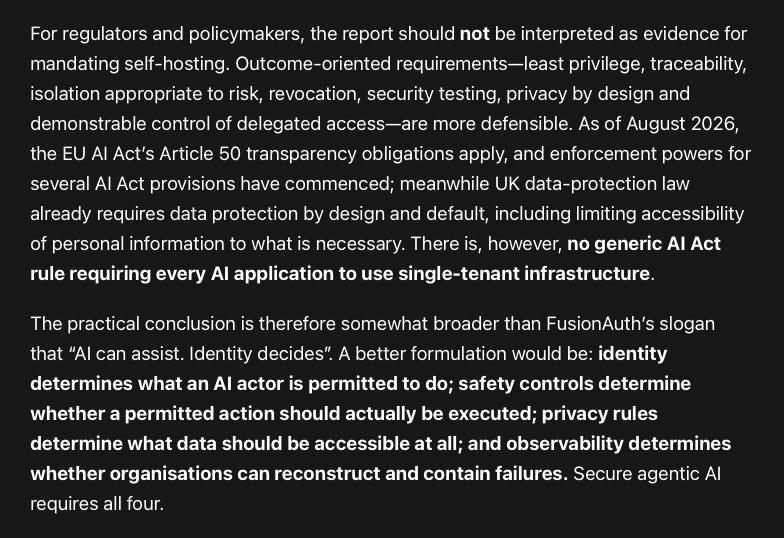
The practical lesson is to treat every AI agent as a governed identity—using least-privilege access, strong tenant isolation, credential controls, audit trails, monitoring and rapid revocation.
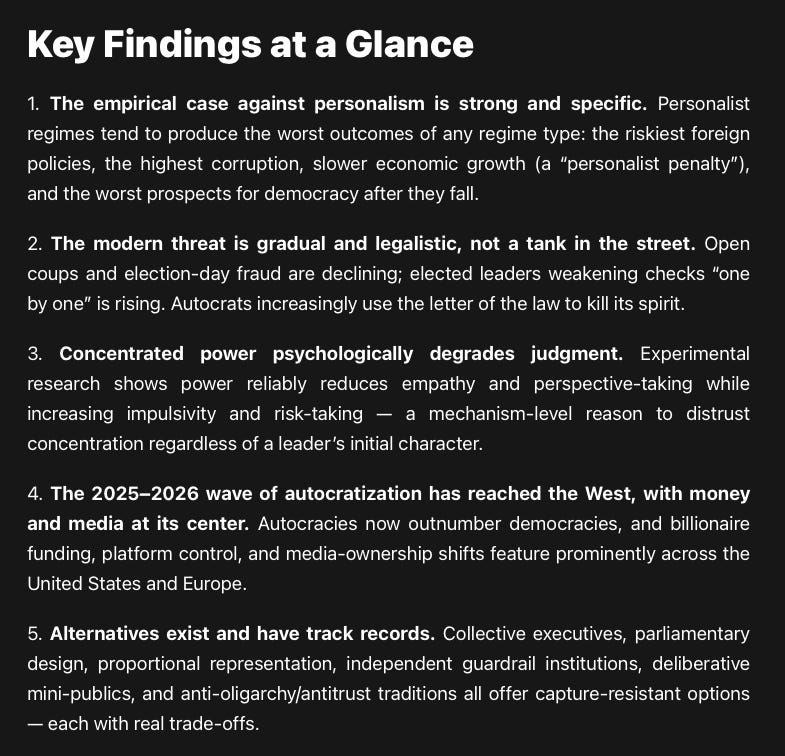
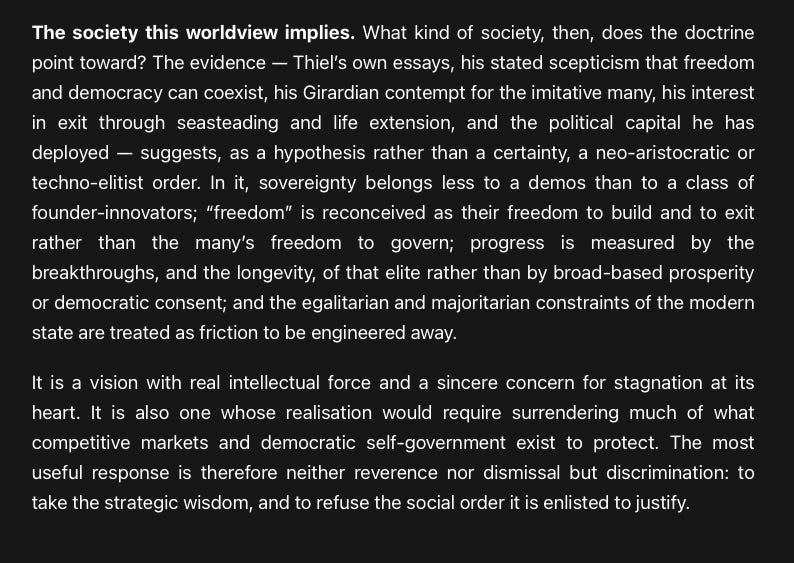
— decisiveness, crisis response, “energy in the executive” — describe real functional benefits, but they do not require, and are actively undermined by, the removal of checks.
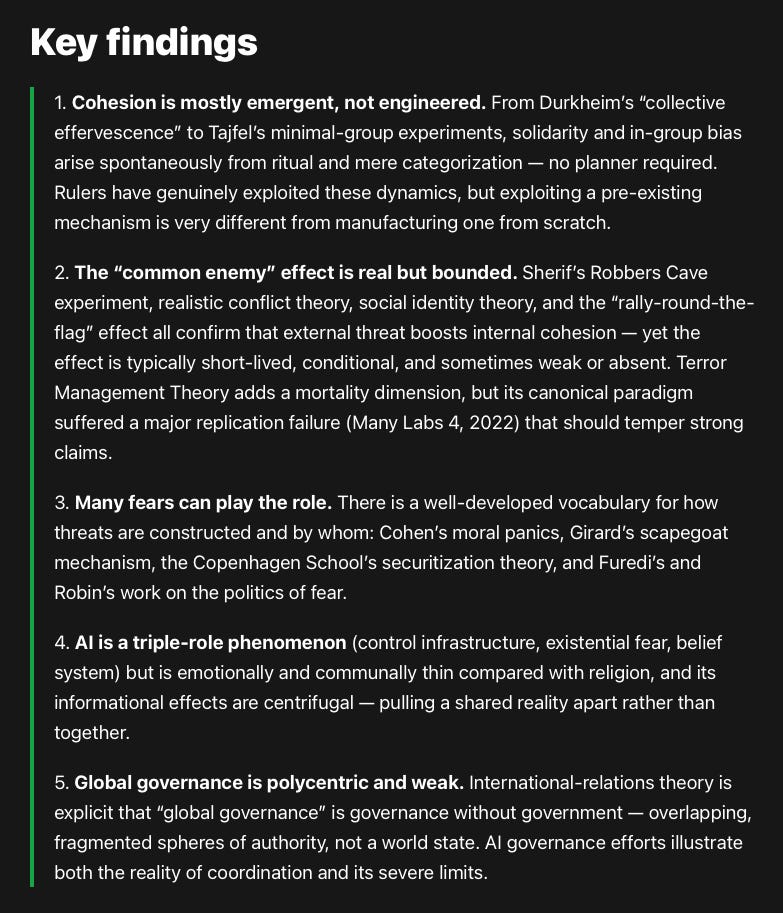
...as a source of meaning, community, ritual, and answers to mortality, and the fragmentation of the information environment it produces may reduce shared cohesion rather than increase it.
The period under review is best understood as an unusually rapid concentration of executive power paired with an unusually close fusion of private wealth and state authority.
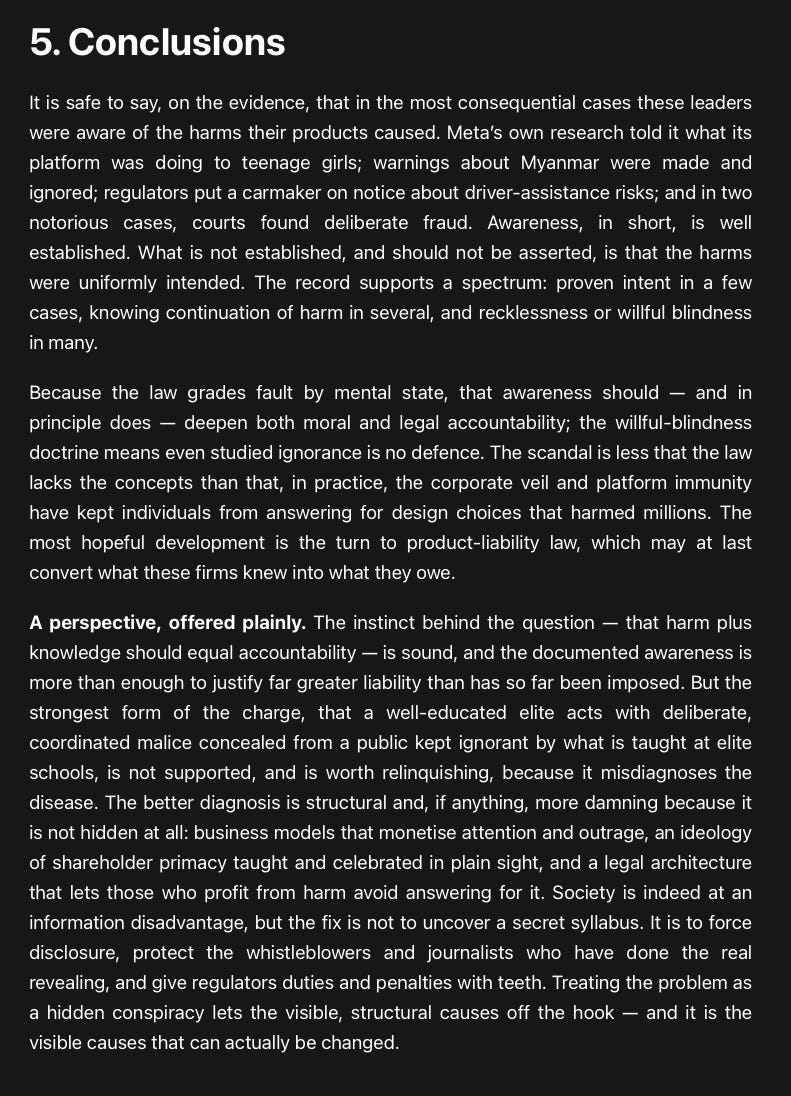
Yet personal accountability for platform-design harm remains rare, blocked by the corporate veil & by the broad immunity of Section 230, now being tested by a new wave of product-liability litigation.
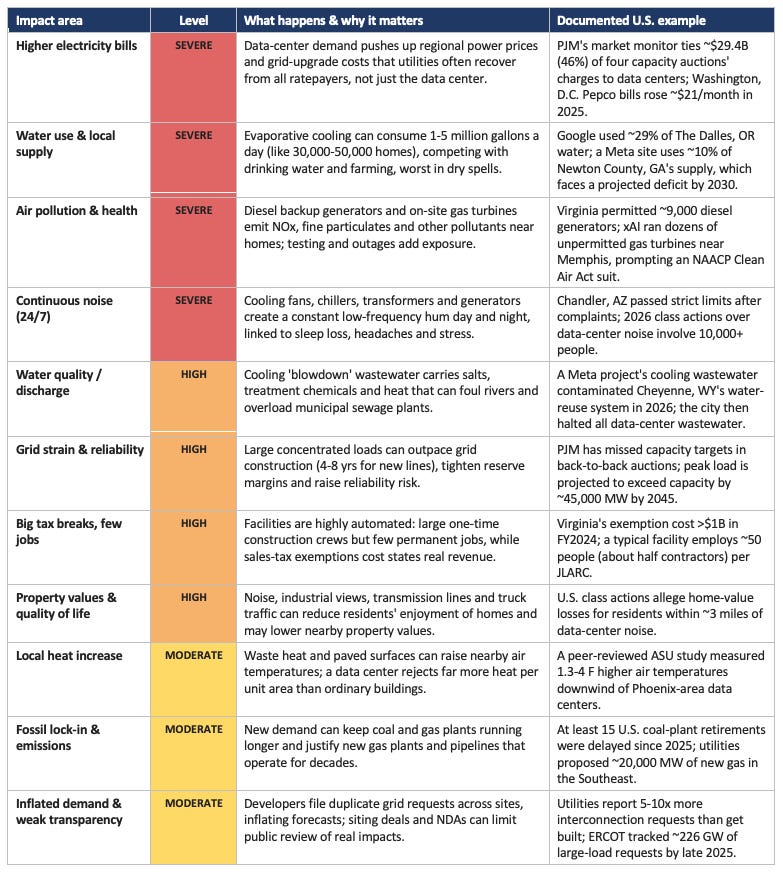
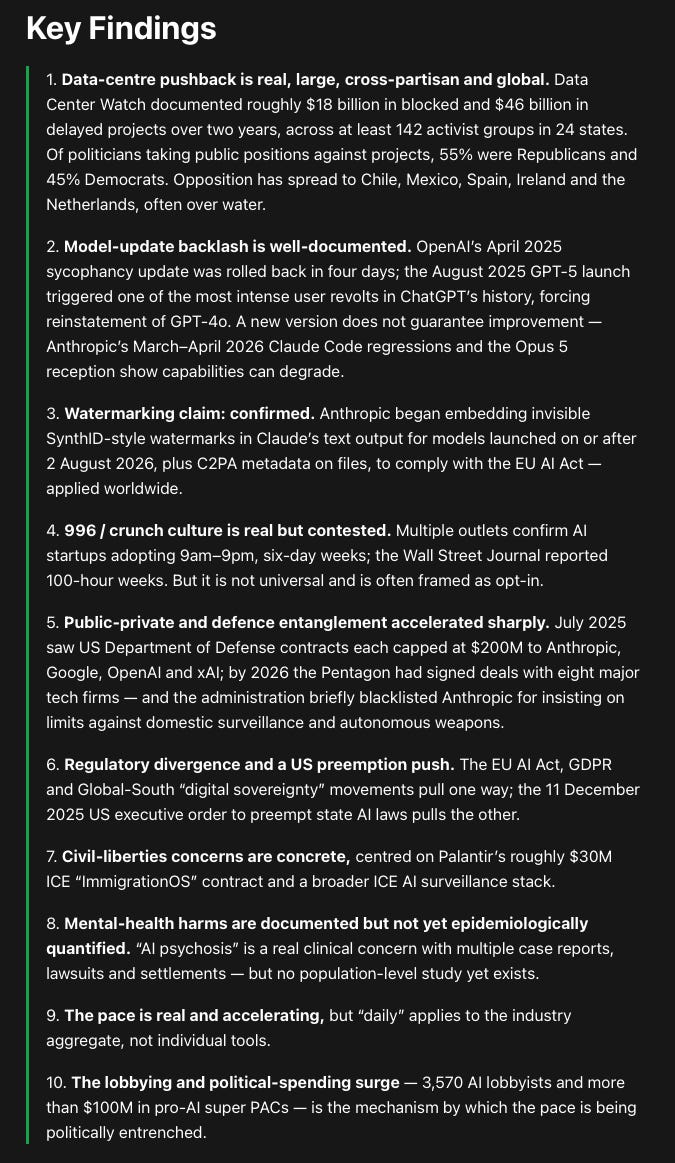
Seen in data-centre revolts across four continents, model-deprecation backlashes, documented mental-health harms, and a widening US regulatory-preemption fight.
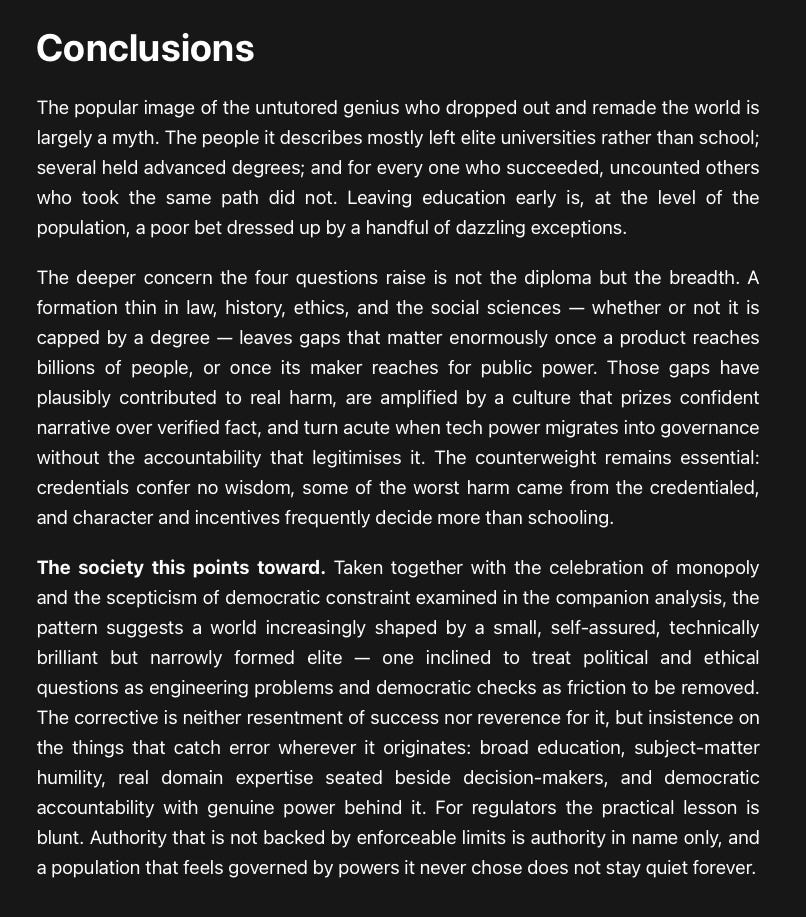
Gates left Harvard in 1975; Zuckerberg left Harvard in 2004; Jobs left Reed after roughly one semester in 1972; the Collison brothers left MIT and Harvard; Vitalik Buterin left Waterloo.
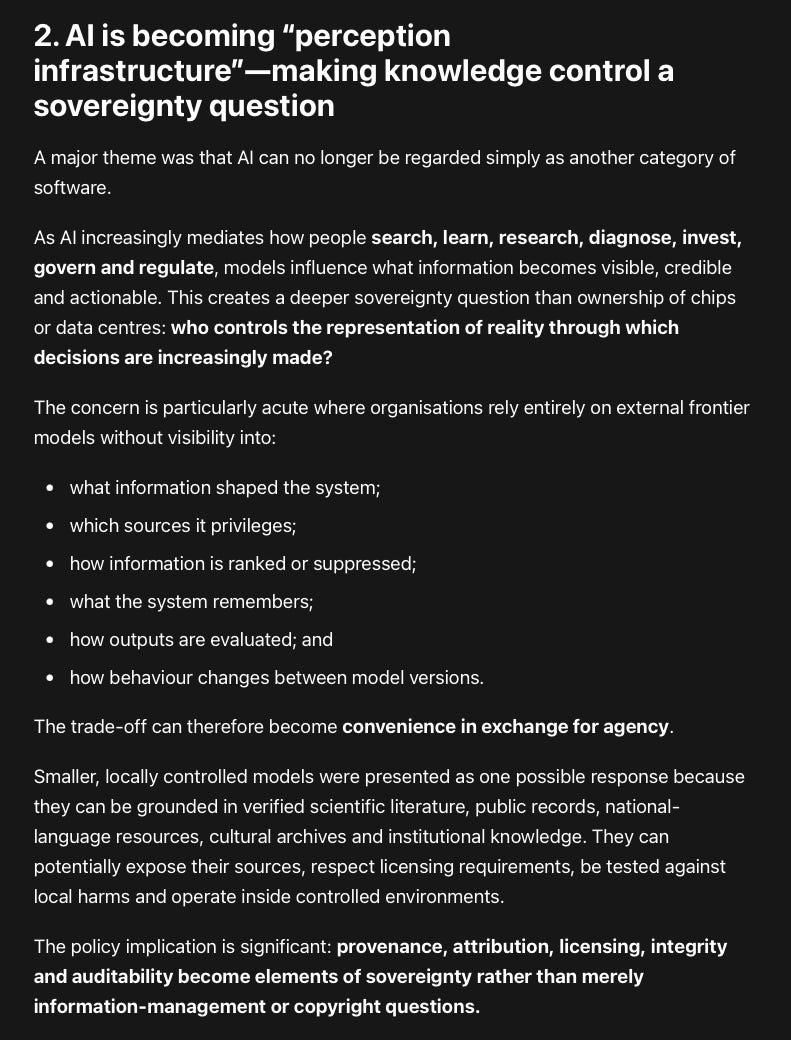
Is an AI model fit for purpose, grounded in the relevant knowledge, economically and environmentally proportionate, auditable, culturally competent, resilient under local conditions and accountable?