

There is a shrine in Mie Prefecture, in southern Japan, that has been around for about 1,300 years but has also never been older than 20.
That’s because Ise Jingu is not maintained in the same way most shrines are. It is rebuilt so that the buildings will be forever new and forever ancient, and forever original. What happens this:
A second plot of ground always sits empty beside the shrine. Every two decades, specially trained carpenters raise an exact new shrine on the empty plot out of cypress that was felled and seasoned for the purpose. At some point, the deity is carried from the old building to the new one at night. The old building is taken apart the next morning. Its timbers are sent to shrines around the country, where they start second lives as gateposts and crossbeams, etc. The vacated plot is then swept empty and waits for twenty years until the whole ritual is practiced again. The rebuilding in 2013 was the sixty-second.

I find this almost unbearably fascinating. Because, as I said in the newsletter I wrote about pen brands a while back, it draws you into so many questions about what something, anything, is. Just as the shrine is permanent, but the building is temporary, so is a pen brand, while the ink cartridge inside is replaceable. Which means that the permanence of something is or can be achieved not in spite of the impermanence but by means of it.
And in this case, it is even more powerful because the impermanent force driving the permanence is people. That is to say, Ise Jingu survives only because one generation of carpenters teaches the next what to do. And what makes it even more amazing is that they do that while doing the work. They don’t, in other words, write down a system which would mean that if, for some reason, the rebuilding of Ise Jingu were to stop, all that would be left is a very old and very beautiful building. But it would not be Ise Jingu.
I know it’s difficult, but try to hold onto that thought while reading what comes next because I am about to show you how this way of thinking about things also happens to be a very healthy way to not only think about everything you do, but yourself as well.
If you strip away the arguing and dive into the data, there is a single doctrine that unites almost everyone publishing marketing and sales advice online:
Consistency beats intensity.
Show up daily.
Trust the compound effect.
These things take time.
So I used Eden to see what kind of consistency content actually travels furthest by looking at outlier posts (posts that did +10x the norm on the largest creator accounts). And the pattern is clear:
A clip of Joe Rogan telling out-of-shape men to start with five push-ups collected over a million and a half views and outperformed his own account by a factor of thirty-four.
A 40-year-old lifter condensed twenty-five years of training into two minutes: two focused sessions a week beat five mediocre ones.
A three-thousand-word sermon on the one per cent rule did twenty-three times its channel's normal numbers.
The reason content about consistency does so well is that it is right. That is what Consistency really is: one of the most important mechanisms for achieving anything. With the exception of dumb luck, nobody sensible questions it.
The problem is that consistency is usually discussed as a rate—the frequency with which you do the thing—so almost everyone hears “be more consistent” as a description of a method where you find a system, lock it in, and never deviate.
You know what I’m talking about: the 5 a.m. wake-up bros, the hook formulas, the three-part newsletter structure (AIDA, PAS, AIDGA, APAG), and let's not forget about content pillars or core values.
The carpenters at Ise are consistent as well. The thing they are consistent about, however, is the rebuilding. They are entirely unsentimental about the building itself.
All of which is comparatively easy to arrange when you are a shrine, but is considerably harder to arrange inside a working life, where the timing is left entirely to us, where nobody has swept a plot in readiness, and where we are almost never willing to let go of a thing while it is still working.
Which is why I find it useful that somebody thought this through for individuals rather than institutions. The philosopher Friedrich Nietzsche is not everybody’s idea of a light read, but he was extremely good on this particular subject, and the useful thing he did was to stop framing it as consistency against inconsistency but rather as brief habits against enduring ones. And he loved the brief sort, because he thought them an invaluable way of getting to the bottom of things, “both their sweetness and their bitterness.”
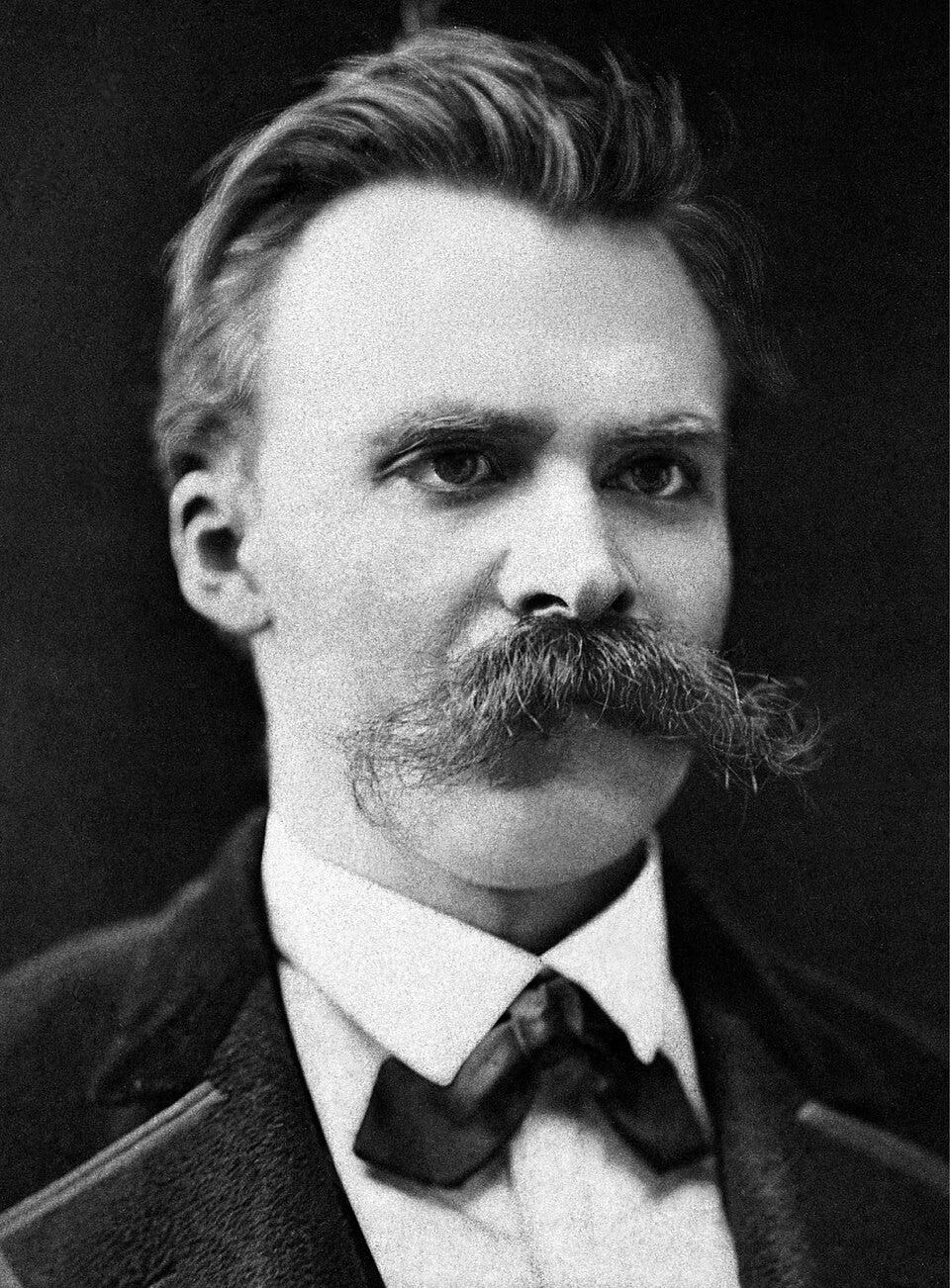
His account of how it goes is uncomfortably honest. Something new arrives, and you believe, with total conviction, that here at last is the thing that will satisfy you permanently. While it is new, it nourishes and spreads deep into you. In a way, you become rather boring about it and mildly contemptuous of the alternatives.
I expect a good many of you can recognize yourselves in that description. How many formulas and systems have you held close to your heart and presented to other people as very nearly an article of faith? And how many of them did you keep until the day you quietly noticed they no longer served you, and let them go, not because they had come to disgust you but let go of them peacefully, so that the parting occurred (in Nietzsche’s phrase) “as if we had reason to be grateful to each other”?
Which is why the manner of the ending matters so much more than anybody supposes. Most of us do not part with our methods. We are eventually thrown out by them, at the point of failure, in front of an audience. And a thing you abandon in humiliation is a thing you cannot afterward go back and learn from, because you are too busy pretending you were never that person. So if we are being honest, ending on good terms is not just politeness. It is the arrangement you make for yourself in which you get to keep whatever the habit has taught you.
Enduring habits, on the other hand, Nietzsche could not tolerate at all. When one came near, he said, he felt as though “a tyrant had entered the room and the air had thickened.”
And I think I know why. It is not simply that he was a difficult man (though he was). It is that a habit held long enough stops being something you use and starts becoming something you are, and once it is there, it can no longer be assessed, because assessing it would mean assessing yourself. This is why the man who has been getting up at five for eleven years cannot discuss whether getting up at five is working. Or why the person who has been running the same LinkedIn strategy for years cannot discuss why it is really working.
It may be doing him an injustice, but there is something rather touching about a philosophy so precisely shaped to the life its author was stuck with.
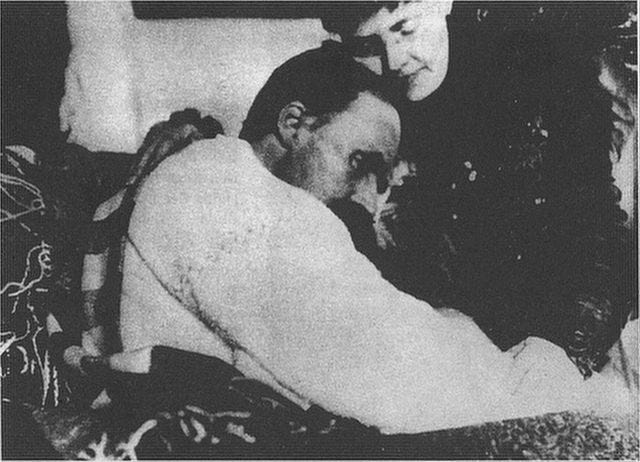
Nietzsche had, it must be said, unusual assistance in avoiding all this.
He gave up his university chair at Basel in his mid-thirties on grounds of health, and spent the following decade moving between boarding houses in Switzerland and Italy with a trunk and a modest pension, chronically ill and more or less permanently uncomfortable.
He said he was grateful for the misery. But let’s be honest. A life that keeps going wrong leaves you with a great many ways out of anything that threatens to become permanent. And yet, and this is the part that tends to get left out by people who quote him in support of their own restlessness, he also thought a life with no habits whatsoever would be the worst life out of all of them because a life demanding perpetual improvisation would be a kind of exile from life itself.
The perpetual improviser, the person who says “just be yourself,” never commits to anything long enough to reach failure and so spends his or her entire career chasing one method after another.
Which brings me to marketing or advertising or branding (both the personal kind and the regular kind)
Consider the models we use. Models like the unique selling proposition, positioning, the brand onion, the brand pyramid, the brand key, and the brand essence (which lived, if I remember rightly, in a small box at the center of the onion and was usually a single word such as “trust”). And then there are the more modern ones, like integration, the funnel, engagement, virality, purpose, and whatever we are calling it this season.
Each of these models was invented as a useful simplification, which was then, in turn, adopted with religious fervor, defended before clients, taught to students, and even made a condition of continued employment. And each was also eventually abandoned, sometimes with a grateful handshake but often with a certain amount of embarrassment, similarly to the way one quietly stops mentioning a friend who has been arrested.
I imagine that many of the things said about AI will go this way too.
I do not believe, however, that any of these models were wrong, but that they were all brief habits mistaken for enduring ones. Which means, ironically, that they deserved our total conviction while they lasted, because a model held half-heartedly teaches you nothing at all.
And in the same twenty years during which we clung to our onions, we also became extraordinarily casual about the one thing that genuinely needs to endure.
Brands are not built in boardrooms; they are built, slowly and rather untidily, in the heads of the people who encounter them. As the advertising philosopher Jeremy Bullmore put it, people assemble them out of scraps and straws like a bird’s nest: a wrapper, a delivery driver, a call center, a remark from a brother-in-law, a poster half seen from a bus. A brand, in other words, is an accumulation of things.
And accumulations are undone very quickly by discontinuity.
Which means that a brand’s character (its manner, its tone, its way of behaving when nobody important is watching) is precisely the wrong thing to reinvent every eighteen months, and yet it is very often the first thing a new CMO or a person trying to keep their personal brand up to snuff does.
Which means we have it inverted. Our methods, which ought to be brief habits, are treated as doctrine. And our brands, which ought to be enduring habits, are treated as this year’s opportunity for self-expression.
Just to be clear, I don’t think this happens because anybody is stupid. I think it happens because changing a brand is visible, while changing your own model is not. At least that’s what people believe. Nobody was ever promoted for quietly retiring a framework.
If I were to offer anything practical (and I am always a little suspicious of anything that ends with instructions), it would be this:
Give every method, habit, or system you take on a term of office rather than a trial period.
What’s the difference?
A trial period implies you are hedging by keeping one eye on the exit, which guarantees you will learn nothing.
A term of office means you have your full loyalty, why you have it, and its authority is not up for debate. And at the end of the term,m it does not simply carry on. It has to be re-elected or sent home. And the burden of proof sits with you.
I think it is important to note here that the signal that a term has expired is not boredom because boredom usually turns up far too early for the wrong reasons and should therefore be ignored.
The signal that the term has come to an end is the moment you notice you are defending the model rather than using it. Or when you hear yourself explaining to somebody at a conference why it works, at length, with unusual warmth.
And if you judge that the term is over?
You don’t just destroy it.
The cypress at Ise does not burn.
It goes off to smaller shrines and remains useful. It just becomes useful in a role nobody originally designed it for.
That, I suspect, is what happens to a model you have honorably finished with.
The Unique Selling Proposition discipline you outgrew left you unable to write a sentence without cringing. The funnel you abandoned taught you that people arrive at things in stages, a truth that remains even though the diagram never was.
Which means that nothing you invested your time in believing is wasted. It is merely redistributed into judgment.
Which is much harder to name and sell than a framework. Which is why most people don't, and why I can do nothing more than write an essay about it.
Nietzsche, of course, would have understood all this perfectly. He knew exactly which habits to get rid of when.
The rest of us, it seems to me, might usefully ask ourselves how much of what we are currently defending is scheduled to be taken down and cleared soon.
Justin Oberman
p.s Want to know the secret about how I kept you reading to the end? Check out my Copy Hunter Field Guide Course. The first 20 to use the code PRESALE to get it for a fraction of the price.
Comments
Nothing yet. Say the first thing.
Sign in to join the conversation.