
Most copywriters and ghostwriters are afraid of AI. I’m not. You shouldn’t be either. My profile explains why.
June 12, 2026
In 1963, Howard Gossage won the Rover Car Company account (a small British outfit, modest budget, selling Land Rovers to a sliver of the American market).
His goal was to sell what most people viewed as a rugged, utilitarian vehicle to the upper-middle class.
And so, in typical Gossage style, the very first ad he wrote for them was not about the car. It was about billboards.
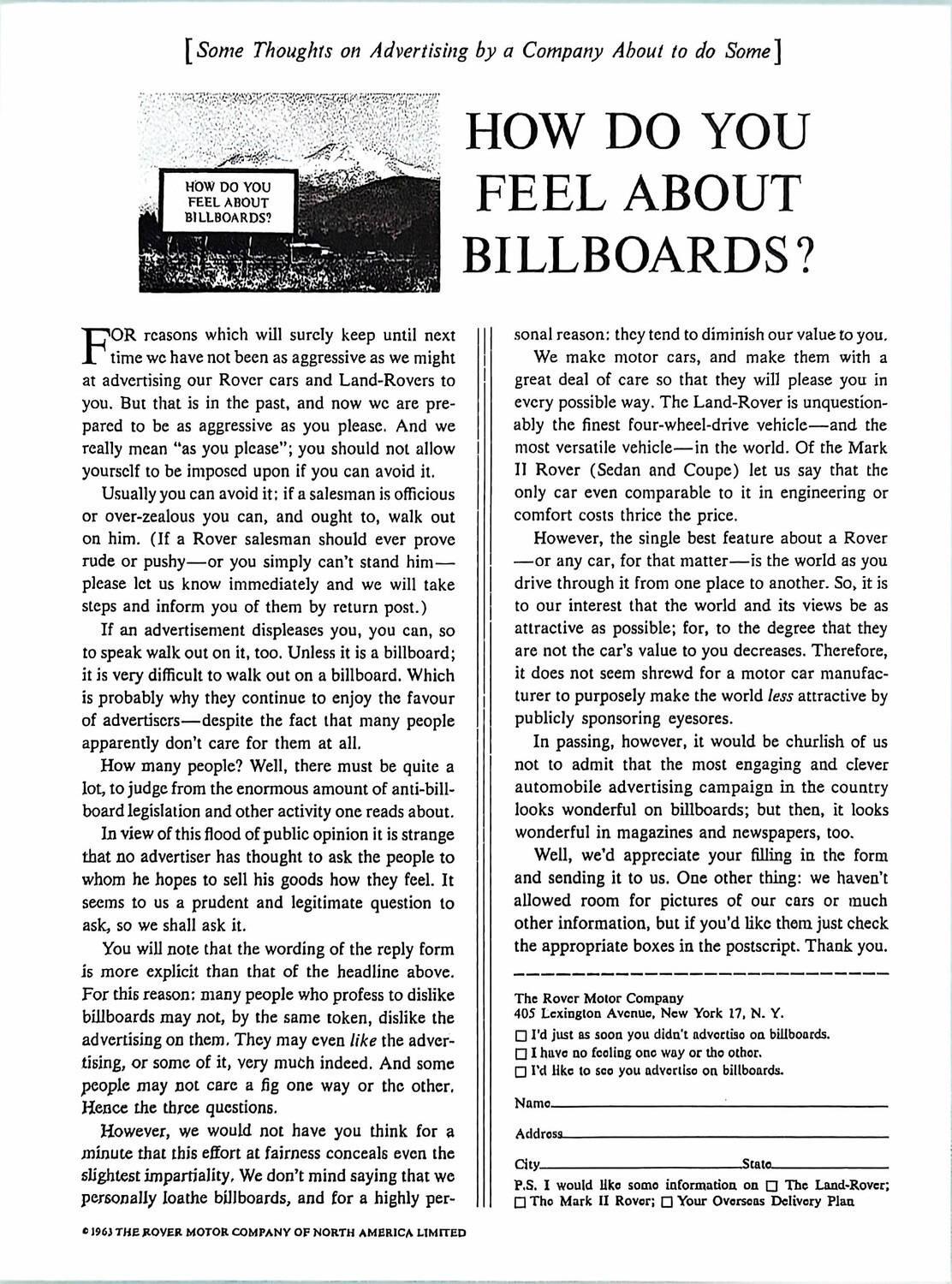
Now, please pause and consider the audacity of this.
Your first ad for a new client. A car company. And instead of showing the car, or talking about the car, or in any way attempting to sell the car, Gossage seemingly used the client’s money to continue a personal crusade against a medium that half the advertising industry depends on for its livelihood.
Which would be crazy, except that it was the client’s idea.
You see, this was not the first time Gossage, an ad man, attacked outdoor advertising either.
In 1961, he published an article in Harper’s Magazine arguing that billboards had no right to exist.
This was, to put it mildly, an unusual position for a person in advertising to take publicly. It would be like a sommelier writing an op-ed in a national magazine arguing that wine is mostly a con.
The Harper’s article was called “How to Look at Billboards,” and its central argument was devastatingly simple: outdoor advertising sells a commodity it does not own. What it sells is your field of vision. And it does so without asking your permission.
For those of you who have never heard of Howard Gossage, I envy you, because you now get the thrill of experiencing him for the first time.
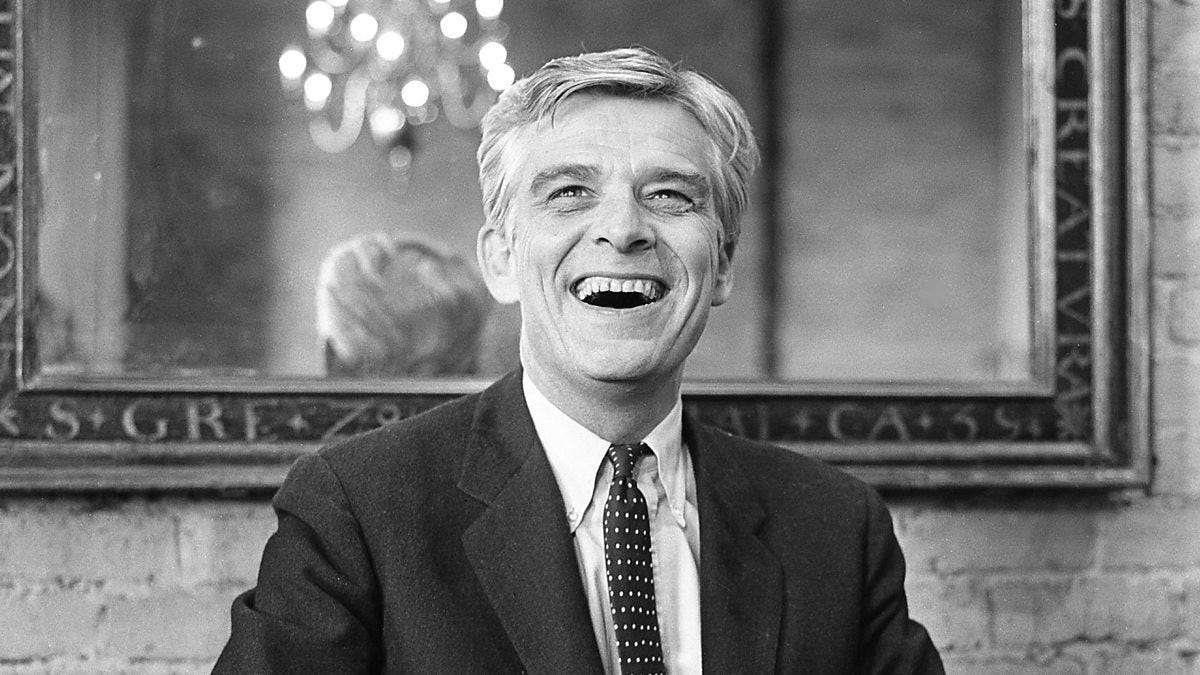
Howard Gossage ran his agency out of a converted firehouse on Pacific Avenue (Engine Company No. 1, if you’re keeping track), where on any given evening you might find John Steinbeck nursing a beer, Buckminster Fuller explaining geodesic domes to nobody in particular, or Marshall McLuhan telling bad jokes. David Ogilvy, who did not agree with Gossage very much, called him “the most articulate rebel in the advertising business.” Jeff Goodby, decades later, went further, calling his work the best advertising ever made. Rory Sutherland says that “Gossage is the Velvet Underground to Ogilvy’s Beatles and Bernbach’s Stones; never a household name but to the cognoscenti, a lot more inspirational and influential.”
And Gertrude “Jimmy” McWilliams, Gossage’s counterpart at Rover, had a hunger for attention that perfectly matched Gossage’s gift for generating it. She understood (perhaps more clearly than Gossage himself) that the billboard ad wasn’t a distraction from selling cars. It was the best possible way to sell them. Because the ad did something that a photograph of a Land Rover in a muddy field could never do: it started a conversation.
The Board of Directors of the Advertising Association of the West, at its 16th anniversary convention in Los Angeles in June 1963, passed a formal resolution. It declared that the ad was “not a fair consideration of the merits of this respected form of advertising,” that it was “not in good taste,” and that it “fails in its presumed purpose of influencing public opinion due to the obviously prejudiced position taken by the advertiser.”
They then resolved to send copies of this resolution to all member advertising clubs, the Rover Motor Car Company, Gossage’s agency, and every publication that had carried the ad, urging member organizations to “individually voice their disapproval.” Advertising Age piled on. The industry closed ranks with the righteous indignation of a gentleman’s club that has just discovered a comedian at the lectern.
Despite the protests (or perhaps because of them), the ad also sold many Land Rovers. Senator Maurine Neuberger inserted that ad into the Congressional Record, which, if you ask me, is something that rarely happens to failed advertisements.
Even David Ogilvy wrote to Gossage with something rather different from indignation.
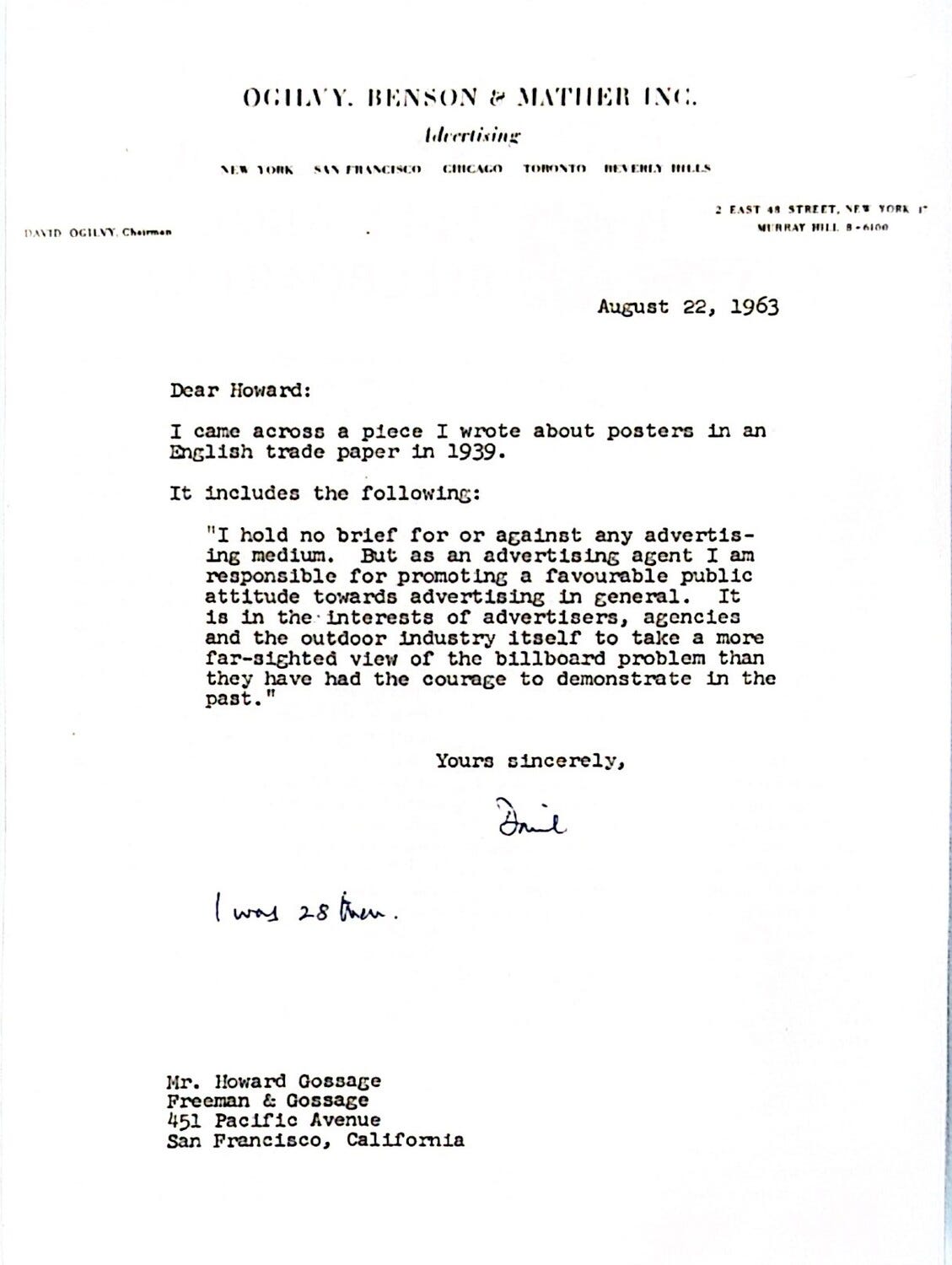
Gossage, characteristically, was delighted by all this. But it also gave him an idea for the next ad.
The instinct of most people trying to attract premium clients is to sand down their opinions. To be smooth, agreeable, inoffensive. To say what they think wealthy audiences want to hear.
Gossage did the opposite.
Howard phoned David Ogilvy and asked if it would be OK to parody the most famous car advertisement ever written.
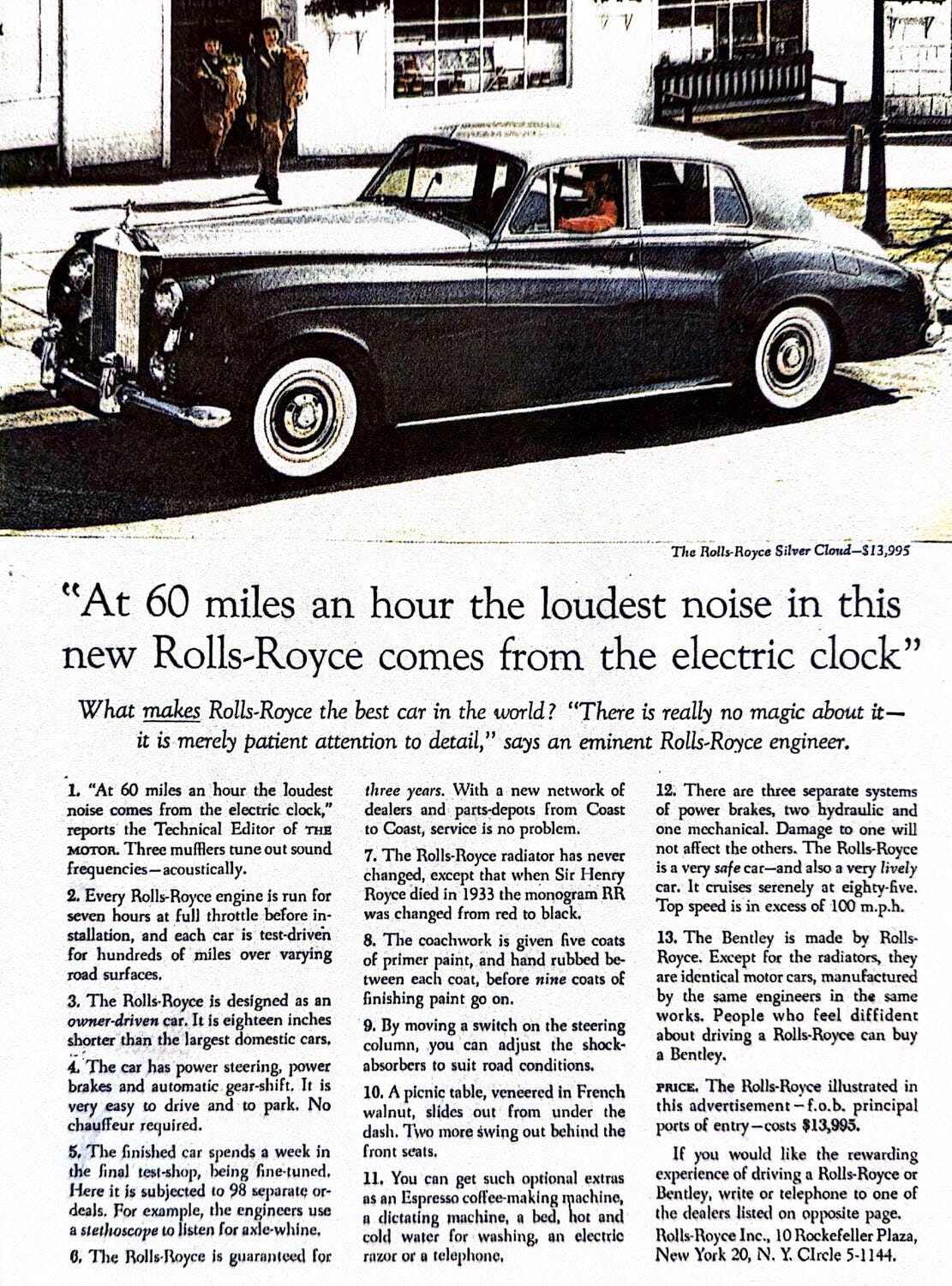
Ogilvy’s Rolls-Royce ad, first published in 1958, had established a standard that every luxury car brand spent the next half-century trying (and failing) to imitate. The headline was a masterpiece of elegant restraint: “At 60 miles an hour, the loudest noise in this new Rolls-Royce comes from the electric clock.” Quiet meant money. Silence meant class.
Gossage asked permission to steal it, and Ogilvy, who evidently had a sense of humor that his writing style and philosophy of advertising did not always suggest, said yes. He even sent Gossage a signed proof of the original.
So Gossage ran a Land Rover ad in the exact same layout, the exact same typeface, the exact same unhurried, meticulous rhythm as the Rolls. The body copy was his own, naturally (he copied, as he put it, everything except Ogilvy’s writing style and content, dealing his own head in) but with a different headline. At 60 miles an hour, the loudest noise in this new Land Rover comes from the roar of the engine.”
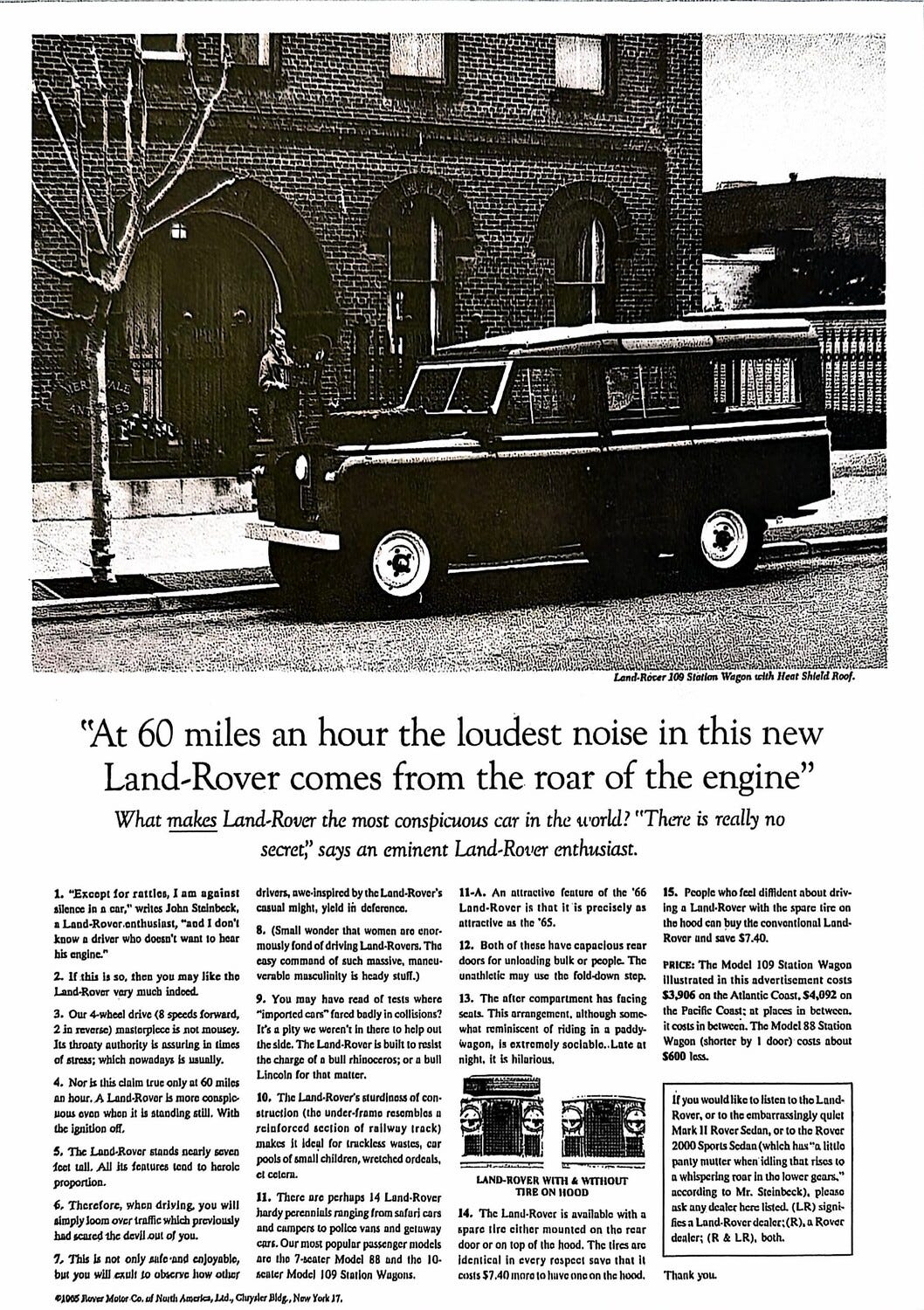
Gossage’s Rover ads open with a genuine conviction that cost him something to hold publicly, and the people who shared that conviction (many of them, as it turned out, wealthy, educated, and deeply tired of being pandered to) recognized him instantly as someone worth paying attention to.
My point here is that not all premium audiences are looking for smooth. They encounter smooth all day long. Some are looking for someone who actually believes something.
So to sell Land Rover cars upmarket, he didn’t pretend that the Land Rover was a Rolls-Royce. He dressed it in the Rolls-Royce’s suit and bragged about being the opposite. Quiet was for people who never left the road. His car was loud because it went where roads stop.
Ogilvy was so delighted that he invited Gossage to dinner the night the ad came out. Gossage brought him a framed copy, and Ogilvy insisted on reading the entire ad aloud to Gossage, who (one imagines) sat there with the patient expression of a man listening to someone recite his own work back to him. Gossage inscribed it:
“To David — imitation is the sincerest form of larceny.”
Despite Ogilvy’s approval, Printers’ Ink, the now-defunct advertising trade publication, complained editorially that the ad was an “in joke” that didn’t do justice to the client.
It sold cars like crazy, though
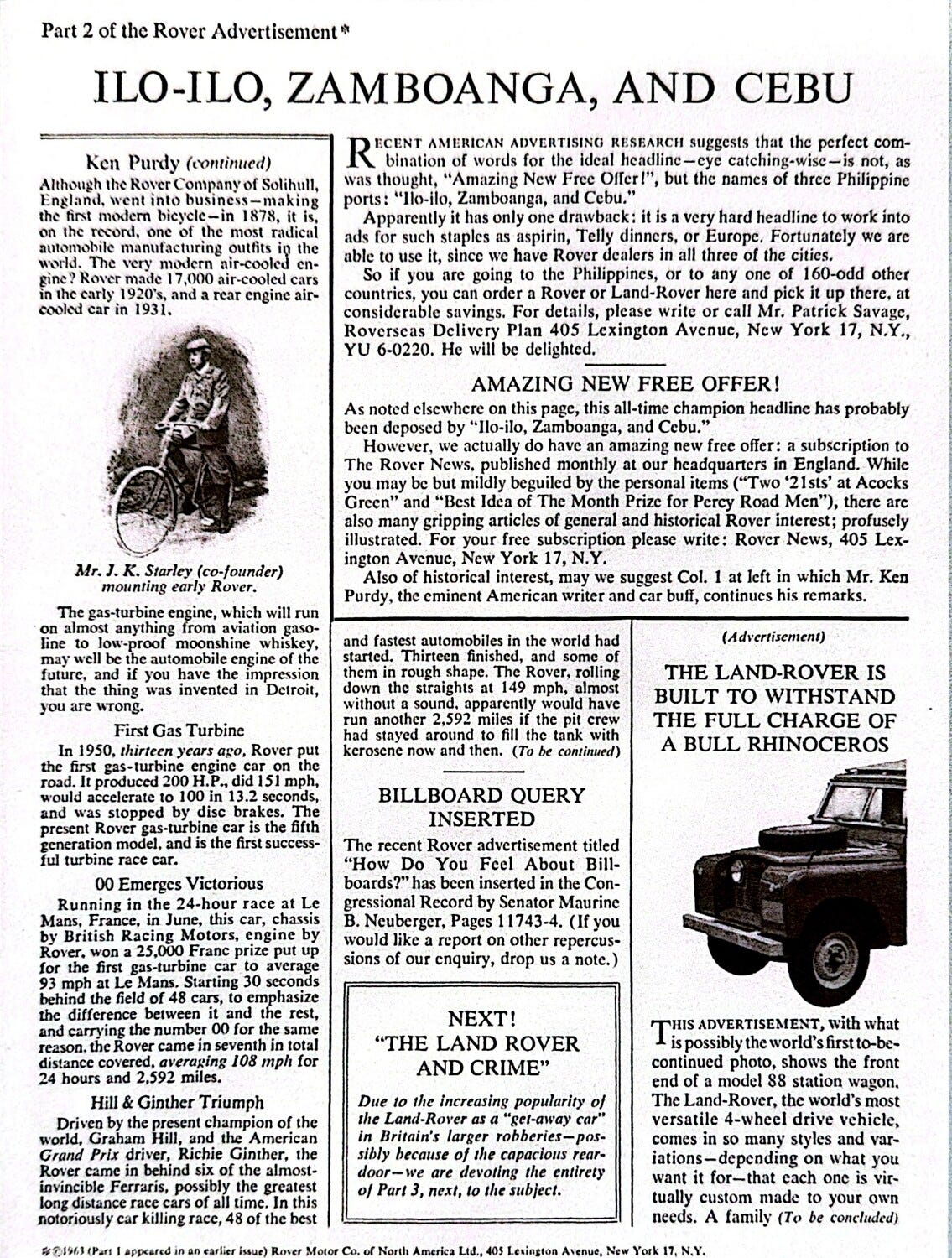
Gossage followed these ads with a two-page advertorial split across two separate editions of the same magazine. You had to buy both issues to get the whole argument. Near the bottom of the second installment, he placed a boxed teaser: NEXT! “THE LAND ROVER AND CRIME.”
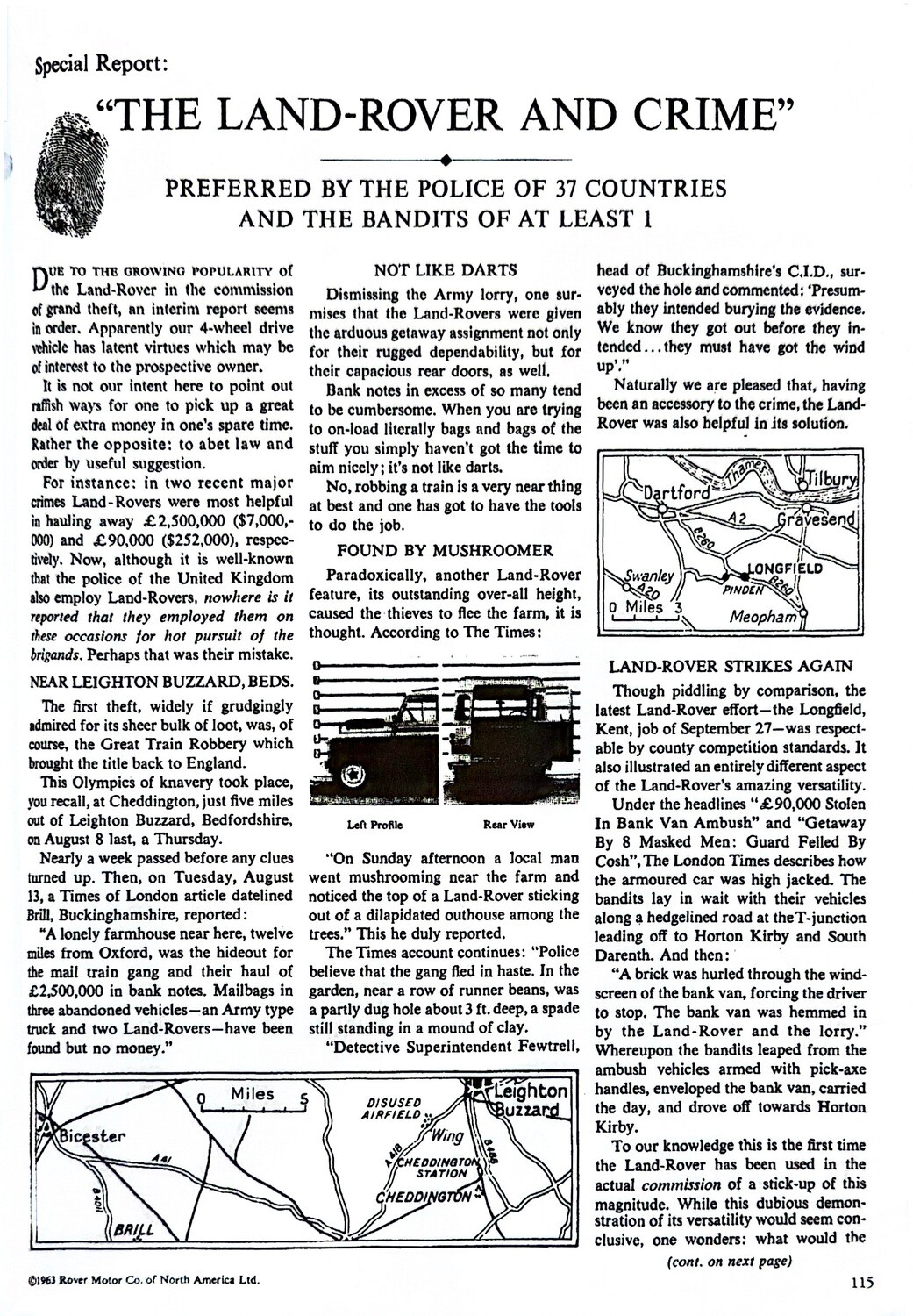
In August 1963, fifteen men pulled off the Great Train Robbery — the most audacious heist in British criminal history. They stopped a Royal Mail train at Cheddington, Bedfordshire, overpowered the crew, and vanished with £2.5 million in cash. The getaway vehicles: two Land Rovers and an Army truck. Nearly a week passed before a man out hunting for mushrooms near a lonely farmhouse at Brill, Buckinghamshire, noticed the top of a Land Rover protruding from a tumbledown outhouse among the trees and reported it to the police.
So naturally, Gossage had to turn it into an ad.
He noted, with the gravity of a Times editorial, that the four-wheel-drive vehicle clearly possessed latent virtues of interest to the prospective owner. He hastened to add that it was not Rover’s intention to suggest ways of picking up a large amount of extra money in one’s spare time. Rather, the opposite: to abet law and order by useful suggestion.
He then reported on the Great Train Robbery in lavish detail — maps, quotes from The Times, police reports, even the observation that the robbers had chosen Land Rovers not only for their rugged dependability but for their capacious rear doors, since when you are trying to load bags and bags of stolen banknotes in a hurry, you simply haven’t got the time to aim nicely; it’s not like darts. He observed that the police also used Land Rovers (though curiously, nowhere was it reported they employed them in hot pursuit of the brigands — perhaps their mistake). He covered a second robbery in Longfield, Kent, under the heading “LAND-ROVER STRIKES AGAIN.” And he addressed the inevitable objection from law-fearing citizens: “Why, decent, law-fearing people may ask, do you sell Land-Rovers to chaps who are going to use them to rob trains and banks?” His answer: they couldn’t always tell.
The ad ran over to the next page “(cont. on next page)” because the story was too good to contain. On the continuation, he noted that Rover had sold to the armed services of twenty-six nations, police forces of thirty-seven countries, desert chieftains, gold prospectors, titled persons (mostly for country use), and multitudes of nice families for skiing, beach buggying, and other pleasant things. With such a limitless range, one often didn’t know precisely how a buyer intended to use his Land Rover.
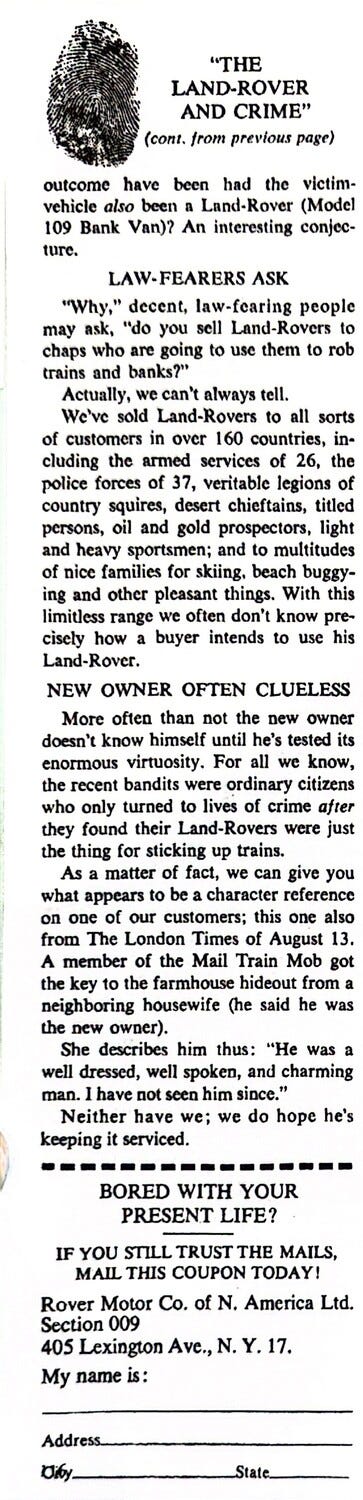
The robbers, it should be noted, did not get away with it. That Gossage got away with celebrating their exploits in a paid advertisement is testimony to his chutzpah and the Rover client’s remarkable nerve.
The ad highlighted the power and features of the Land Rover by showing how it was used to accomplish one of the most daring criminal heists in the UK. And as if promoting crime to sell a product wasn’t audacious enough, he cut off the full-page ad and continued it on the other side.
Because you need to feature the car sometimes, Gossage followed the Crime ad with perhaps the most perfectly executed sight gag in advertising history.
The Land Rover Concours d’Élégance Entry for 1964: a boxy station wagon parked before a neoclassical building inscribed HONNEUR ET PATRIE, with Rodin’s Thinker perched on the roof. “One imagines they’re worried sick over at the Brand X Limousine Division.”
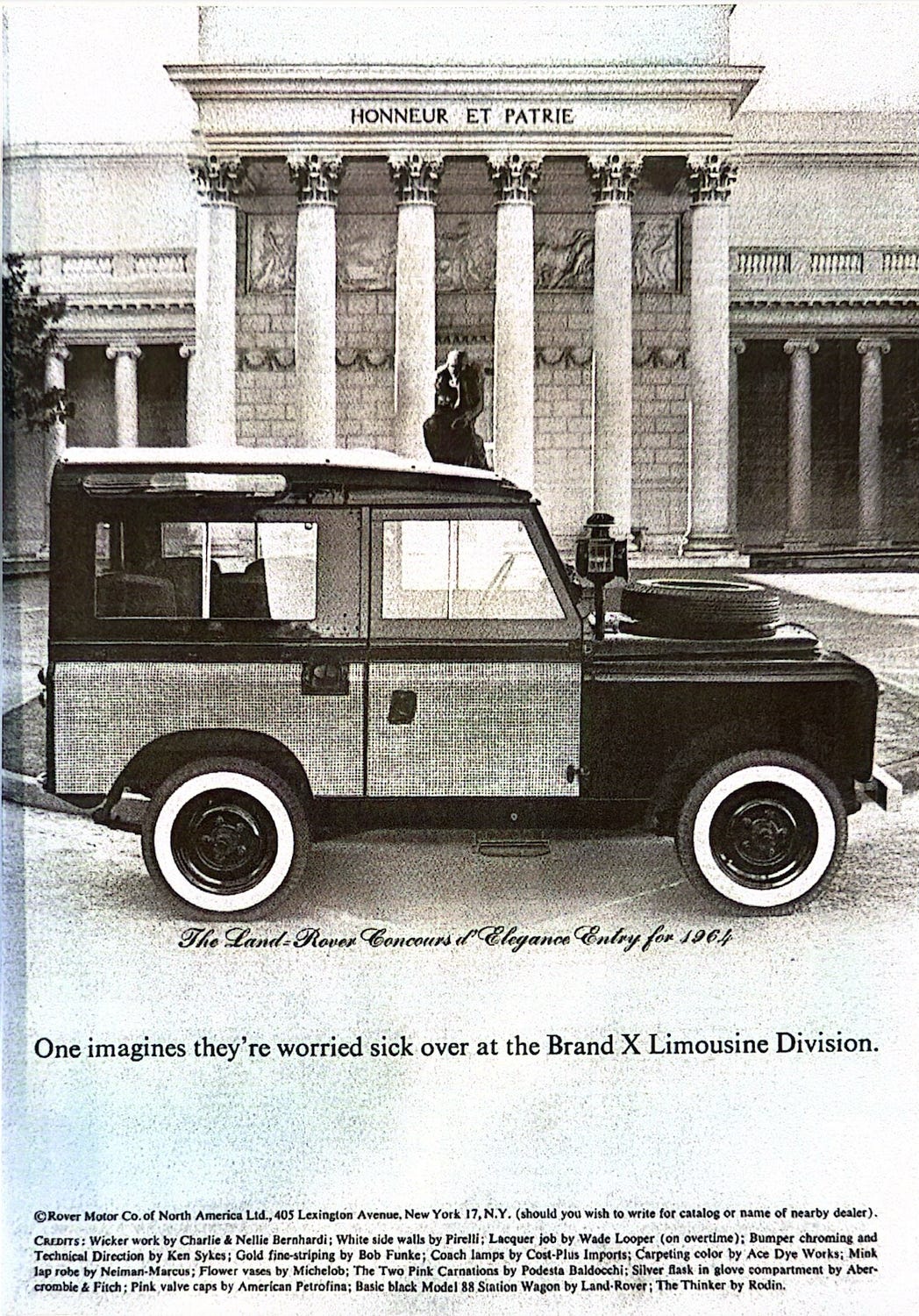
The credits, where a fashion spread would list designers, listed other things, including ads and stunts he created for other brands like the “Pink Air” stunt for Fina Gas stations.: “Wicker work by Charlie and Nellie Bernhardi; White side walls by Pirelli; Lacquer job by Wade Looper (on overtime); Gold fine-striping by Bob Funke; Coach lamps by Cost-Plus Imports; Mink lap robe by Neiman-Marcus; Flower vases by Michelob; The Two Pink Carnations by Podesta Baldocchi; Silver flask in glove compartment by Abercrombie and Fitch; Pink valve caps by American Petrofina; Basic black Model 88 Station Wagon by Land-Rover; The Thinker by Rodin.”
Like the Ogilvy spot, it was parody so meticulous, so affectionate, and so deadpan that you couldn’t tell whether it was mocking the luxury market, celebrating the Land Rover, or both at once. Which, of course, it was.
Gossage didn’t make the Land Rover upmarket. He didn’t touch the car. He left it loud, rough, and exactly as it was.
What he did was find the upmarket people who were bored of quiet. A category of wealthy buyer that, in a sense, didn’t exist until an ad said he did. The adventurer. The man who buys rough on purpose. The ones who flew their own planes. Who wanted adventure and loved the idea of mud on the tires. Whether they actually used the Land Rover for off-road use was not the point. To them, the roar of the engine represented something primal. Something missing in their haughty safe lifestyle.
Every luxury market, it turns out, eventually grows a rebel. Fashion had Chanel and Dior; it also got Vivienne Westwood, who walked off the King’s Road in ripped clothes and ended up dressing people who hated the other two. Watches had Cartier, who, after making a wristwatch for the pilot Dumont, made wearing wrist watches for men acceptable; Patek Philippe and Vacheron Constantin; they eventually got Richard Mille, who strapped a Formula 1 engine to the wrist and started charging six figures for the privilege of ignoring three centuries of Swiss tradition
In 1965 the mid-market auto industry had a rebel, the Volkswagen. But the luxury car market had no rebel at all. Gossage saw the empty chair. And he sat a muddy, loud, square, magnificent Land Rover in it.
He didn’t move the car into the upmarket world. He built a new room inside it.
Which, as his next two Rover ads demonstrate, left little room for the product itself.
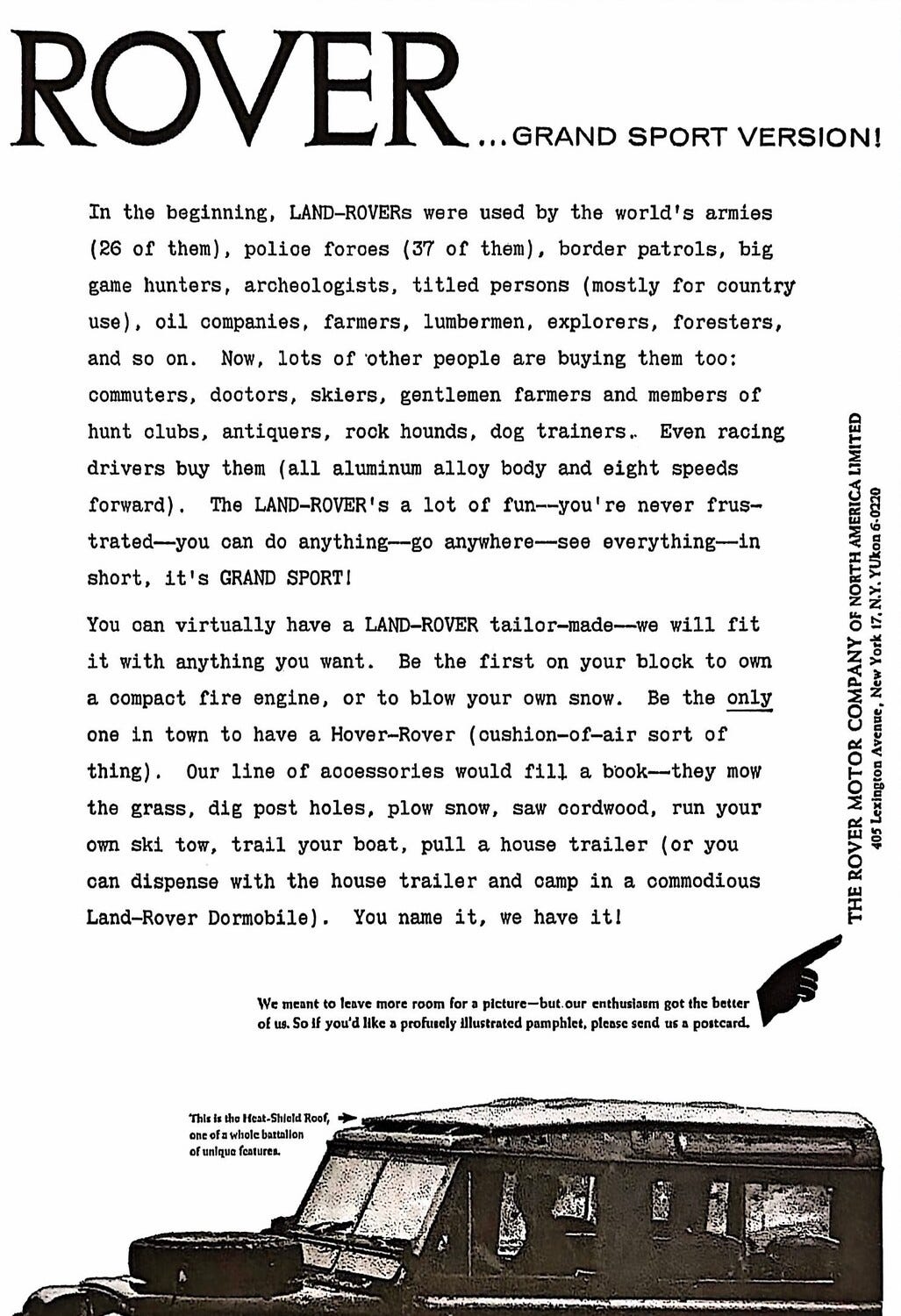
His ad for the Rover Grand Sport Version was so packed with enthusiastic copy, listing the armies (twenty-six), police forces (thirty-seven), archaeologists, titled persons, dog trainers, rock hounds, and racing drivers who used the car, that there was no room left for a photograph of the product. The footnote: “We meant to leave more room for a picture — but our enthusiasm got the better of us. So if you’d like a profusely illustrated pamphlet, please send us a postcard.”
And the ad that came after that one (one of my favorite ads of all time) not only didn’t show the car, but failed to mention Rover at all.
The one Gossage himself described as having callously flouted all the rules — worse still, he said, defying the brand name.
It mentioned neither the brand nor the product.
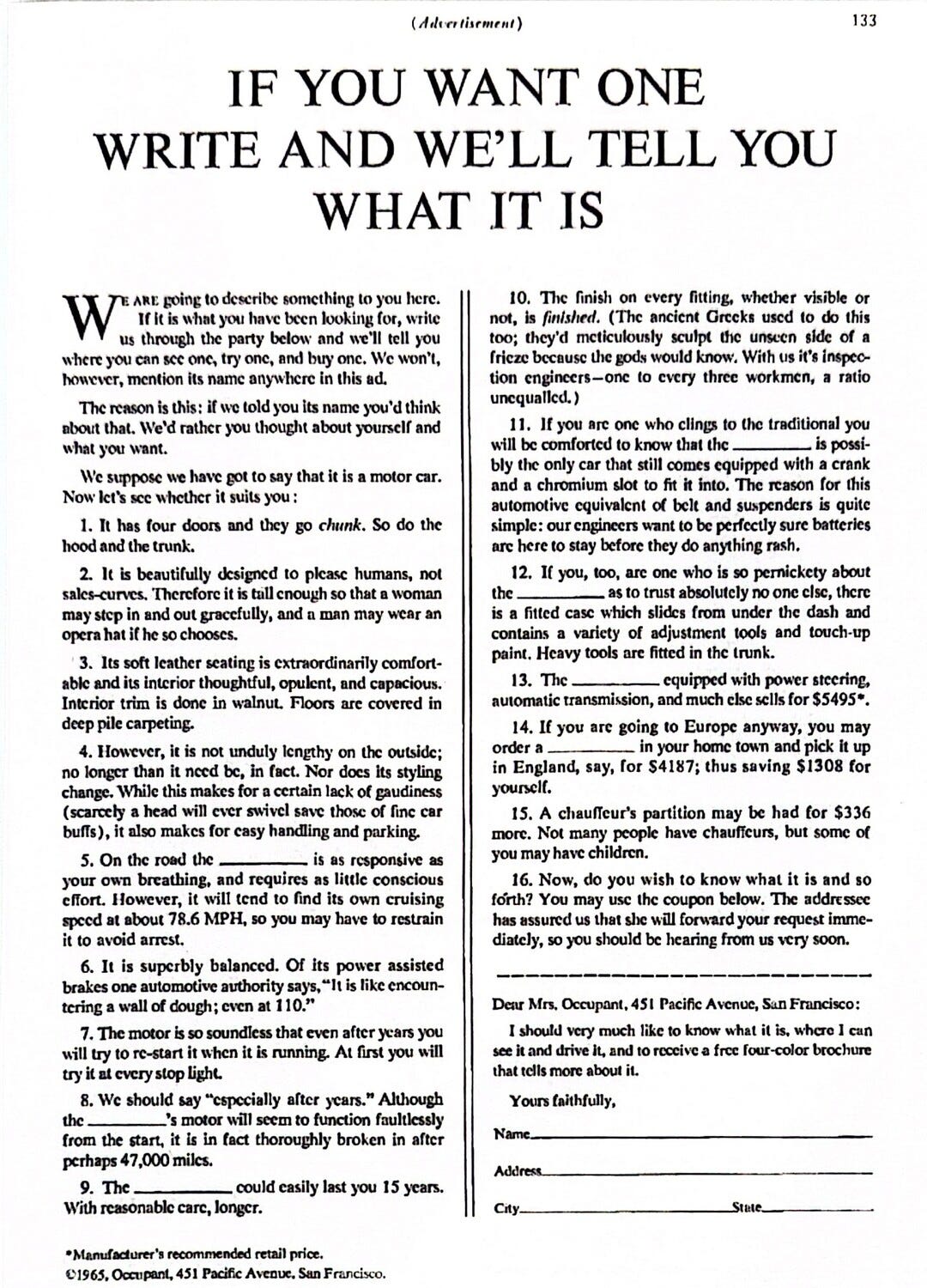
The entire ad was a dare. A provocation dressed as an invitation. Built on the premise that any reader who had been following the campaign would already know what “it” was, and any reader who hadn’t would be so intrigued by the confidence of the omission that they’d fill in the coupon.
I love this ad because it represents the purest form of something the entire content marketing industry has spent sixty years trying to articulate:
If your audience is engaged enough, you can stop selling entirely and let curiosity do the work.
The ad, in case you are wondering, was the Rover 2000 sedan. But you would only learn that by asking.
And speaking of asking...
Gossage also created the first experiment in what we would now call influencer marketing, though considerably more literate than the kind involving protein shakes and discount codes, by giving the Nobel Prize winner and author John Steinbeck, the author of The Grapes of Wrath, a Land Rover.
The hope was not to get a testimonial or endorsement deal.
The idea was to let one of the most celebrated, land-rugged living American novelists talk about a car in his own voice, on his own terms, with his own sensibility.
And write about it he did
So much so that point one of the Rolls-Royce parody opened with a Steinbeck quote: “Except for rattles, I am against silence in a car,” writes John Steinbeck, a Land-Rover enthusiast, “and I don’t know a driver who doesn’t want to hear his engine.”
Steinbeck’s voice carried the kind of authority that no amount of advertising copy could manufacture. When a Nobel laureate says he prefers rattles to silence, the reader does not think: this is an endorsement. The reader thinks: this is an interesting man who has made an interesting choice. And the Land Rover becomes, by association, an interesting car for interesting people.
Gossage also enlisted Ashley Montagu, the British-American anthropologist (best known for his work on The Elephant Man), who contributed handwritten copy. And Ken Purdy continued his motoring observations across multiple installments, his byline carrying editorial weight that a client testimonial could never match. The campaign was becoming a collaborative literary project, a running conversation between a car company, a firehouse full of eccentrics, and some of the most interesting minds in America.
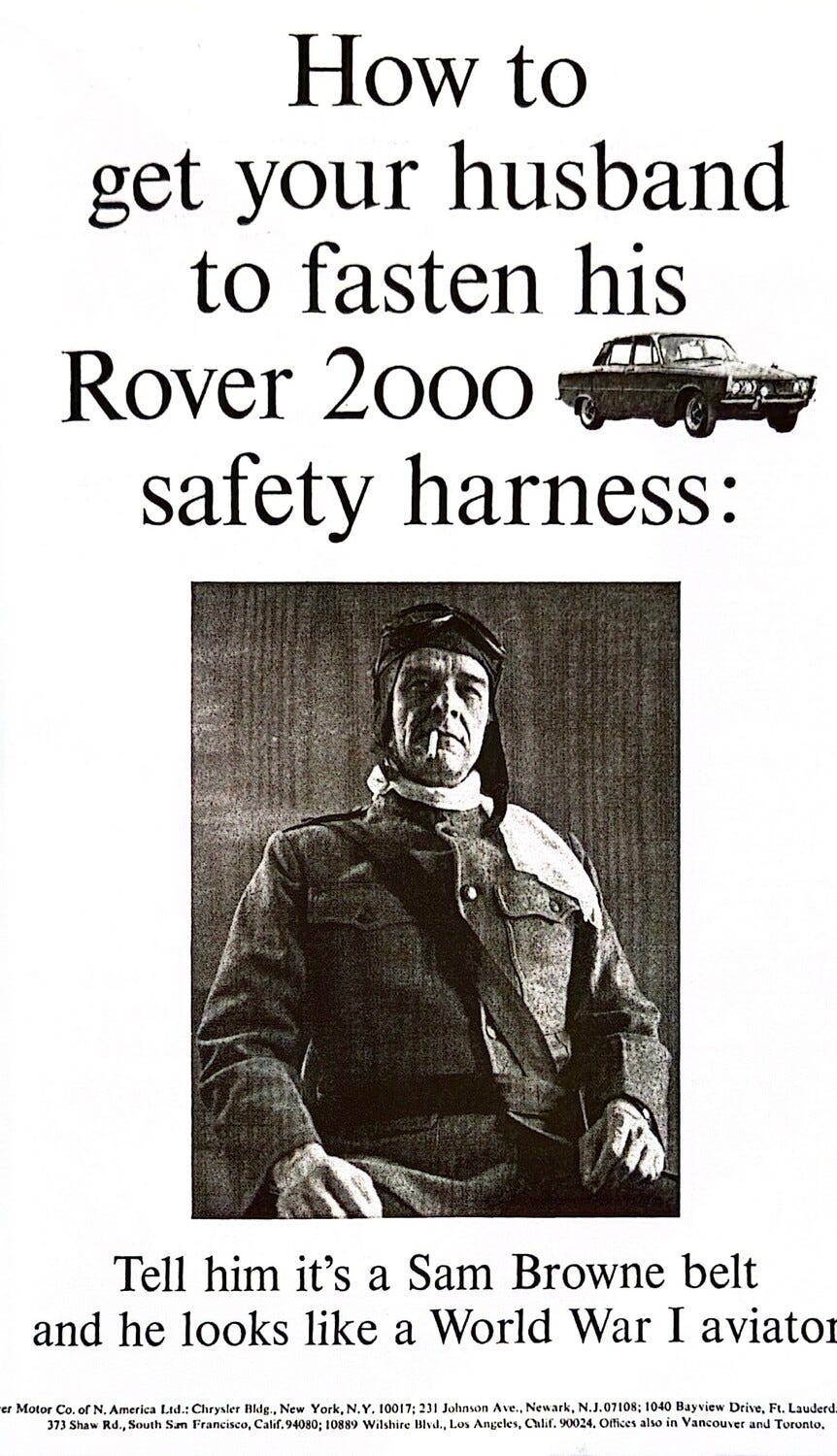
When Ralph Nader published Unsafe at Any Speed in 1965 — the exposé arguing that most American cars were dangerously designed — Gossage and his agency pivoted. Rover, built for terrain where surviving mattered more than comfort, had always prioritized engineering robustness. The campaign reframed itself around the proposition that making driving safe as well as satisfying was the entire idea behind Rover.
The safety ads were likely shaped by Gossage’s partner Jerry Mander — a man who held the rather wonderful position of being conscientiously opposed to gas-guzzling automobiles while working at an agency that sold them. Mander did something more radical than write the copy: he put his own family in the ads. His wife. His children. And even himself.
Gossage died in 1969, at fifty-two. He left behind a body of work so small it fits in a single book (The Book of Gossage, if you’re curious) and a reputation so large that people who have never read an ad of his somehow know his name.
He and Ogilvy disagreed about nearly everything. Ogilvy was suspicious of humor; Gossage was fuelled by it. Ogilvy believed in research and discipline; Gossage believed in conversation and instinct. Ogilvy’s ads were beautiful and authoritative. Gossage’s were funny and subversive.
And yet they admired each other enormously. Perhaps because each recognized in each other something that most of the people working in the advertising industry lacked:
A personal brand.
Gossage once said: “Nobody reads ads. People read what interests them. Sometimes it’s an ad.”
I have been brooding about that sentence for a long time. It seems to me to be the most important thing anyone has ever said about this business.
What follows is personal branding advice for everyone, but best suited to creative people.
The most counterintuitive lesson first. As I mentioned before, Gossage didn’t make the Land Rover upmarket. He didn’t touch the car. He left it loud, rough, and exactly as it was. What he did was find the wealthy people who were bored of being wealthy. The ones who flew their own planes. Who wanted mud on the tires, not a clock on the dashboard. To them, the roar wasn’t a defect. It was the whole point.
I then pointed out how every luxury market eventually grows a rebel. I talked about Chanel and Dior, and Vivienne Westwood’s punk off the King’s Road, dressing the people who hated the other two.
Stop trying to make yourself fit the affluent world. Build the room in the affluent world that only you can fill.
Wealthy people don’t always like doing business with their own. Especially when it comes to certain types of services. That doesn’t mean they are expecting you to play some kind of subservient role. Quite the opposite. They may be looking for you to help them feel alive again. This is especially true of personal brands that work in the creative space, such as copywriters and designers.
Start with what you actually believe. This is easier said than done, and why it is sooooo important to build a personal brand that attracts the kind of people you want to work with and who want to work with you. Gossage’s first ad for Rover was about billboards, not cars. It cost him industry goodwill, but it earned Rover something far more valuable: the immediate trust of every reader who shared his conviction. But he was able to do that because he convinced them too. It was actually their idea, based on an article he had written a few years earlier. The executives at Rover were looking for a Howard Gossage. Not the other way around.
Make it a serial. Gossage split ads across editions. He referenced his own controversies inside subsequent copy. He teased future installments by name. He built narrative arcs across the campaign so that each piece enriched the ones that came before. Your posts are not isolated events. He also appeared in his own ads. They are chapters. You need to start treating your posts in the same way. Instead of posting about separate things, to them together, refer to them, make them all part of your story.
Steal the frame. Tell the opposite truth. Gossage borrowed the most prestigious ad format in existence and used it to celebrate everything the Rolls-Royce was not. You can do the same thing with any dominant format created by any dominant figure in your space: take the convention everyone follows to sell your service one way, replicate it with perfect fidelity, and then subvert the content. The collision between the familiar form and the unexpected substance creates a shock of recognition that no original format could achieve.
Be outrageous enough that they can’t look away. Gossage celebrated a Train Robbery in a car ad. He addressed violent career criminals as satisfied customers. He included maps of the crime scene. Yes, it was, in a weird way, kind of on brand for Rover. But the more important insight is that premium audiences have a particular weakness for audacity. They encounter caution all day long, from their lawyers, their advisors, their wealth managers, their endless parade of polished professionals who are terrified of saying the wrong thing. So while they may not let you do the same thing for them, the person who takes a genuine risk stands out to them with almost unfair clarity.
Play with the format like a musician plays with tempo. Gossage omitted the product photo from a car ad and apologized for his enthusiasm. He ran a fashion shoot for a vehicle built for mud. He mocked headline conventions inside the headlines themselves. The format of any medium, even LinkedIn, is a canvas, not a cage. Write a post that’s all questions. Start one at the end. Deliberately leave out the thing everyone expects. The person who plays with the medium signals to a premium audience that they are dealing with someone who thinks for themselves, and that signal is worth more than any amount of polished positioning. I have a formula for this. 70/20/10. Your content should be 70% what’s working, 20% repetition of what’s working, and 10% pure experimentation.
If you need help coming up with that 10%, you are really going to enjoy my free masterclass on June 16th, titled “How to never run out of ideas.” Click here to grab a seat.
Let other voices elevate you. Gossage gave Steinbeck a car and let the Nobel laureate write about it in his own words. He enlisted an anthropologist and a motoring journalist as collaborators, not endorsers. A message from someone your audience admires, in their own voice, is infinitely more persuasive than a message from you. By sharing the stage, Gossage made the stage larger. The selfless act was also the most effective one.
Create the invisible coupon. Wealthy people have an exquisite sensitivity to being sold to. What they cannot resist is genuine quality presented with the quiet confidence of someone who doesn’t need to announce it. You don’t always need to be so forward with everything. Especially with intelligent, wealthy people. The “If you want one” ad never mentioned the brand. It described an unnamed vehicle in sixteen tantalizing points and dared the reader to write in and ask what it was. The absence of the name made the car more desirable, because mystery is more seductive than declaration. Instead of writing a spammy call to action, every piece of content you create should have an invisible coupon at the bottom, something that makes the reader arrive, independently, at the conclusion: I need to know more about this person, or I need to tell them why they are wrong, etc. In other words, the call to action for every post should be the post itself because a conclusion, reached on their own, is worth infinitely more than any conclusion you could have spoon-fed them.
If you want to learn other ways to edit your copy to make it sound more human and relatable, then join 200 other writers and get in early on my upcoming Copy Hunter: How to Write Like A Human in the Age of AI course. Click here to learn more and use the code PRESALE to get it for $75 instead of 200.
And finally: have fun, or don’t bother. Gossage had fun. Genuine, visible, infectious fun. The fun was not decoration. The fun was the strategy. The thing that separates personal brands that attract genuinely wealthy, interesting, sophisticated audiences from those that attract other personal brand builders is this: the former are enjoying themselves. Wealthy people have the luxury of choice. The one thing they consistently choose — across restaurants, travel, art, advisors, everything- is the thing that feels alive. The thing where somebody is clearly having a good time.
And, like the Land Rover, not once did he change who he was.
Gossage had a good time. From a firehouse in San Francisco, with a tiny budget, a loud car, and the magnificent, soul-preserving conviction that the audience deserves a good show.
The audience got one. They came back. His clients got one too, and they kept coming back too. The audience filled in the coupons and bought the cars. His clients hired him and paid for the ads.
And not once, not in the billboard ad, not in the crime report, not in the Rolls-Royce parody, not in the sixteen-point mystery, nor in the way he talked about or sold advertising to his clients did Gossage pretend to be something he wasn’t.
He was a reprobate in a firehouse. Which is why the premium brands beat a path to his Firehouse door. And American beat a path to theirs.
Which, incidentally, exactly what my Art of Personal Publicity course is all about. Use the code ADVERTIISNGHISTORY to get 35% off.
See ya next week!
And if you have any questions about advertising history, let me know. Maybe I’ll cover it.
Justin Oberman
Comments
Nothing yet. Say the first thing.
Sign in to join the conversation.