
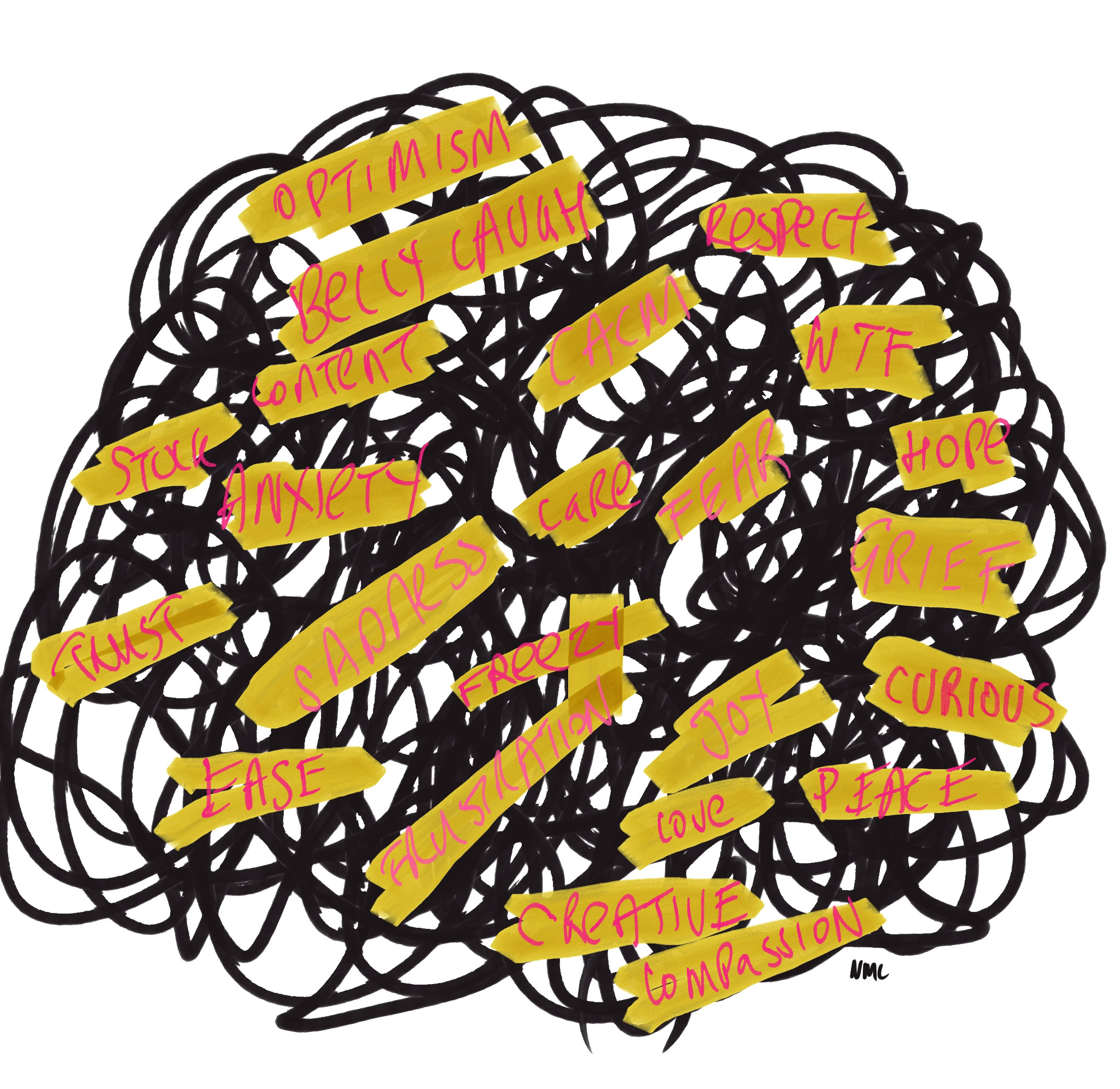
What do you do when you’re scared, worried or anxious about something that feels big and existential? Do you give yourself lots of reassurance and move ahead? Do you throw yourself into a whirlwind of busyness? Perhaps you try to shut it out or conversely you can’t seem to stop thinking about it. Do you feel galvanised into aligned action or in and out of freezy feelings?
I’ve thought a lot about writing here, but by God, this year’s done a number on me. Pretty much every week since the summer, I’ve planned to do what I’m doing now. Not what I’m now writing but to say something. To start somewhere.
When I pondered why I hadn’t, despite good intentions and even a vague sense of needing to speak on something that maybe I don’t even know I’m expressing or knowing yet, something crystallised for me.
That I’ve felt so lost and confused this year since my diagnosis. That even though I’m okay, touch wood, for a good chunk of this year, my mind cycled through potential horrors, dragging my nervous system and sense of self along for the ride too.
Thankfully, the darkness eased over this summer. I rooted into my being okay and in the present and, jaysus, what a difference that’s made. I get to be here. I am here.
But even though things are definitely better, the anxiety and freezy feelings I’ve felt around work and what I’m doing with myself have lingered.
You can be lying in a hospital bed the day after a hysterectomy and blood transfusion with thoughts about stuff you’ve forgotten to do and vague worries about when you’ll have to start working again. Weeks later, you get a cancer diagnosis and work and money aren’t the first things you think of. But gradually, as terror, grief and uncertainty grip you, life converges and you remember you’re self-employed.
There’s also just so. much. noise. about the state of the world and all the things you’re ‘supposed to be doing’ to, you know, ‘make it’. But you feel too tired, scared and uncertain, plus your body’s riding the rollercoaster of no external hormones and the onslaught of medically-induced menopause.
When I share my angst and sense of paralysis with people, employed and self-employed, they share their own worry stories.
For some, it’s a near-constant state of waiting for the other shoe to drop and prepping for disaster and failure.
When you’re going through something major (or can see you’re struggling), you might do your best to give yourself some grace about your worry stories and how busy your mind is. After all, we’ve been socialised and conditioned to have these worries so that we never feel okay and are always essentially hoeing ourselves out, often so that someone else benefits.
Still, it’s amazing how much you think about work, money, and what you’re ‘supposed’ to be doing even when you fundamentally value and prioritise your wellbeing.
After a shock or crisis, there can also be a sense that you need to make things count, which creates its own twisted pressure. You start overthinking things and get all perfectionistic about how making things count ‘should’ pan out.
It also doesn’t mean you never have to deal with sucky things or that you don’t find it hard to navigate them.
Here’s a hard but necessary truth I’m facing: the me before I had surgery, the me even of those four weeks between surgery and diagnosis, I’m not her anymore. She’s in me, like all the mes I’ve ever been, but I can’t go back, just like you can’t turn a chicken back into an egg.
Life feels and looks different, and I have to meet this version of myself where she’s at and clumsily and sometimes boldly, where I can, make my way forward. I’m someone who’s learning to hold a different type of uncertainty as I navigate being closely monitored with scans for ten years. That makes me super curious about who I’ll become along the way and what I’ll have to shed to become her. I’m also very curious about our anxious relationship with money, work and purpose, and I think I need to explore more of that.
Readers like you support my work here and at Baggage Reclaim, helping keep the proverbial lights on. If you love my work and have the means to become a paid subscriber for £1.05/week (when you subscribe annually), please support independent writing.
Comments
Nothing yet. Say the first thing.
Sign in to join the conversation.