
For the last decade, I’ve been in varying degrees of a wrestle with myself, with life, that I’ve come to understand is about my relationship with letting go, which is closely intertwined with a pesky habit I have of wanting, sometimes desperately feeling like I need, to be in control.
I haven’t always characterised this existential journey I’ve been on as being about letting go. It would also be easy to reach the conclusion, based on my history, that I’m rather proficient at it. I’m someone who’s used her walking away from emotionally unavailable and shady exes, sometimes toxic situations with family, and unfulfilling and out of alignment opportunities, to help many others around the world do the same so that they, too, can welcome more love, care, trust and respect.
All of the above is true and since my late thirties, I’ve grappled with a series of events and emotions that triggered anxiety, paralysis, and stuckness—making me feel like I was going around in circles, which triggered shame.
Why is this happening to me? Why does this feckin’ thing still bother me? What does [this thing I moved on from] want with me now? I should know better. Am I always going to feel like this? Why do I know what’s bothering me and what to do and yet I’m not doing it? Ah, jaysus, I froze [about something] and when I finally did the thing I knew I needed to do, it took an embarrassingly short amount of time and/or I felt immediately better. Why do I feel so alone? *whisper* It’s because I’m not good enough.
Let’s be clear: it wasn’t all hunky-dory prior to this decade, but, truth be told, my brain organised the prior nine years in a narrative of my feeling like I was on an upward trajectory. Like a ‘happy ever after’, which is ironic considering I’ve long had an aversion to that narrative. But hey, that’s societal programming for you.
Following a serious illness in my late twenties that forced me to confront my pattern of being with emotionally unavailable men, settling for crumbs, and self-hate, I dramatically changed my life. I’d gone into (and stayed in) remission, met my husband, had two children, become a full-time writer, and basically my life looked radically different from before 2005. Of course, I had struggles during that period, particularly with family, but, honestly, the high of having experienced deep transformation inside and out inoculated me, until it didn’t.
At the same time, it’s also crucial to point out that despite everything I’ve wrestled with, life over this last decade wasn’t “terrible”. As hard as parts of it were, it wasn’t a total shitshow. To write it all off would be to ignore the simple truth that I lived. I experienced so many good things, so much joy, and I was in varying degrees of this wrestle with myself and some not-so-great things happened. People and life can be more than one thing, something you’ll see throughout this book.
When JP first approached me about working together, I was a few months out of what had been an incredibly unsettling and frightening several months where one of our daughters struggled with her mental health and missed almost an entire academic year. The year before, aged forty-five, I’d felt low following the publication of my book The Joy of Saying No, which, on reflection, involved a traumatic publishing process. I’d also stepped back from almost two decades of work, including ending my podcast The Baggage Reclaim Sessions and then, within days, had to break up with my mother. Throw in that I was perimenopausal and feeling low energy and lost, and it was safe to say it felt like life was putting me through my paces.
In my chats with JP, as I reflected on what I’d write about, grief and letting go sprung up. All humans struggle to some degree with holding on too tightly to that which they need to let go of. For most of us, grief is something that seems scary and to be avoided so that we don’t plumb the depths of other feelings and thoughts we consciously and unconsciously avoid. We associate ‘letting go’ with it resulting from something negative, not realising that in every moment of our lives, we are letting go in teeny, tiny, and yes, sometimes much bigger ways.
There is something in the chaos, stuckness, pain, stillness, anxiety, guilt, shame and self-doubt of what I’ve wrestled and reckoned with. As soon as I began to articulate some of what I’ve grappled with, I knew with every fibre of my being that I’m not alone.
The big plan was to spend the beginning of 2025 recovering from surgery and gently gathering my thoughts on what it means to let go. Although I’m not a ‘New year, new me’ person, there was this sense that, after several runs of entering the year with anticipatory grief or trepidation due to something I was already dealing with, I was in a ‘good place’.
I regarded starting 2025 with recovery as an opportunity to hibernate and approach the year from a place of it being all about me. Of course, in that way that life often is (and yet we continue to resist it), life had other plans. It put everything I’ve learned (and not learned, haha) about letting go to the test. Instead of experiencing the recovery I’d expected, I grappled with repeat infections. Then I had a shock diagnosis that rocked my foundations and sent me into an existential tailspin that brought so much clarity about my life, never mind this last decade.
I’ve never prided myself on being ‘good at letting go’ as if it’s a badge of honour. However, there are things I hold dear to my identity and sense of security, sometimes not always for the better, that guide and inform my feelings, thoughts and behaviour when I need, want to, or even should let go.
It’s in this quest to understand myself and why, when in theory I have the means to make it easier for myself, I find it hard to let go, I hope that in sharing some of my story, you recognise your own humanness and what you, too, need to release and surrender.
Many of us unwittingly, sometimes consciously, associate the invitation to let go with being synonymous with giving up, failing, backing down, not caring, losing face, excusing, letting ourselves or others off the hook, and essentially losing the sense of safety and security we get from holding on. We’re attached to the hopes and expectations contained in our holding and afraid of the unknown in our letting and listening.
I’ve learned time and again that to let go means making peace with allowing things to be instead of inadvertently, sometimes consciously, trying to control how the letting go (or holding on) shakes out.
To let go is to truly hear and listen to ourselves and our lives in deeper ways that we might not always be comfortable with, but we’re all the better for doing so. When we build a relationship with grief, with being more intentional and compassionate with letting go, we experience more freedom, security, peace and joy in what remains.
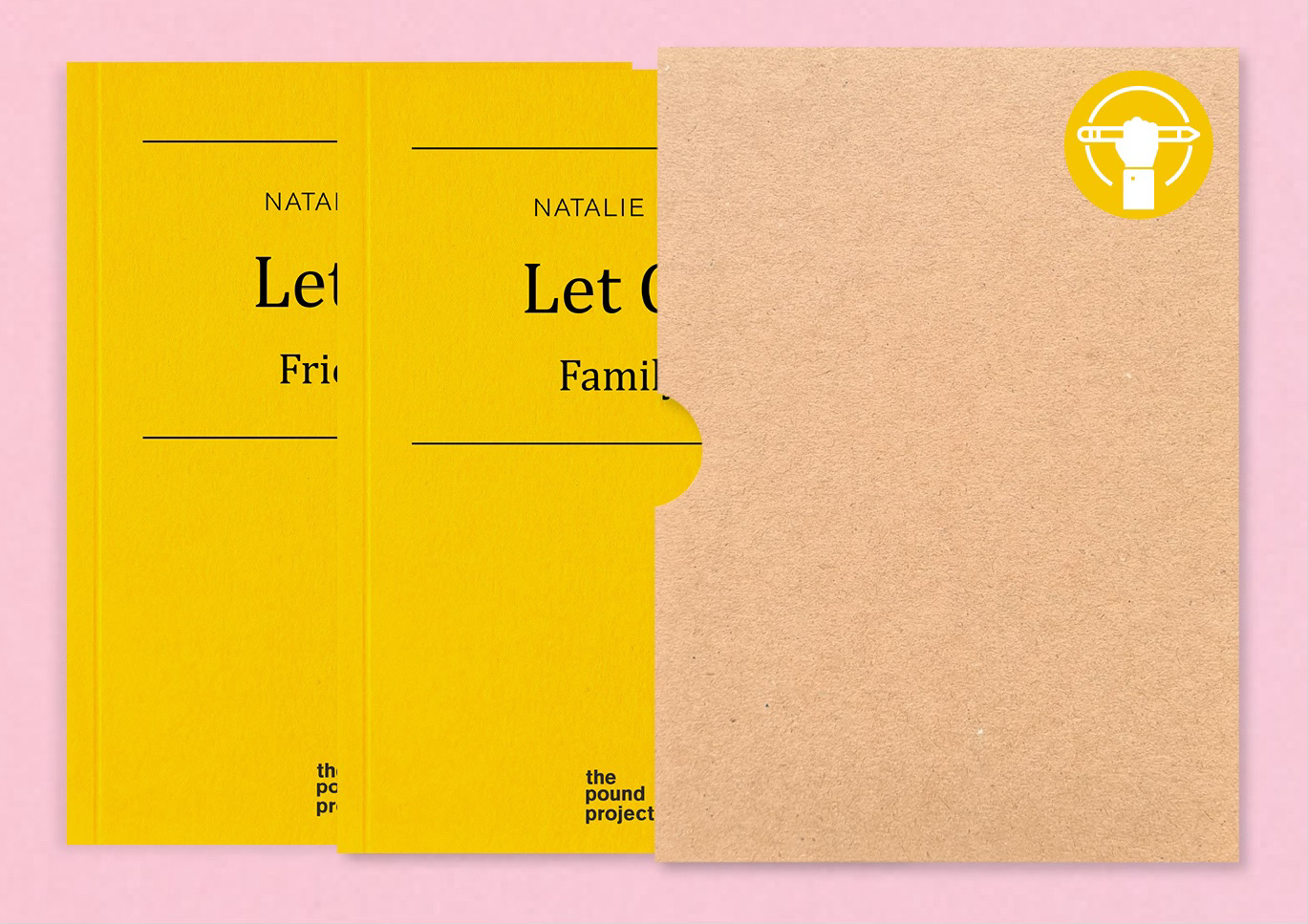
Let Go is only available for a limited time (until 5th August) and can only be ordered via The Pound Project (ebook and print versions, signed and unsigned). It comes in two parts, Family and Friction, and I’m excited and humbled to share my story. Note: We only print what we sell during this period, so if what I’ve shared so far resonates, I’d love it if you could support.
Comments
Nothing yet. Say the first thing.
Sign in to join the conversation.