
Hi everyone. Welcome back to another AI x Gaming newsletter. Today, we discuss game distribution in the age of AI.
As always, if Naavik can support your business — for example, if you need guidance operating in today’s evolving AI landscape — we’re happy to chat. Our team and partners are ready to help.

When Epic Games needed to scale Fortnite, the Epic Games Store, and the Unreal ecosystem to hundreds of millions of players, it partnered with EPAM. Together, we engineered the backbone and data platforms behind one of gaming’s biggest empires.
EPAM brought together software engineering, big data, and AWS cloud expertise to help Epic scale with speed, reliability, and reach.
This collaboration leveraged AI and data-driven insights to improve player support, in-game communication, and personalized engagement across platforms — creating a smooth experience for developers and players.
If you’re looking to deliver live services at massive scale, this is your inside look at how world-class engineering powers global gaming.
As AI lowers the barriers to creation, the supply of newly created games (which is already rising year after year) will only accelerate. And as supply expands, those who aggregate demand — our leading digital distribution platforms — become even more important.
So far, it’s unclear if (or when) emerging AI technologies will actually transform distribution. Most innovation is taking place on the game creation and operations side. If this trend continues, gaming’s leading platforms are unlikely to be threatened and may only become more important.
These digital gatekeepers hold some of the most valuable digital real estate in the world. Their policies and ways of working will make or break companies and change the meta of how game studios find customers. Companies like Steam, PlayStation, and Roblox already play this role, but managing organic discovery in a larger sea of AI-enabled games makes this more important than ever.
As the responsibility of these distribution platforms heightens, what may change? Who is positioned to help game studios, and who may hold them back? Let’s find out.
Questions around distribution apply to other forms of entertainment as well. I’d argue that top gaming platforms are well behind other industries in incorporating AI, so we can learn from what others have already figured out. Fortunately, the early signals are encouraging.
Take Spotify as an example. Just like games, there is far more music out there than any one person could ever listen to, and Spotify has been central to helping listeners create custom playlists and experiences out of seemingly infinite options for years. AI catalyzing an explosion of new musical supply is not a problem for Spotify; sifting through massive supply is simply an extension of one of their long-time strengths.
While AI transforms the creation side (which Spotify doesn’t need to touch), it also raises the bar for personalization: better algorithms, new features (like prompting playlists), and more.
It is also worth noting that the business model does not need to change. The freemium model (ads or subscription) is already a great fit for customers, and AI won’t change that.
We see similar patterns in video on YouTube. Just like Spotify, it’s already built to take on more supply, steadily level up personalization, and better monetize through ads and subscriptions.
As we can see, while AI uproots the supply side and makes it more competitive, this trend actually benefits the largest distribution platforms. The big will get bigger.
Games differ from other forms of entertainment in obvious ways, such as more varied business models and player expectations across platforms. However, many distribution challenges are self-imposed. Leading mobile storefronts have seen limited innovation (especially Apple’s App Store), while Steam’s approach to AI is counterproductive.
Let’s start with mobile. As we noted in Naavik Digest, AI is already driving a spike in the launch of new apps and games. Like Spotify or YouTube, this is what the app stores are built for, but their discovery systems still leave much to be desired. Both Apple and Google have made modest strides in the past year, but neither platform is realistically set to dramatically improve the odds of players discovering games that aren’t already very popular.
Will this change? Hopefully, but maybe not anytime soon. With Apple’s upcoming CEO change, there’s a chance that the company’s approach to developers could become friendlier than under Tim Cook, but any change is currently speculation. Google has made somewhat more progress. Last year, Google Play launched the “You” tab, which is a personalized hub. This year, it launched Ask Play (to better assist with search), and it now surfaces apps in places like Gemini.
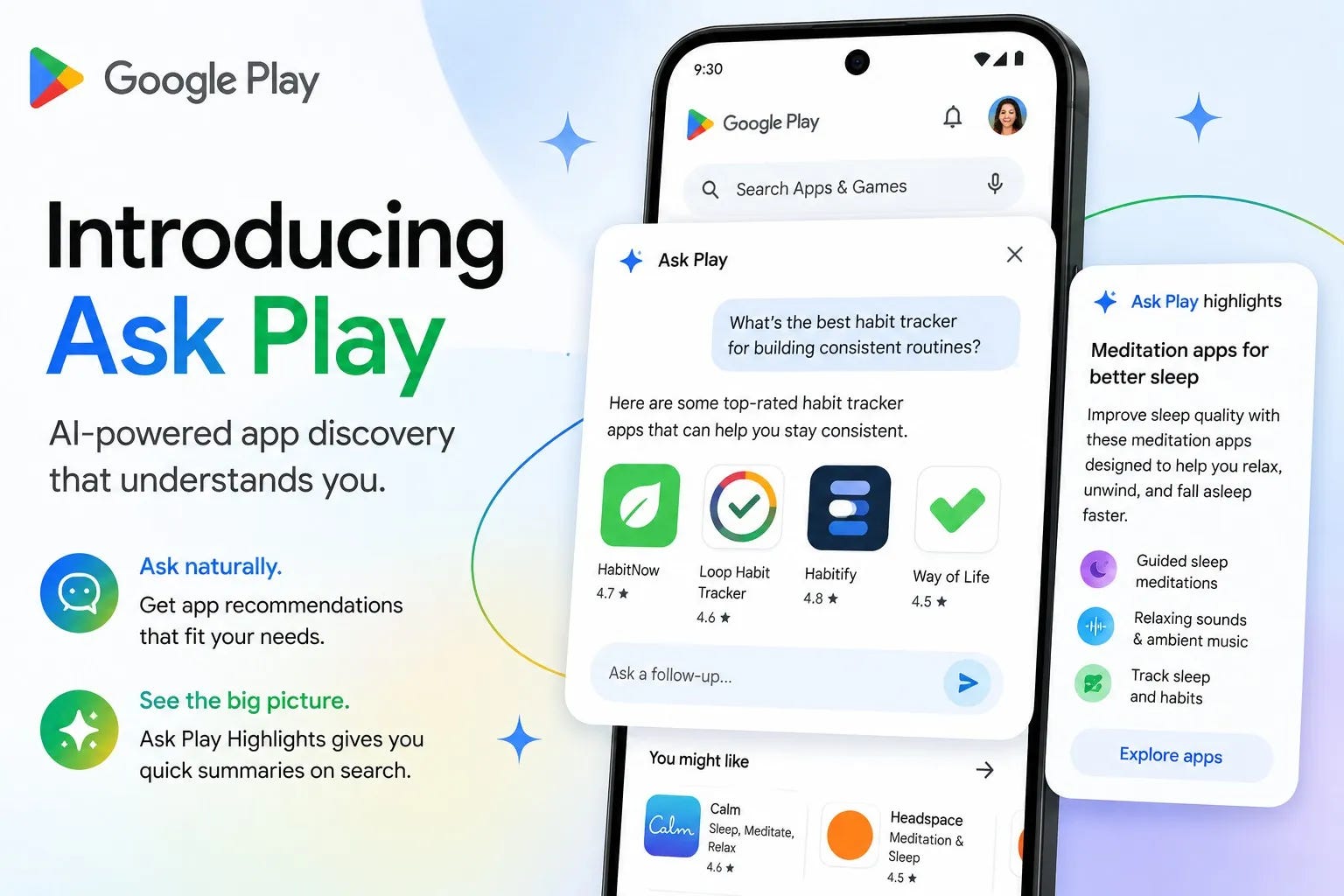
These updates help around the edges, but it’s nothing transformational yet. If this trend endures, the biggest winners beyond the distributors will continue to be the tools and platforms that studios and publishers pay to attract users at scale — like AppLovin and Unity. Even if the barriers to creation are massively reduced, but the barriers to scale aren’t, this reality will still limit the number of casual / smaller teams from finding success. Hopefully this changes one day, but that day doesn’t seem to be soon.
Console / PC has its own challenges. In some ways, given the concentration of playtime in a handful of “black hole” games, discovery is less important to a major swathe of players. Plus, most dedicated players pay attention to events (like The Game Awards, Nintendo Direct, and PlayStation State of Play) that help players learn about what’s coming next or watch creators (on YouTube or Twitch) who often promote what’s new and interesting.
That doesn’t mean distribution isn’t impacted by AI. While AI isn’t directly threatening the position of leading game platforms (beyond other forms of entertainment fighting for consumer attention), there are still retention and monetization benefits in helping players find experiences they will enjoy.
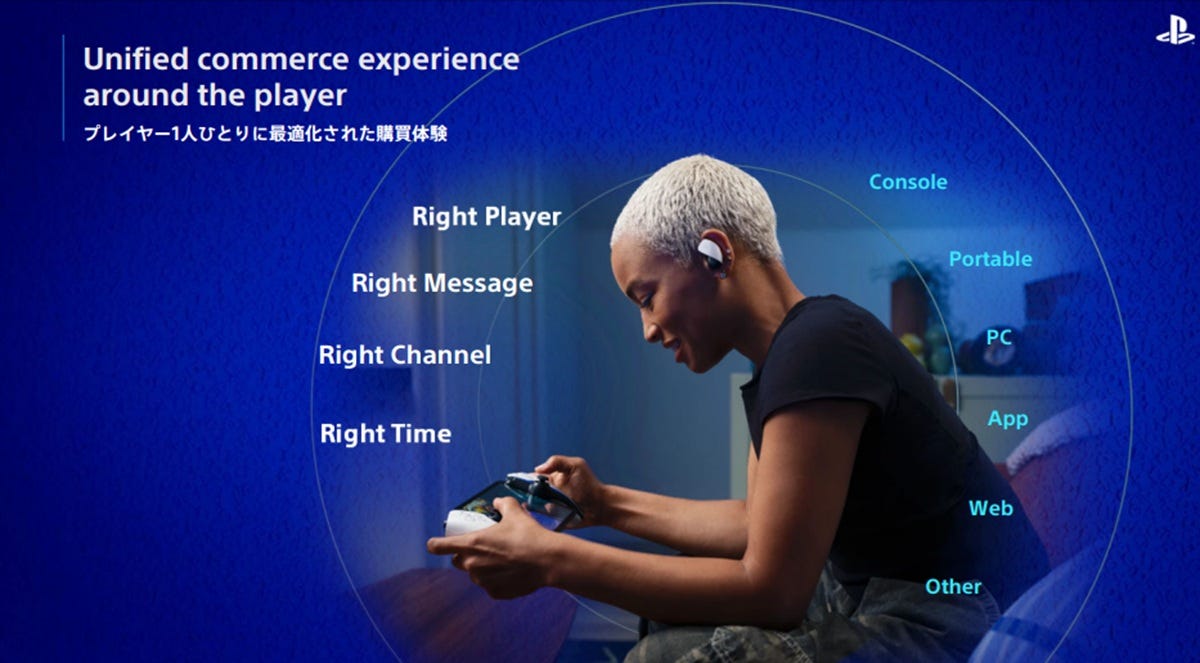
As noted in a news item below, PlayStation is beginning to use AI to improve discovery and content recommendations. Xbox will likely follow, if not already. These changes won’t be transformational, but they should incrementally improve player experiences.
Steam needs to get its act together the most. PC has a longer tail of games for players to discover compared to console platforms, and while Steam’s discovery is passable, it can be improved. However, the company is showing strong Luddite tendencies when it comes to AI.
By forcing disclosures on games that use AI at any point in production — and given gamers’ overzealous vitriol against AI (exacerbated by media companies thirsty for views) — it’s more hurtful than helpful.
Given AI’s growing inevitability in the process of making or marketing anything digital (not just games), Steam is on the wrong side of history here. If Steam is worried about AI slop, it only needs to look around to see that its platform was already slop-filled before AI. But just like we see from Spotify and YouTube in managing larger inflows of AI-enabled content, that’s OK; there are better ways to help users find high-quality content they’d enjoy than the blanket labeling used which hurts small teams above all.
If Steam was thoughtful and responsible, it would remove or replace the AI tagging system. Perhaps it could be reserved for games more entirely vibe-coded.
While Steam could also benefit from using AI in its own discovery systems, that’s not all that matters. In a world in which AI helps craft digital content and powers the algorithms that connect players to games, platforms that elevate humanity can succeed too. Alongside AI-influenced personalized feeds, Steam (and others) have the opportunity to get more innovative with human curation. The Steam team can promote some of its favorite underappreciated games while getting creative with curated lists and experiences from people like celebrities, popular game designers, content creators, or users’ other friends.
In an AI-powered world, leading distribution companies need to find the right ways to both support progress and keep the human touch that we all benefit from.
The biggest distribution winner in the age of AI might be Roblox. This is because:
It aggregates demand and engagement for a generation of players.
By being vertically integrated from creation to consumption, it can control how AI improves the entire end-to-end experience (including better games).
Roblox already has a fitting freemium business model.
The anti-AI mind virus hasn’t hit Roblox users, who simply want fun games.
Roblox can use AI to improve discoverability / recommendations while using human-curated lists in parallel.
Roblox is innovating faster than its more lethargic gaming peers.
Roblox is already winning; AI just helps keep momentum going around what is already working.
Roblox isn’t perfect (it faces regulatory pressures, too much stock-based comp, maybe too much focus on HD games these days, and it still sits on top of other platforms which pressures its margins), but it appears better positioned than its peers to benefit from AI, which could further widen its market share lead.
Will other AI-first distribution platforms change the industry or make a dent? It’s possible, but it’s also not the case yet. Astrocade is one contender, which we wrote about in our last issue. However, at a fundamental level, if the very best games will still need to be played on PCs, consoles, and smartphones, then they will need to be largely distributed through the same dominant distribution platforms (usually) native to that hardware. Steam is the exception, and it is even strengthening its operating system advantages by expanding into more hardware itself (Steam Deck and Steam Machine).
What would change this reality is either a new generation of consumer hardware that opens up the opportunity for new app stores (like the smartphone did) or some breakthrough in AI-native games (where prompting games and virtual worlds becomes 100x better than it is today) that leads to an entirely new platform that gamers flock to.
While that may one day come true, it’s not reality today. As such, the best path forward is for our leading platforms to get the memo, get over any misplaced AI animosity, and start innovating. Will this happen in unison? Probably not. As such, the distribution winners don’t look to change anytime soon. The dominant platforms will remain in place, and where they fall short, the Applovins of the world will become more important than ever.
Written by Devin Becker, Consultant at Naavik
During Sony’s recent earnings presentation, PlayStation CEO Hideaki Nishino devoted significant time to AI, framing it as central to PlayStation’s mission of being “the best place to play and the best place to publish.” Nishino highlighted Mockingbird, an internal tool that generates facial animations from performance capture data, compressing work that previously took hours into a fraction of a second. Studios including Naughty Dog and San Diego Studio are already using it, and the tool shipped in Horizon Zero Dawn Remastered. A separate AI tool converts video footage of real hairstyles into strand-level 3D models. Beyond development, Nishino noted that AI-powered payment routing has generated over $700 million in incremental revenue by using context to process payments with more profitable and risk-appropriate routes. He also mentions that machine learning-driven personalization for the PlayStation Store is coming next, which has already seen some experimentation around pricing.
Focusing on specific, focused use cases where AI shows promise without prompting too much artistic backlash was a solid strategy here. What stood out was Nishino’s prediction that AI will drive “a meaningful increase in the volume and diversity of content” on the platform. If AI tools compress production timelines and lower costs for third-party developers, it accelerates an already growing content oversupply reality on the PlayStation Store. To counter this, Sony is also looking to AI to help improve recommendations and discovery systems, which makes a lot of sense.
Odyssey, an AI lab founded by self-driving veterans, simultaneously released two different world models. Starchild-1 is a multimodal world model that generates synchronized audio and video in real time, responding continuously to user input. Agora-1 is the exciting game-related side, as the first multi-agent world model, allowing up to four participants (human or AI) to share and interact within the same AI-generated environment simultaneously. To demonstrate it, Odyssey rebuilt a GoldenEye 007 multiplayer deathmatch where every frame each player sees is generated live by the model. Architecturally, Agora-1 decouples simulation from rendering, maintaining a shared world state that each player’s view is independently generated from. It functions, in effect, as a learned game engine. Meanwhile, Decart raised $300 million to help build its low-latency infrastructure for world models, with its Oasis model focused on physical AI and its Lucy model targeting immersive experiences including gaming.
This is all still early research, not a product yet. Visual fidelity lags well behind traditional engines, and Odyssey’s GoldenEye demo is a controlled, relatively simple environment. But the investment pace and release cadence indicate serious money and talent believe world models are a major AI frontier. For games specifically, world models that support multiplayer interaction are a prerequisite for AI-generated experiences that go beyond single-player tech demos. Odyssey is also explicitly positioning these models as training environments, where multi-agent interaction generates the complex and emergent training data that passive observation cannot. If world models eventually become capable enough to generate high consistency playable environments on the fly, the implications for prototyping, testing, and procedural content generation are significant. There is still a long way to go before world models directly apply to game development, but the velocity of progress, and the dollars chasing it, suggest this space is only getting started.
Liu Wei, co-founder of HoYoverse (the global brand name for miHoYo), announced plans to invest up to CN¥100 billion (roughly $14-15 billion) in AI over the next three years, committing to full-stack, in-house AI R&D. HoYoverse intends to build everything from infrastructure to application layer internally, moving well beyond fine-tuning external models. Specific plans include a self-tuning pipeline where AI autonomously identifies training bottlenecks and writes GPU kernel code, multi-model architectures for managing AI NPC dialogue at the scale of tens of millions of concurrent players, and FP8 mixed-precision training to cut memory and compute costs. AI NPCs are planned for the company’s upcoming life simulation game, Petit Planet.
The scale of this commitment dwarfs anything a Western game publisher has publicly announced around AI. HoYoverse’s advantage is its position as a private company with massive cash flow from Genshin Impact and Honkai: Star Rail, meaning Liu can make long-horizon bets without quarterly earnings pressure. His own framing was blunt: if it fails, “it’s just a big firework.” A ~$15B bet is enormous for HoYoverse’s size, which adds risk and makes us wonder if the investment is truly going to end up this large. That said, the full-stack approach is notable because it signals that HoYoverse sees AI not just as a development efficiency play but as a foundational platform technology for next-generation games. If their multi-model NPC architecture works at scale, it would solve a cost and latency problem that is currently blocking every major publisher from deploying real-time AI characters in live games.
Origin Lab, a startup building a licensed data marketplace between game publishers and AI labs, raised $8 million in seed funding led by Lightspeed Venture Partners. The core thesis is straightforward: as AI moves beyond language and static images toward world models and physical AI, frontier labs need training data that captures motion, physics, spatial structure, and cause-and-effect. Video games, with their richly simulated environments, are an untapped source of exactly that kind of data. Origin Lab works directly with publishers to license game content, captures it through proprietary pipelines, enriches it with structured metadata (gameplay state, camera movement, player inputs, environment conditions), and packages it as researcher-ready datasets.
This is a bet on a new revenue stream for game publishers: selling access to their game worlds as training data. For publishers sitting on decades of richly built environments, the proposition is appealing, especially because Origin Lab handles the legal licensing framework that avoids the scraping controversies plaguing other AI training data pipelines. The critical question is whether enough AI labs will pay meaningful prices for this data relative to alternatives. Games are rich simulations, but they are also often built for elements of non-realism. If world models continue their current trajectory, demand for high-quality interactive training environments should grow substantially. Origin Lab is positioning itself to be the infrastructure layer connecting two industries that haven’t traditionally had reason to work together.
GGWP, the AI-powered content moderation platform used heavily across more than 100 games, announced its expansion into real money gaming and non-gaming verticals, including commerce and advertising, with $15 million in additional funding. GGWP’s platform combines real-time moderation, behavioral context analysis, enforcement workflows, and community intelligence, supporting over 20 languages with what the company calls “cultural intelligence technology” to detect nuanced harmful behavior across text, voice, and usernames.
Gaming forced GGWP to build moderation for “some of the most demanding real-time environments online”: high-volume, adversarial, multilingual, and full of context-dependent communication where traditional keyword filters constantly fail. Every platform that hosts user-generated content or real-time interaction will hit similar challenges, and regulatory pressure is accelerating the urgency. This move fits a common pattern of technology battle-tested in gaming finding broader enterprise applications. The AI-generated content explosion is itself making reactive approaches increasingly unsustainable. If GGWP can prove its gaming-native approach works across industries, it becomes another meaningful example of gaming as a proving ground for AI infrastructure.There’s also the potential that learning from challenges outside gaming could feed back to improvements in game moderation as well.
Sleepagotchi pivots from sleep to an AI-based health and wellness platform
k-ID launches AI-powered compliance tool aimed at speeding global game launches
Google announced a multitude of AI products and updates at I/O 2026
George Clooney, Tom Hanks, and Meryl Streep back new ‘Human Consent Standard’ for AI licensing
AI Eats The World (Ben Evans): “It’s been almost impossible to build capacity fast enough since ChatGPT launched.”
The new Wild West of AI kids’ toys (Ars Technica): “When it comes to ‘best friends,’ childcare workers, surveyed by the researchers, expressed fears that children could view the toy ‘as a social partner.’ A young girl told the Gabbo she loves it. In another instance, a young boy said Gabbo was his friend. Goodacre refers to this as ‘relational integrity,’ the responsibility of the toy to convey that it is a computer, and therefore not alive, and doesn’t have feelings.”
EMERGENCE WORLD: A Laboratory for Evaluating Long-horizon Agent Autonomy (Emergence): “Agent intelligence over long horizons is not the same construct as agent intelligence on short tasks, and it cannot be measured the same way. Emergence World is a laboratory for the long-horizon question—a continuously running, instrumented, multi-agent environment where the dynamics that only emerge over weeks can actually be observed. The cross-vendor study above is one use of it; we expect more interesting uses to come from the research community.”
The big Strauss Zelnick interview: GTA, AI, Roblox and building the biggest entertainment company in the world (Gamesindustry.biz): “I prefer the word ‘technology’ because technology encompasses AI, and using the word AI means different things to different people,’ he says. ‘But everything that we create, we create inside computers and always have. And new technology and new tools are always a good thing for us.’”
Naavik’s team of experts has helped over 300 companies — publishers, studios, tech companies, and investors — succeed across the video game industry. We’d love to work with you too! Here’s what we offer, spanning all platforms, genres, and regions:
Strategy Consulting: Projects covering market research, corporate strategy, game and economy design, gamification, live ops strategy, AI strategy, product management, brand and performance marketing, and more.
M&A and Investment Advisory: Expert commercial due diligence for buyers, fundraising support for sellers, and fractional CFO/CSO services.
Fractional Talent: The one-stop shop for top-tier fractional talent covering dozens of game industry roles — analytics, design, marketing, art, QA, and more.
Check out the links above for more details. If you’d like to chat about how Naavik can serve your team, click the box below or send us a note at consulting@naavik.co.
No posts
Comments
Nothing yet. Say the first thing.
Sign in to join the conversation.