
M&M written content is human-created, independently researched, and filled with resources to deepen your learning. Click here to see all the ways you can support this work. Not medical advice.
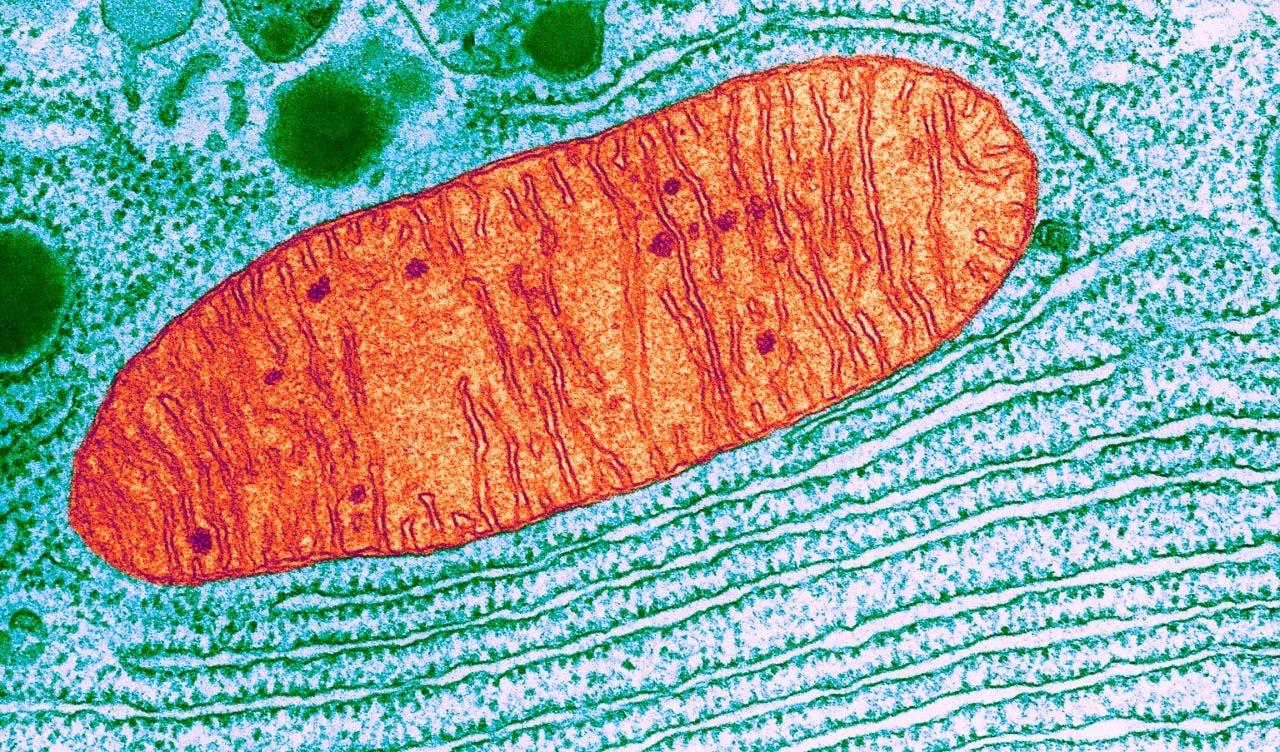
Summary of main points:
GDF15 is a body-to-brain distress signal: peripheral tissues release it under cellular strain → activates GFRAL in the hindbrain → appetite falls.
Levels stay low in healthy baseline conditions and do not respond to ordinary meals or short fasts; they rise with sustained mitochondrial stress.
Exogenous GDF15 reliably cuts food intake and body weight in mice and non-human primates mainly by reducing calories eaten, not by raising energy expenditure; human long-acting agonists produce smaller weight loss.
GDF15 and leptin potentiate each other: combined treatment yields greater fat loss in obese mice even under leptin resistance.
Dual GLP-1/GDF15 agonists outperform pure GLP-1 drugs in animals because both pathways contribute roughly equally to the weight-loss effect.
GDF15 reduces liver inflammation and fibrosis independently of food intake or body-weight change.
GDF15 is strongly induced when mitochondria struggle to move electrons from food to oxygen; circulating levels serve as a sensitive reporter of energy resistance—the same process that rises with aging and metabolic disease.
Growth Differentiation Factor 15 (GDF15) is a protein hormone released under stressful conditions. It acts as a cytokine (a stress-induced signaling protein) involved in communication between cells; while it can influence immune and inflammatory processes, it is produced by many cell types under stress.
GDF15 in a nutshell:
Acts like a distress signal from the body to the brain.
GDF15 levels rise in the blood when tissues experience cellular stress, e.g. inflammation, mitochondrial distress, injury, hypoxia, or certain diseases.
GDF15 mainly signals through the GFRAL receptor (expressed almost exclusively in the hindbrain), reducing appetite.
Similar to endogenous mitochondrial peptides, such as MOTS-c and others, GDF15 is a stress-induced signal. Unlike endogenous mitochondrial peptides, GDF15 is a full protein encoded in the nuclear genome. But similar to stress-induced mitochondrial peptides, GDF15 levels are low under normal, baseline conditions in healthy animals.
GDF15 levels rise when mitochondria are strained, such as when the body faces sustained nutritional imbalance. Unlike everyday satiety hormones, it does not spike after a normal meal or drop sharply during a short fast. Instead, it acts as a longer-term signal of cellular distress. Because GDF15 is released by peripheral tissues and activates the GFRAL receptor in the hindbrain, it functions as a body-to-brain signal of sustained metabolic distress.
A graphical depiction and description of GDF15, straight from the literature:
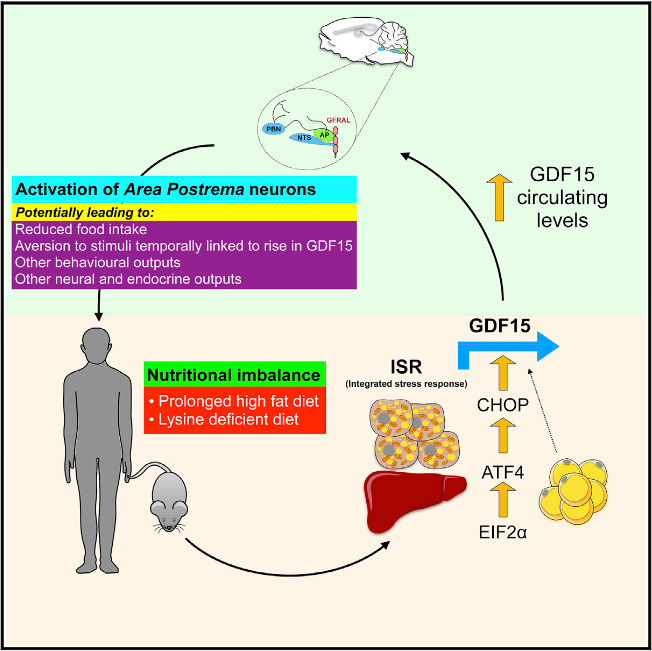
Highlights
Dietary changes influencing adipose/gut-derived hormones do not alter GDF15 levels
Chronic high-fat or acute lysine-deficient diet exposure increases GDF15
GDF15 administration triggers conditioned taste aversion in mice
GDF15 is a stress-induced hormone that may mediate an aversive dietary response
GDF15 is a protein encoded in the nuclear genome. The active protein is a dimer.
Circulating levels increase with age, obesity, smoking, intense exercise, mitochondrial disease, and many chronic conditions.
In mice and non-human primates, giving GDF15 consistently cuts food intake and reduces body weight.
The weight loss comes mainly from eating less, not from major increases in energy expenditure.
In people, a long-acting GDF15 drug lowered appetite scores and produced some weight loss, but the effect size was smaller than in animals and came with dose-related nausea in some participants.
GDF15 differs from classic appetite hormones in important ways. Short-term overfeeding or moderate caloric restriction barely changes levels, while sustained high-fat feeding or diets low in certain amino acids raise it. This pattern suggests GDF15 reports more serious or prolonged metabolic strain rather than ordinary day-to-day energy balance.
Learn more about gut hormones regulating appetite:
Podcast | Genetics & Neurobiology of Obesity: Hypothalamus, Leptin, Gut Hormones, Weight Loss Drugs | Giles Yeo
Comments
Nothing yet. Say the first thing.
Sign in to join the conversation.