
Part one in a series. Read Part Two, Part Three, and Part Four.
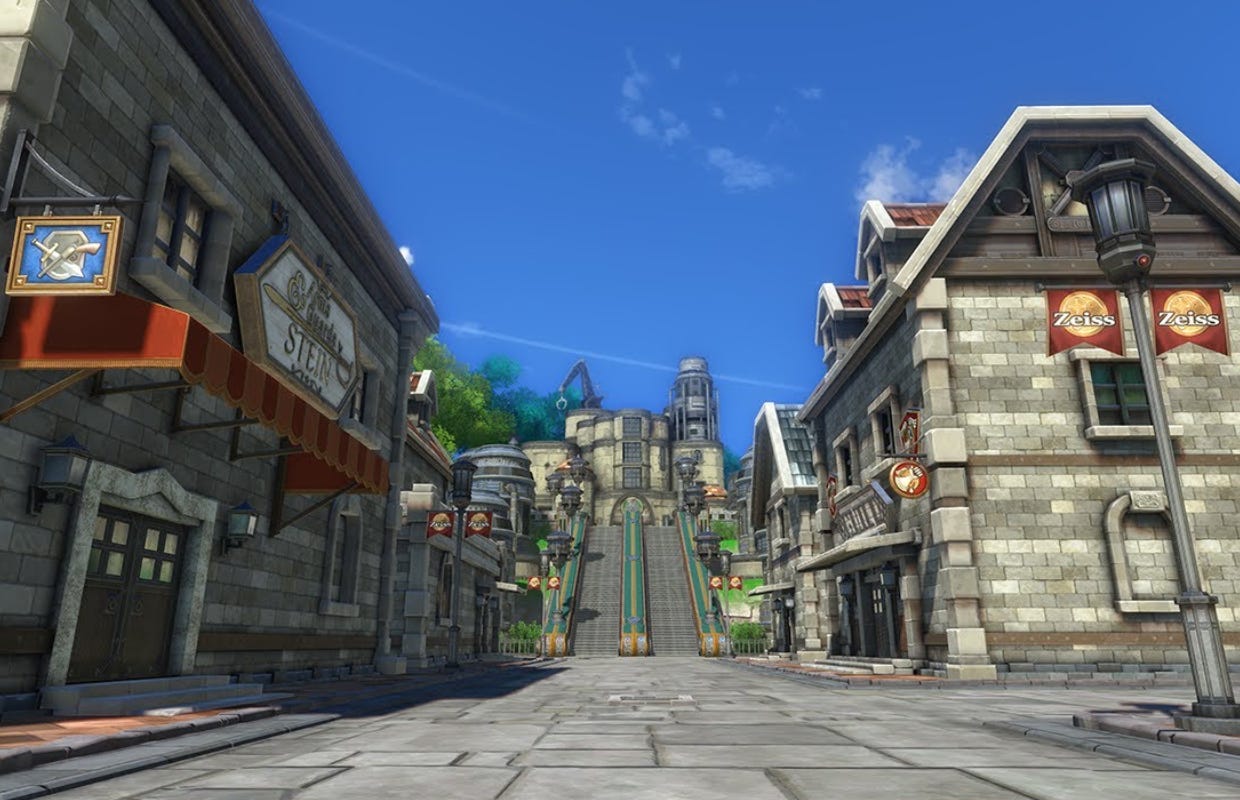
Returning home is a comfort we all deserve, but what if home is long behind us? The grand adventures of RPGs can wear on even the most intrepid explorer or boneheaded, shonen-esque protagonist. For moments of safety and comfort when far away from our original homes, we have the town.
After a foray in the wilderness or a dungeon delve, we return to a cozy town nestled in a wheat field or bordering the edge of a vast woodland — a haven of rest in a dangerous, exciting world. I find it comforting to know that whatever the game, I can go to a town and usually find the inn, some stores, NPCs with charming dialogue, and often some of the best music in a game. These are sites of rest and contemplation. Many a time I’ve put down the controller in my favourite towns and simply watched virtual life pass by.
Equally compelling is entering a bustling city after a long trek. The party has braved dangers and digressions, with the reward now a huge, new city brimming with possibility. There is always a rush exploring every nook and finding a torrent of equipment, quests, and sights.
Whether by dint of game length or tradition, RPGs (especially JRPGs) are often rich in atmosphere. And towns1 have atmosphere in spades.
This is the start of a short series on what makes a good RPG town. I’ve read enough praise of the town to know the appeal is common, but why do we love wandering these streets?
The original towns, back in the days of dungeon crawlers like Angband, were singular settlements that functioned as a point of return. The dungeon crawler is a distinct subgenre of RPG nowadays, but as one of the genre’s murky ancestors we can see how the town in those games functioned as a refuge from the (usually lone) dungeon of each title.
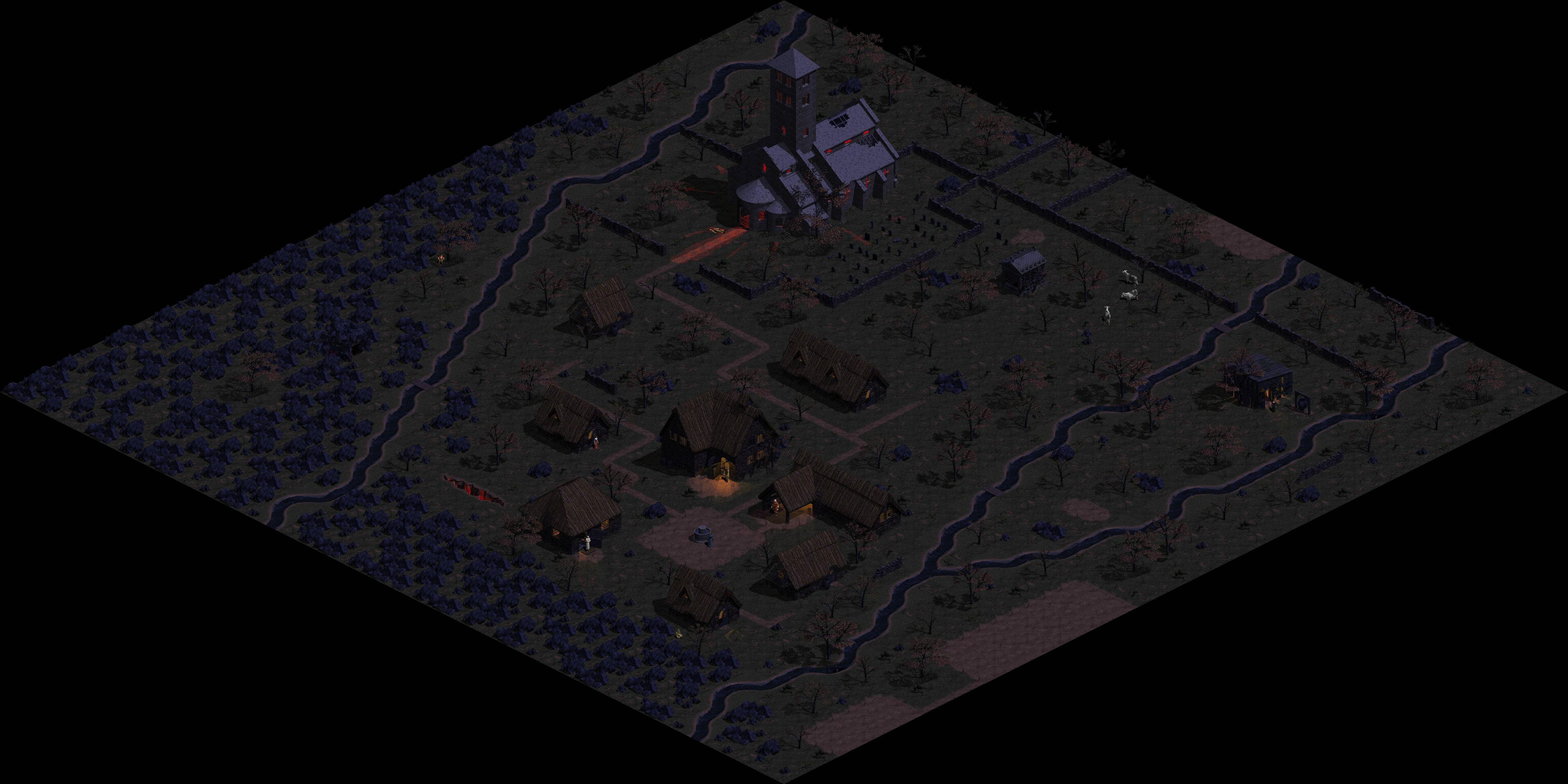
The town in a game like Diablo is practically the only safe place where the hero can catch a breath. Especially in games where monsters are free to act when the player does — such as in Diablo when opening the inventory doesn’t pause the game, or in turn-based roguelikes where changing equipment ticks the timer — the town’s role as a refuge is cemented. The point of such dungeon crawlers is to push into the labyrinth a little farther each time, then return to the town as a place of safety.
In the broader genre of RPGs, towns maintained that role of a refuge as part of a classic loop: town → overworld (or wilderness) → dungeon, then back again. This is not a gameplay loop as such, but a broader structure that defines player goals and attitudes more than their verbs. A typical RPG experience is the player character receiving a quest in a town, such as defeating a monster or nabbing some treasure, traversing the overworld to find the quest location, then navigating a perilous dungeon to complete the quest. Afterwards, it’s back to the town for a reward and some recuperation. Then we receive another quest and the game progresses.
One can find this pattern in older games like Eye of the Beholder or the first Dragon Quest all the way to more recent titles like Clair Obscur or Final Fantasy XV2. It persists and works well because the three elements clearly represent different parts of an adventure.
The dungeon is danger: monsters, traps, and puzzles, with the reward of treasure for those who can best it. The overworld is exploration: stunning vistas, hidden nooks, the promise of excitement over the next ridge.
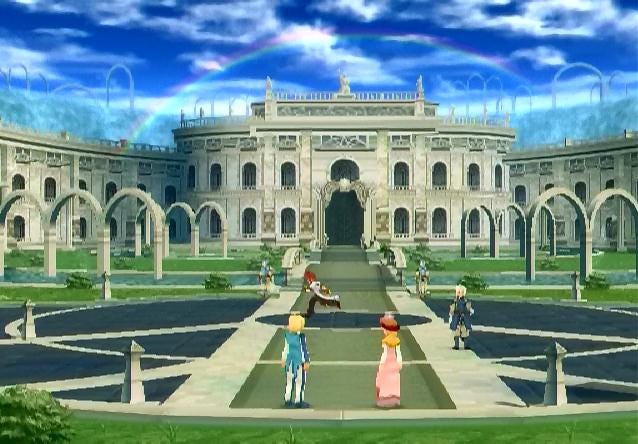
What then, are towns? As places of both comfort and novelty, they contrast the adventurous with the domestic. The unfamiliarity of a new town is exciting, but in a different manner than that of the overworld. It’s a space to explore, yes, but that exploration is about finding interesting NPCs or new equipment rather than points of interest on the map. They are slower and safer than the other two parts of the loop, providing a crucial point of rest.
What I find interesting is how often towns, especially in JRPGs, are used as a key structural element beyond this loop. Often JPRGs layer an additional plot element on top of towns as a return point: structuring the journey as moving from town to town. This is a very common structure in many JRPGs, including almost every entry in long running franchises like Final Fantasy, Tales of…, and Dragon Quest, along with many titles in the 16 and 32 bit eras.
For example, after leaving Midgar in FF VII, the rest of the game is largely about travelling between different towns. First stop is the Chocobo Farm, then a trek to Junon before crossing the sea to Costa del Sol, then Corel, then the Gold Saucer and so forth. There is plenty of overworld (and a few dungeons) between each location, but by and large the plot of FF VII — along with a huge number of RPGs — is a travelogue.
A new town acts as a physical and story destination in an RPG. Often arriving at one signals a shift in the story. The party is travelling from place to place or sometimes cycling between the wilderness and a main hub(s), like in FF XII or Baldur’s Gate II. Arriving at a new town provides the player with story content, new quests, and often a new destination in the form of the next town.
Thus, for many RPGs instead of chapters we have towns. In the case of a cycle, returning to a town (especially multiple times) provides an anchor point that contrasts the changes in the rest of the game world, while journeying to a new town provides both a destination and a useful jumping off point for the next part of the story.
Now we’ve examined the function of towns in RPGs, we can start to think about what defines a good one. Before going into detail on that (which will actually be in the next article), I would like to start with two examples of towns I dislike. I find both instructive for different reasons.
The first example is pretty much any city in a current AAA, open-world game. The cities of Assassin’s Creed or the settlements in the Horizon games are a good example3. These aren’t RPG towns, obviously, and as such they have different priorities and functions. It’s not so much as that the London of AC Syndicate is unsuccessful, but rather how it differs from RPG towns is illuminating.
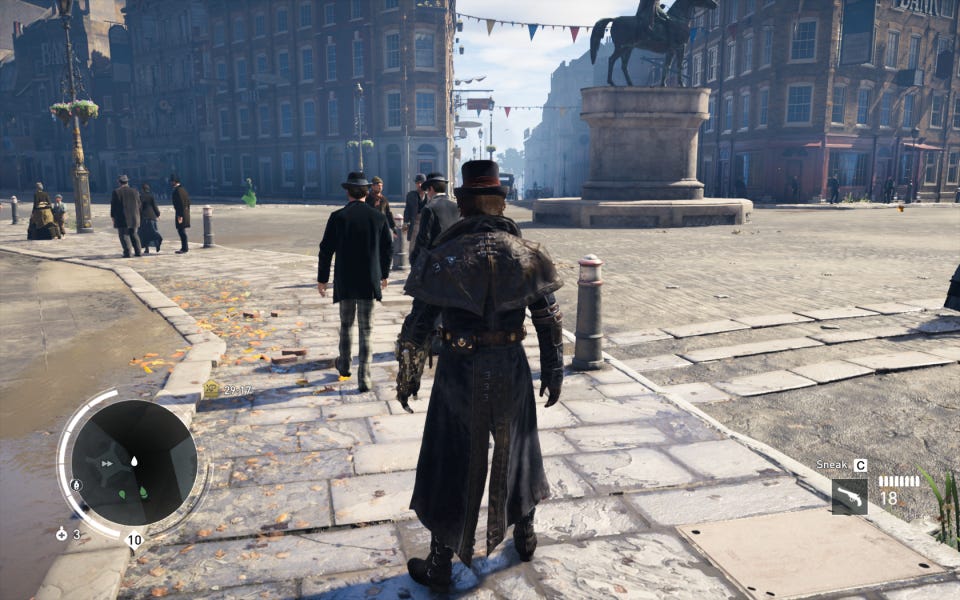
These locations often have similar gameplay functions as RPG towns: vendors for equipment, NPCs, quests, etc. Especially since many games of this type incorporate systems from RPGs nowadays, this isn’t surprising. But the chief difference in comparison to RPG towns is how busy such cities are. They are drowning in detail and milling bodies. I salute the AC franchise’s commitment to historical tourism, and it along with similar titles pore a staggering amount of work and money into realistic, busy, detail-heavy cities.
However, I think this realism strips such cities of any charm. While the dense streets and crowds are technically impressive, they don’t inspire the same feelings in me that a smaller town of named NPCs with interactions and dialogue does4. This isn’t strictly a matter of scope, as there are several RPG cities that present a similar impression of a gigantic city while still retaining the appeal I’m trying to define — often while being much smaller in actual size, interestingly enough.
The RPG town possesses an intimacy, charm, and invitation to explore that to me the AAA city lacks. To put it another way, I’d be happy to visit the Victorian London of AC Syndicate, but I want to live in Rolent or Gondolia.
The second example of what doesn’t work is an unambiguous RPG town that, frankly, just kind of sucks: Neverwinter from Neverwinter Nights 2.
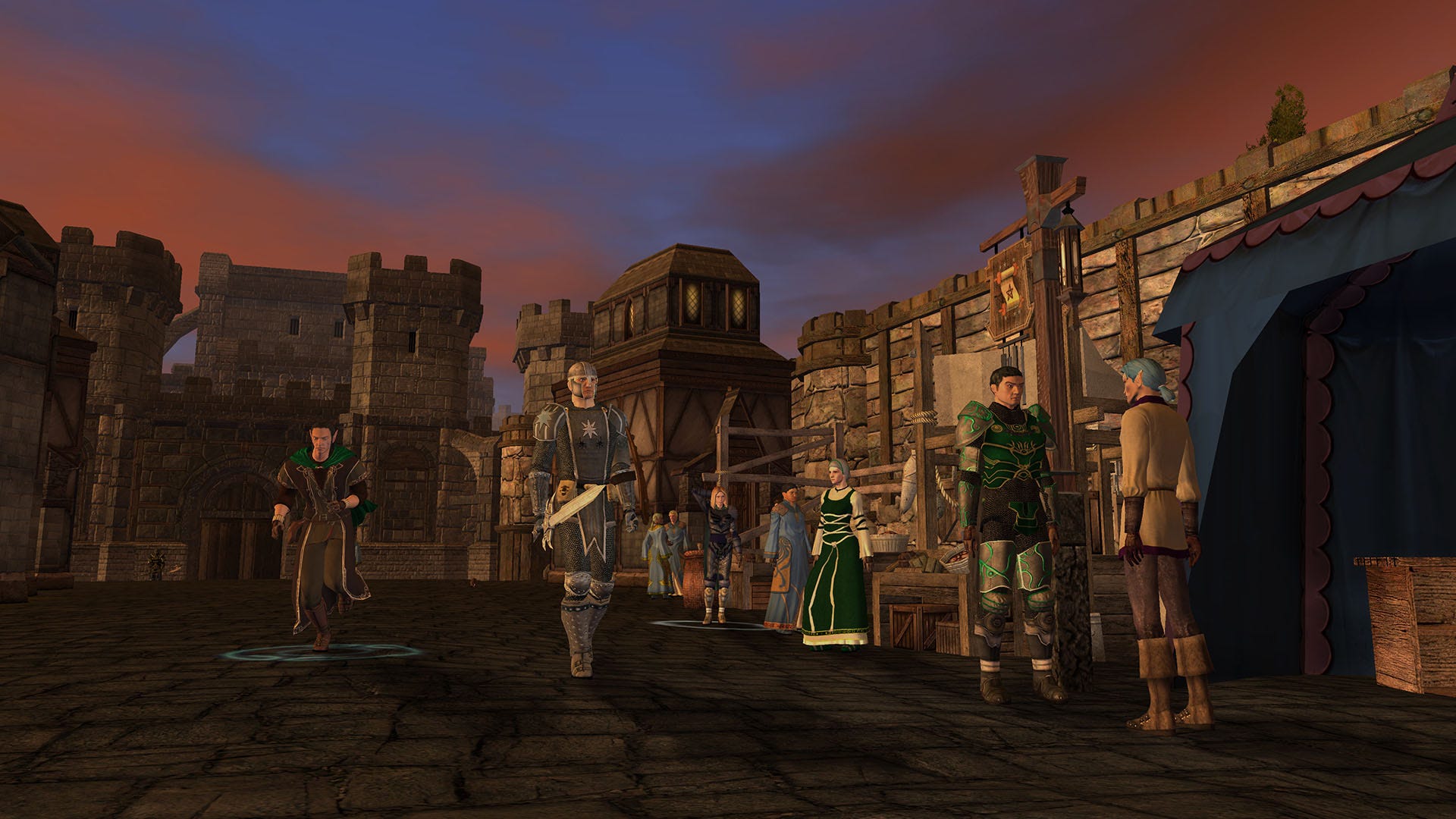
Neverwinter, especially the Docks district, is a bland, miserable space. The town is held hostage by the game’s awkward 3D models and grim colour palette, but there are plenty of other sins. The locations are spread a little too far apart, giving it an eerie feeling similar to the large hallways of MMOs. The buildings are too similar without feeling like it’s deliberate due to architectural trends. There are few NPCs, and those that do exist stand stock still without having much of anything to say. It’s a ghost town rather than a curated collection of interesting characters. It neither looks nor navigates like a town built for people or players.
Neverwinter Nights 2 released in 2006, so it has no excuse of early 3D growing pains to explain its bland city environment and awkward layout. For contrast, 2006 also saw the release of titles like Baten Kaitos: Origins, Suikoden V, and FF XII, all featuring stunning locations5.
In fairness, The Sunken Flagon is a bright spot: a tavern in the Docks district that acts as a home base for the player, including a space for companions to relax when not in the adventuring party. It’s a cheery place full of named NPCs, light, and space that’s both easy to navigate and recognizable as stemming from its function. But the town itself is just painful to exist in.
Neverwinter does provide a classic RPG town structural function: a large chunk of the early game is about the player leaving their sleepy village to travel to Neverwinter, finding adventure along the way. Yet upon arrival, we find a town that feels grim and lifeless, all while the story is trying to convince the player it’s full of possibility and bustle. That contrast more than anything killed a recent playthrough for me.
Neverwinter reminds me of a boarded-up main street in a fading town. Not dangerous or exciting. Not even interesting in how it explores darker themes. Just dull and dead. I’m not sure why I would want to hang around there voluntarily.
So what does Neverwinter lack, and what are RPG towns doing differently than AAA cities? If we now know why towns are important, and have two examples of contrasts, the next step is to examine what elements go into a good RPG town. Which is exactly what I’ll do in the next part of this series. So tune in next time: same bat time, same bat channel.
Pathfinder: Wrath of the Righteous continues to dominate my time and mind. One bold feature, which I always love in RPGs, is how it displays choices that a player is unable to take on their current run, especially as they relate to the mythic paths. At one point, I killed a powerful but tragic enemy, and an underling asked “What do you want to do with the body?” Among the usual choices of bury him with honours, string up the body as a warning, etc. etc., there was a locked, hidden choice that read “Requires Lich Mythic Path.” Nothing makes me want to replay a game more than seeing things like that.
Evelyn Waugh is an interesting writer. In the 20s and 30s he wrote several hilarious novels poking fun at the British upper classes. Decline and Fall is a personal favourite, which received a great BBC adaptation about ten years ago starring Jack Whitehall. But after trouble in his personal life and a conversion to Catholicism, he started writing more serious (even dour), conservative novels. His best of these is probably Brideshead Revisited, and while I don’t share Waugh’s rosy picture of the sacred, the novel itself is beautiful, sensitive, and full of stunning prose.
The Video Game Storyteller beat me to press a few weeks ago with an article of their own called JRPG Towns Are Cool. Give it a read, then give that charming substack a follow if you don’t already.
Dismal towns and bland art direction aside, there is a lot to love in Neverwinter Nights 2. It’s a fairly faithful reproduction of the D&D 3.5 rules, and after a bit a slow start the main campaign develops a pulpy charm. The real appeal is in the expansions, particularly Mask of the Betrayer, which features some wonderfully rich writing.
I’ll continue this series by breaking down what makes an RPG town work.
For simplicity’s sake, I’m going to use “town” to refer to any RPG settlement, city, burg, hamlet, metropolis, village, etc. etc.
FF XV leapt to mind when I was thinking of a new JRPG, but it’s actually ten years old. Uh-oh. I’m choosing to interpret this as a commentary on modern development cycles and the blurring of console generations rather than a sign of me getting old.
Though there are locations that have the same vibes as RPG towns in games of other genres (or at least RPG-adjacent genres). Most towns in Breath of the Wild/Tears of the Kingdom the hubs of Monster Hunter qualify in my eyes.
This isn’t terribly surprising, as soulless, expensive competence that doesn’t aim to inspire any actual feeling is the byword of most AAA development.
Rest assured, Rabanastre will pop up once I start discussing my favourite towns.
No posts
Comments
Nothing yet. Say the first thing.
Sign in to join the conversation.