
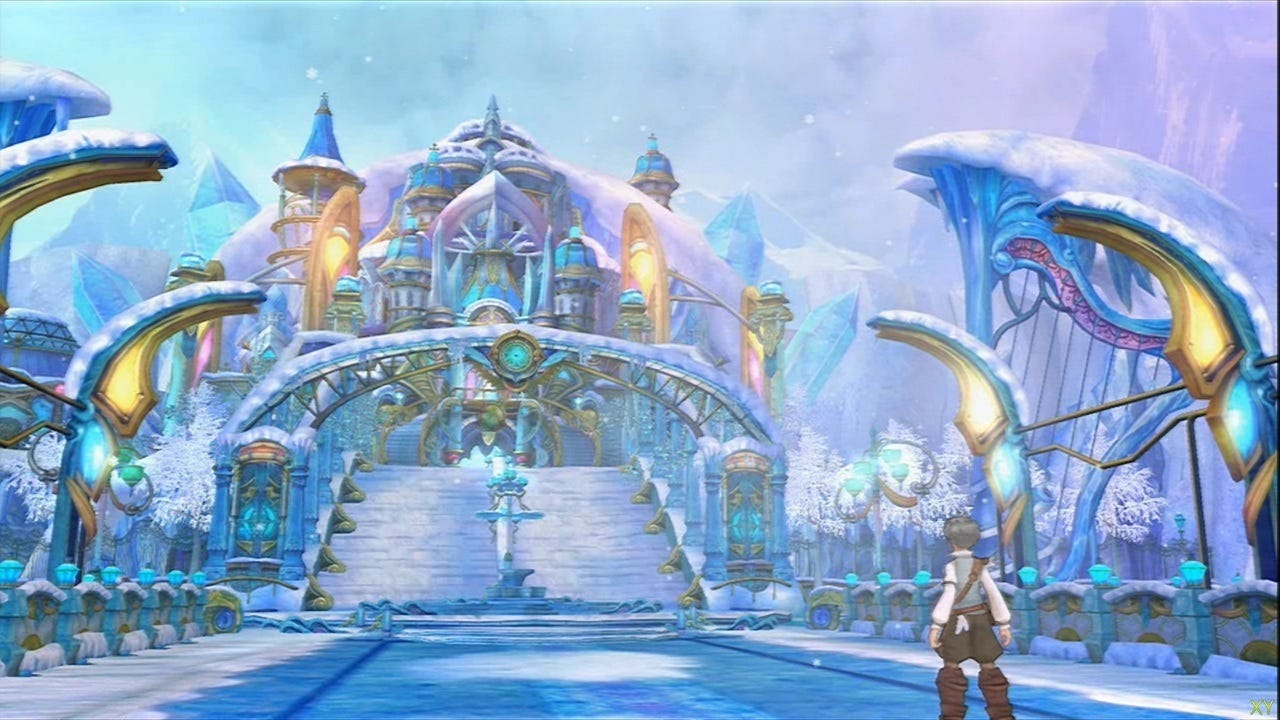
Part Two in a series. Read Part One, Part Three, and Part Four.
In my previous piece, I discussed the appeal of the RPG town1 in general terms, thinking about how their role in gameplay contributes to why it’s so nice to arrive or return to a town. I also ragged on Neverwinter a bit.
Now that we (hopefully) have a good understanding of why we like towns, and a good example of one that doesn’t work, today I’ll be examining what goes into making a good RPG town.
I’ll start by banishing an overused, unhelpful descriptor: “cozy.” While cozy nowadays seems to mean any game with a minimalist soundtrack and the opportunity to organize things, the term is also applied to towns, especially JRPG ones.
My issue (besides rampant overuse) is the term is too broad and player-centric for any helpful analysis. While it hits on something important, cozy is a feeling inspired by town elements, not an aspect of a town itself. That is to say, when someone calls a town “cozy” they are articulating their feelings. Today I’m after the aspects of the town that create that reaction.
Besides, plenty of great RPG towns are bustling cities full of novelty, not cozy havens. So while cozy is (annoyingly) an important descriptor insofar as it often is the impression that good towns produce, hopefully we can find common elements between the big city and woodland hamlet that points to what actually makes a good town.
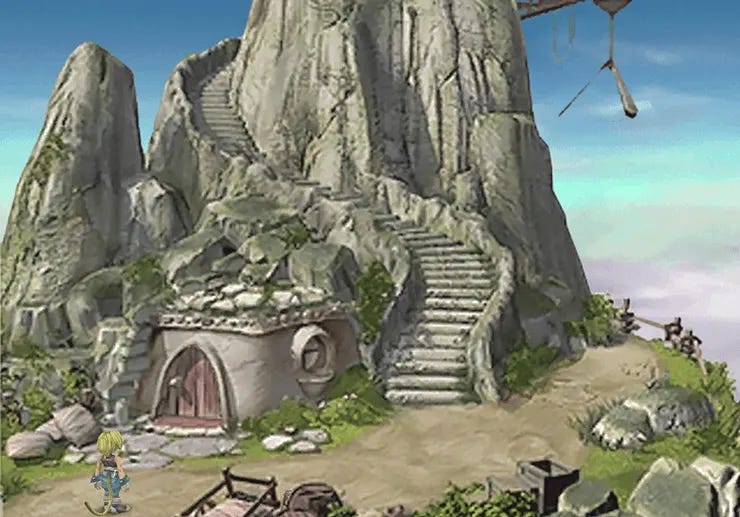
As I mentioned previously, towns form part of the classic RPG loop of town → overworld/wilderness → dungeon. The town is a place of safety, which can be the high walls of civilization or a steaming mug of tea found in a village. In addition, it can serve as a destination after a long journey — especially since so many JRPGs are structured as town-based travelogues. In the latter case, safety is combined with novelty. The party has reached a place to rest after a few days on the road, but also one to explore.
Thus, presentational elements that promote that sense of safety/refuge and novelty are often what makes a good town. These aren’t sufficient conditions, but good towns usually have chill or catchy music, interesting architecture, and NPCs that invite conversation. In doing so, a good town has thematic weight because its presentation reinforces its gameplay function.
In other words, since towns are safe and novel, they should feel the same way through their presentation. That’s what people are getting at when they say cozy: some combination of welcoming, atmospheric, and interesting. They’re saying that it’s a place they want to spend time in, because it contrasts with the adventure and danger of the rest of the game.
A sense of safety through presentation is the first building block of a good town. The second, and I think even more important, is a distinct identity grounded in a sense of place.
Towns are, after all, locations in a game world. They have a gameplay relationship to the world through the exploration loop but also must have a relationship to the world of the fiction, to the landscape. A good town must make sense in relation to its immediate surroundings, role in the game world (i.e., does the country’s capital feel different than a sleepy hamlet?), and even the implied local economy. Farmers have different needs than miners, for instance, so their town should be different. A strong sense of identity stems from these factors.
A town should blend with the immediate landscape surrounding it. Someplace on the coast ought to have a pier, and a town nestled in a forest should have the trees looming in the background. Architecture, layout, and NPC placement should allow the player to infer what sort of place it is, along with creating a sense of continuity with the land. Is the wilderness in this area particularly dangerous? Better have some walls or guards patrolling. Maybe there are few young NPCs in a small town, because there is a big city is nearby on the world map that offers more opportunity.
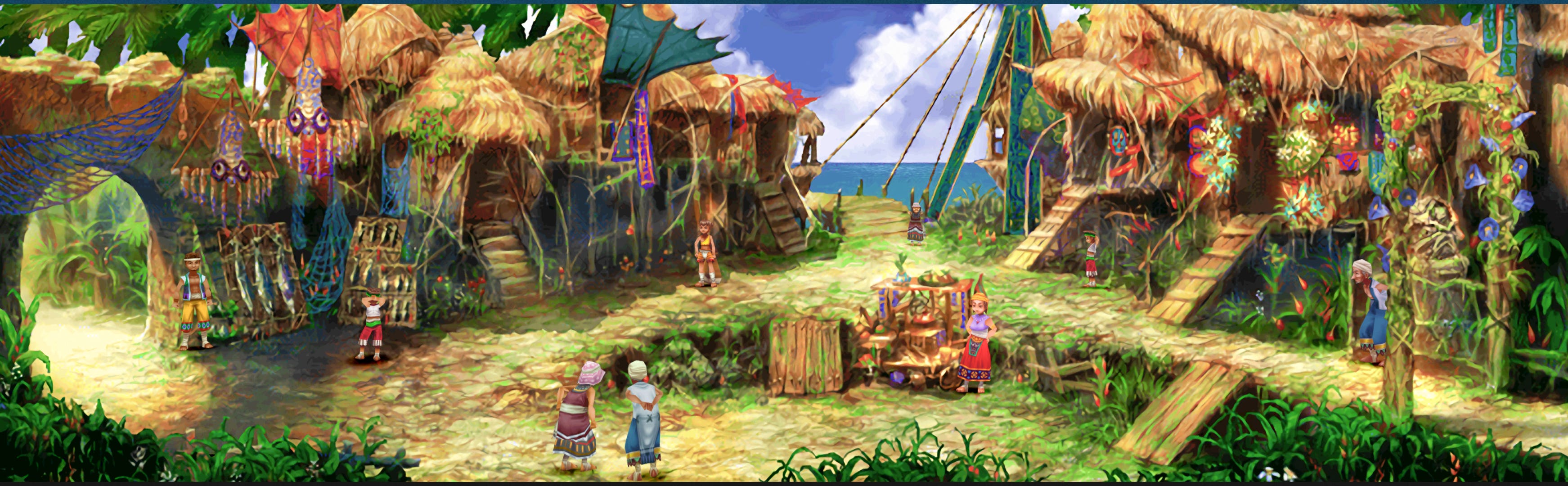
At the same time, a town needs to stand out from others in the same game. A little shock of freshness or unconventionality goes a long way when first arriving at a town, especially if a game is structured as a town-based travelogue that I mentioned above. This can be achieved through architecture, colour choices, or even climate. Moving from a desert town of harsh browns and tall towers to a snowy locale of cozy cabins and warm lights not only helps distinguish the towns themselves, it makes the world feel larger and varied. Enjoyable, memorable towns are those that feel rooted in the world, using the landscape and art direction to develop its identity.
Layout is crucial to a town’s sense of place. This is a tricky balance, because the streets need to feel as if people live there, while also providing easily navigable and interesting locations. Usually, a good town requires maybe one or two laps to get a decent sense of the layout. This is, of course, in stark contrast to how real-world cities are often constructed. But RPG towns are meant to be crossed through easily, deepening familiarity and interest without the headache of actual navigation.
This tension — seeming real without being real — is why good towns are so difficult. When done well it allows the whole town to exist in a state of heightened reality. The layout of a town is similar to set design at the theatre. Sets showcase what we are meant to think about while discarding the uninteresting bits. Town streets are the same way. If they were as difficult to navigate as a real place (or a big open world city like in an Assassin’s Creed title), then we would spend our energy trying to remember where the item shop was instead of drinking in the atmosphere.
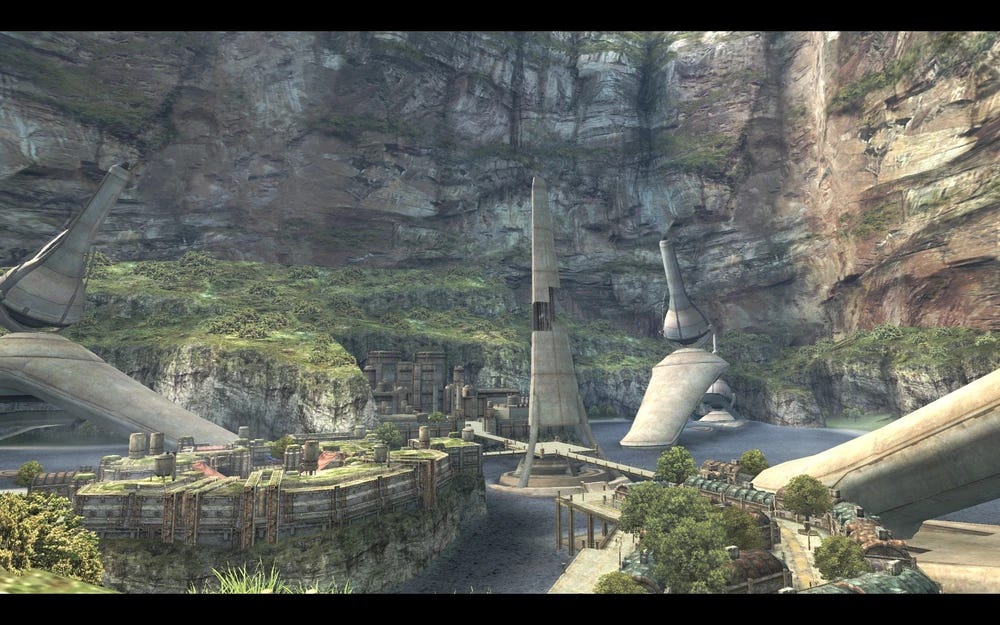
On the other hand, a town layout that is too logical loses that lived-in element that is essential to a sense of identity. It has to present the fiction of NPC lives that we don’t see. Districts are often used for this — with one street full of shops and another with homes, we develop an impression of the town serving the needs of NPCs and often as being larger than it is. One of my favourite examples is Dazil from Xenogears, which features a large section of the city, including the excavation sites, only visible as part of the prerendered background. While we can go into one or two houses to chat, a good town — either through implication or clever use of inaccessible locations — lets us think about the many citizens we don’t interact with or see, simply living their lives in the background.
I actually think towns are at their best when they are, for lack of a better term, a bit video-gamey. A certain level of artificiality can be in service to not only navigation but also the atmosphere. Easily understood towns are better at building familiarity and impression at a glance, which allows the factors like sense of place and presentation to shine.
Towns are more than the buildings or streets, of course. People live there. Walking around and talking to everyone is a time-honoured part of the town experience. NPCs are crucial to a good town but can fulfil that role in different ways.
NPCs provide both novelty and reactivity. They have interesting things to say, giving us motivation to explore, and they sometimes react to a story beat or provide hints about what to do next, providing us motivation to return to a particular town. The gold standard for reactivity is the Trails series, in which entire mini-storylines play out in the dialogue of NPCs for players willing to talk to their favourites as the game progresses.
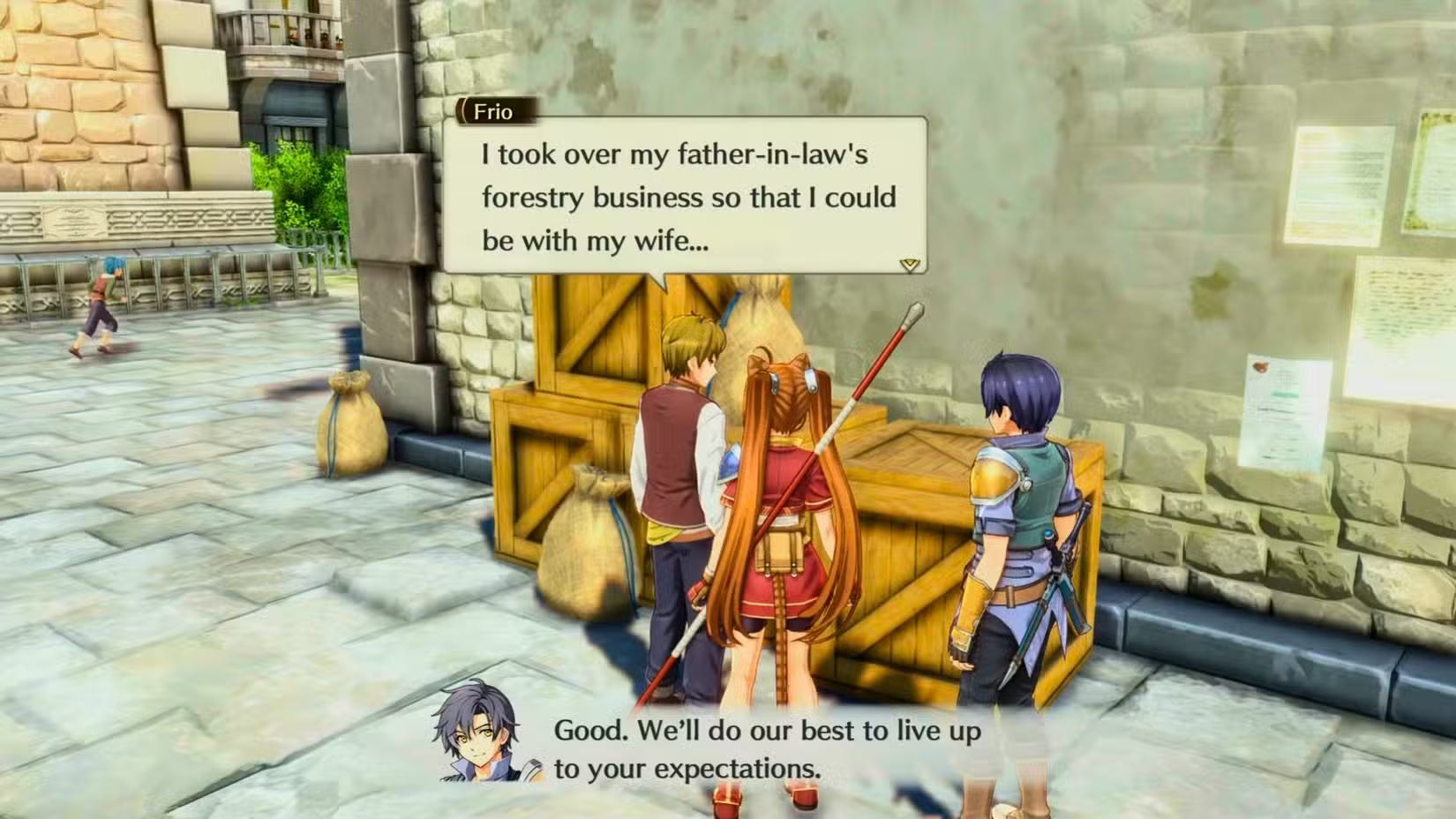
Again, artificiality in service to a heightened reality is key here. NPCs need not be realistic. In fact, they probably shouldn’t. They need instead to be memorable. They can be funny, charming, interesting, or helpful, but they must make some sort of impression. They need to stick in our minds, but not too much, as a town entirely made up of larger-than-life characters will end up grating.
But in balance it works wonderfully: someone makes a joke, an old man grumbles, two lovers quarrel, someone has a hint, someone else says something eccentric. Each of these need only be a single line of dialogue, because it is about how they contribute to the whole.
Just as with layout, judicious use of artificiality allows for deft impressions that are more atmospheric than a painstakingly realistic city would be. NPCs don’t need full programmed routines like in Skyrim, but a character who sits in the cafe during the day and his house at night presents the idea of a life beyond what we as players see.
With a full cast like this, a town springs to life. With the right balance of dialogue types and just enough liveliness that allows us to imagine more, NPCs are the final ingredient in a town’s identity.
We’ve now explored several overlapping factors that make a good RPG town: memorable NPCs, a sense of place both in terms of the town itself and the larger world, good art direction and architecture that reinforces identity, catchy but unobtrusive music (since one will be hearing it often), a layout that suggests a real place without any of its real world complications, and presentation that reinforces the town’s gameplay role as a place of safety and novelty.
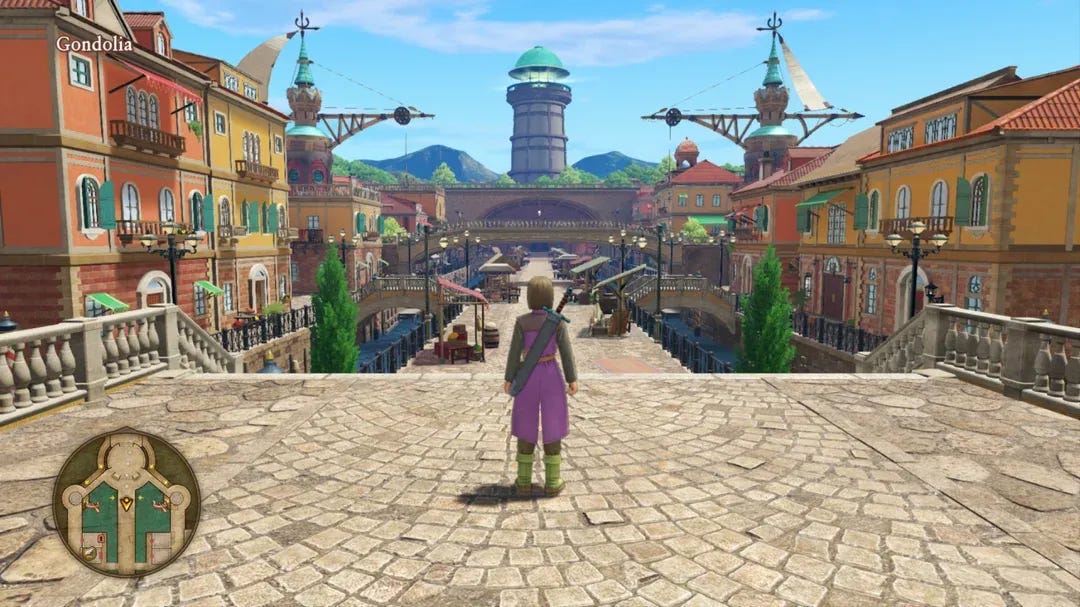
This heightened reality of the town is what makes a good one invite relaxation and return. But does all this capture the idea, almost equally unhelpful as cozy, of atmosphere or vibes?
In other words, is there a special sauce that the best towns have beyond the sum of what I’ve described? When I reflect on my favourite RPG towns (no spoilers, as that article is coming), it’s a diverse bunch. A development team’s mastery of craft is of course vital to a good town, but the best towns are spread across different games and teams.
Throughout this article I’ve returned to the importance of a sense of artificiality in service of a heightened reality. The best towns are not realistic or overly detailed. They are constrained, making judicious use of their elements in pursuit of a feeling.
I think that final ingredient, the key element of “vibe” is trust in the player’s imagination and curiosity. Just as a horror movie monster is often scarier before we see it on screen, a town that engages our imagination will leave a stronger impression than one that details every single brick.
My favourite towns, those with charm and atmosphere, are those with a smaller number of NPCs that have lives and something to say, as opposed to a crowd of faceless ones milling about. They are those grounded in the landscape while forging an identity. They are, finally, those that allow me to use my imagination as I grow to learn about them, providing new sights and hidden charms as I go.
Towns are a place of safety, but they are also places full of life beyond our own adventure. The best ones trust us to understand that, inviting us to wonder and marvel as we walk the streets.
Alundra is a PSX action RPG with a great town. The action is smooth, the world is gigantic (probably too large), and there are some very tricky puzzles. Give it a try if you love 32-bit sprite art or challenging puzzle dungeons.
Zulu Rising by Ian Knight is a great single volume history of the 1879 invasion of Zululand. Along with some very detailed descriptions of major battles, this even-handed work examines the political situation prior to the British invasion and its lasting colonial legacy. On the subject, the 1964 movie Zulu — starring a young Michael Caine — is essentially a problematic version of 300.
While most people know him for Neuromancer, I’ve long been a fan of William Gibson’s later work, specifically the Blue Ant trilogy. While not science fiction per se, the novels are about the power of information, which perfectly suits Gibson’s slightly neurotic writing style.
In anticipation of an upcoming trip to Southern France, I’ve listened (at the recommendation of my wife) to The Rest is History podcast episodes about the Cathar Crusade. I’ve since become hooked on the whole podcast. It’s funny and informative with a great dynamic between the hosts.
I wrote this article while listening to an excellent and appropriate playlist.
Make sure to bring some sturdy walking shoes, as this series continues with a guided tour of one of the greatest towns in RPGs: FF XII’s Rabanastre.
Again, “town” means pretty much any settlement in an RPG.
No posts
Comments
Nothing yet. Say the first thing.
Sign in to join the conversation.