
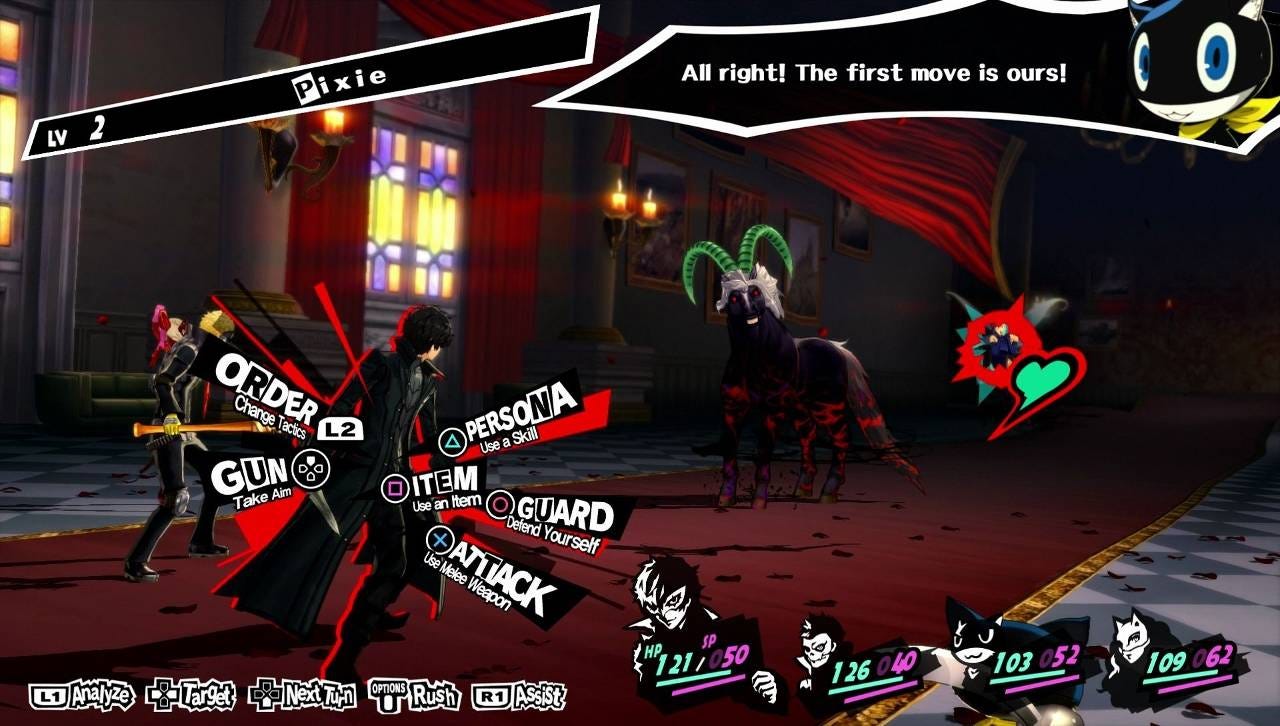
I’m going to agree with a legion of worried suburban parents: video games are violent1.
More precisely, video games have a disproportionate amount of action2 in them compared to other stories. Any given Final Fantasy title has far more instances of stabbing and slashing than an ostensibly violent tv show like Game of Thrones. On the one hand, this is to be expected in a medium driven by verbs. Some video games also contain disproportionate amount of jumping compared to other mediums. On the other hand, even with that in mind RPGs generally have an enormous amount of fights, to the point where some games are just aimlessly killing monsters until a cutscene happens.
I’ve written about the narrative function of battle systems several times before (specifically in Final Fantasy Rebirth, on their abstract nature, and trying to like real-time with pause), so I’m going to take for granted that they have storytelling value. The question I’m interested in today is why there are so many battles in RPGs. Does their preponderance undercut their service to the plot?
Battles in RPGs both take up a lot of time in already long games and tend to be very frequent. The stereotypical JRPG dungeon is a series of many short fights, with that being the primary gameplay element besides cutscenes or wandering around a town.
Now, I’m not discussing the individual interest level of battles. Some RPGs have very involved battles, while some tend to have battles that aren’t particularly interesting individually, but present a continual drain on resources that shift the decision making to the dungeon crawl as a whole. Either approach is fine. What I’m curious about is the sheer number of fights in an RPG, and if that affects our perception of the use of action as a storytelling device.
This seems to me like a larger problem for RPGs than other genres. As I said before, games are very verb-driven by virtue of the medium. A player will shoot as often in Halo (at least proportionate to the length of the game) as they choose the attack command in Dragon Quest. But battles in RPGs, at least to me, seem to stick out a little more.
I think there are a few factors that bring this to light in RPGs. First, the sectioned-off nature of most RPGs battles — moving to a separate screen, or at least separate interface — frame them as a distinct element from other parts of a game. Second, the sheer length of RPGs make any frequently used element stand out3. Finally, I think the story-driven nature of RPGs — especially the frequent reliance of more traditional styles of storytelling in JRPGs — cause any gaminess, so to speak, to stand out in starker contrast.
To put it another way, shooting a thousand aliens in Halo feels to me like a more natural plot element that a thousand random battles on a separate screen in a JRPG. If my impression is justified, then we’ll have to look at RPG battles a little differently to see if they can hold storytelling value.
Interestingly, this trend seems to cross subgenres. JRPG, CRPG, WRPG — choose whatever prefix takes your fancy and we’ll find an abundance of fighting. We can point to the tabletop and dungeon-crawling roots of the genre as whole as a reason why battles are so prevalent, though that doesn’t justify why the trend should continue.
And continue it does. We take for granted that, as the protagonist, we’re entitled to slaughter indiscriminately without it affecting (or even warranting a mention in) the rest of a game’s plot. Some titles, such as Xenoblade 2, are even silly4 enough to have characters refuse to kill their opponents in cutscenes despite carving through an army of underpaid soldiers to get to the boss.
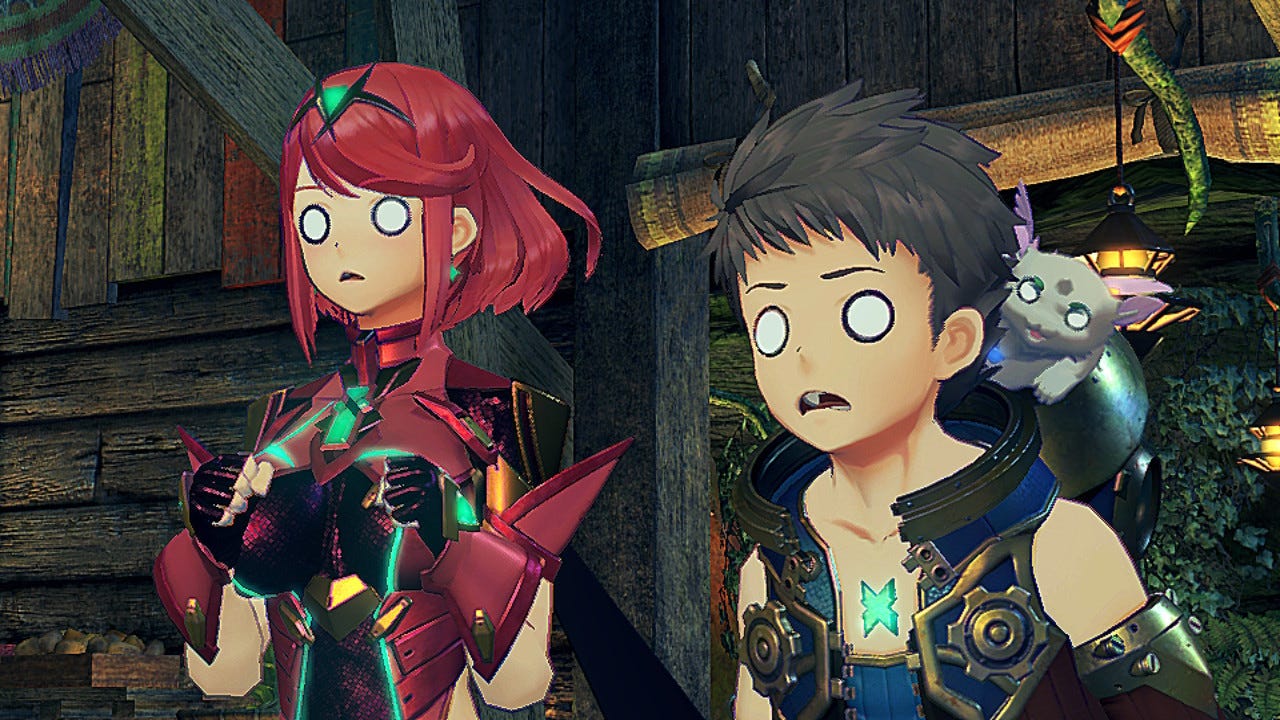
A few games note the strange dichotomy between heroism and constant battling. Knights of the Old Republic 2 has a character criticize the protagonist for such unrepentant violence when they are supposed to be following the Jedi path of peace. Baldur’s Gate, another Bioware title, contextualizes all the fighting with the reveal that the hero is a Bhaalspawn, child of the Lord of Murder himself. It’s in the genes.
I’m trying my best not to use the tired term “ludonarrative dissonance,” but we’re certainly in that realm. The plot as told through dialogue often ignores (or clashes) with a major element of the plot as told through mechanics. This is worsened by the frequency of fighting as a mechanical plot element.
The more a piece of media deploys a dramatic element, especially the more intense ones (e.g., a fight, a shouting match, a shocking revelation), it diminishes the effect of any one instance. Plot elements are diluted by repetition, and I think this truer the more pronounced or unusual they are.
For example, one of the many delights of the fantastic movie The Taking of Pelham One Two Three5 is the restraint the film has in deploying action. The tension of the hostage situation builds and builds, and the fact the hijackers rarely deploy violence make them paradoxically seem more dangerous. When someone does fire a gun, it’s a shocking, almost cathartic event.
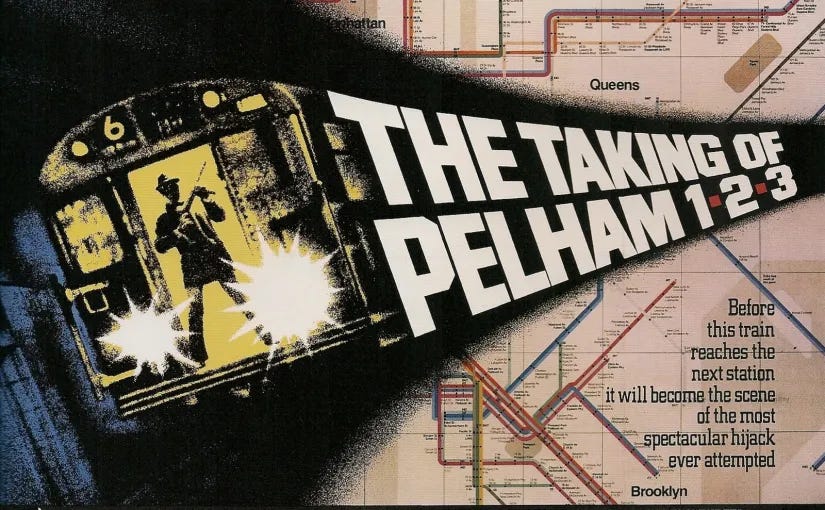
Compare that to the dreadful 2009 remake of the film, which can be summed up by the casting of Robert Shaw’s villain with a late-2000s John Travolta. Among its many sins, there is far too much running around and shooting in the remake. Since the villains are blithely killing hostages and firing guns from the jump, viewers aren’t left to wonder and worry about what could happen. It lacks any tension because the violence isn’t treated with respect.
However, there is a flipside to this. While individual instances of a plot element find diminishing returns when repeated, they can instead be subsumed into the overall impression of a scene or work. A single gunshot in the original Pelham is an important moment, but any given gunshot in Terminator 2 serves its purpose alongside dozens of its siblings to create an exciting action scene. Another example is how a single joke in a drama is a moment of lightening tension through contrast, while lots of jokes turns a piece of work into a comedy that creates expectations in the audience of laughing and light moods throughout.
Thus, if if I were feeling generous (and overly wedded to genre), I could say the remake of Pelham is less a terrible thriller and more a mediocre action movie. Still not good, but by taking the act of firing a gun and using it more then the original film, we can see how the same dramatic (in both sense of the word) element can be used for different purposes, depending on how frequently it’s used.
Given that, I think there is something similar to be said about RPGs. A heroic journey through a fantastical world is, after all, rather different than a claustrophobic crime thriller, thus requiring different framing and use of plot points. Even setting the question of genre aside, I think it’s fair to say that the constant battling in RPGs shouldn’t be analyzed as individual instances that overstay their welcome but as contributions to a whole.
This is also, as I said above, how many RPGs work on a strictly mechanical level — with the challenge resting not in individual fights but rather the long-term resource management that comes with many battles in a row.
The obvious question, then, is what impression such constant battling leaves. Many small, easier battles grants us the steady walking pace of a long journey. A grind session mimics the mindset of characters as they journey from place to place. As the battles get tougher or the locales more dangerous, the exhaustion from fight after fight also allows us to test our nerves in the same way the party is. In the latter case, a death from a thousand cuts via many short battles is likely more effective at communicating this than a few climatic ones.
While that explanation covers most RPGs, I think there are some issues with it. First, it pigeonholes the “battles as plot” to one genre: long adventure stories. Battles as a stand-in for the perils of the journey in general only work if the characters are going on a journey. Luckily, that covers a huge number of RPGs, but not all of them. Second, the metaphor is pretty stale by this point. It gets stale in a particular title if there are too many battles6 or just because we as players have seen said metaphor a thousand times. I understand that a hundred battles on the world map serves as an emotional connection to the character’s journey. I’ve just done that so many times in so many games that I sometimes want to skip to the damn destination.
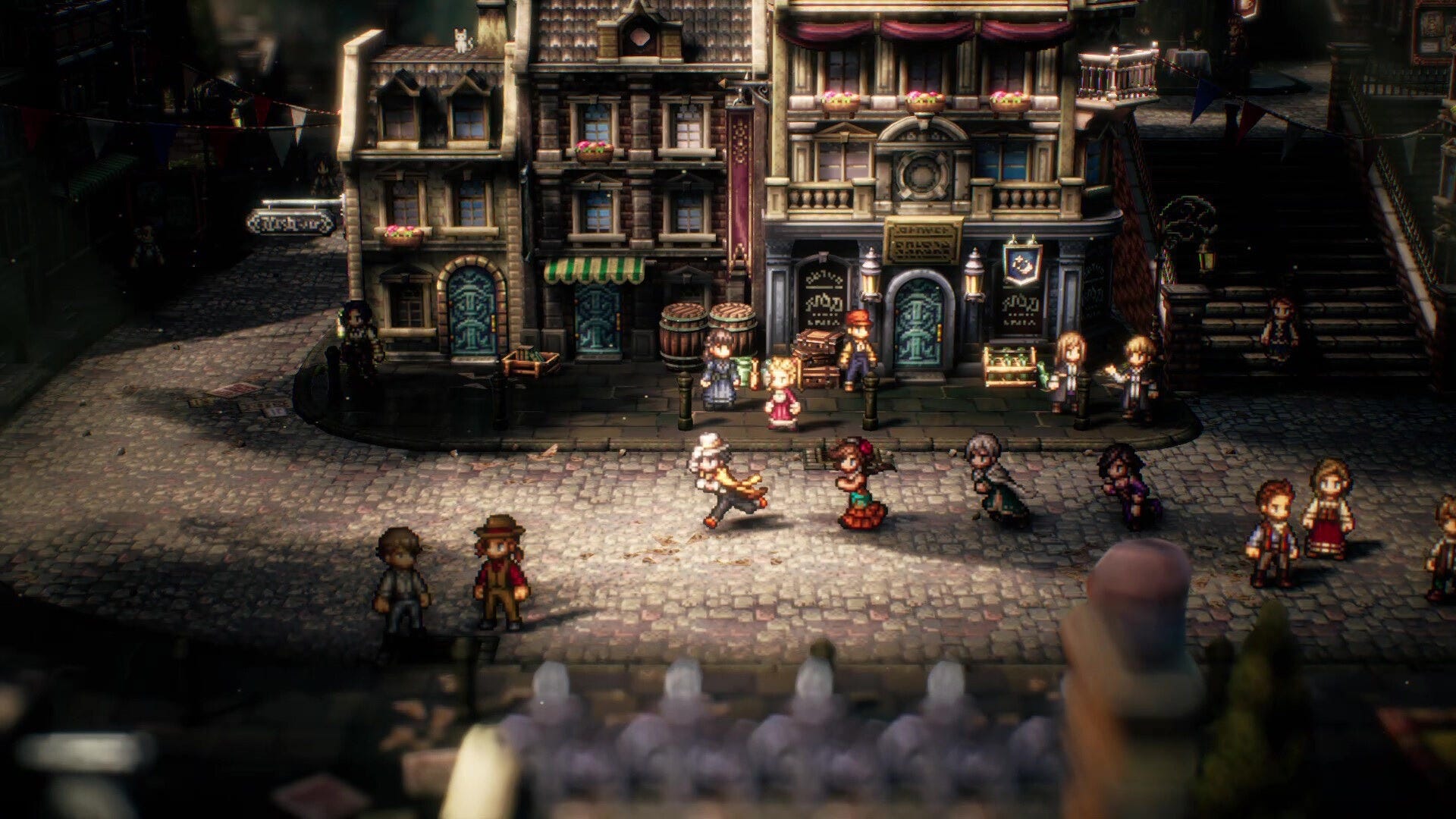
RPGs are a conservative genre, and we can in some sense accept they feature lots of battles because other titles in the genre do as well. While a little defeatist for a critic, at some point I may have to shrug and accept that lots of battles is a primarily mechanical feature, and any storytelling value stems largely from accepting such a well-worn metaphor at face value.
But wait! There is a crucial element missing from this analysis: I keep coming back to these games. I can’t think of any major plot/metaphorical element that I will happily sit through again and again like I will with “many battles as a journey” in RPGs. It’s certainly not because that the mechanics are compelling enough to get me to ignore their storytelling implications. Even in games I quite like, most battles are so simple they don’t require more than occasionally casting ice magic on the monster that’s weak to ice.
I argued previously that the abstracted nature of battle systems (especially in JRPGs) can serve emotional or metaphorical purposes. In other words, the over the top attacks and animations of many battles are not literally happening in the fiction of the game world but can communicate the mindset of the characters. That point, along with the typical separate screen/interface approach of RPGs and the relative simplicity of many battles, is key to understanding how their preponderance contributes to the plot.
I think by grasping — either instinctively or upon reflection — that the battles are not happening as depicted in fiction we open ourselves to being affected by them in ways that the other storytelling elements like dialogue cannot. Since we’re not getting short-term mechanical engagement (since they’re usually simple) or obvious storytelling benefit, what we’re left with is the flow state.
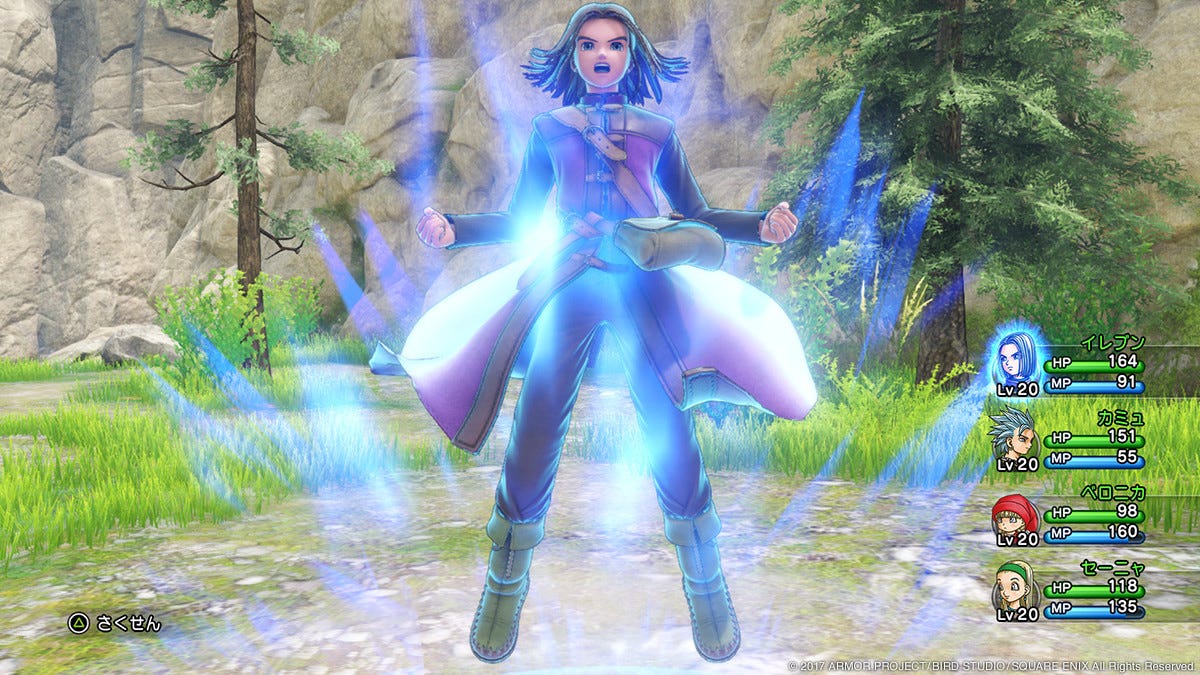
The half-mindless, relaxed flow induced by many battles in a row is a valuable mindset. Similar states in exist in other games, in some cases to even greater degrees7, but the dipping in and out of such a state throughout the game is a particular feature of RPGs.
RPGs are long, and even when not explicitly about a character’s journey require a significant time and emotional investment on the part of the player that is a journey in itself. I do think my journey metaphor above is still the strongest reading, and inducing a flow state to complement storytelling is itself a storytelling device that strengthens the metaphor. This dramatic element is simultaneously the means of making us be more open to it.
Media teaches us how to read it, and this is a prime example. The cynical view is that we are being manipulated into loving a time-wasting cliche. The other is that the flow state of the grind primes us to adopt a mindset in which we are willing to take things a little slower, spend a few months with a 100 hour RPG and enjoy the space between towns or points of interest.
My favourite part of RPGs, especially JRPGs, is the sense of boundless adventure they inspire. They often contain a sense of expansive horizons and another compelling stop on the journey just over the next hill. The constant battles are interruptions, yes, but they are also both perils and a journey of their own. We learn to appreciate the sense of adventure by the open-minded flow state caused by battle after battle. The horizon is always just out reach, after all. What matters is each step taken to get there.
I’m in the middle of The Woman in White by Wilkie Collins, an early example of the mystery novel from the 1860s. It’s full of wonderful twists and breathless pace despite its length, but a delightful surprise was how funny it is. Collins loves to make fun of his own characters, which makes for a great read.
While I haven’t properly dug into the latest big Stellaris update (4.3), the one full game I did play was fantastic. I dip into Stellaris every few months for a few playthroughs, and have been unsatisfied with the extreme power creep prior to this update. 4.3 solves this. The devs have revamped the economy and shrank navies, making every decision feel more interesting and vital. A good lesson in why games should have smaller integers.
Outrun 2006: Coast to Coast is a fantastic racing game that encourages a pick up and play mentality. It preserves the Outrun format (one long race through multiple stages) with a few twists and breezy vibes. Almost every car is a convertible, and the player’s driver character sometimes casually leans an elbow on his car door during the race. There’s also an entire mode about driving in various wacky ways to impress the cute girl in the passenger seat. Very mid-2000s, no notes.
I’ve only just started with Pathfinder: WOTR, so I can’t comment in any detail on it. I will say that, while real-time with pause still sucks, so far it’s the exact sort of game for a genre sicko like me. I loved Baldur’s Gate 3, but the systems were in some ways a little too streamlined for my tastes. I admit this opinion means there is probably something wrong with me. Fortunately, the developers at Owlcat are ready to cater to this particular brand of brain disease.
Retrograde Amnesia is one of my favourite podcasts, and introduced me to the term “genre sicko” that I just nicked above. I’m normally not a fan of recap podcasts, but these hosts are so funny and the content so in-depth that I can’t help but love this one.
In what will likely end up being a two-parter, I’ll tackle my most hard-hitting question yet: what makes a good RPG town?
My wonderful mother started reading this substack and confessed she doesn’t get any of it. Hi mum.
I put fighting/violence/etc. in media on an entirely unscientific continuum with “violence” on one end and “action” on the other. Violence is meant to be traumatic, scary, or disturbing, while action is exciting or fun. Both Jackie Chan and a domestic abuser in a serious drama are punching someone, but there’s a notable difference in tone and framing. For the most part, video games — especially games where shooting or attacking is a player verb — fall firmly on the action side.
I will definitely discuss the length of RPGs (and how other genres have gotten longer) in a future article.
I love Xenoblade 2, but in some ways I love it because it’s so silly. Plus the incredible battle system.
Other delights: an incredibly bold, jazzy soundtrack, Walter Matthau of all people playing the hero, and the odd detail of his character as a detective who works directly for the transit authority instead of the police.
How many is too many? No idea! That’s the hard part.
i.e., taking drugs and playing Rez.
No posts
Comments
Nothing yet. Say the first thing.
Sign in to join the conversation.