
I love complicated games, particularly RPGs. I love poring over detailed stats or ability descriptions. I adore in-depth battle systems that require positioning and coordination. I quite dislike — especially nowadays as my beard greys — when combat is too simple or repetitive. As a connoisseur of complicated battles, I enjoy sampling the variety of interesting systems that the gaming landscape has to offer.
All that being said, I hate real-time with pause.
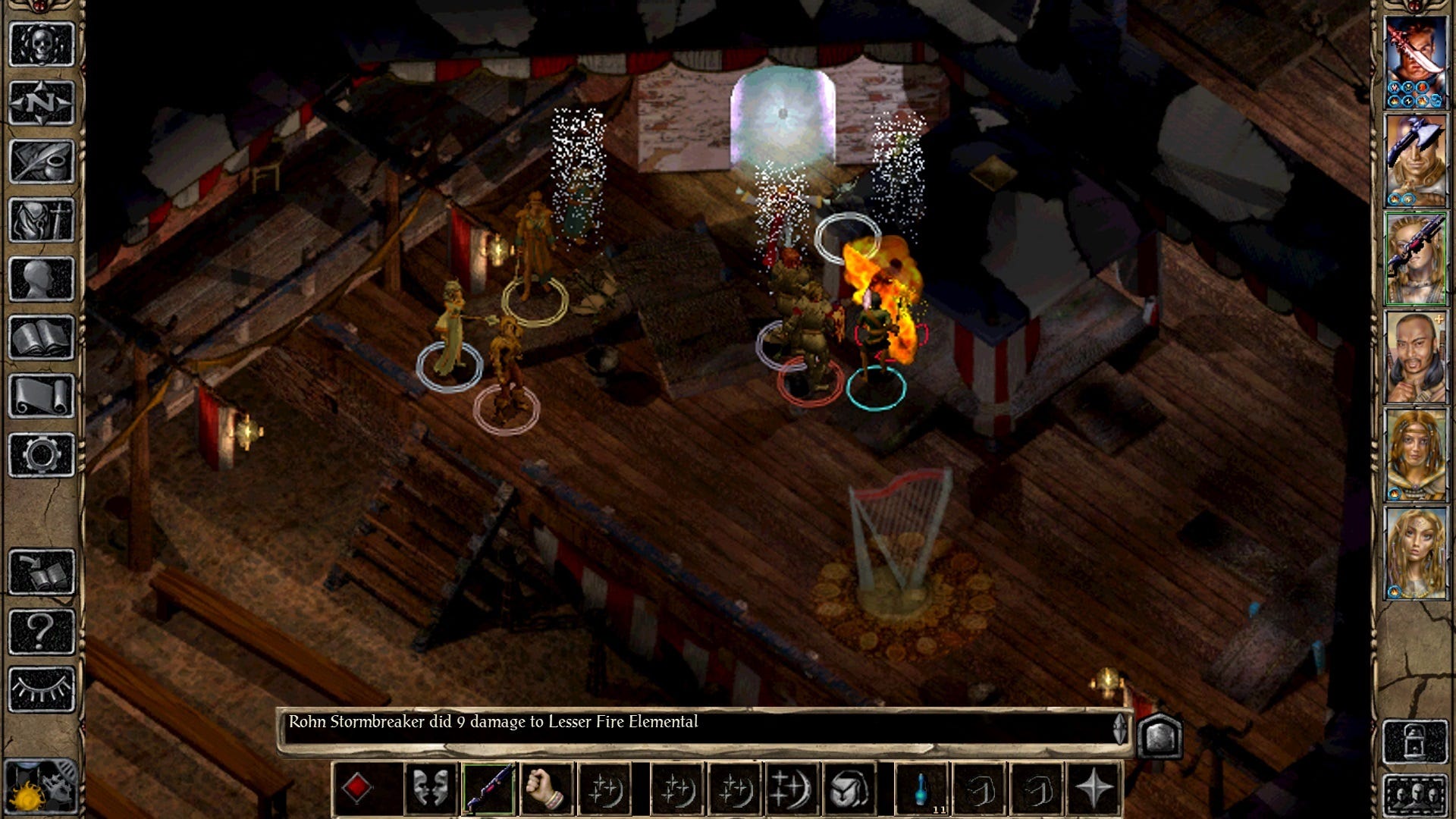
The type of battle system common to older, isometric cRPGs like Planescape: Torment or the Baldur’s Gate series has always rankled me. While I adore those style of games,1 it’s always been in spite of the moment-to-moment combat.
But in the spirit of generous criticism, I’m going to see the good in RTWP. After some defining (and complaining), I’ll consider the context of why RTWP emerges, and see how it can contribute to that nebulous intersection of mechanics and story that interests me.
It’s always a good idea to define one’s terms2, so let’s start with figuring out what I mean by RTWP. Popularized by Baldur’s Gate and appearing frequently in Bioware, Black Isle, and Obsidian titles, RTWP is a form of RPG battle system where combat occurs in real-time but allows the player to pause at will to issue commands.
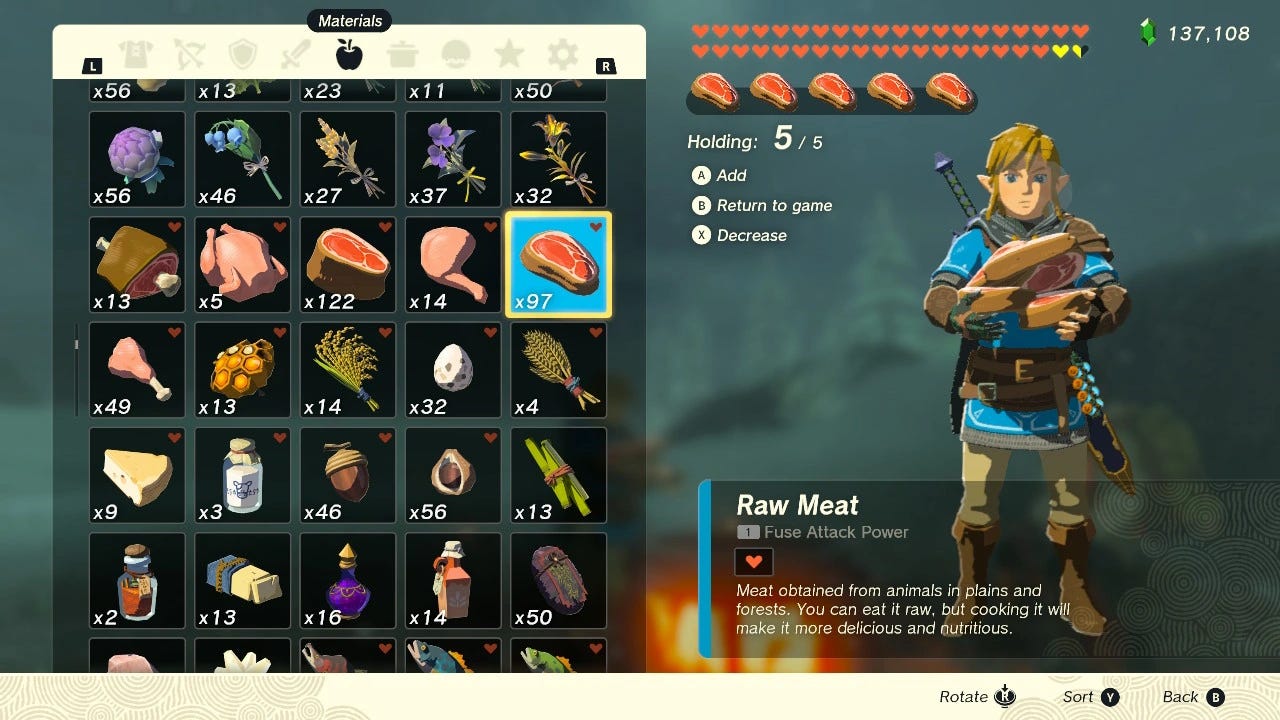
It would be easy to define this too broadly and start including titles like Paradox games or action RPGs that are influenced by the legacy of RTWP, such as Mass Effect. However, this would dilute the conversation to the point where we start saying any game which allows pausing for actions in a real-time setting counts. Eating food in Tears of the Kingdom is not the sort of thing I’m interested in.
What defines RTWP games (as opposed to real-time games that allow pausing) is that they occur in rounds. When playing Baldur’s Gate or Pillars of Eternity, the combat is occurring in rounds exactly like a tabletop RPG. Movement tends to be a little more freeform, but generally speaking characters are restricted to a certain number of actions per round, and everyone on the battlefield acts before the round ends. The difference is that characters are acting simultaneously and the rounds seamlessly flow into each other. Under the hood, however, the computer is GMing a turn-based battle system.
This is a crucial part of the definition, as it not only highlights my issues with the format but why it came into existence. RTWP was developed in a very particular context, which is where we’re going to find the means to appreciate it.
RTWP has always felt both chaotic and fiddly to me. Since it’s hard to tell when rounds end — and thus when characters can act again — one can either trust in the AI to look after itself or micromanage with frequent pausing. Either approach is unsatisfying.
Positioning has always been a particular headache for RTWP. Characters never quite get out of the way of AOE attacks, or the games don’t provide sufficient information for decision making. For instance, both Tactics Ogre3 and the first Pillars of Eternity have class abilities that prevent enemies from moving past the party’s tank to the backline. Tactics Ogre’s movement grid and turn structure allows me to position my knight at chokepoints to take advantage of that ability. PoE’s messy battlefields usually has Edér standing alone, picking his nose while goblins sail past to attack the party’s spellcasters.
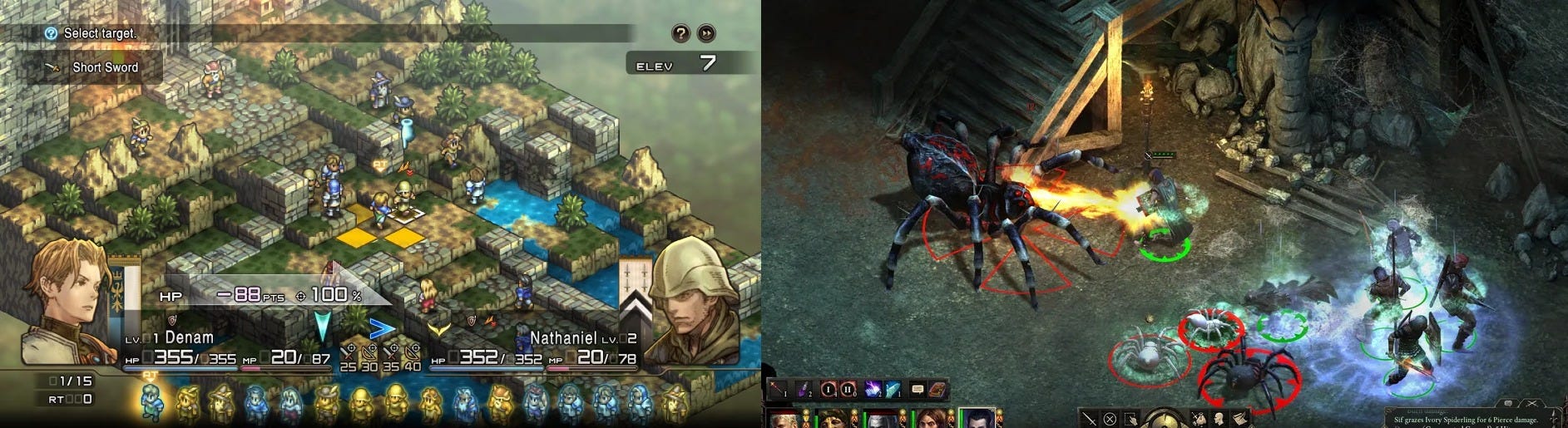
What I dislike about RTWP is that it often undermines what should be interesting about the battles. Given the games under discussion often have a variety of actions to choose, a host of monster types with many different abilities, and frequent need to place characters precisely, I should think a considered, careful approach is best. But RTWP instead presents hectic, fast-paced battles that don’t gel with the actual tactical layer. Sometimes I feel like I’m trying to play a game of chess in the middle of a Dynasty Warriors level. RTWP often feels like the worst aspects of action and turn-based systems.
Despite my griping, though, I think RTWP has value, and said value starts with why it exists.
The title that popularized RTWP4 was the first Baldur’s Gate, which was not only based on Advanced Dungeons & Dragons rules, but was part of an legacy of replicating the tabletop experience in computer form.
There’s a subtle but important difference between adapting the rules or setting of a D&D adventure5 and trying to make a game that feels like playing a tabletop RPG on the computer. Baldur’s Gate has a fanatical devotion to the rules and assumptions of AD&D. By necessity of interpreting through the cold logic of computers, it tends to a stricter interpretation of the rules than the average DM. And the rules of AD&D (or any edition of D&D, for that matter), by and large exist to facilitate combat encounters.
There are several pillars of design that cross from AD&D to Baldur’s Gate,6 but there are two of importance here.
First, there is a lot of combat. Early RTWP titles have so many combat encounters it’s almost rude by today’s standards. The player can’t take three steps without meeting another group of homicidal gnolls. What’s more, that combat often involves many more characters — both in terms of player characters and monsters — than is typical of turn-based battles. Many run-of-the-mill fights in Icewind Dale or Baldur’s Gate II get as crowded as Fire Emblem maps. Combat encounters in RTWP games are usually swarming with weak monsters.
Second, during those frequent combat encounters, characters often are just attacking. Many classes — such as fighters — won’t do much besides attack for the entire game, only getting better at hitting and attacking more frequently. But even spellcasters don’t have the spell slots under the AD&D ruleset to cast very often, especially if the player can’t (or won’t) abuse resting. Even at the mid-level range in the earlier parts of Baldur’s Gate II, mages like Aerie are going to spend more turns chucking rocks than magic missiles.
These design pillars are expressed most sharply in the early wilderness areas of Baldur’s Gate. Here is the true experience low-level AD&D, faithfully recreated in all its late-90s isometric glory: missing attack rolls. A lot.

To put it another way, translating the assumptions and design goals of a combat-heavy, tabletop experience like AD&D to a video game creates combat that, frankly, kind of sucks much of the time. It’s too frequent and is full of solely attacking. RTWP addresses these problems by taking away much of the repetitive clicking.
Now, the uncharitable take on this would be that such problems are not inherent to cRPGs or video games in general. Designers could, instead, create combat encounters that are interesting and involve lots of neat abilities. I’m generally of this view, and prefer it when a game has fewer, more involved combat encounters. I was pleasantly surprised in my recent playthrough of Rogue Trader how well-spread the combat encounters are, and how they take a longer than the average cPRG fight7.
However, another perspective is that the combat is only subpar if approached with certain assumptions. The tabletop RPG experience tends toward tactical combat, and the fact that RTWP games tend to come with huge spell lists and deep monster rosters adds to that impression. The non-combat systems and legacy of adaption causes us (or perhaps just me) to assume that combat ought to be a slow, tactical affair. From that perspective, RTWP is a fiddly mess. But RTWP might not be about tactics, but rather strategy.
As I’ve mentioned in a previous essay, the deep, gnarled roots of RPGS is the dungeon crawl. The experience of clearing a dungeon room by room is crucial to the history of video game RPGs, with many design habits coming over from the wargaming tradition that birthed early tabletop RPGs like Chainmail. Early RPGs — both tabletop and video game — were often nothing but navigating mazes and bashing monsters.
At the risk of repeating myself, the base assumption of the crawl is a long-term drain on resources. Each individual battle in an old-school JRPG or dungeon crawler like Diablo or Wizardry is not meant to be a serious test of skill. Instead they chip away at mana and health, with the decision-making focused on long-term planning: the player judging the best time to use a healing potion or powerful spell with the knowledge there are many more dark corridors to explore before the day is done.
This model is present in most RTWP cPRGS, and helps make sense of its strengths. If most of the combat encounters aren’t challenging by design and the faithful adaptation of tabletop rulesets means they’re a little sloggy to play through, it makes sense to just automate the slightly boring bits, allowing the player to focus on the wider view.
However, the problems of RTWP still rear their head when battles are complex. The average JRPG will have players choosing the basic attack command almost as often as they would in a RTWP. However, during something like a boss battle, the presentation format and turn-based systems of JRPGs and other such subgenres are able to more comfortably allow players to switch into tactical thinking.
Yet perhaps that lack of comfort is exactly where RTWP can thrive.
When properly implemented, RTWP never allows us to leave the wider view of conquering the dungeon as a whole, even during harder or more complicated combat encounters. RTWP commits fully to the long-term strategic thinking of the dungeon crawl by always denying the player a certain amount of control.
My dislike of RTWP is that it doesn’t allow me to control my characters with sufficient ease. That introduces a certain amount of chaos, but instead of the reactive chaos of an action game, it’s the chaos of plans that are never fully reliable.
By automating much of combat, RTWP allows the computer-controlled characters to make mistakes. Perhaps the appeal of RTWP is that the fighter won’t move out of the way of an AOE attack all the time, thus introducing a different sort of complication and risk assessment, along with an additional drain on resources in the long-term.
Tabletop RPGs, and the systems underlying the combat of RTWP heavy-hitters, live and die on the dice roll. That thinking has simply extended to the combat presentation. If a designer tried to do this for something like Tactics Ogre, which is almost nothing but combat and story, I would lead a riot. RTWP cRPGs, however, are crawl-based. They have heavy strategic considerations linking the combat encounters. A bit of wobbliness, while distracting from the tactics, can make the strategy more interesting.
In light of this, my two favourite iterations of RTWP are Dragon Age: Origins and Final Fantasy XII. The simple reason is the robust AI controls.
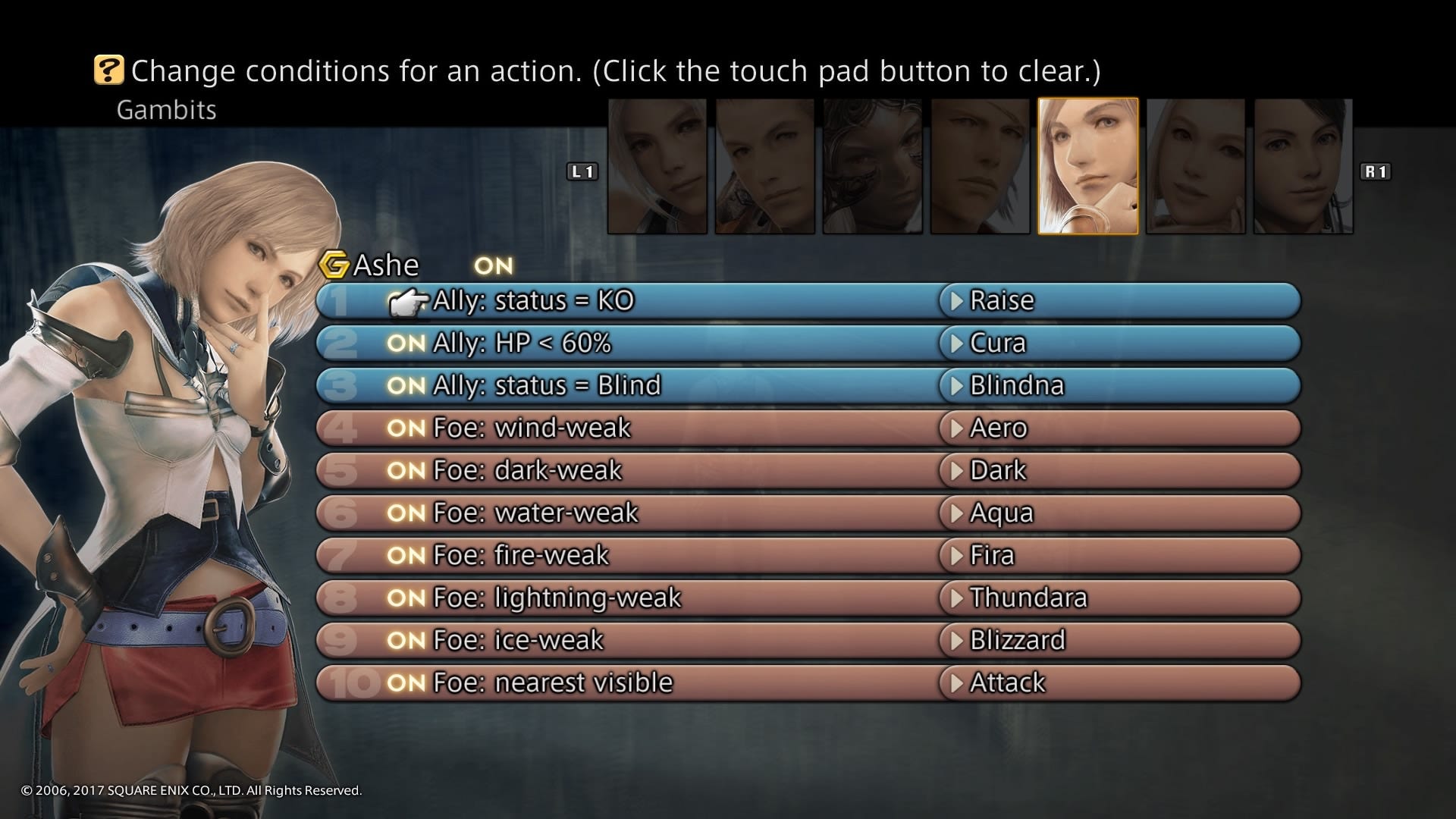
A good AI toolset puts the strategy firmly in the hands of the player, allowing them to think like a general. I can develop a plan of attack for battles, putting more long-term decisions in my hands. This is not perfect, nor — as I’ve come to realize — should it be. Things won’t always work out, and a player’s ability to react and adjust through pausing can only accomplish so much.
Thus, the strength of RTWP is part of why I dislike it. It takes the control out my hands. In doing so, I still maintain, it makes combat encounters less interesting. At the same time, it reflavours the longer-term thinking by introducing complications and greater risks.
And what is a dungeon crawl if not but a series of risks? As I said, the key to understanding RTWP is where it came from. The first source is sitting around a table with a group of friends, never fully able to rely on your slightly drunk roommate who never reads his character sheet. The second is a party of adventurers trapped in a lightless cave network, battling exhaustion and frayed nerves as much as the next group of monsters. Such a place would wear even the mightiest hero down, and force them to adapt and improvise as the next unforeseen complication arises.
What right do I have to demand total control under either of those circumstances? There are no perfect plans when stuck in a dank hallway infested with goblins. For all its frustrations, RTWP forces me to reckon with the truth of that.
I’m doing a “bangers only” rewatch of Star Trek: The Next Generation and couldn’t recommend it more. While I’ve watched the whole series a few times, the episodic nature means it’s viable to pick the best 5-10 episodes from each season and have a great time without missing a beat. I also think TNG, cheesy as it is, is fairly unique television with its heavy emphasis on problem solving. While there are character-driven episodes, the bulk of them involve the crew working together to address a crisis, which makes for a satisfying watch. But take my advice and skip the first season.
The City and The City is China Miéville at his most Borgesian: he invents an impossible city, then has the brilliance (or gall) to set a murder mystery inside of it. While it lagged at the end, the book is well worth a read for the descriptions of the stranger, interlocking city alone.
Speaking of Borges, he’s one of my favourite writers. My recommended stories to start with would be “Tlön, Uqbar, Orbis Tertius,” “The Library of Babel,” “The Garden of Forking Paths,” “Pierre Menard, Author of the Quixote,” and “Death and the Compass.”
I mentioned it in passing, but seriously, play Final Fantasy XII. It’s one of my favourite mainline FF titles, and has some of the richest environments and worldbuilding in any game I’ve played.
I’m going to follow this essay with a more general look at RPG combat. What makes a good battle systems from an adventuring and storytelling perspective?
Baldur’s Gate II is comfortably in my top ten games of all time, for instance.
One of the most important lessons I took from my philosophy degree is to sort out definitions before getting stuck into the weeds. If we can’t agree on what we mean by RTWP (or a term like “justice”), arguing about the details is only going to waste time.
This is where I show my true hipster credentials and recommend the Let Us Cling Together PSP version with the One Vision mod instead of the recent Reborn remaster. Both are great, however. I wish more tactics RPGs had a level cap like in Reborn.
Very curious if one my readers can name the first RTWP game. My light research didn’t turn up a definitive answer.
The Gold Box games are probably a good example of this.
For better and for worse, as in the case of THAC0.
Well, at least in theory the battles are longer and more involved. In practice, even though I was playing on “Daring” difficulty (a notch above normal), by midgame combat was a cakewalk. Rogue Trader definitely falls into the trap I discussed in my article about game menus, where mastery of non-combat systems (character building, in this case) trivializes the battles. Still, it was satisfying to watch a single character like Argenta shred through the entire enemy roster before they had a chance to move.
No posts
Comments
Nothing yet. Say the first thing.
Sign in to join the conversation.