The cut, not the country
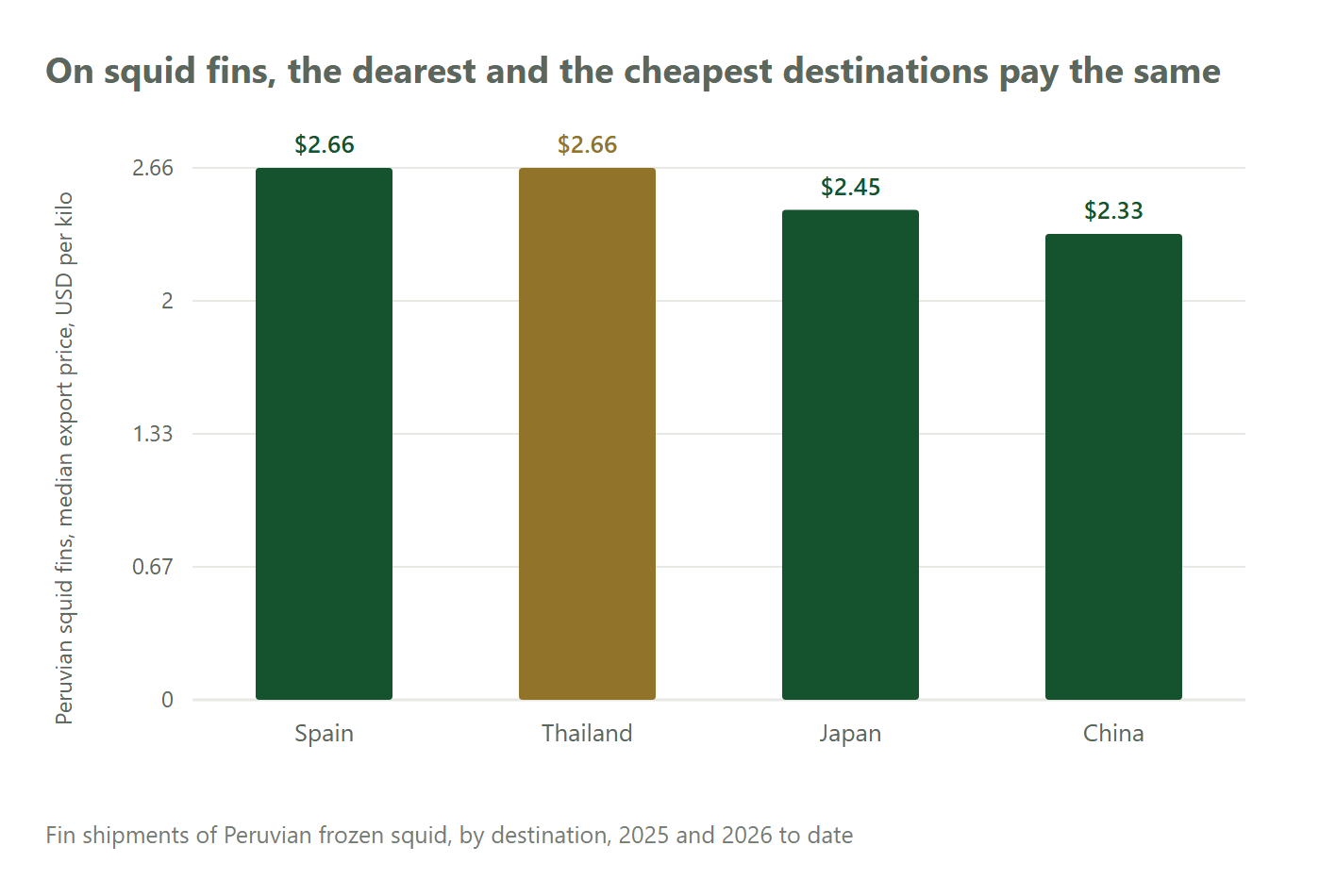
Spain and Thailand look twice as far apart as any pair of squid buyers Peru ships to, and on fins they pay the same $2.66 a kilo, to the cent.

Latin American trade intelligence for global executives. Data-driven briefs on the flows, markets, and signals shaping commerce with the region.
Live Last read · last published · next check
Spain and Thailand look twice as far apart as any pair of squid buyers Peru ships to, and on fins they pay the same $2.66 a kilo, to the cent.
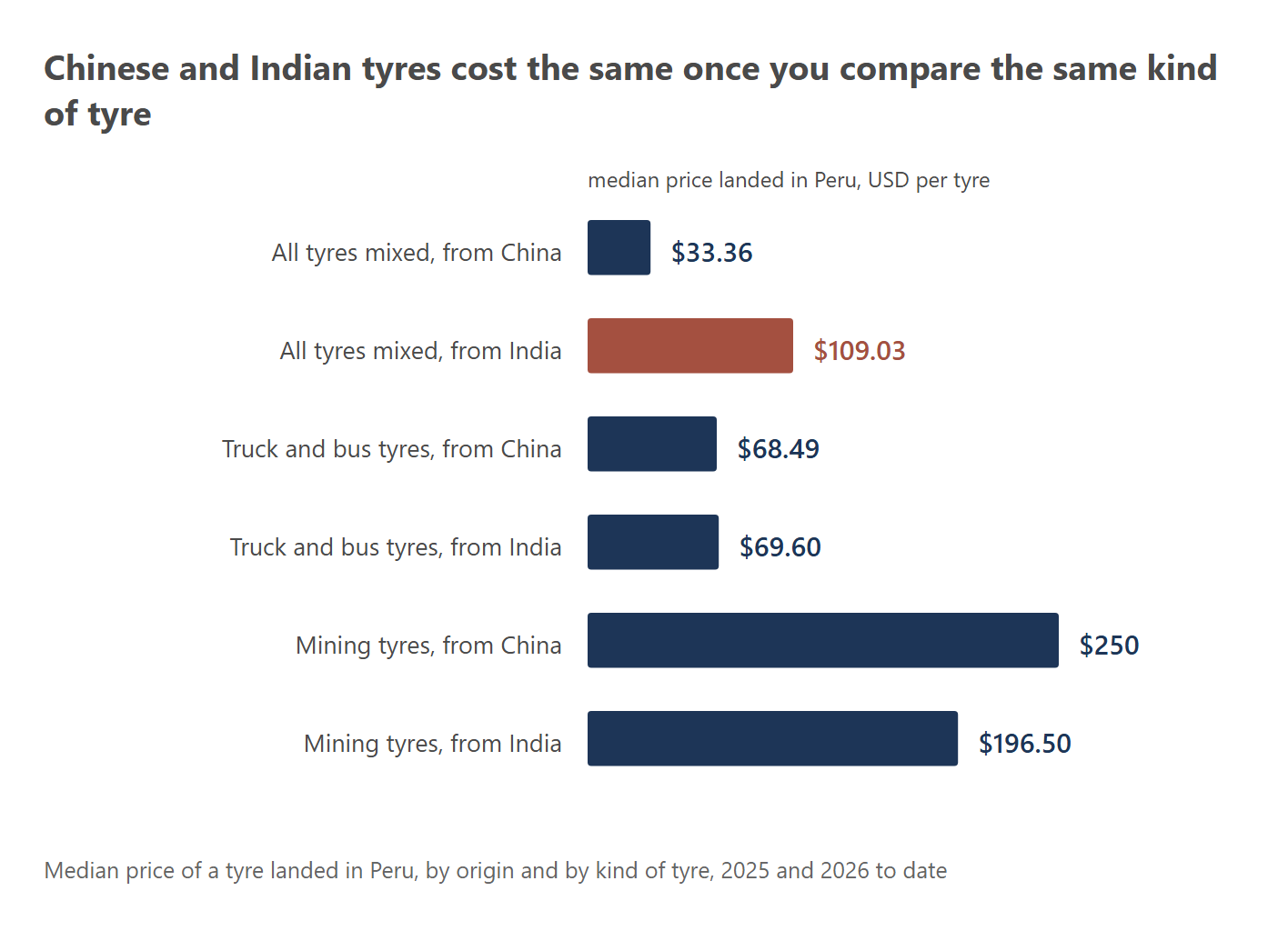
A Chinese tyre lands in Peru at $33 and an Indian one at $109. The gap disappears as soon as the kind of tyre is held still, and in the big sizes India is the cheaper.
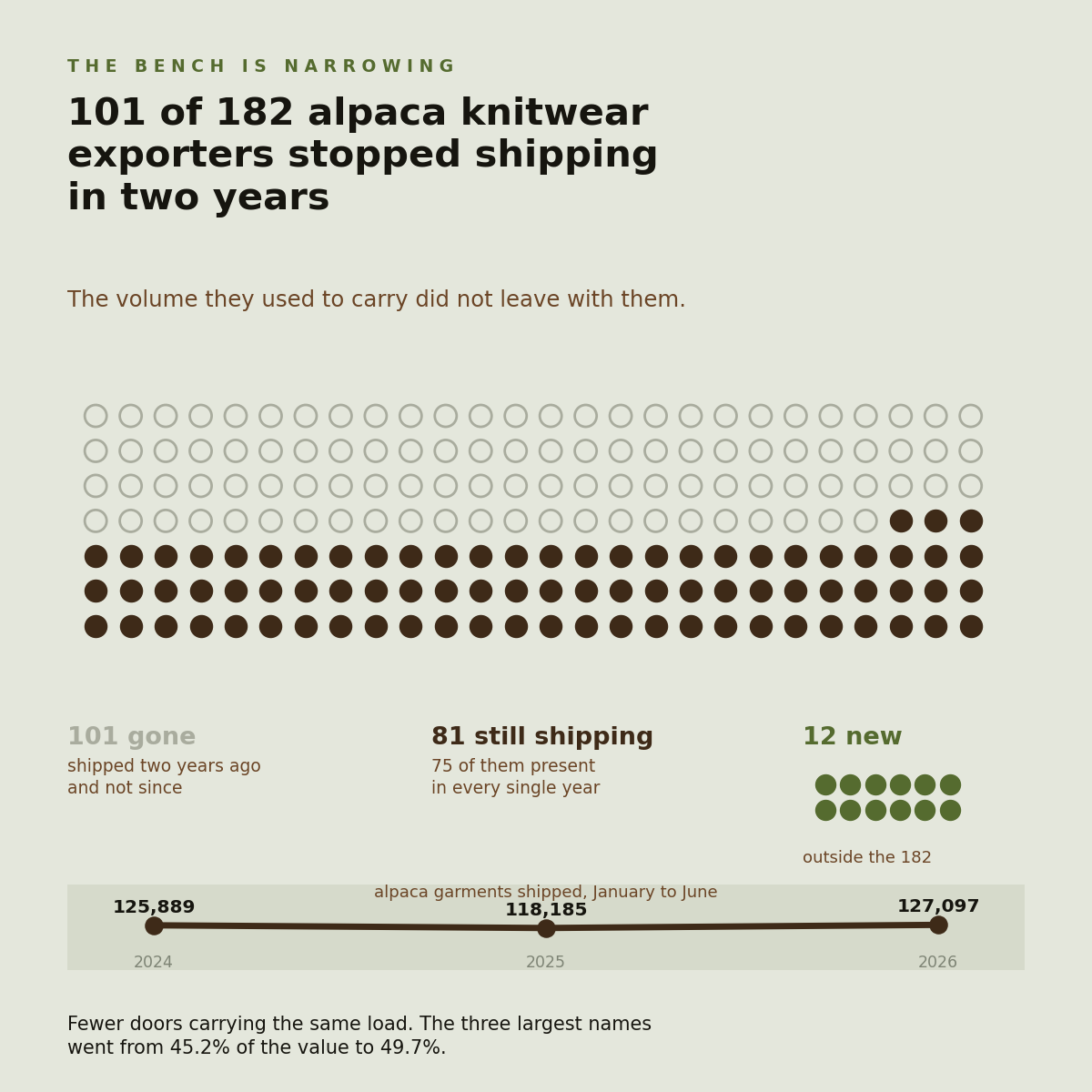
Of the 182 Peruvian companies shipping alpaca knitwear in 2024, 101 no longer do. Volume held. The same output now comes from a shorter list of places.
Half of Peru's knitwear leaves in shipments of 25 garments or fewer, and those earn more per piece than the containers do. Same companies, both doors. What that means for a first order.
Peru's geisha coffee never sells below the ordinary price, no two batches agree on anything above it, and it ships once the rest of the harvest has gone. Forty five tonnes a year.
The seal that commands a premium on the shelf earns almost nothing at the border. I checked it four ways, across two datasets. Here is what Peru's coffee structure actually rewards.
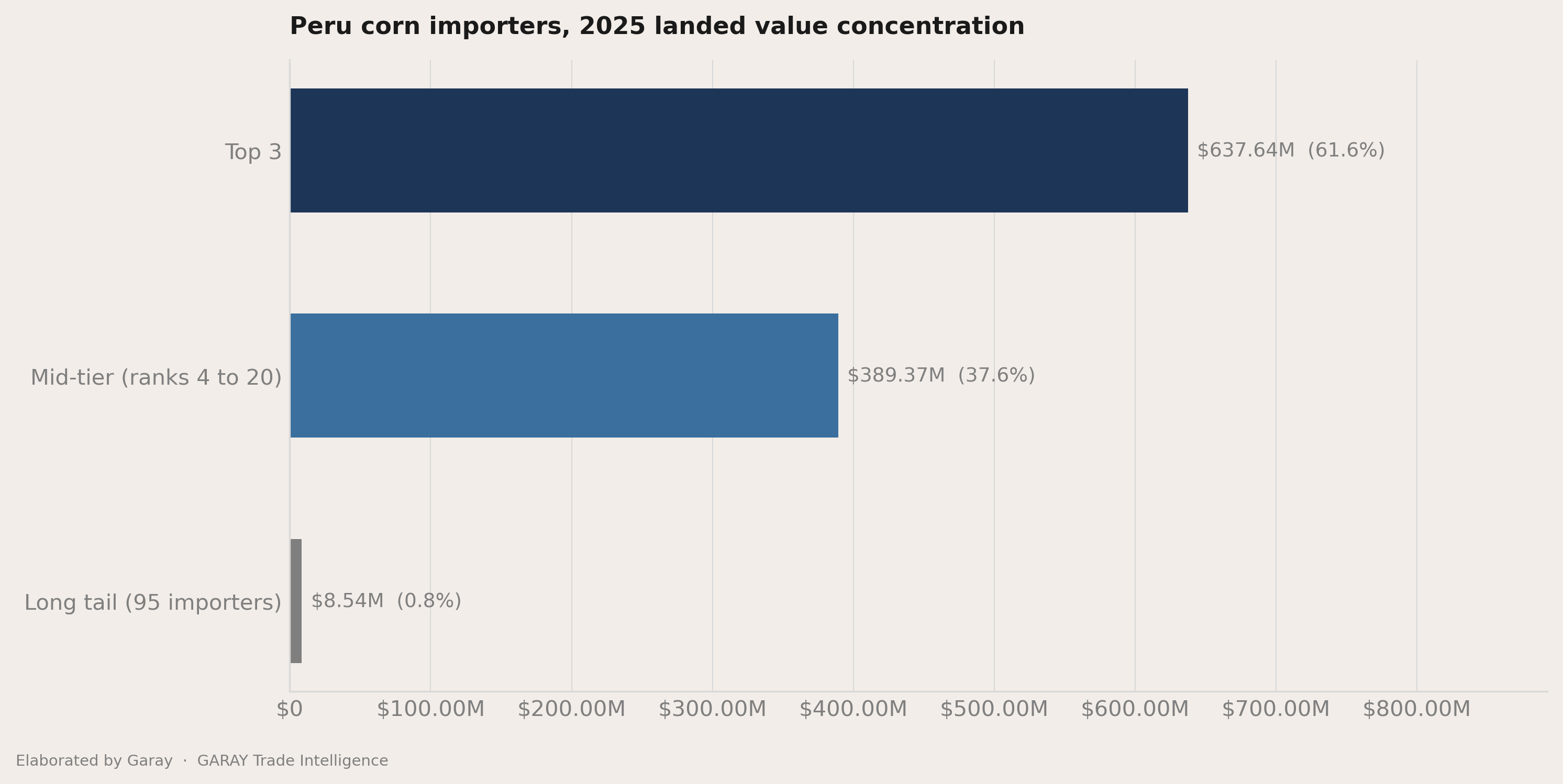
Two concentrations stack here: one origin supplies almost everything, and three buyers hold most of the volume. A fragile setup and an opening at the same time.
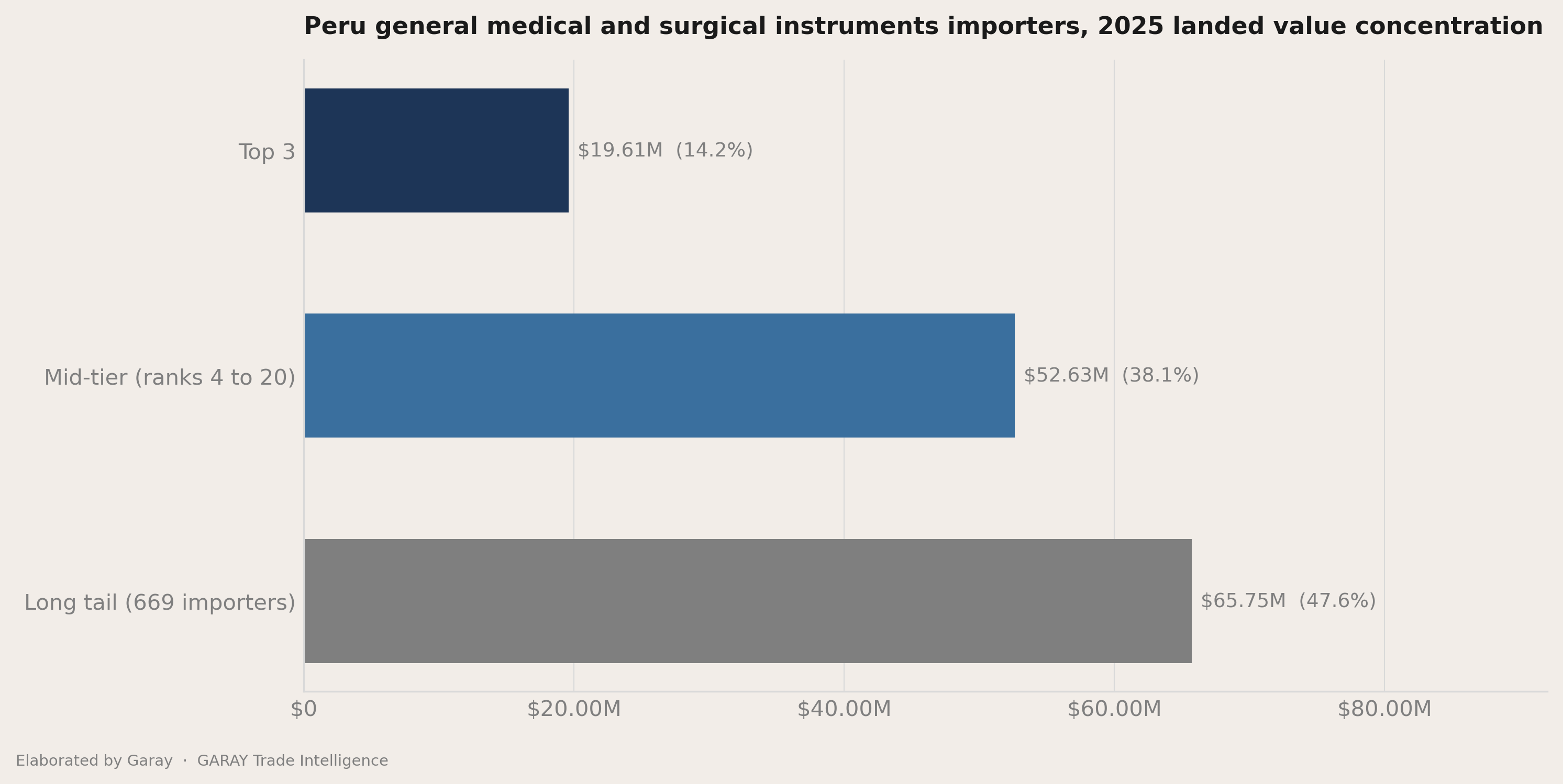
A $138M import category growing 24% a year, spread across 490+ buyers. What that means if you sell medical and surgical instruments into Peru or source them there in 2026.
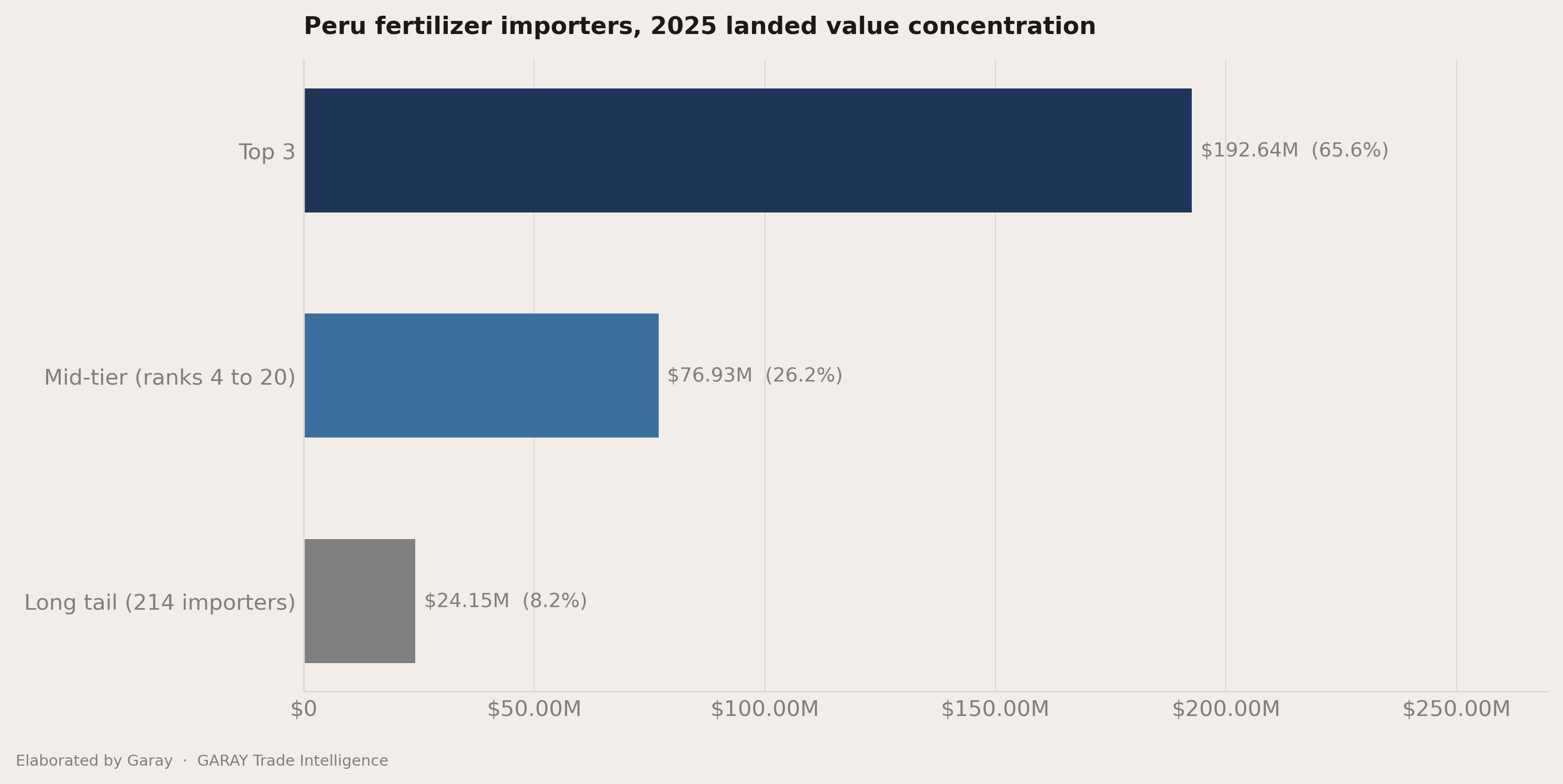
A $294M import category that nearly doubled, spread across 140+ buyers. What that means if you sell fertilizer into Peru or source it there in 2026.
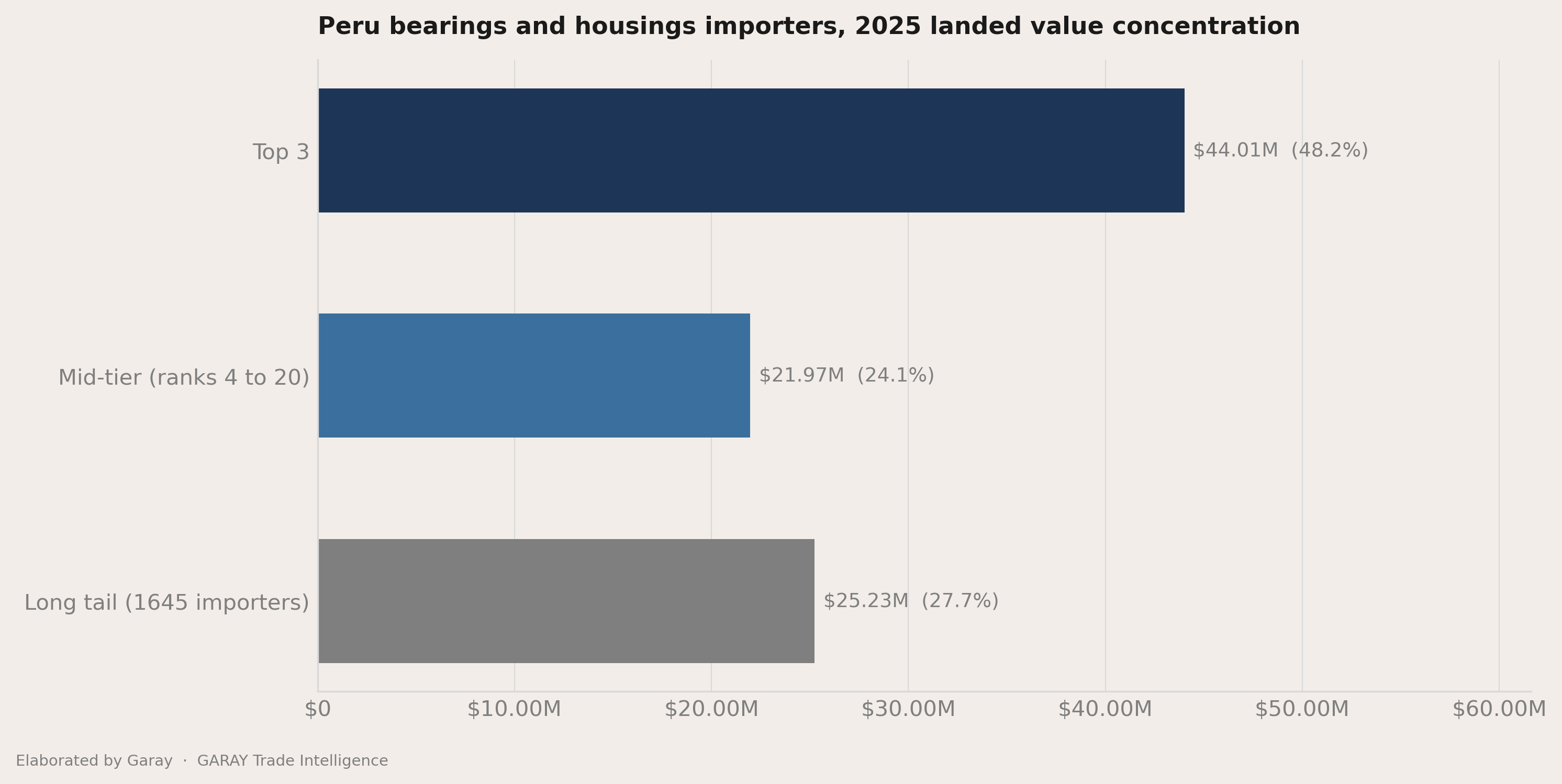
A $91M import category that grew 16% in two years, spread across 1,665 buyers. What that means if you sell bearings into Peru or source them there in 2026.