
Peru imported $91.2 million in bearings and housings in 2025. Two years earlier the figure was $78.7 million. That is a 16% climb in a category tied directly to how hard the country's mines, plants and fleets are running, and it happened across 4.4 million units at an average of $21 per unit.
The headline reads like a procurement line item. It is not. Bearings are the part that fails first and gets reordered forever, so this number is a steady, recurring demand signal, and the interesting part is who carries it and where they buy from.
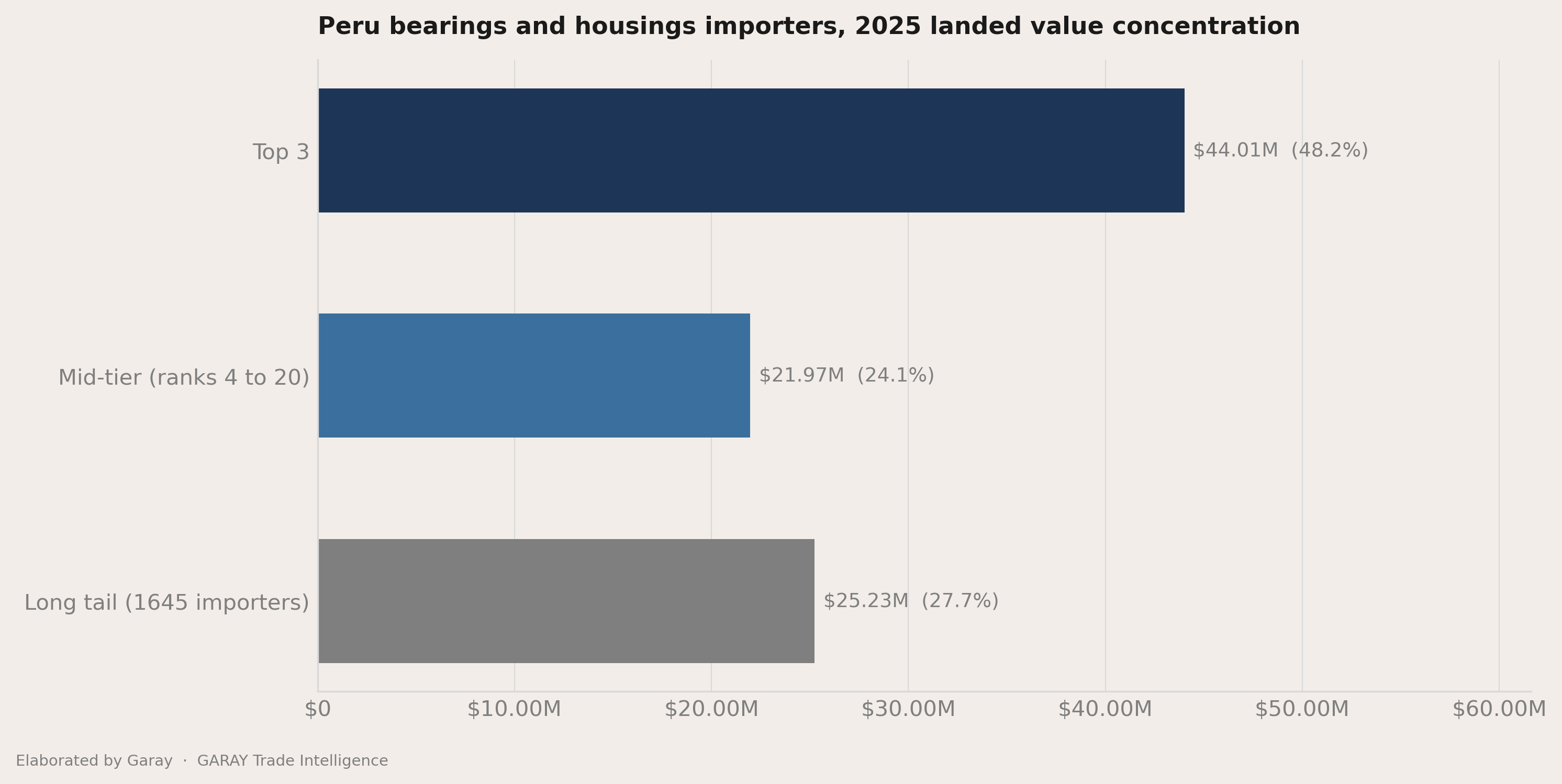
1,665 companies cleared at least one bearings import in 2025. Going into 2026, 1,055 of them are still active. That second number is the working pool a supplier actually meets at the table, not the historical list of everyone who ever imported a box.
The names at the front are the ones that move the country's heavy industry. Ferreyros, Komatsu, SKF, Metso and Distribuidora Cummins lead the import flow. These are mining dealers, equipment houses and industrial distributors, the accounts that reorder on a fixed maintenance cycle rather than a one-time project. For a supplier that is the difference between a single sale and a standing position. For a buyer it tells you the bearings that keep Peruvian mining and processing online run through a short list of serious importers, not a scattered crowd.
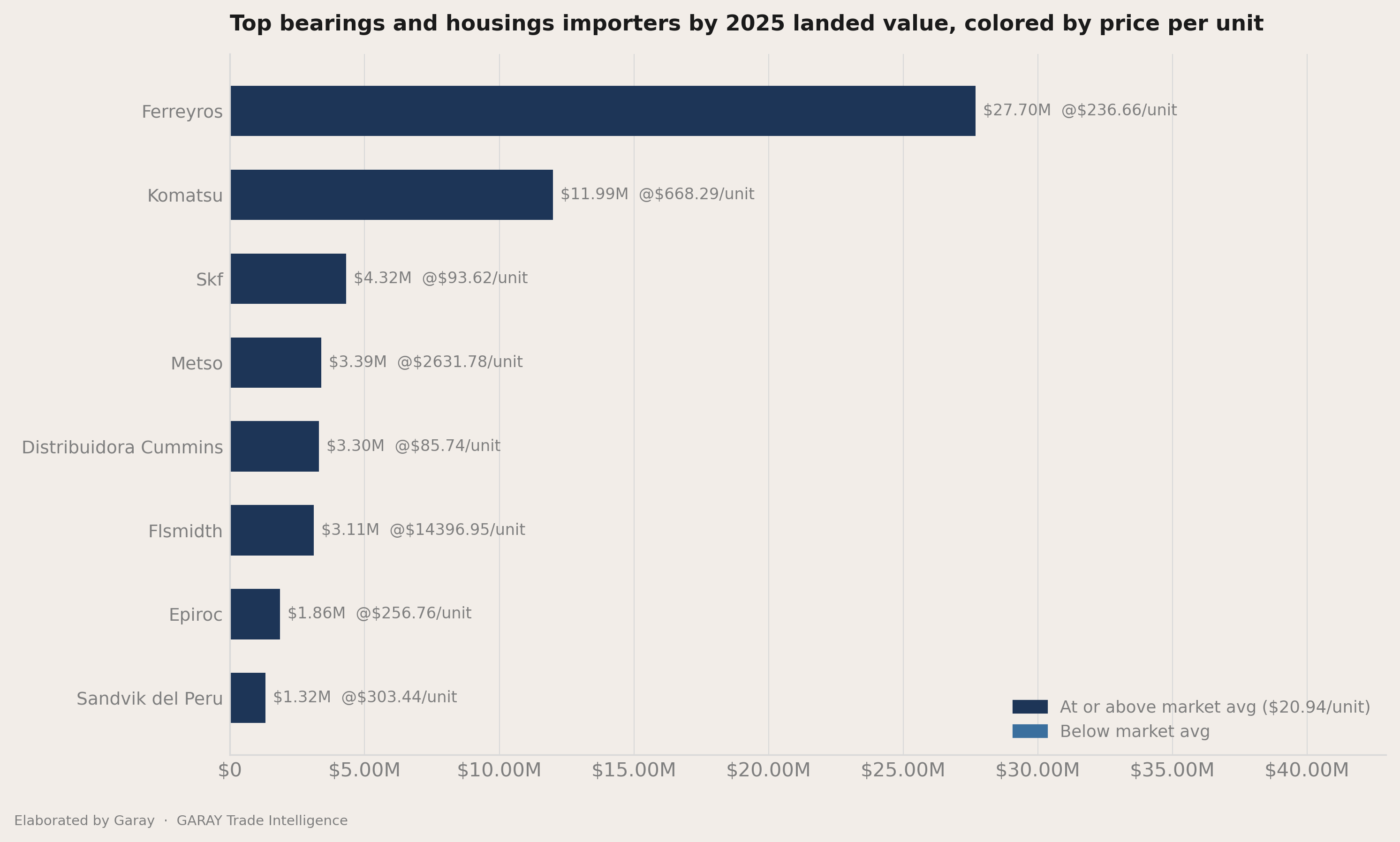
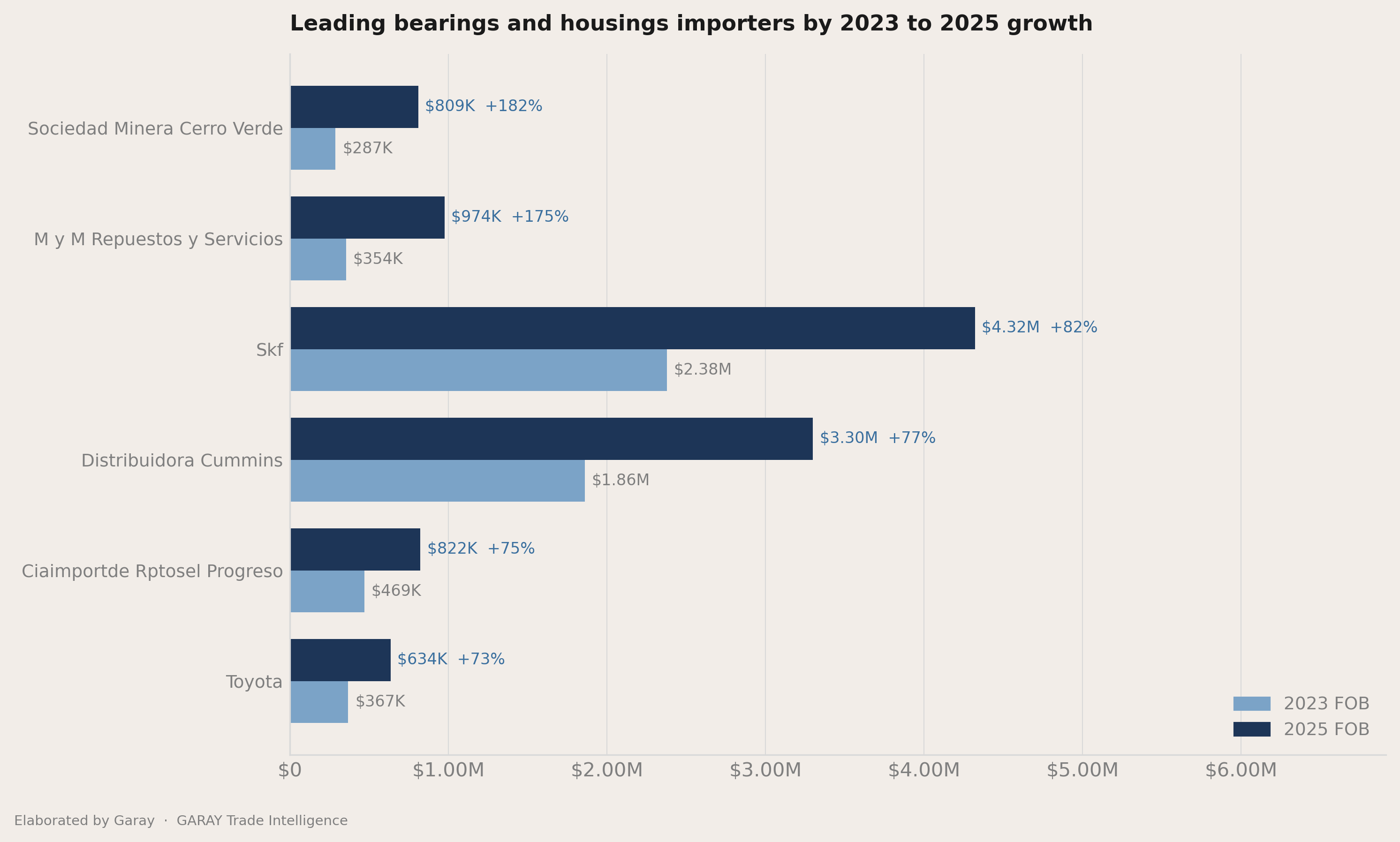
The 16% climb from $78.7 million in 2023 to $91.2 million in 2025 is not a one-off project spike. Bearings track operating intensity. When mines extend hours, when plants add lines, when fleets stay in service longer, the reorder volume rises with them. That is the kind of demand that compounds quietly instead of arriving in a single tender.
For a supplier going into 2026, that matters more than a flashy growth rate. A category that grows on replacement cycles rewards the vendor who gets specified into a maintenance program early and stays there. The wallet share is expanding, and most of it is being spent on parts that get reordered the moment they wear out.
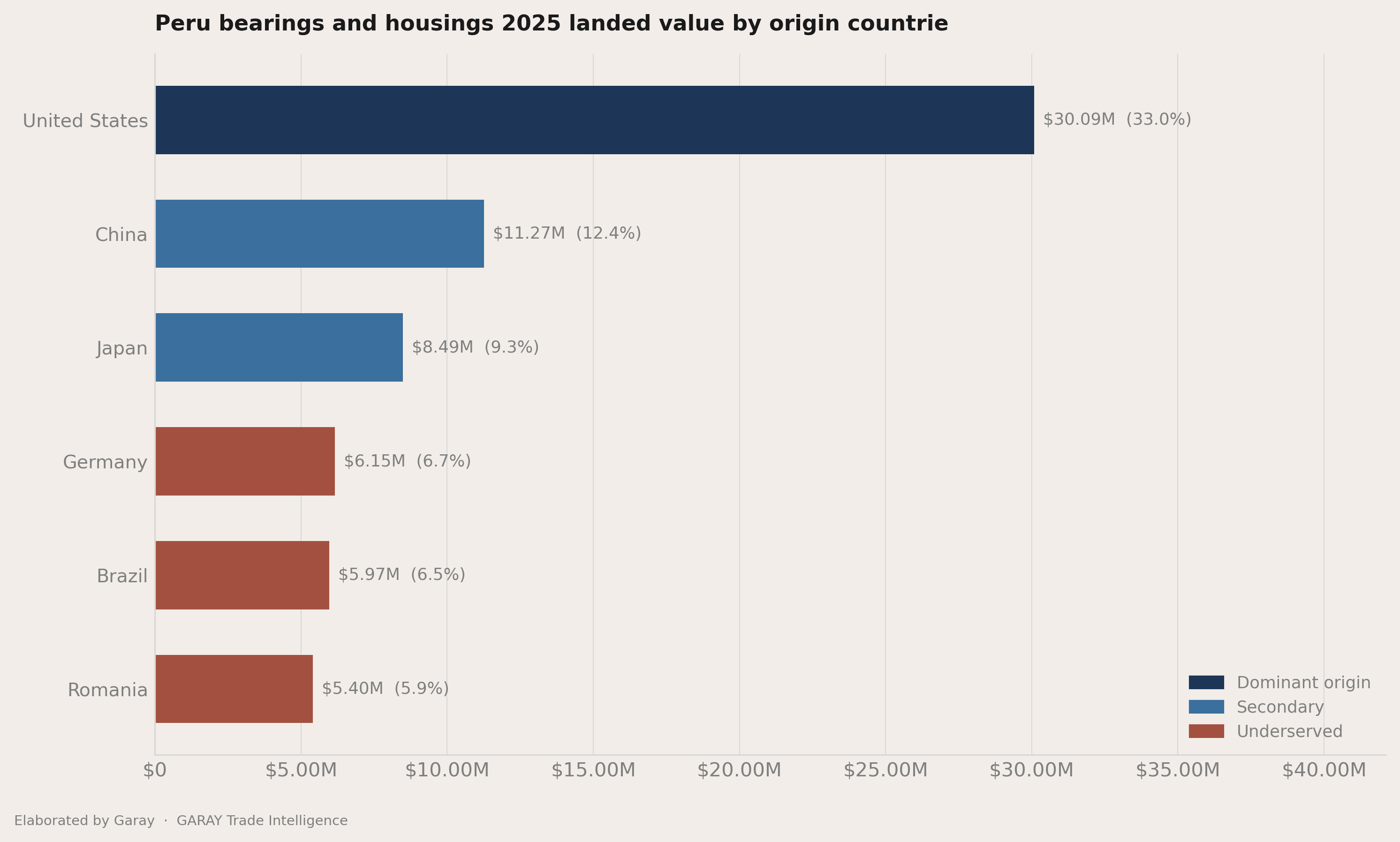
The supply map is concentrated. The United States accounted for 33% of 2025 import value, China 12% and Japan 9%. Three origins carry most of the category.
Behind those flags sit the names every maintenance manager in Peru already knows: Caterpillar, Komatsu, Cummins and Metso feed a large share of the OEM and aftermarket bearings entering the country, alongside the dedicated bearing makers. That concentration cuts two ways. A supplier competing into the China or aftermarket lane faces a different field than one selling US-origin OEM parts, and a buyer who only sources from the dominant origin is exposed if a tariff move or a freight disruption hits that single lane. The opening is in the lanes that are not yet crowded.
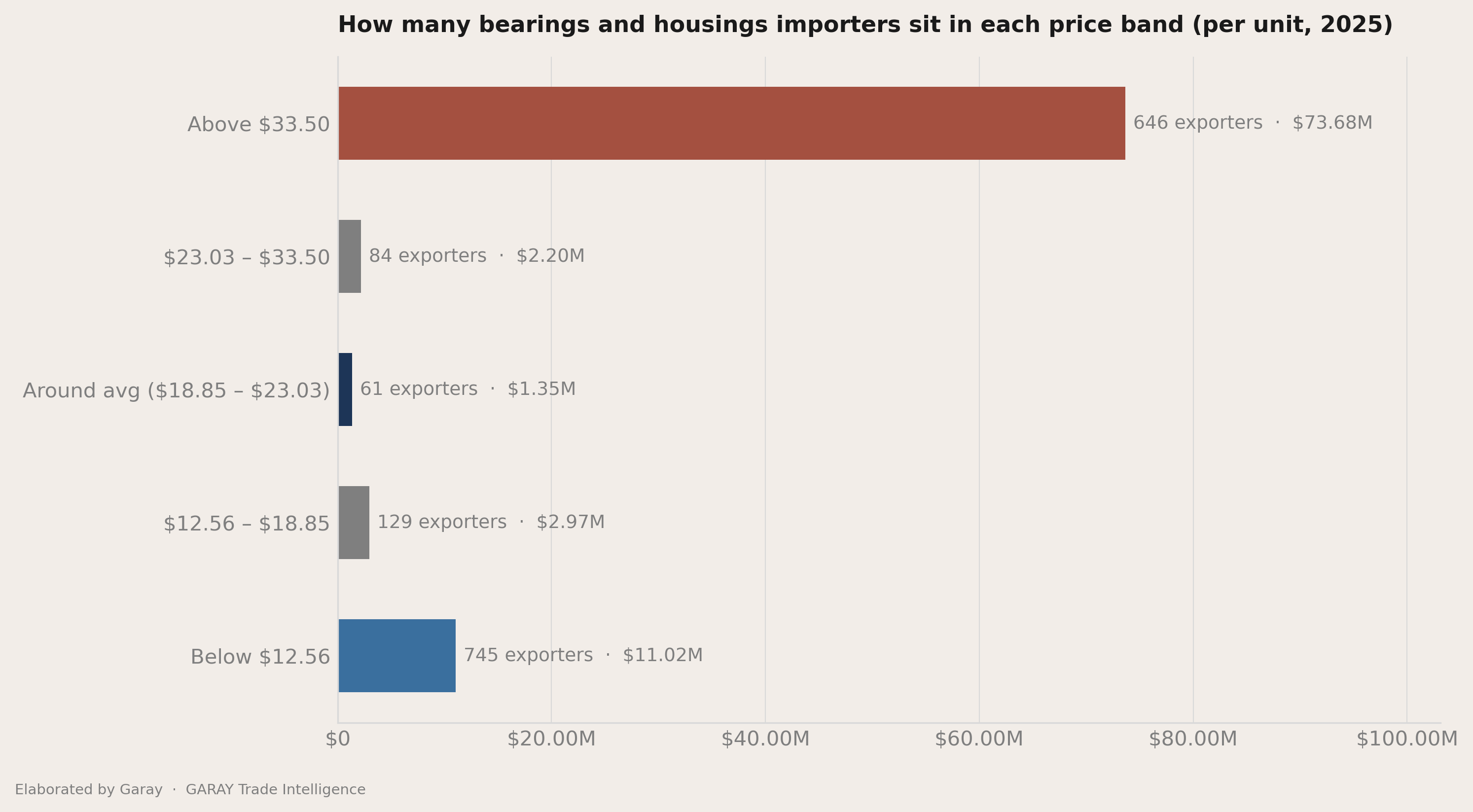
The $21 per unit average sits in front of a category that runs from a small standard ball bearing to a large engineered housing for mining equipment. 4.4 million units cleared in 2025 at that blended average, which means the figure is a mix, not a market.
A supplier who quotes against the headline average is pricing against a number that exists for almost no single line. A buyer who benchmarks the same way overpays on the commodity end and underestimates the engineered end. The margin lives in knowing which part of the range a given importer actually buys, and that breaks down account by account.
If you sell bearings into Peru: the demand is recurring and the buyer pool is anchored by a short list of mining and industrial accounts that reorder on a cycle. Map that list before you map a price. The standing positions are won inside maintenance programs, not on a single quote.
If you source bearings in Peru: the 1,055 active importers are not interchangeable. Origin lane, brand and part class set very different cost structures, and the leverage is in knowing where your counterparty sits.
I pulled the structure of this market from Peru's official trade records. The public view above names the leading importers and the shape of the demand. The full picture, the complete buyer ranking, every active 2026 importer, and how each one's origins and part profile break down company by company, sits in the Peru Bearings and Housings Importers Radar.
The full breakdown is here: Peru Bearings and Housings Importers Radar
Martin Garay
Sin posts
Comments
Nothing yet. Say the first thing.
Sign in to join the conversation.