
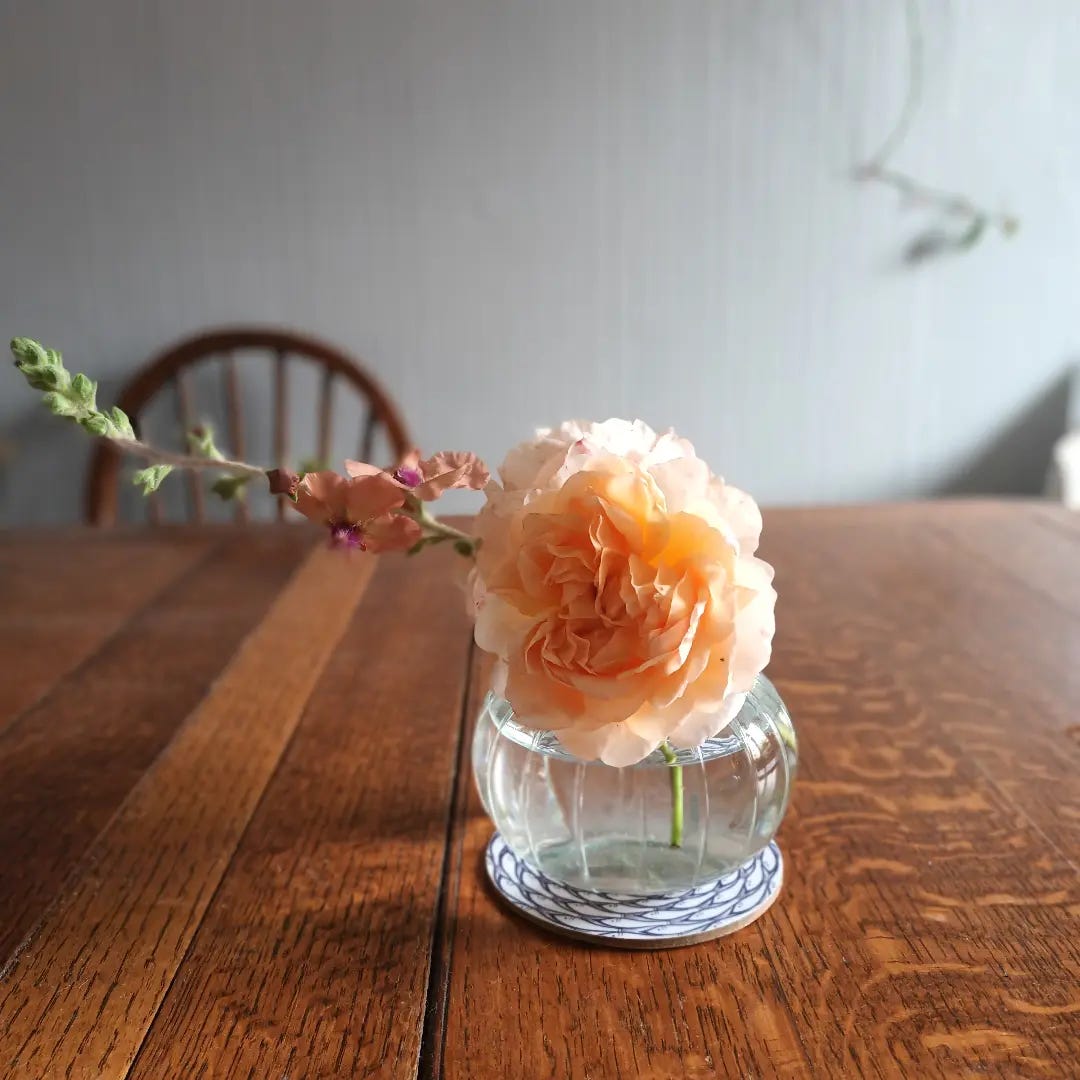
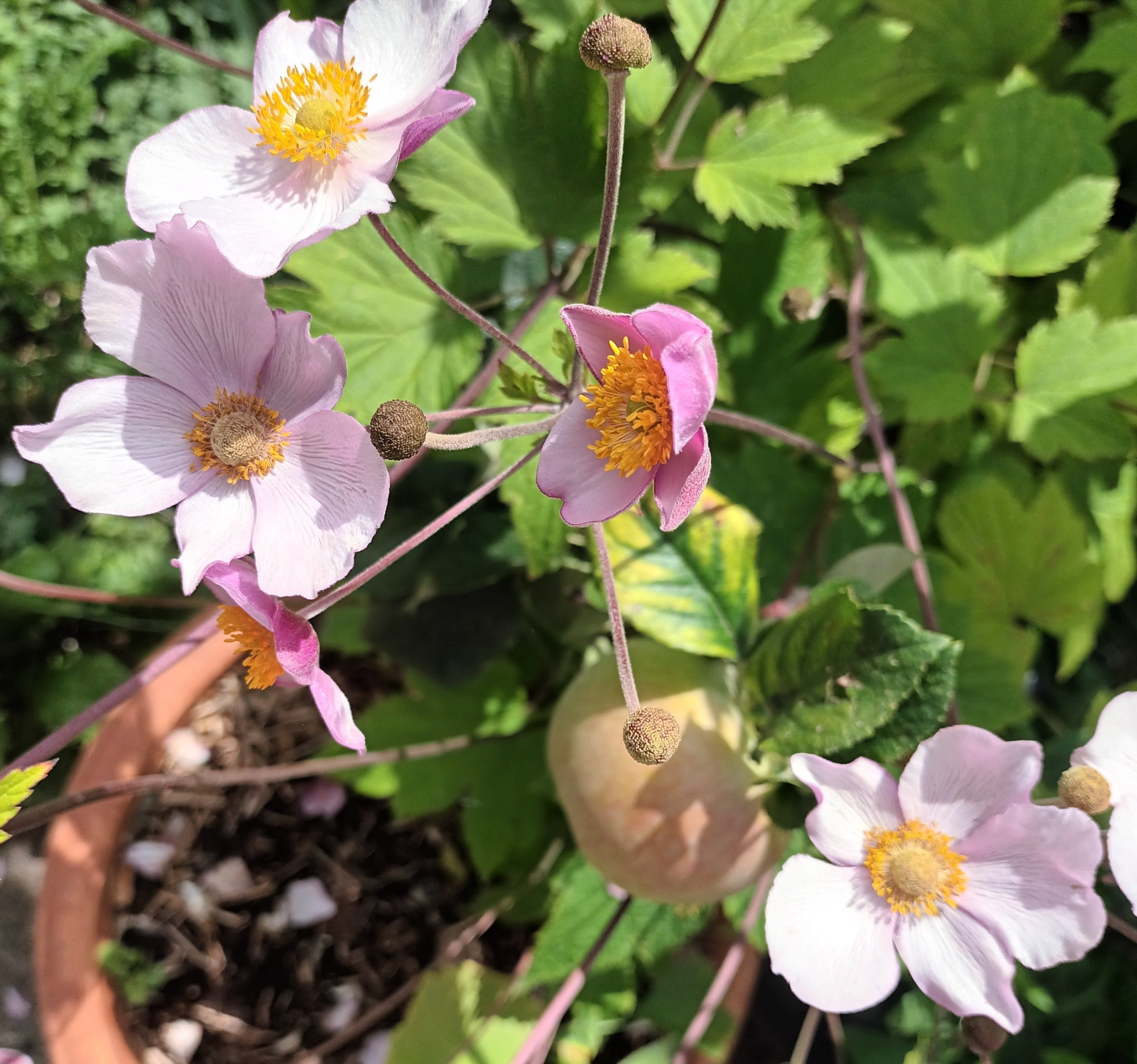
It rained! Like everyone else I am glad, and turning eagerly towards autumn. Yesterday was the first really cold morning, with condensation on the window panes: it felt right that I’d booked a delivery of heating oil. I went out to rediscover the garden, and saw that the lavender that’s been flowering all month is finally over; the japanese anemones are all flowering underneath the apple tree by the oil tank.
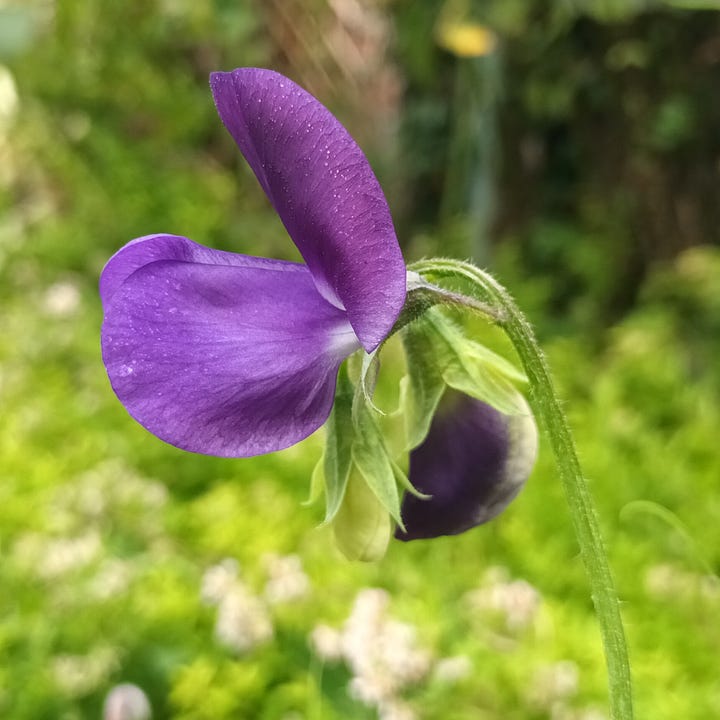
The sweet peas are still going. The best ones are self-seeded from last year. One is clearly the wonderful dark blue-purple ‘Pluto’: the other, a dark, slightly frilled maroon that must owe something to ‘Beaujolais’. Both are growing up through the carpet of golden oregano, Origanum vulgare ‘aureum,’ which seems to have protected their roots and kept them damp enough to produce good long stems. This years seedlings, cossetted in pots, have been less happy. They have been short-stemmed almost from the start, but still pretty, though I’m dead-heading rather than picking: ‘Matucana’ is threading itself through the tomato vines by the wall, and both ‘Mrs Collier’ and ‘Mollie Rilstone’ are in a big pot the oil tank. Every year I tell myself I’m going to save seeds, instead of relying on my own laziness in clearing the gone-to-seed pods that do the job for me. I’ve not done it yet.
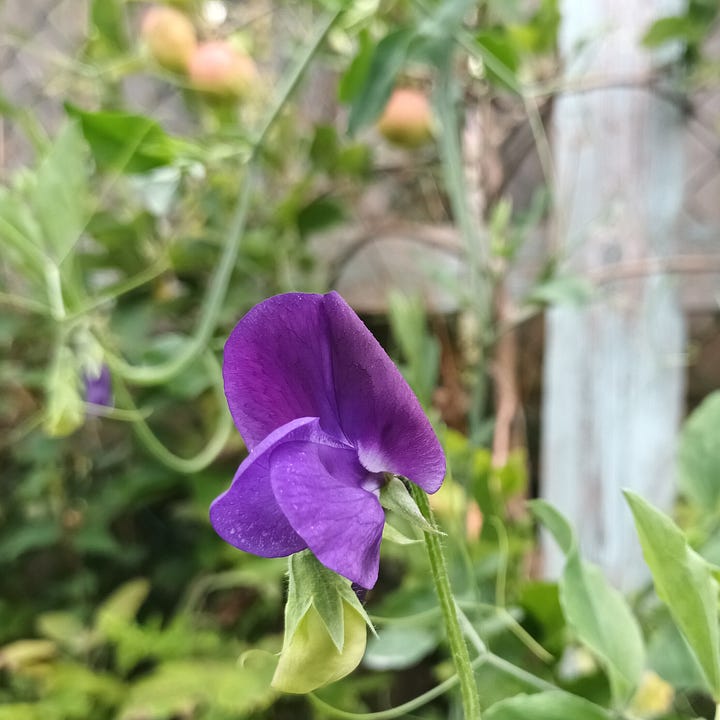
In a good year, sweet peas can carry on until the first frosts. The cold isn’t usually what does for them with me - they just run out of steam. But when they do last, those rich purples and maroons feel beautifully autumnal. Every year I’ve been here, I’ve grown squash - sometimes a mad splurge of different varieties and a Halloween pumpkin for Elisabeth; sometimes just one or two. Always ‘red kuri,’ which makes for the prettiest vermilion-orange globes, to sit on the windowsill hardening off, next to a bunch of those last sweet peas.
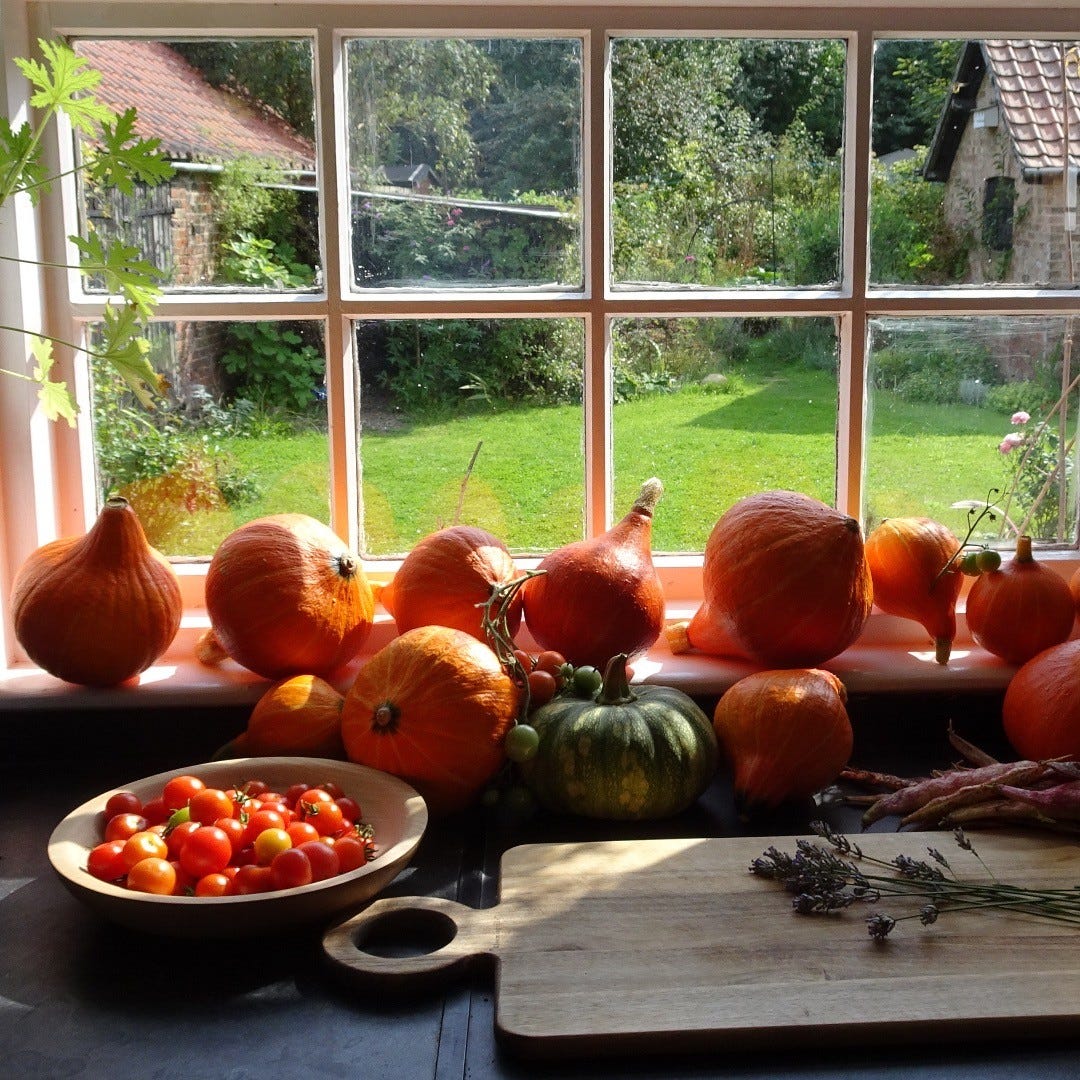
This year is the first year I didn’t manage. It was just too hot at the wrong times, and I told myself I’d struggle to lift a watering can if I had a c-section. So the garden feels a bit empty and aimless, especially since I am terrible at dahlias, which I would love to grow.
So instead, I am thinking about spring bulbs. I’m holding out against Farmer Gracy and Sarah Raven (how can it be ‘last chance’ for anything bulb-related yet?!), and waiting for my local nursery to get in its stock. I wrote last year about the wonderful seventeenth-century garden writer, John Parkinson, and his delightful descriptions of ‘sullen and smoakie yellow’ tulips, which were in my mind as I chose bulbs for a client’s garden. It was wonderful to see the results this year, and the dark purple ‘Queen of the Night’ was an particular hit, working absolutely beautifully with the existing planting of creamy amelanchier, dark-leafed physocarpus and foaming pink astrantias.
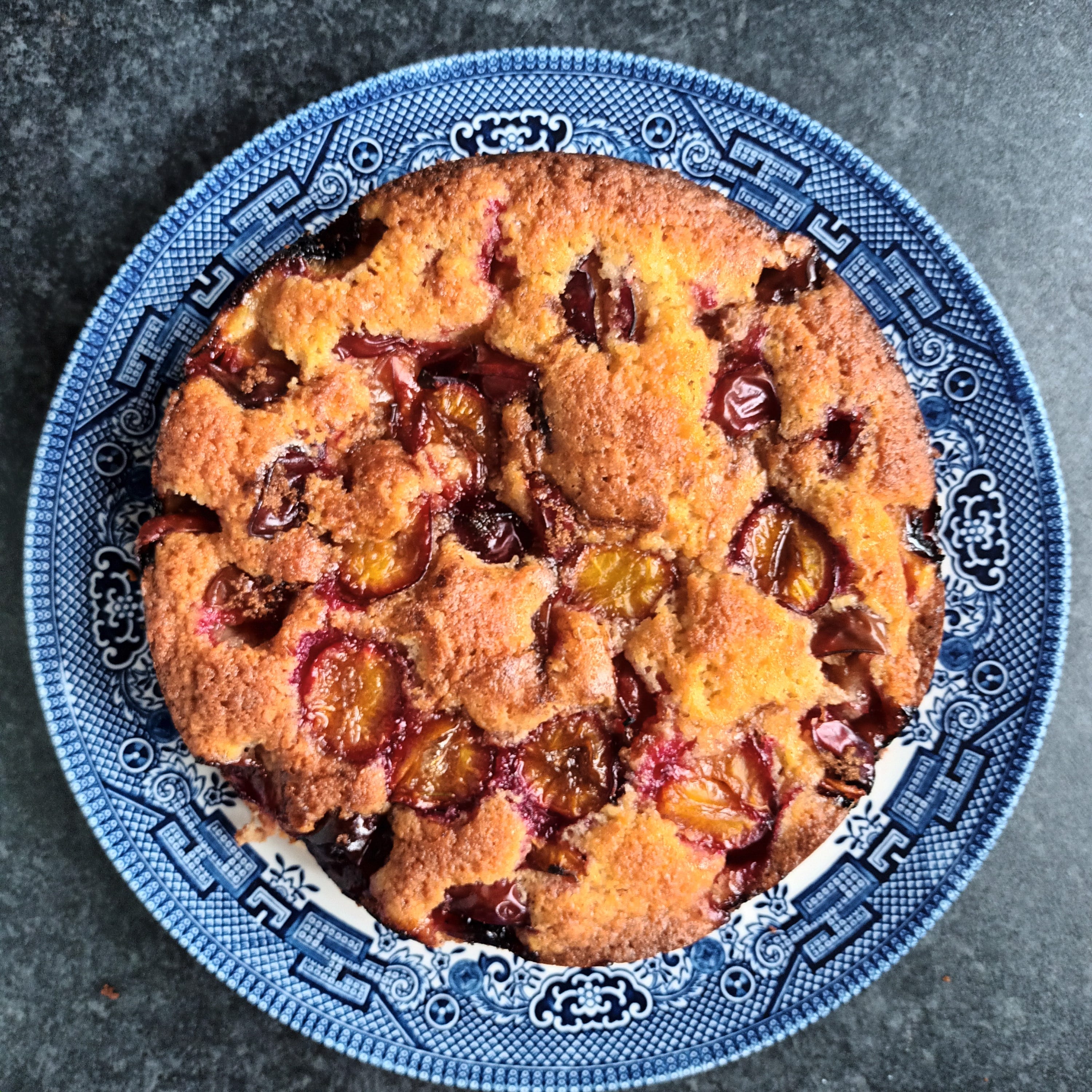
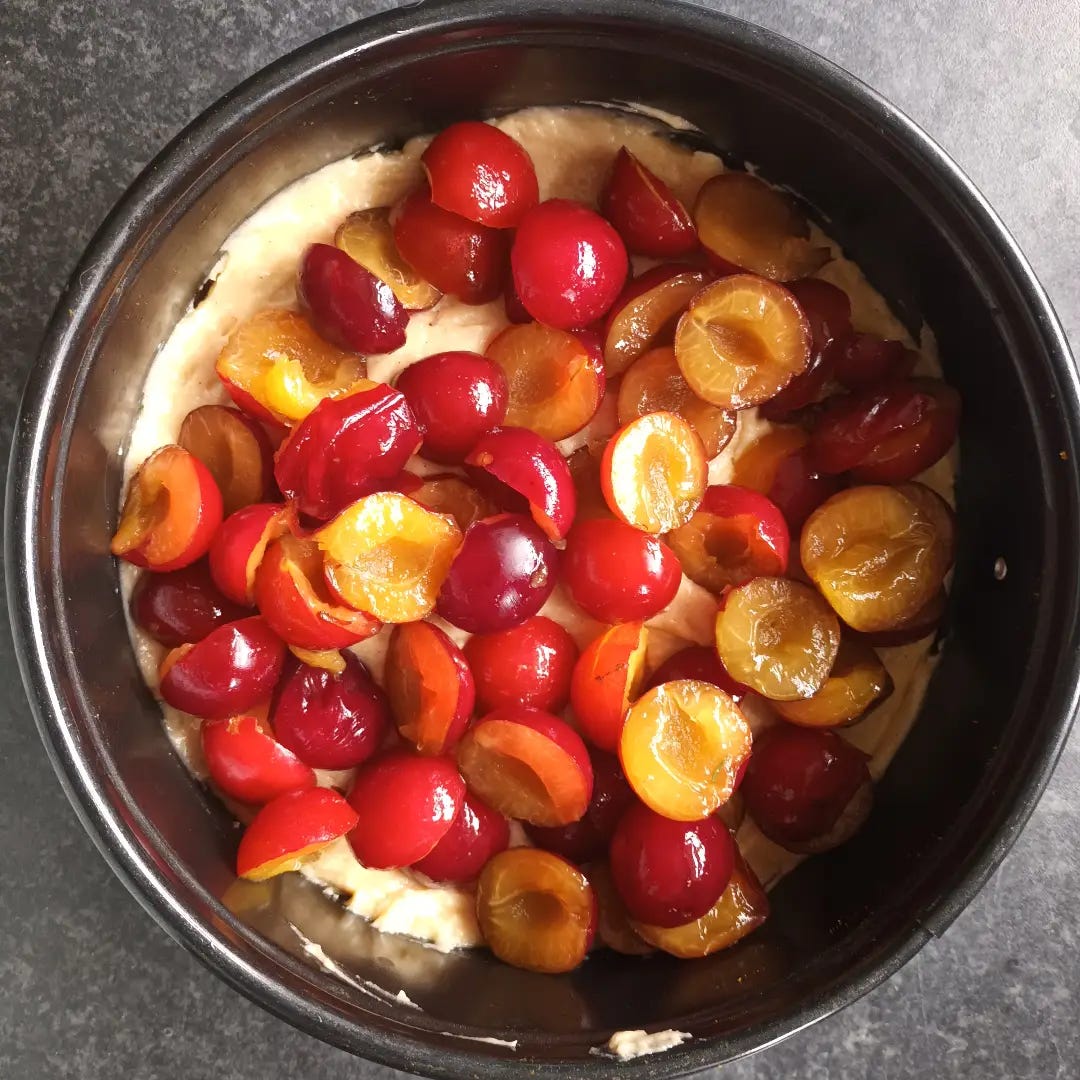
To distract myself in the meantime, I made a cake with my daughter, while the baby woke up periodically to see what was going on. I am not really a cake baker, but Diana Henry’s recipe is absolutely foolproof. She calls it ‘a cake for the weekend,’ which I think perfectly captures both how easily you can throw it together, and how long it’s likely to last. If I were up with the baby, I could probably get it baked and out of the oven in time for civilized people to have a piece with a morning coffee. Henry’s recipe is for rhubarb, which obviously isn’t in season, but the principle is easily adapted: it’s a soft, vanilla-scented batter, onto which you scatter a layer of fruit sprinkled with sugar. As the cake bakes, some of the fruit sinks through the batter and some of the sugar caramelises on the top, so that you get delicious crisp sugary edges above soft, juicy fruit. I used the cherry plums that grow in the field behind the house, and a tiny bit of almond extract alongside the vanilla. Another time I could have added some flaked almonds across the top, too.
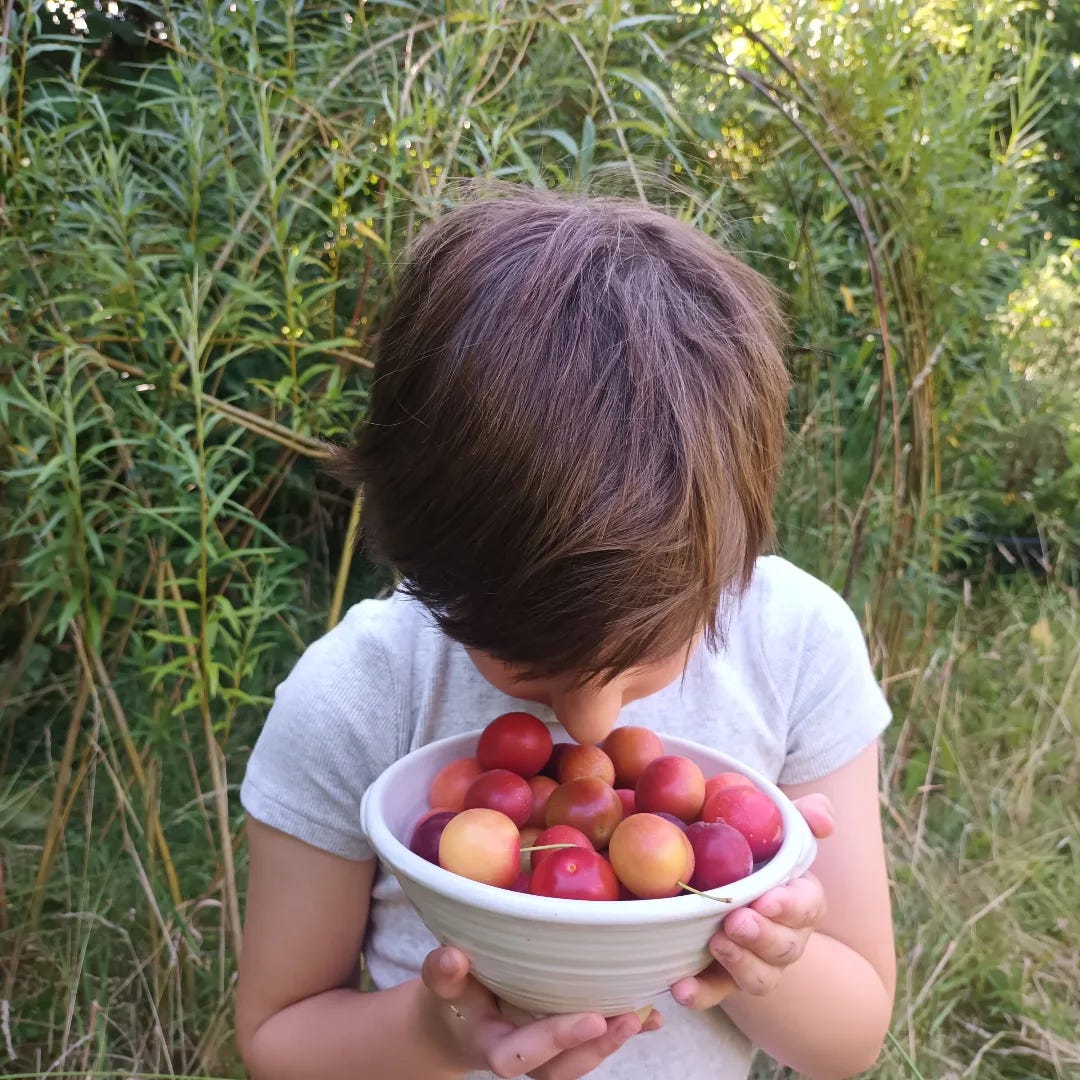
Over on instagram, we ended up chatting about cherry plums, since you don’t see them in the shops. They’re the fruits of one of the wild cherries, prunus cerasifera, which flowers early in spring with a bright white blossom that looks like a scattering of snow. The trees themselves are leggy and sprawling: hedge and field trees, not suitable for a garden. But the fruit is lovely: a clear amber that flushes to deep red-purple, with tiny stones and sweet flesh. The stones of the fruit have been found in archaeological digs at Coppergate and Hungate in York, so people have been enjoying cherry plums in my area for around a millenium, if not more. The latin name literally means ‘cherry-bearing plum,’ but the common name, ‘myrobalan,’ has a more romantic and circuitous history. Originally, ‘myrobalan’ (from the Greek words for ‘sweet oil’ and ‘nut’) referred to a nut-like fruit imported from Asia. It was used in medicine, dying and tanning, and the making of ink. Gradually, in the later medieval and Tudor period, the word migrated from the exotic to the native, coming to refer to prunus cerasifera, which has overlapping uses as a dye mordant and tannin, and giving this fairly simple tree a name breathing memories of exotic fragrance.
This year has been a good year for them; I will make that cake again, and have plums for the freezer.
***
Most of the posts I write involve quite a bit of research and time, but sometimes I just want to read - and write - something nice. Something to curl up with, with a cup of coffee and a chunk of that cake. And I would also like to be able to offer something more regular, with this substack. A lot of you lovely people who subscribe, seem to like my posts about gardens mixed with thoughts about history and family and time. Would you like a weekly five-minute set of ‘good things’ from Writing the Garden? Please let me know, as I’m testing this out!
No posts
Comments
Nothing yet. Say the first thing.
Sign in to join the conversation.