
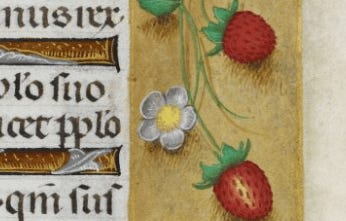
I first wrote about Brilliana, Lady Harley, back in December 2025. A mother of seven, living on the border between England and Wales, she is remembered both for her astonishingly sanguine refusal to surrender her castle during a prolonged siege in the English Civil War, and for the four hundred-odd letters she wrote to family members, primarily her beloved oldest son Ned.
Reading these letters sends me off on endless, enjoyable meanderings through seventeenth-century household books and recipe collections, for food is never far from Brilliana’s mind when she thinks of her son, a teenage student in Oxford. Almost as soon as Ned was safely settled college, a letter announces ‘I haue sent you a cake, which I hope you will eate in memory of Bromton [Brampton]’. The cake is followed by turkey pies - ‘send me word, wheather you reseaue [receive] them, and wheather they be good’ - pigeon pies and a kid pie, made with different seasonings in each half, special because ‘I beleeue [believe] you haue not that meate ordinaryly at Oxford’. These snippets - half reminiscence, half recipe - continue throughout the year. In a letter written just after Midsummer - July 5th - Brilliana writes that:
Your father has diuers [many] times sence you went asked for strawbery butter, and in memory of you this day I made Hacklet [the cook] make some. I wisch you a disch of it.
My initial, half-formed thought on reading this letter was that ‘strawbery butter’ might be fruit cooked to a thick paste, like the apple butters beloved of Puritan New World cooks later in the century and into the present day, or like the sweet fruit ‘cheeses’ made of damson or quince. After all, this is prime time for finding those recipes in English cookbooks that would transfer to the New World, becoming accepted as iconically American.
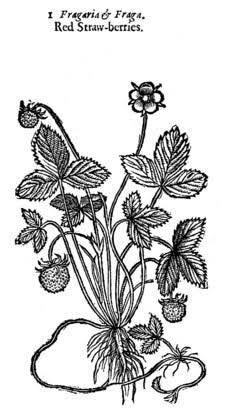
However, a friend pointed out that the tiny, piquant strawberries of early modern gardens - a fraction the size of what we buy in scentless punnets in modern supermarket - would have been tedious to pick in numbers large enough to be worth cooking down to a paste.
Going back to my research, I soon found recipes that seemed more plausible. A charming seventeenth-century recipe describes jasmine or ‘jessamine’ butter’: concoction made by infusing fresh butter with the gorgeous fragrant, star-shaped jasmine flowers, which probably came to England in Middle Ages, from Arab-Norman Sicily and down through Europe. That led me to discover a seventeenth-century fashion for flavoured butters made, quite simply, by whipping butter with the ingredient in question, perhaps with a little sugar added. One might imagine a butter made from cream whipped only just to solidity - almost the texture of clotted cream - slightly sweetened and mixed with chopped wild strawberries. It would be perfect with the rich white ‘manchet’ loaf mentioned in so many seventeenth-century cookbooks, and for a modern audience, with fresh-baked scones. It would not be too sweet - those tangy, tiny berries - but a treat to tempt a child, and a memory to remind a son of summer days in the kitchen and kitchen garden.
Reading Brilliana’s letter, I’m transported back to my own days in the garden with my daughter when she was a toddler, picking endless punnets of berries or watching her pick and eat the tiny alpine strawberries that are the closest thing we can grow to what a seventeenth-century kitchen garden might have produced.
That the same maternal nostalgia shimmers behind that evocative reference to ‘strawberry butter’. It is characteristic of Brilliana to remind her son of home and family. Elsewhere she reminds him that the pie she is sending him is made to a recipe beloved of her father, dead seven years and obviously much missed; when she sends him apples, she does so not because she thinks he cannot get any in Oxford, but because they are the specific variety from home.
We all know how deeply scents - and tastes - settle into the memory. But they also allow us to weave memories into something larger, and to transform nostalgia into a kind of conversation across time. Sorting through early modern household books, scanning through the herbals of Culpepper and John Gerard, I find a network of contexts for Brilliana Harley’s strawberry butter. Thinking about her affection for her nearly-grown son, I think about my own daughter, and about the common experience - in medieval England or seventeeth-century Wales; in Puritan-era America or twenty-first-century North Yorkshire - of sharing food, and love, and memories.
Note
There is a sadder undertone to some of the economics of food production evoked here, but it too is part of these interwoven narratives.
The same manuscript that includes the recipe for Jessamin butter also includes a recipe for preserving strawberries. Marissa Nicosia, the author of the wonderfully informative blog Cooking in the Archives, notes somberly that this recipe’s sweetness is inextricable from the brutal history of the sugar trade. She also suggests that - by the somewhat later date of the 1660s - the makers of the recipe may have been using the newly-imported American strawberry, fragaria virginiana, which is one of the parents of our modern strawberry hybrids. It was this traffic between American and England that ultimately led to the commercial propagation of strawberries in volume, which we rely on for English summers today. All we can do with these memories is to call them forwards into more loving and generous narratives, to use them as a reminder for the need to learn from our history.
No posts
Comments
Nothing yet. Say the first thing.
Sign in to join the conversation.