
Inside this issue:
Ten years of LVPR calls for reflection. We’re talking entrepreneurship, industry evolution, and what a decade of building actually teaches you about yourself. Plus: internet discourse, PR moments, and the cultural rabbit holes currently consuming the group chat.
We’ve been doing this for a decade. Fill out our interest form to get started.
One of the biggest things entrepreneurship unlocked in me was realizing I’m wired for it. Not in a “everyone should quit their job and start a business” way, because entrepreneurship is not for everyone. Some people thrive in structure, stability, and clear roles. The world needs those people. I just learned, over time, that I’m not one of them.
What I didn’t anticipate was how much running a business would reshape the way I think about everything. My brain doesn’t turn off. I’m constantly scanning for opportunities, inefficiencies, connections between things that don’t obviously belong together. I probably come up with a new business idea every three days. That instinct has shaped how LVPR works too. We’ve never approached PR as just “getting press.” I’m always thinking about the bigger ecosystem: affiliate, retail, partnerships, social, AI search, founder storytelling, consumer behavior. How do we take one good idea and make it work harder across every channel? That’s a big part of why, ten years in, we operate as an omnichannel marketing business rather than a straight PR shop. The industry evolved, and we evolved with it.
But here’s what I think about most on this anniversary: if LVPR went away tomorrow, I’d be okay. Not because I’m cavalier about what we’ve built, but because entrepreneurship gave me something hard to put a price on. It taught me how to find a problem and find a path forward. Whether that means taking equity in an emerging brand, consulting, thought leadership, or building something new entirely. There is always a next move when you’ve trained your brain to think this way.
That’s the contrast I keep coming back to. Someone who has spent ten or twenty years inside a corporate structure, excelling at one defined role, and then has to start over? That’s a terrifying position. Not because they aren’t talented, but because figuring it out, building from scratch, tolerating uncertainty long enough to find the opportunity inside it, that’s a muscle you only build by using it.
Entrepreneurship gave me that muscle. Ten years later, that feels like the real gift. Not just that I built a business, but that I built a version of myself that knows how to keep building, whatever comes next.
And if I’m being honest, the through-line across all of it is this: I’ve learned to trust my gut. I’ve made mistakes, a hundred percent. But I’ve never regretted leading with my instincts, whether that meant believing in myself, leaning on my network, or making a hard call I didn’t want to make but knew I had to. That confidence is something I couldn’t have had at the start, and even when I had flashes of it, it didn’t matter because someone else always had final approval. Entrepreneurship gave me the authority to trust myself. That might be the most valuable thing it’s given me.
So here’s what I want to know: What has a big risk, a career pivot, or a leap into the unknown taught you about yourself that you never could have learned playing it safe?
In between 10-year celebration festivities and PR chaos, this is what has been in our minds this month:
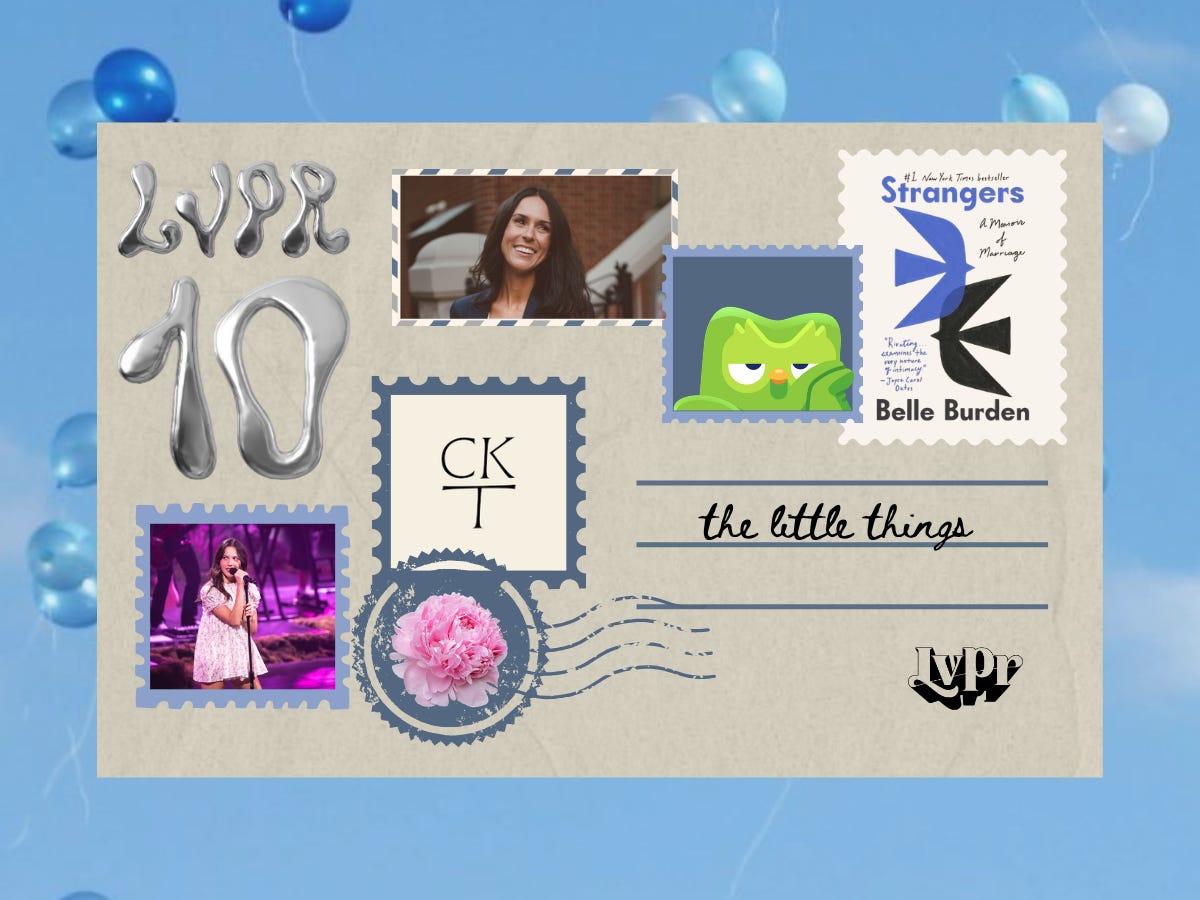
The Cool Kids Table from Emily Cody (IG: @emmahcodee): culture and news from the lens of a brand consultant
Sexy Unique Podcast (IG: @sexyuniquepod): A reality TV and pop culture download, laughter guaranteed
Strangers: A Memoir of Marriage by Belle Burden
Thank You, Teachers by James Patterson: serves as a great gift for the kids’ teachers. It comes with a personal note inside from the parent and kiddo and it is genuinely the most thoughtful thing I’ve found. Highly recommend if you’re still scrambling.
Duolingo leaving “unhinged marketing” behind?!? Perhaps our streaks will outlive its legacy
Kids bypassing AI age verification with fake mustaches is divine irony; billion-dollar technology defeated by disguises. Everyone please stay safe, though
Olivia Rodrigo dress discourse
Bravo is making its way to Boerne, TX with a new Real Housewives installment
Finding out 80% of the office is highly proficient/fluent in American Sign Language?!?! Very cool.
Best of early 2000’s music: so fun to experience some of our fave songs from back in the day all over again through our kiddos.
A chief of staff for high-achieving families: Kaskey Consulting. Filing this under things I didn’t know I needed to know about.
Peony season!
Have a May must-have that we need to be on? Comment below!
INDUSTRY BABY
Meet Sarah, our Gen-Z Account Exec: she’s talking to industry pros to figure out what’s actually popping.
LVPR is ten! Woah!
Despite the namesake of this column, I’ve actually been part of the LVPR team for a few years now, and have enjoyed every minute of it. From securing press wins, to pivoting campaigns that aren’t sticking, to evolving practices to fit the times, working at a boutique agency has been a breeding ground for pure, concentrated PR chaos and the ideas and learning that come with it.
Cheesy? Maybe. Readers, take your pepto. You know her, you love her, I chatted with Ali Karsch to get the scoop on the past decade: more on entrepreneurship, lessons learned, and how building an agency that stands the test of time.
Ten years ago, what was the big PR industry fear? What were you worried about?
Ten years ago, the biggest shift was influencer marketing. Brands knew they needed to be in the space, but nobody really knew how it worked yet.
We got into it really early, especially around retail launches. We were running influencer campaigns that drove people into major retailers, and those retailers could actually see products moving off shelves because of it. At the time, that was a huge proof-of-concept moment for the industry.
Because influencer marketing was still so undefined, we were able to get ahead of it fast. We ended up consulting for private equity firms and portfolio brands that wanted help understanding how to actually execute in the space. Looking back, trusting my instincts early has probably shaped the entire agency. Usually when I feel a shift coming in media or consumer behavior, it’s already started.
It’s fun to reflect on how something so commonplace now once felt like a giant, scary void. Gen Z, in many ways, is defined by uncertainty. We grew up during rapid shifts in tech, media, culture, labor, all of it. We really know nothing but the void. Developing the instinct to feel a shift happening, or at least learning how to move alongside uncertainty instead of freezing because of it, feels critical now.
What does that mean for industry fears? Keep up. Learn from the people who’ve lived through earlier versions of disruption. Then figure out what comes next.
What were you worried about?
Personally, though, my fears were much less glamorous. I was just a freelancer with no roadmap. I had to figure out pricing, cash flow, taxes, contracts, all the backend operational stuff nobody teaches you. I started out invoicing net-30, which completely wrecked my cash flow.
I was also building the business while surviving a lot personally at the same time. Entrepreneurship looks very shiny from the outside, but there were definitely years where it felt more like survival than success.
So, what was something you did, or a practice you followed at the time, that you look back on now and cringe?
Selling myself short is one of my biggest regrets from those early days. When you go out on your own, especially as a woman, I think you can confuse being accommodating with being strategic. I would lower my rates, overdeliver, or take on brands at reduced retainers because I wanted the work and believed loyalty would eventually translate into respect. It doesn’t always.
The example that sticks with me most is Native Deodorant. We worked with them for years and helped take the brand from startup to acquisition by Procter and Gamble. Right before the deal closed, they actually asked us to reduce our retainer. That one really stayed with me because I knew exactly how much PR had contributed to building not just the brand, but the category itself. When we started working with Native, natural deodorant wasn’t even really a recognized category yet. By the end, it was everywhere. The brand sold for $50 million.
I look back now and realize I should’ve advocated for our value much earlier and much more confidently. I think a lot of founders learn that lesson the hard way.
An important lesson indeed, I’m a big believer that good, honest work eventually comes back around. I would rather take a financial L knowing we did right by a client than optimize for profit.
That said, there’s a difference between being collaborative and undervaluing yourself. Strategy has value. Experience has value. Taste, instincts, relationships, time all have value. Part of growing professionally is learning how to recognize that value in yourself, even before other people do.
What is something you did back then that you continue to do now?
Storytelling has always been the core of what I do and honestly probably my biggest strength. What’s the story? What actually makes this brand different? Why should people care? And if the story isn’t there yet, being honest about that too.
That directness has never changed. I think it’s a huge reason LVPR has stayed referral-only for ten years (huge). We’ve always treated clients like partners, not transactions, and I’ve never been interested in overpromising just to win business.
The other thing that hasn’t changed is knowing when to walk away. Whether it’s a client who isn’t kind to my team, a brand that isn’t ready for PR yet, or simply not being the right fit, I’ve learned protecting the agency culture matters more than chasing every opportunity.
The most empowering part of building my own business has always been choosing who I work with and how I’m treated. I built the kind of agency I wish existed when I was coming up. One where founders and challenger brands don’t have to fit some polished mold to be taken seriously.
In an industry built around visibility, these are the things that actually make a business future-proof. PR relies on stories and connection. The strongest campaigns aren’t manufactured in a vacuum or engineered solely for virality. They work because there’s a real understanding of the brand, the audience, and the cultural moment surrounding it.
That connection has to be nurtured, paid attention to, evolved alongside. People can tell when something is forced. It’s understanding how brands move through culture as a whole.
And the industry itself has changed so much. Ten years ago, brands hired PR firms mostly for press. Today they need partners who understand visibility, conversion, affiliate, retail strategy, AI discovery, founder positioning, all of it. PR became much more intertwined with actual business strategy, and honestly, I think that’s made the work more interesting.
Thank you, Miss Ali K. Getting to learn the industry from women who have adapted alongside it, and helped shape it, has been incredibly special.
Here’s to ten years of LVPR and to whatever version of the industry we’re all navigating next.
P.S. Want to yap with Sarah or see your takes in the next Industry Baby? Hit the button below!
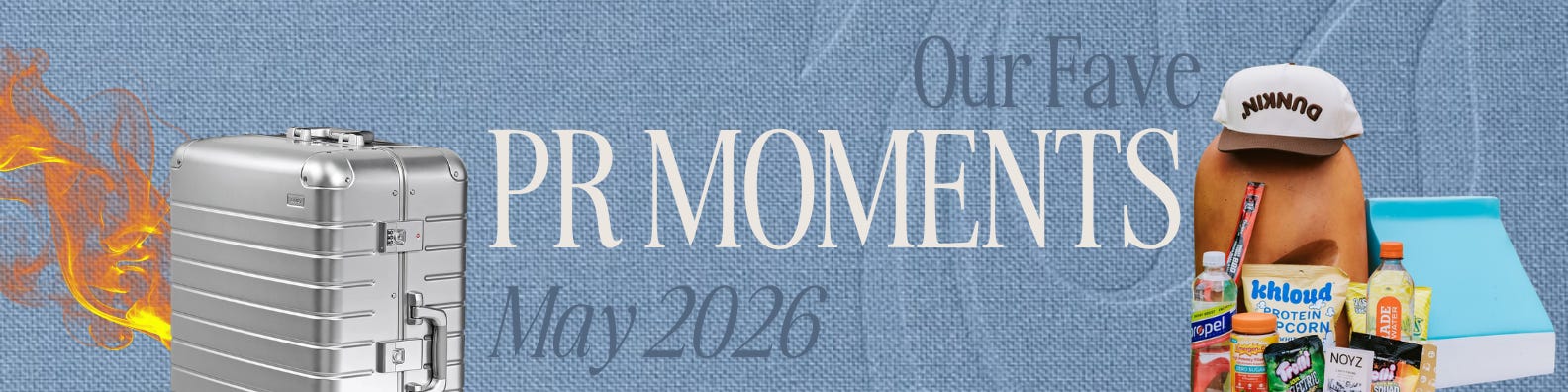
John Summit posted a luggage-related crashout and suddenly the Rimowa PR team became the main characters of the internet for 24 hours. Shoutout to the Away team for executing the kind of real-time response brands dream about during brainstorms and almost never pull off this cleanly.
Rush week marketing is making its way into brand strategy, and we’re here for it. Brands are borrowing the language, aesthetics, and community rituals of sorority recruitment to build hype, drive conversion, and create a sense of belonging around their products. It’s a smart play: taps into a deeply familiar cultural moment, makes consumers feel like they’re being chosen, and generates organic content almost effortlessly.
No posts
Comments
Nothing yet. Say the first thing.
Sign in to join the conversation.