
Hi Little Loves,
Ten years ago next month, I started LVPR. There was no master plan. I wanted to work on clients I was excited about, by myself, and get back to doing the work I loved. I never envisioned running an agency. The universe had other plans.
What I didn’t see coming was how much this industry, and my own life, would change over the next decade.
I’ve always loved PR because nothing about it is static. In ten years, I’ve watched categories emerge that didn’t exist when I started: natural deodorant, non-alcoholic beverages, maternal wellness, period care, lab-grown diamonds, oral care, and the return of analog products, to name a few.
But the shift happening right now is different.
The way people learn, question, and discover has accelerated in a way we haven’t seen before, and AI is a big part of it. Once you start digging into something, you don’t stop. That behavior is changing everything: how we understand the world, how we trust, and how we choose the brands we engage with.
And here’s where I get a little frustrated.
The gap isn’t in the budget. It’s where the budget is going. I see it every day: teams defaulting to what’s familiar, even when the results aren’t there. That’s the reality of any shift. There’s always a learning curve, and after ten years, I’ve learned you can’t force it.
You can only guide it when brands are ready.
The biggest shift for me this year has been letting go of how things have always been done and meeting consumers where they prefer to discover.
That’s the work now.
Ten years in, 2026 is the most energized I’ve felt about where this is going. The rules are changing, and the brands willing to adapt are the ones that will actually win.
What’s one channel you’re investing in this year that you weren’t last year?
Inside this issue:
A milestone moment, a few hot takes, and plenty of group chat discourse. In this issue, we’re approaching 10 years of LVPR, getting into the new era of brand trips, and sharing the cultural moments we couldn’t stop talking about.
Spring is in full swing, let’s make sure your brand is too. Fill out our interest form to get started.
Booked, Busy, and Group Chat Buzzing. Here is what has been in our minds this month:
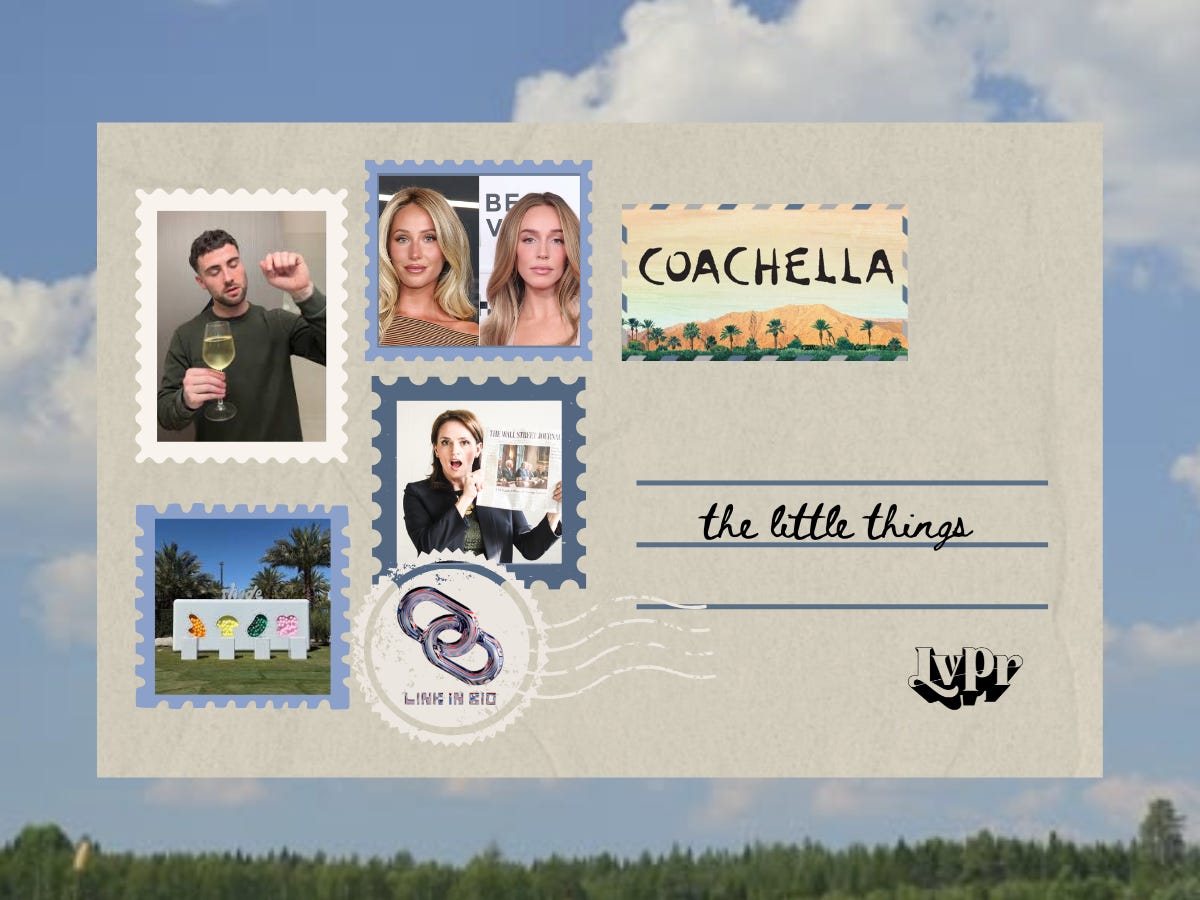
Tell The Bees by Josh Lora (IG: @tellthebeees ): Pop culture’s latest through the lens of sociology from an author unafraid to stand 10-toes-down on their human-formed, well-researched perspective.
PR Breakdown with Molly McPherson (IG: @molly.mcpherson ): PR Icon and crisis strategist Molly McPherson talks scandals (and there have been quite a few this month) and the strategy/lack thereof behind them.
Link in Bio by Rachel Karten (IG: @milkkarten): One of Substack’s top newsletters from a longtime Social Media pro covering social media strategy and resources, plus weekly interviews with industry greats and quarterly roundups.
Scoping out Coachella brand activations from my couch: have the corporations taken over? yes. Have they made it a marketing playground? also yes. (shoutout @gradgirlmarketing for the roundups)
Bieberchella: was that performance art? A flop? Healing of the inner child?
The Courtyard Marriott wine pour saga on TikTok - Bartaco tapped in
Cooper vs. Earle and how it’s taken over podcast, social media, digital media (and the strategy behind it)
What’s been making your spring shine? Spill in the comments so we can add it to our rotation.
INDUSTRY BABY
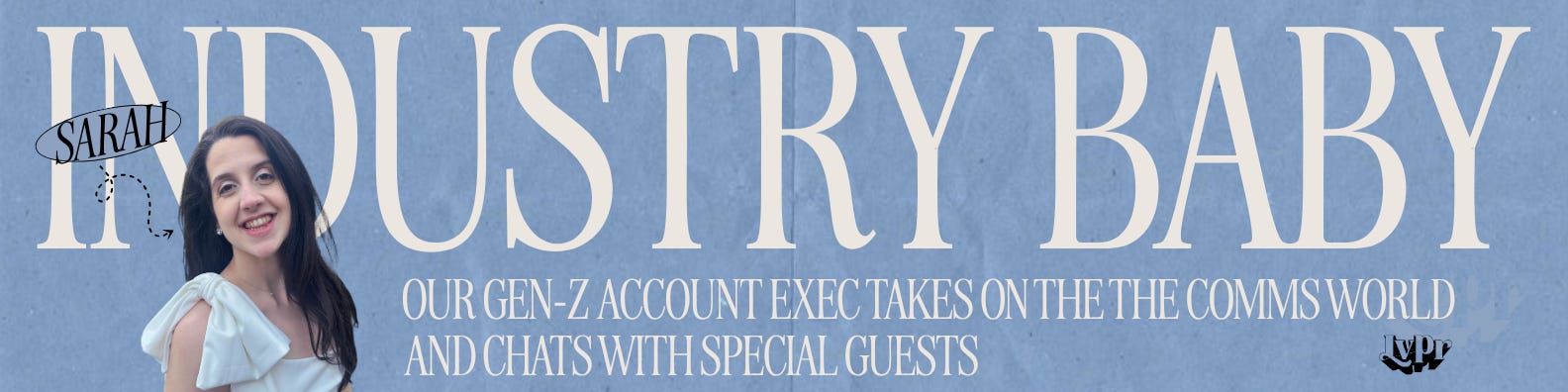
Meet Sarah, our Gen-Z Account Exec: she’s talking to industry pros to figure out what’s actually popping.
In theory, a brand trip is a great idea. A bunch of camera-ready personalities, generating a triple whammy of creator-brand longevity, brand buzz, oh, and a ton of content, all together on a lush adventure, earning an influencer right of passage on the corporate credit card? Sign me up!
In practice, they make my PR brain very nervous. Anyone who lived through Dramageddon or the infamous Tarte trip knows that brand trips have had a tumultuous past and are heading toward an even more uncertain future. As recent as Coachella ‘26, influencers “sell out” to live lavishly with brands they once condemned online to mass backlash.
On my nightly LinkedIn lurk, I came across this article from Jasmine Enberg and Kaya Yurieff from Scalable Pod (IG: @scalablepod) on these exact thoughts, with a focus on a new, potentially major player in creator marketing: the live event. Immediately, I knew I had to slide into some DMs. Extending a big, huge ‘thank you’ to Jasmine for sharing her thoughts:
Given the history of controversy and risks with brand trips, why do you think brands still lean into them?
For some brands, trips make a lot of sense. Take airlines and hotels, for example: Their businesses revolve around travel, so taking creators on a trip is a natural way to promote their brands.
Trips are also still a way for brands to generate buzz, creator loyalty and get a ton of social content at a relatively low cost. It’s often cheaper to fly a bunch of creators and influencers to an exotic location where you know they’re going to film a ton of content than to negotiate individual brand deals with multiple creators.
The problem is that these trips often get the wrong kind of attention. They’ve gotten more and more extravagant over the years, which has rubbed people the wrong way. Especially when people’s budgets are tight, trips can seem out of touch.
It also just gets old: There’s only so much content people can take on anything.
Plus, brands also have less control than they might think over what creators post from those trips. And the ripple effect is real: Shein’s disastrous trip in 2023 also reignited other concerns about its business practices.
That’s the crux of it: the lack of control. In today’s landscape, lack of control over public perception and creator content is a risk that is harder to justify than ever. As recently as a few weeks ago during Coachella, feeds were flooded with backlash and discourse around brands like Starbucks and their heavy-handed presence at the festival.
“Selling out” and becoming “unrelatable” are critiques as old as time, but the stakes feel higher now. What was once a symbol of influencer status is increasingly viewed as tone-deaf, or worse, reputationally catastrophic. Consumers are more discerning, more vocal, and more skeptical.
But, as they say, when one app closes, another one opens. The brand trip may be losing its shine, but a new model for experiential marketing is gaining traction: the live event.
What makes a live brand event successful (or more effective than a brand trip?)
Live events give brands many of the same benefits (meaning buzz, loyalty and social content) as influencer trips, with much better optics and more control.
For brands, live events are a way to bring people into their world in a more controlled environment, while still letting creators share their own stories. They can also open these events up to the public, so people don’t feel excluded.
They can also be logistically easier and cheaper to coordinate, especially when brands don’t have to fly a group of creators somewhere—and if they were planning to host an event anyway.
Do you see this as a lasting shift?
It’s certainly not just a fad. Live events are so back. People genuinely want to be in-person again. You see that everywhere, with Gen Zers returning to malls and even campuses opening up for creators (whose entire careers have been digital) to co-work.
The catch is that people also want their offline experiences to reflect what they’re experiencing online. They don’t want the malls of the 90s, they want experiences that are made for the modern age. Creators are a big part of that.
That’s also why you see podcasters going on tour and some creators even opening theme parks!
I’ll admit, I’m a bit biased. I got my start in PR helping local bands (including my own) plan and promote live concerts and festivals. I’ve seen firsthand the kind of connection that only happens in person. Events are lit.
And as a Gen Z, that desire for connection feels stronger than ever. Authenticity is a value and baseline that my generation and beyond demands (peep last month’s piece on celebrity brands and perceived authenticity). That fine line brands and creators dance between relatability and “selling out” isn’t going anywhere; there’s just something more honest about an experience that’s meant to be branded, especially when it invites people in, rather than shutting them out.
Brands creating connections will fare better over those creating content. Where the standard of brand trips is reminiscent of past trends, the artifice of content and aspiration, the new standard and best practices will become about access. And the brands that understand the difference will be the ones that can get away with creator-brand longevity, buzz on the cheap, oh, and a ton of content once again.
Brand trips walked so live events could run. For Gen Z and beyond, consumers are going to be more interested in what’s happening IRL than who got flown to Tulum.
P.S. Want to yap with Sarah or see your takes in the next Industry Baby? Hit the button below!
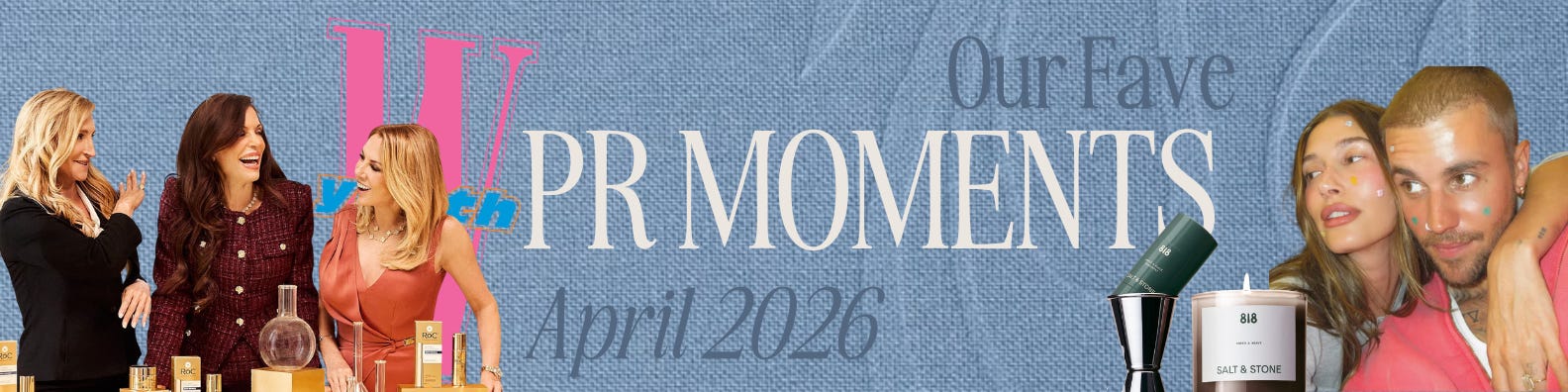
818 Tequila is on track to becoming a full-on lifestyle brand, partnering with Salt & Stone to launch a tequila-inspired body care line that blurs the line between beauty, fragrance, and CPG, which is basically everything we love at LVPR. it’s culturally timed, category-blurring, and aesthetic IP expansion that takes mere product a step further.
W Magazine is launching a youth-focused sister title, WYouth, a biannual print and digital platform designed to repackage its legacy aesthetic for a next-gen audience and deepen cultural relevance with younger readers. The ‘90’s are back, y’all! its legacy media extending brand equity across formats, and heritage titles thinking like modern lifestyle brands in order to stay in the conversation.
Rhode x the Biebers joint collection blends skincare, celebrity, and Coachella hype into an instantly viral product moment. Founder marketing at its peak: merging personal narrative and product to create a drop that feels less like a launch and more like a moment.
RoC Skincare reunites Bethenny Frankel, Ramona Singer, and Sonja Morgan to position its retinol cream as a “10-year skin age reset” backed by both science and cultural relevance.
Swan Beauty turned Acquired Style’s bachelorette into a full-blown marketing moment, backed by investor dollars and built for maximum visibility. What looked like a luxe girls’ trip was actually a highly orchestrated, creator-first campaign designed to dominate the timeline—and it worked. It’s a bold move, leaning away from traditional launches and into high-impact, culturally engineered experiences. Hot take: the sheer level of brand awareness alone may have justified the spend. It’s another signal that the most effective launches right now don’t follow the old playbook—they create their own moment entirely.
No posts
Comments
Nothing yet. Say the first thing.
Sign in to join the conversation.