
Hey Little Loves,
We have been so busy soaking up the sun and keeping up with the summer’s hottest PR and marketing moves, our June issue is a little late. Better late than never, though. We would not let your summer be a bummer, our June newsletter is here!
Inside this issue:
Mapping the messy customer journey that actually drives sales, what Gen Z marketers are seeing that the rest of us are missing, and the June brand moments we can’t stop thinking about.
For The Summer I Turned Omnichannel Growth: Fill out our interest form to get started.
A few weeks ago, I bought a $600 set of suitcases because of an Instagram ad… at least that’s what Meta would like to think.
The ad wasn’t the reason I bought them. It was simply the invitation.
Before I clicked “Purchase,” I read the comments, visited the website, and searched for reviews. I saw the brand pop up again. Then I did what I always do - I added it to my cart and let it sit for a while. Every interaction built a little more confidence until buying felt obvious.
That got me thinking about how we talk about marketing.
We still organize it in channels: PR. Paid. Social. Affiliate. Influencer. Retail. SEO. Partnerships. Consumers don’t experience brands that way.
Brands organize marketing in channels, but consumers experience brands as one continuous relationship.
That realization hit me while reading this month’s Industry Baby column below. Lainey shared something that stuck with me: her generation doesn’t want brands that try harder - they want brands that feel real. They want personality, community, and a reason to care beyond the product itself.
I actually don’t think that’s unique to Gen Z. I think Gen Z is simply forcing the rest of us to acknowledge what consumer behavior has quietly become.
Discovery isn’t linear anymore.
Someone might hear about your brand from a creator, validate it through an earned media article, ask AI what people think, see your founder on LinkedIn, notice a partnership that catches their attention, walk past it at Target, save it for later, and finally buy weeks - or even months - later.
So who gets credit for the sale? I think that’s where so many brands get stuck: spending too much time debating attribution and not enough time understanding behavior.
Buying has become about how did someone decided your brand was worth buying in the first place, not which channel drove the connection.
My shopping carts are proof. I have products sitting in Amazon, Revolve, Nordstrom, and TikTok Shop that have been there for months, simply waiting for another moment - a recommendation from a friend, a founder video, a press mention, a great review, or even a sale - to remind me why I wanted them in the first place.
Does your marketing strategy actually reflect that journey?
Because if your customer moves seamlessly between AI search, social media, retail shelves, earned media, creator recommendations, email, conversations with friends, and in-store experiences, your marketing strategy should too.
Those that adapt, well those case studies will be the stuff of legends, founders onto their next endeavor after their 8-9 figure acquisition.
One exercise we’ve been walking clients through lately is mapping every meaningful touchpoint between discovering their brand and making a purchase. The exercise itself isn’t revolutionary - but the answers almost always are.
If you’ve never looked at your business through your customers’ eyes rather than through your marketing channels, we’d love to help you uncover what you’re missing.
→ Let’s map your customer’s journey together.
Curiously yours, Ali
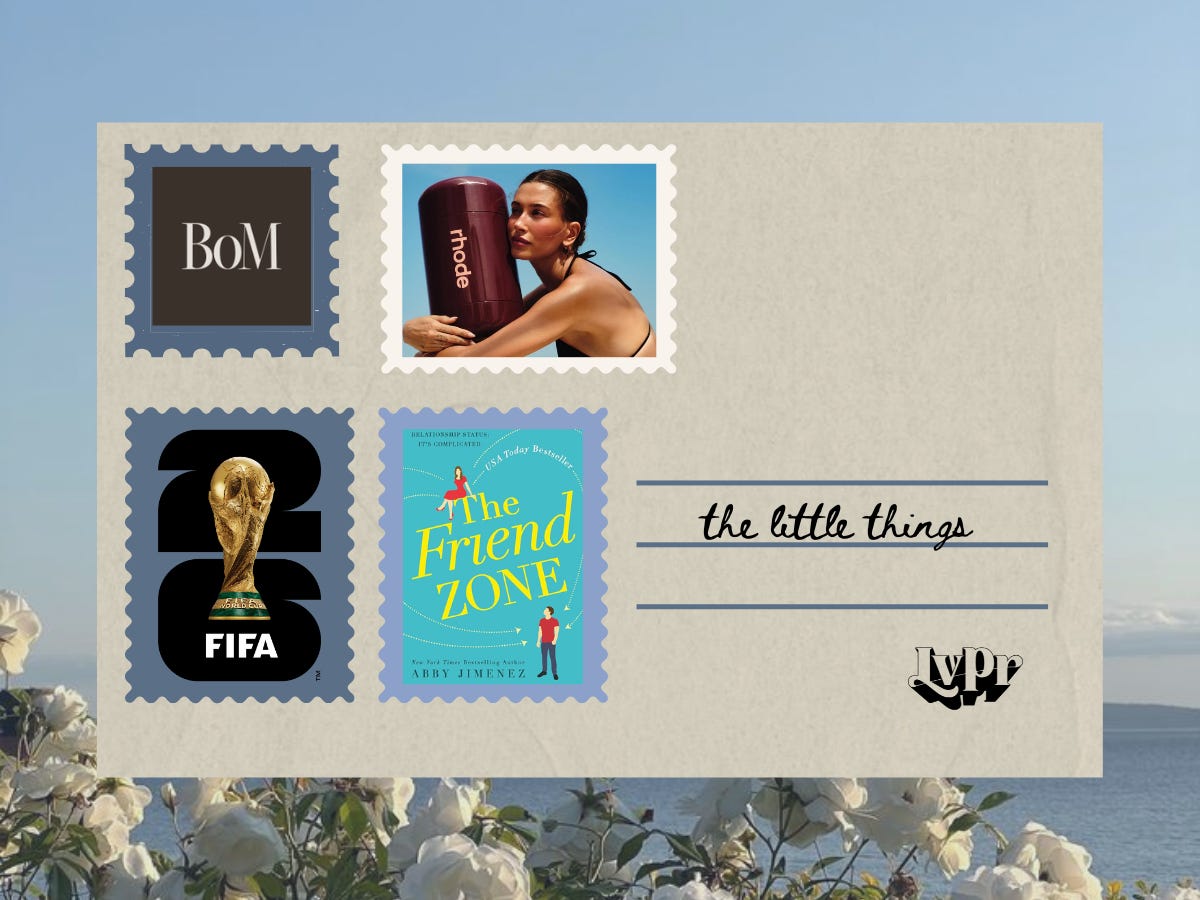
In between our (albeit permanent) summer Fridays and PR chaos, here’s what has been in our minds this month:
Because of Marketing: resources, Inspo, the latest in marketing and promo
Stop Letting Everything Affect You: How to Break Free from Overthinking: Emotional Chaos, and Self-Sabotage: (For obvious reasons). HIGHLY recommend if this is even slightly an issue for anyone.
Colorful plants, statement pots, outdoor furniture, full “joyful poolside vibes” mode
Euro Summer (2026 version): following World Cup tourism closely and loving the excitement for Americana
The new Rhode drop. We want all of it.
Brands that have completely mastered the comments section, specifically on TikTok. Duolingo and Scrub Daddy are setting the standard
Have a summer obsession to put us on? Comment below!
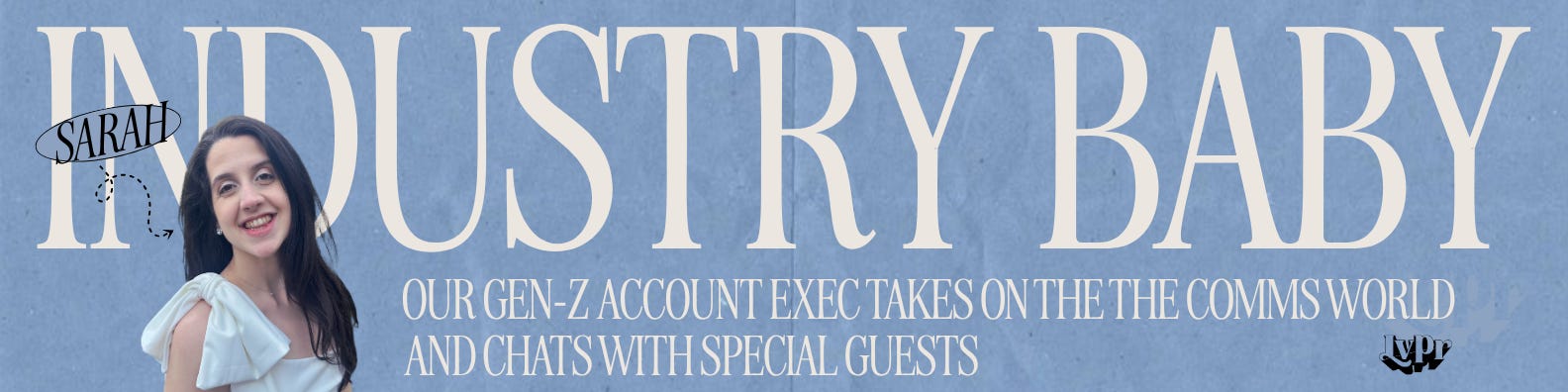
INDUSTRY BABY
Meet Sarah, our Gen-Z Account Exec: she’s talking to industry pros to figure out what’s actually popping.
Both Sides of the Brief
Working in an industry that spends a lot of time talking about what Gen Z wants, I have a front-row seat to both sides of that conversation, and more often than not, the gap between what the industry thinks we want and what’s actually happening is wide. That’s a major influence on this column and why I try to keep an eye on the incoming crop of practitioners shaping the industry.
So this month, I chatted with Lainey Patton, CU Boulder student, LVPR intern, and emerging digital marketing professional, to get the scoop on what brand marketing looks like through the eyes of someone simultaneously studying and doing it. What’s exciting, what’s surprising, what does this incoming generation of marketers see that maybe other practitioners don’t?
What about brand marketing right now excites you? What made you want to study it?
What excites me most about brand marketing right now is how much creativity is involved. There’s always something new, a trend, a platform, a totally unexpected way a brand connects with people, and I love that it never really gets old. I’ve always been drawn to the social media and content side of things, but what really pulled me toward studying it was realizing there’s so much strategy underneath all of it. It’s not just making something look cool. It’s about building something people actually want to be part of.
Creativity as a prerequisite feels more true now than ever. The current consumer craves genuine connection over a quick hit of promotional dopamine. PR, by dictionary definition, is about relationships, and the campaigns breaking through right now are more communal and more felt than consumed. I see the industry moving toward experiential, participatory work, something to get involved in rather than scroll past. Two-way PR is becoming the baseline expectation rather than the gold standard.
What do you think your generation is going to change about the way brands communicate/market?
We want brands to feel real. Growing up surrounded by ads means we can spot inauthenticity pretty fast, and we’ll just scroll past it. The brands that actually land with us have a personality, they get their audience, and they’re not trying too hard. I also think we care a lot about community, so I see brands moving toward real conversations and experiences instead of just pushing a message out and hoping that it sticks.
When marketing campaigns and content are created to squeeze meaning out of a trend that was never a fit to begin with is a total ick for me (more on that here). Brands showing personality is another way to illustrate authenticity that we see with founder-led content and behind-the-scenes access. Gen Z’s relationship with brand loyalty works more like a current, chasing it as a destination tends to miss it entirely. The brands catching the current lead with personality, story, and authenticity upfront.
What excites you about the future of brand marketing/comms?
There are just so many ways to tell a story now: creators, social, PR, AI tools, and honestly we’re still figuring out what all of it can do. What excites me the most is that the brands winning right now are the ones staying innovative without losing the human side of it. And I get to be entering the industry while all of that is still taking shape, which feels like good timing.
I love that outlook. The Gen Z panic I read most often paints us as chronically burned out and fighting a system working against us. That framing misses the opportunities that uncertainty represents. I’ll take this one step further: I don’t think the pace of change slows down. The industry will keep shifting at breakneck speed. The practitioners who thrive are comfortable with the current.
What did school prep you for (and/or what did you expect from school) that is actually different IRL?
School gave me a solid foundation. Consumer behavior, marketing strategy, the fundamentals, but nothing really prepares you for how fast everything moves in real life. There’s no one right answer, and things are rarely as clean as a class project. The biggest surprise for me was how collaborative it all is. Some of the best ideas I’ve seen come out of a random brainstorm, not a polished deck. Being adaptable honestly matters just as much as anything that I have learned in the classroom.
Education builds an invaluable body of knowledge, but it can also neglect some of the common skills needed to thrive in the corporate world. Specifically, the muscle for real collaboration as PR/marketing are relentlessly team sports. Group projects get a bad rap, sometimes deservedly so, but the version of that in real life is constant, and the quality of what comes out of it depends entirely on whether a team actually trusts each other enough to throw out the first idea and get somewhere real. That’s a skill schools could do a much better job fostering, because it might be the most used one in this field.
What’s refreshing about talking to someone entering the industry right now is the lack of cynicism, genuine clarity about what they value and why. The fundamentals of what makes communication work haven’t changed: be real, build trust, give people something worth showing up for. Every generation just figures out a new way to do it.
So readers: What do you think the industry is still getting wrong about younger practitioners? I’d genuinely like to know.
P.S. Want to yap with Sarah or see your takes in the next Industry Baby? Hit the button below!
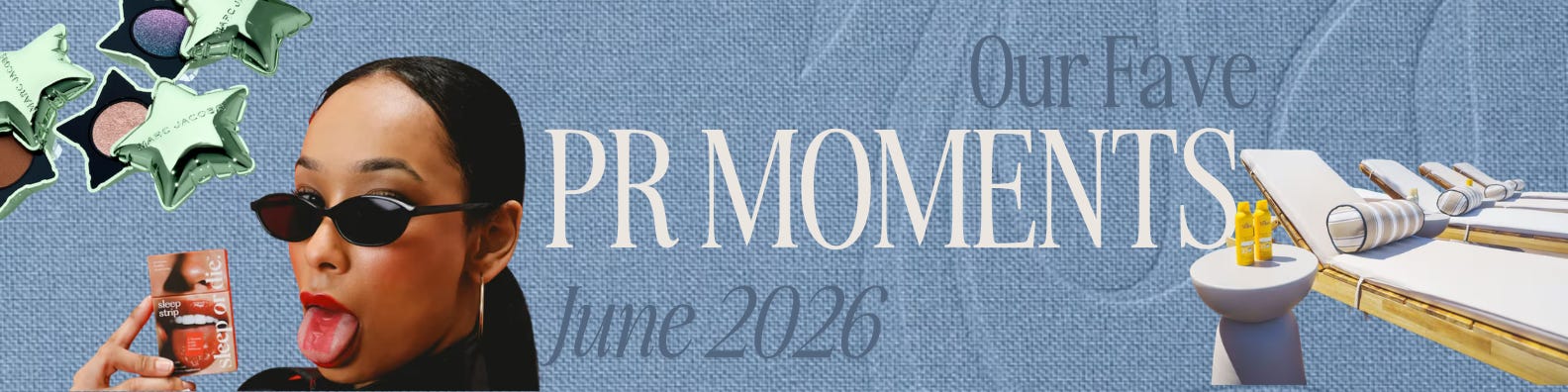
Marc Jacobs beauty is. So. back. Ditching the standard black tube for fun packaging, with whimsical designs like heart- and daisy-shaped compacts and sculptural shapes, the new line is made to sit immediately recognizable on the vanity, the retails shelves, and the social feeds. The timing is not accidental: clean girl minimalism is fading, and maximalist, expressive looks are having a moment. Marc Jacobs saw it coming.
Love Island has officially become appointment television for brands and viewers alike. NBCUniversal locked in 21 brand partners for season eight, and the pitch is simple: six days a week for seven weeks generates the kind of sustained fandom that, outside of sports, is nearly impossible to manufacture. CeraVe, Maybelline, and Poppi are integrated directly into the villa which means every episode is essentially a live brand activation.
Sleep Or Die built a 4,000-person waitlist, $1.5M in funding, and a cult following called the Zombie Club before most people had even heard of it with almost zero ad spend and no influencer strategy. Founder Lauren Sudeyko used her Substack as the launch funnel: paid subscribers voted on packaging, got early access, and became the brand’s de facto product team. Owned community, built right, does the work that $50K in Meta spend can’t. Start that Substack!
Big month for beauty! Clean beauty brand Saie became the Knicks’ first official beauty partner and the only sponsor dedicated exclusively to women, integrating itself into everything from Madison Square Garden activations to Knicks City Dancers’ viral TikToks. As women’s spending power continues to shape sports culture, brands are realizing fandom doesn’t stop at jerseys and foam fingers.
No posts
Comments
Nothing yet. Say the first thing.
Sign in to join the conversation.