

The older I get and the more experience I accrue working with health and neurophysiology, the more my views continue to broaden as to what adaptive human features can and often will become maladaptive as a result of prolonged or extreme stress.
Dissociation is probably one of the most familiar patterns that I see in myself and those around me who have experienced developmental trauma, chronic stress, or ongoing illness. In fact, it’s so common and familiar to me personally as a strategy for managing unresolved stress that it has taken me decades to recognize all of the many ways it manifested in my own life.
I’ll get more into my own personal patterns later in this article, but for now, let’s define what dissociation is and what the medical community has to say about it compared to disassociation (which isn’t even a recognized term in the fields of psychology and psychiatry).
As a neurosomatic and bioenergetic practitioner, the issue I have with the medical community’s hard-line distinction between these two phenomena is that they aren’t actually two distinct patterns at all, but rather variations along a spectrum of human adaptive responses to stress. At their foundations, these responses are energy conservation mechanisms, even within the most dysfunctional degrees presented.
Here is what the medical community says about dissociation and how it differs from disassociation:
Dissociation refers to a mental process where a person disconnects from their thoughts, feelings, memories, or sense of identity. The dissociation definition refers to a coping mechanism often triggered by traumatic events, such as emotional abuse. Dissociation can range from mild detachment to severe cases where it disrupts daily life. Symptoms of dissociation might include:
Memory Loss (Amnesia): Forgetting specific periods, events, or personal information.
Out-of-Body Experiences: Feeling as though you are watching yourself from outside your body.
Emotional Numbness: A sense of detachment from your emotions or a lack of emotional response.
Identity Confusion or Alteration: Feeling unsure of who you are or experiencing multiple distinct identities (as seen in Dissociative Identity Disorder).
Depersonalization: A feeling of being detached from your own body or thoughts, as if you are an outside observer.
Derealization: A feeling that the world around you is unreal, dreamlike, or distorted.
Difficulty Connecting with Reality: Struggling to distinguish between what is real and what is not.
Detachment from Surroundings: A sense of disconnection from your environment and the people in it.
The distinction:
Disassociation is not a recognized term in psychology or psychiatry. It is often confused with dissociation but lacks a clinical definition. In everyday language, disassociation may be used informally to describe a general sense of disconnection or disengagement, but it does not refer to a specific mental health condition. Symptoms of disassociation might include:
Zoning Out: A temporary loss of focus or attention during conversations or tasks.
Mild Disengagement: Feeling mentally checked out or not fully present in the moment.
Temporary Disconnect: Momentarily feeling disconnected from your surroundings, often due to boredom or fatigue.
Types of Dissociative Disorders
Now that we’ve established the difference, we can talk a bit more about dissociative disorders, which are within the realm of mental health psychology. A dissociative disorder is a mental health condition characterized by disruptions in memory, consciousness, identity, and perception. The three major dissociative disorders are often linked to trauma and include:
Dissociative Identity Disorder (DID): Formerly known as multiple personality disorder, DID involves the presence of two or more distinct personality states or identities within a single individual. Each identity may have its own name, age, history, and characteristics. DID is typically a result of severe trauma during early childhood.
Dissociative Amnesia: This disorder involves an inability to recall important personal information, usually related to a traumatic or stressful event. The memory loss can be localized (specific event or period), selective (particular aspects of an event), or generalized (complete loss of identity and life history).
Depersonalization/Derealization Disorder: Individuals with this disorder experience persistent or recurrent feelings of detachment from their own body (depersonalization) or the environment around them (derealization). They may feel as though they are observing themselves from outside their body or that the world around them is unreal.
Dissociative Symptoms and Related Disorders
Dissociative symptoms can vary widely but often include:
Memory loss (amnesia) for certain periods, events, or personal information
A sense of being detached from oneself and one’s emotions
A perception of the people and things around as distorted and unreal
A blurred sense of identity
These symptoms can occur in the context of various mental health disorders, including post-traumatic stress disorder (PTSD) and certain other mental health disorders.
Treating Dissociation
Some of the common therapeutic approaches include:
Cognitive Behavioral Therapy (CBT): CBT helps individuals identify and change negative thought patterns and behaviors associated with their dissociative symptoms.
Dialectical Behavior Therapy (DBT): DBT combines CBT techniques with mindfulness strategies to help individuals manage emotions and reduce self-destructive behaviors.
Eye Movement Desensitization and Reprocessing (EMDR): EMDR is particularly effective for individuals with PTSD and dissociative symptoms, helping them process and integrate traumatic memories.
Medication: While there is no specific medication to treat dissociative disorders, medications can help manage symptoms of co-occurring conditions such as depression and anxiety.
Understanding the difference between dissociation and disassociation is crucial for recognizing and addressing dissociative disorders.
All of this information in italics was copied and pasted from this website.
Nourishing Our Sanity is a reader-supported publication. To receive new posts and support all that my work entails, please consider becoming a paid subscriber for as little as $6 a month, which will increase the quality of content I’m able to create on here.
If you take some time to read through and reflect on the information above, you’ll notice that there aren’t clear distinctions between these two terms, except within the severity and adaptive nature of the experiences themselves. Both involve spacing/zoning out, disengaging/disconnecting from life, and losing track of feelings and bodily sensations.
The distinction between the two lies in the degree to which a person does this and how much it fragments their sense of identity, their memories, and their overall ability to remain present and functional within their own bodies and lives. The distinction will be obvious when you’re comparing a low-agency person with a psychiatric diagnosis, such as DID, to an otherwise functional person with a self-diagnosis (or misdiagnosis) for ADHD, with patterns of procrastination or avoidance.
What gets trickier when working with someone’s energy management systems via metabolism and neurophysiology… is determining if all the zoning out and disconnection is the result of hypothyroid, low ATP within the cell, low nutrient status, and overall adrenal exhaustion—patterns that can and often do exist in adults without any traumas—if these metabolic conditions are themselves the result of trauma, or if they’re causing dissociation as a result of the stress they induce over time.
I also want to make it clear here (and I will throughout this article) that I don’t believe that everyone who zones out or disconnects has trauma. I do believe that understanding the difference between benign adaptive energy conservation and pathological maladaptive dissociation is important, too. I just don’t view dissociation and disassociation as two separate things. Neither does Google nor Grammarly because they keep flagging the latter as a spelling mistake, not having been programmed to even acknowledge it as real!
Having two terms, especially when they’re pronounced and spelled so similarly, for similar phenomena can be confusing and can make communication harder, so I’m going to make this whole article easier for everyone, and I’m going to use the term dissociation throughout the rest of this article. I will be emphasizing adaptive and maladaptive differences, but will be using the same word to describe both.

Normal dissociation is a sophisticated neurological process that allows our brains to operate efficiently by selectively attending to what's most important while filtering out irrelevant information. When we're absorbed in a good book, our brain is essentially reallocating attention and energy resources - the prefrontal cortex reduces monitoring of our external environment while increasing focus on processing the narrative in what we’re reading. This creates that "flow state" where time seems to disappear and we're completely absorbed, which can be incredibly healthy, especially for those of us with a lot of interoceptive stress, who tend to spend more time monitoring how we feel all the time and thus potentially live with greater centralized stress as a result.
Neurophysiologically, normal dissociation involves the default mode network (DMN) in your brain, which becomes active during rest, introspection, and imaginative tasks. When we're daydreaming or lost in a book, specific brain regions like the medial prefrontal cortex and posterior cingulate cortex are highly active, while areas responsible for external monitoring quiet down. This isn't dysfunction - it's our brain's way of conserving energy for focused processing while giving our surveillance systems a break.
The parasympathetic nervous system also plays a role in healthy dissociation. When we're safely absorbed in something enjoyable, our body can shift into a calm, restorative state. Heart rate variability often increases, breathing deepens naturally, and stress hormones decrease. This is why reading, creative activities, or getting lost in music can feel so rejuvenating - we're literally giving our stress response system a rest; moving out of survival states.

The shift from adaptive to maladaptive becomes tricky to recognize because it often happens gradually. Also, for many of us who lived with C-PTSD, we may have leveraged otherwise healthy outlets as escape routes without realizing that this is what we were doing. This means using healthy pursuits such as reading, movement, or listening to music as excessive sources of escape from any experience of reality that we don’t like.
Here are the key differences between healthy and unhealthy dissociation:
Voluntary vs. Involuntary Control: Healthy dissociation feels voluntary and can be interrupted when needed. You can put down the book when someone calls your name or when you need to go to sleep or feed yourself. Trauma-based dissociation often feels like it "happens to you" - you suddenly realize you've been staring at nothing for an hour with no memory of what you were thinking about.
Context Appropriateness: Adaptive dissociation happens during safe, appropriate times - reading at home, daydreaming during a boring commute, getting lost in creative work. Maladaptive dissociation starts happening during situations that require presence - conversations, work meetings, or when you need to respond to your body's needs like hunger, sadness, or fatigue.
Emotional Regulation: Healthy dissociation often involves positive or neutral emotional states - the peaceful absorption in a hobby, the excitement of being engrossed in a story, the pleasure of listening to a certain song. Trauma-based dissociation typically serves to escape from difficult emotions or sensations, creating emotional numbing or disconnection from certain feelings. What I used to think was me regulating myself using things like music and movement, I’ve grown to recognize was often me completely changing my feelings through neurosomatic queues that would take me away from reality itself.
Memory Integration: After healthy dissociation, you usually have continuous memory of the experience. You remember the book you read or the creative project you worked on. With pathological dissociation, there are often gaps in memory or a sense that time "disappeared" without any clear recollection of what happened. Many of my clients with C-PTSD have entire portions of their childhood that they simply cannot recall as a result of dissociation. And because having a moderate to higher ACE score increases the likelihood of substance use/abuse throughout life, many women (myself included) develop patterns of substance-based dissociation, which can also impact memory formation. This is particularly true for many health-oriented women who habitually use cannabis.
Somatic Awareness: During adaptive dissociation, you can still access body signals when needed - you'll notice if you're hungry, need to use the bathroom, are feeling sore, contracted, or inflamed, or if someone touches you. Trauma-based dissociation often involves greater degrees of disconnection from bodily sensations, leading to ignoring basic needs or not noticing physical discomfort. This can lead to more serious illnesses and injuries, as these signals compound over time within us, yet can go years without proper brain responses or conscious attention.
Recovery and Integration: Coming out of healthy dissociation feels natural and refreshing - like waking up from a good nap. Returning from trauma-based dissociation can feel jarring, disorienting, or accompanied by anxiety about lost time. It can also increase any attachment insecurities or neurosomatic deficits we may have, which often make transitions and loss more acutely felt and difficult for those of us with attachment trauma. If you struggle with remaining present during difficult emotions and use music to escape those difficult emotions, eventually turning the music off may trigger more anxiety or stress.
The neurophysiological difference here is crucial to recognize, and it comes with certain somatic and emotional signals we can grow to notice: adaptive dissociation maintains integration between different brain regions and allows for flexible attention shifting, while trauma-based dissociation involves disconnection between brain networks, particularly between areas that process emotion, memory, and bodily sensation. The latter will often leave us feeling fragmented, disorganized, and less connected.
In healthy dissociation, the brain's executive function remains online and can redirect attention when needed. In pathological dissociation, these executive functions become impaired, making it difficult to choose when and how to shift attention. This can show up as “OCD” patterns where we get caught in loops, hyperfixated on a perceived threat, or it can show up in “ADHD” patterns where we’re reliant on a certain mental pace, driven by dopamine levels we cannot sustain.
Note: I place those conditions in parentheses because they get self-diagnosed and over-diagnosed when any of these patterns become disruptive, instead of looking at a woman’s overall health profile. I don’t think it’s helpful.
If we chronically struggle with low-dopamine states because we’ve been navigating low dopamine resulting from long-term stress, this might make it harder for us to come back to reality after dissociating, even if what we’re using is otherwise healthy, such as music. Most of us understand that this is what happens with drug addiction and alcoholism, which is why the use of these substances gets so excessive over time. But this can also manifest for those of us with dissociative patterns in ways that, from the outside, may seem healthy and neutral. It all depends on whether it increases our overall agency through integrated experiences or whether it induces helplessness as a result of compartmentalizing our experiences.
This spectrum approach I’m taking here to dissociation is intended to help people understand that dissociation itself isn't the problem - it's when it becomes the primary coping mechanism for managing overwhelming experiences that it interferes with healthy functioning and connection to ourselves and others.
I became very self-aware early in life, as a survival mechanism, and I have memories as far back as early childhood of doing otherwise fun, healthy things to an excessive degree. Because I had no adult around to explain to me that pleasurable things can be overdone or to investigate why I might be engaging in excessive behavior, I was left with this feeling of shame around my behaviors because I could sense, from mere observation, that what I was doing was unusual.
I will share more about these specific things later in this article, but I think it’s important to note that we all possess more intuitive awareness around our patterns than we often give ourselves credit. Understanding our behaviors through a trauma-informed, somatic lens (if we do indeed have trauma, that is) can help us dispel a lot of toxic shame we may carry that isn’t helping us change or heal.
Based on my own education and experience, I believe dissociation exists on a continuum that ranges from completely normal experiences to more severe forms that significantly impact daily functioning. On the mild end, we have experiences like "highway hypnosis" - that trance-like state when you arrive at your destination with no memory of the drive. We also experience dissociation when we're absorbed in a good book or movie, losing track of time, bodily signals, and our surroundings.
These normal forms of dissociation serve important functions: they allow our minds to rest, process information, and conserve mental energy. Having worked with small children—some of the most present and embodied humans on earth when they’re safe and have their core needs met—I can assure everyone that dissociation happens naturally as a process of intense, focused engagement.

There have been countless occasions when I’ve had to monitor a 3-year-old’s body mechanics and insist they go to the bathroom before it’s too late, having become so consumed by their object of focus as to have lost contact with what their bladder is saying. The same can be true for getting them to eat, protect themselves from the sun, or put a sweater on when it’s freezing. Adults can do this too, which is partially why so many of us don’t eat until we’re hangry or sit for hours on end until our joints lock up. The difference between adults and children is that fewer variables at play could be driving a child’s dissociation, so it’s often easier to recognize the adaptive nature of this pattern.
However, when dissociation becomes our primary coping mechanism for overwhelming experiences—either as a result of trauma, chronic stress, or long-term energy mismanagement—it can shift from helpful to problematic, creating disconnection from our bodies, emotions, and present-moment awareness. If this goes on for years or even decades on end, we can end up not only with habitual disembodiment and misattunement to our own needs, but also a fragmentation of self and a profound loss of memory and time.
This ties in with developmental trauma because it often reinforces (if not creates) developmental delays in adults, whereby parts of ourselves remain “frozen” in earlier developmental stages, living in helplessness and immaturity, even as our bodies and parts of our conscious minds continue to age and grow. This can explain why we may feel equipped to manage certain areas of our lives, while others we avoid entirely, to the point of serious consequences to our health, relationships, finances, and big life goals.
We cannot integrate experiences, lessons, and information that we’re not showing up to receive; therefore, the solution will be found in behavior change more than in pathology.
When we’re looking at maladaptive dissociation, there are two main categories. Understanding the difference between these two types is crucial for recognizing how trauma affects our internal landscape and for more effectively working with and changing our patterns as adults.
Structural dissociation refers to the way our psyche organizes itself into different "parts" to manage overwhelming experiences - think of it as having an "everyday self" that handles normal life tasks, “protector parts” that we habitually accumulate throughout life in response to perceived or even legit threats, and "exile parts" that hold traumatic memories and emotions from our past. This is a normal response to trauma that becomes problematic when these parts remain rigidly separated, while simultaneously influencing our behavioral choices, thought patterns, and worldviews over time.
Peritraumatic dissociation, on the other hand, occurs during or immediately after a traumatic event - it's that "out of body" feeling, emotional numbing, or sense of unreality that can happen when our system is overwhelmed. Both types serve protective functions, but can become stuck patterns that interfere with healing and integration.
The distinction between these two types becomes much more blurred when we're talking about complex trauma that occurs during developmental years. With C-PTSD, we're essentially experiencing repeated peritraumatic dissociation during critical developmental periods, which then becomes structurally integrated into how our psyche organizes itself—how we show up to both ourselves and the external world throughout our lives. So the "during trauma" dissociative responses often become our baseline way of navigating the world, expressing our personality, and our baseline nervous system states.
What happens with C-PTSD is that the nervous system adaptations that were meant to be temporary protective responses during acute trauma/stress become (more) permanent features of how we relate to stress, relationships, and even everyday experiences. The frozen response we may feel during dissociation isn't just happening during "big" traumatic events - it becomes our go-to response when any part of our system perceives a threat. In C-PTSD, this can be incredibly subtle things like someone's tone of voice, feeling emotionally seen, or feeling the stress of adult demands we never learned how to respond to maturely.

The structural dissociation model, primarily developed by Van der Hart, Nijenhuis, and Steele, describes how the personality becomes divided into different parts to manage overwhelming experiences. The Haunted Self: Structural Dissociation and the Treatment of Chronic Traumatization is worth looking into if this topic is of more interest to you and you’d like to understand where these ideas come from.
In C-PTSD, we have what they call "secondary structural dissociation," where we develop multiple emotional parts (exile parts in IFS language) that hold different aspects of traumatic experience, while our "apparently normal part" tries to handle daily functioning. These are all theories about the impacts of developmental trauma on our psychophysiology, so they’re not adopted by everyone. However, as someone who has C-PTSD and works with it professionally, these theories reflect a lot of what I witness and work with myself. I wouldn’t say they reflect the whole truth of what’s going on, but they point to real truths and give a language to otherwise difficult patterns many of us live with.
There is considerable overlap between structural and peritraumatic dissociation because these structural divisions (parts) were created through repeated peritraumatic dissociation. Every time our developing nervous system encountered overwhelming stress and dissociated to survive, it was simultaneously creating these structural splits. So when an exile part gets triggered now, your system defaults to those same peritraumatic dissociative responses - the freeze, fight/flight, fawn, collapse, the disconnect.
In the book Dissociation in Children and Adolescents, Frank Putnam’s research shows that repeated trauma during development shapes how the brain organizes consciousness and memory. The dissociative responses that helped us survive become hardwired patterns as a result of complex trauma that activate automatically when our system detects anything reminiscent of past danger. Furthermore, since our brain demands familiar, predictable experiences over new ones, we can re-create the same traumatic patterns over and over, only to dissociate in maladaptive ways as a result of this pattern. This creates a cycle where maladaptive dissociation creates more of the same, unless we can begin to recognize this pattern and shift it in a safe and integrated manner.
As I’ve said many times in regards to our unhealthy patterns, they tend to become more expensive over time. So, whereas skipping meals or staying up until 1 am each night may have never been a great idea for our metabolic health, it’s going to feel a lot more expensive for us at 40 years old than it did at 20. From a bioenergetic perspective, dissociative patterns follow similar laws of diminishing returns, since disconnecting from our bodies and our lives during times of stress means we often aren’t present to make the self-parenting choices we most need in those moments. As a result of this, our lack of skill for managing stress & conflict becomes more obvious over time, and our resources available for this process continue to go down.
Over time, this pattern can extend to include any experiences we find uncomfortable, such as boredom, fatigue, uncertainty, loneliness, or sexual frustration, which can make it harder to show up for and remain present during any experience in life that we don’t want. This can happen to people without trauma, so it’s important to understand that you don’t have to have trauma to avoid uncomfortable feelings.
What makes C-PTSD different from single-incident PTSD is that the dissociative patterns become integrated into our personality structure and stress response systems instead of being a pattern that we develop on top of these things. Because this is a spectrum in how it presents itself, it can vary from person to person, from incident to incident, and can change over time, depending on our resources and overall sense of agency.
Despite being a newer diagnosis and one that often goes under-reported, the research on C-PTSD as a distinct diagnosis is robust. The WHO included Complex PTSD in the ICD-11 in 2018, recognizing it as fundamentally different from PTSD. Key researchers like Judith Herman, who first coined the term, and Marylene Cloitre, who developed much of the research foundation, have shown that C-PTSD involves disturbances in self-organization (emotional regulation, negative self-concept, and interpersonal problems) in addition to the core PTSD symptoms.
The dissociative patterns in C-PTSD aren't just "zoning out" or normal stress responses - they involve fundamental alterations in consciousness, memory integration, and sense of self that develop as adaptations to inescapable, repeated trauma during critical developmental periods. This is neurobiologically measurable through neuroimaging studies showing differences in brain structure and function, particularly in areas responsible for memory integration, emotional regulation, and self-awareness.
This is why traditional stress management techniques often don't work for people with C-PTSD - we're not dealing with typical stress responses, but with fundamental alterations in how consciousness, memory, and identity are organized. This is why I use the term “disorganization” to describe the experience that many of us with C-PTSD have. We’re not simply stressed—we’re internally cluttered, conflicted, and confused about how to relate to this, often integrating it into our sense of who we are and what’s possible. The more disorganized we are, the more likely we are to dissociate and not even realize this is what we’re doing.
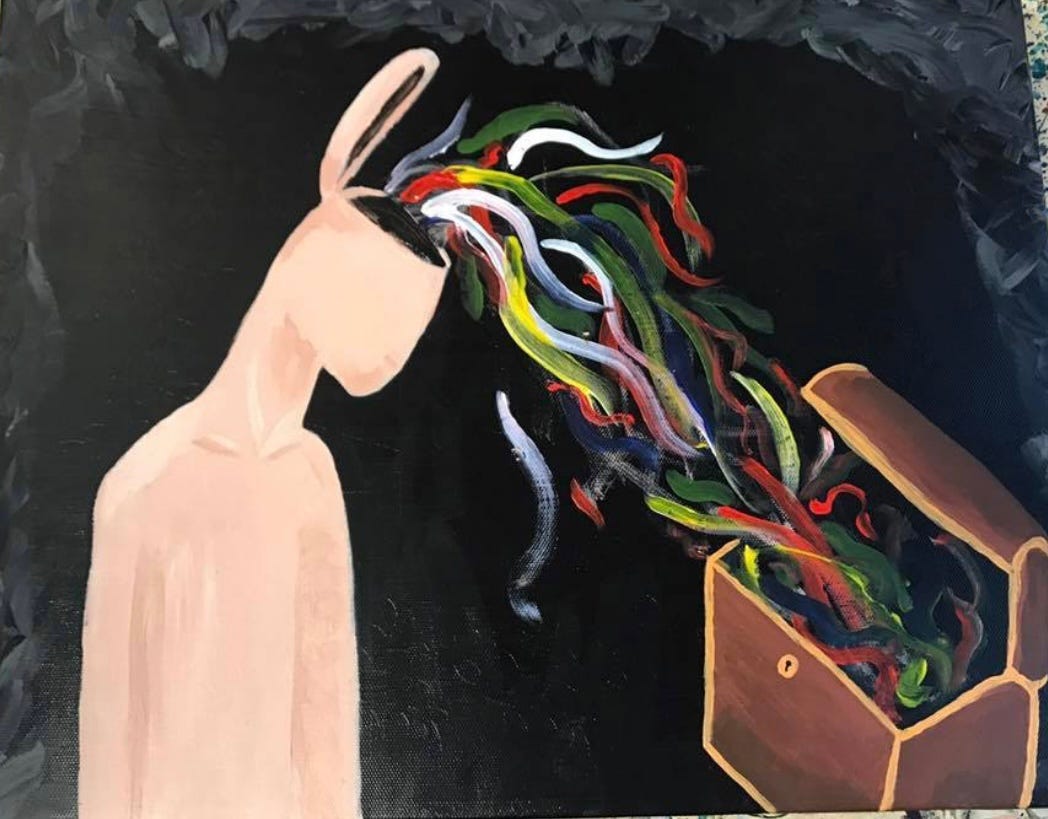
Dissociation fundamentally alters how our brains process and store memories, which explains why trauma memories often feel fragmented, confusing, or "unreal." When we dissociate during overwhelming experiences, the normal memory consolidation process gets disrupted.
Instead of forming coherent narratives with clear timelines, we end up with scattered fragments - sensory impressions, emotional states, and body sensations that exist separately from each other. This is why someone might remember the smell of their childhood kitchen but feel completely disconnected from the emotional memory of what happened there. Understanding this helps explain why traditional talk therapy alone isn't always effective for trauma healing - we need approaches that help integrate these fragmented pieces, using neurosomatics, parts integration, relationship building, and physiological care.
This is what I aim to offer in my private coaching container—to support the whole woman and emphasize the integration of memories and parts with our present reality’s needs and experiences.
At this point, it’s hopefully clear to my readers that dissociation isn’t an all-or-nothing thing and that it exists along a spectrum. Where our patterns fall will be influenced by our ACE score and developmental years, our overall physiology and metabolic health, the environments we live in, and even the larger cultural influences we’re exposed to.
For instance, we may have an otherwise healthy and stable childhood, but have far too much screen exposure early in life, driving us toward dissociation patterns that we may not have otherwise developed. We may have a healthy family unit, but we were brutally bullied at school or experienced prejudice as a result of our ethnicity, religion, or socioeconomic class, leading us toward dissociative patterns that become maladaptive over time. If we don’t have an obvious issue that is disrupting our lives, such as an addiction, we may be the only ones who can ever truly know if our dissociative patterns are maladaptive and keeping us stuck in learned helplessness.
As I mentioned earlier, I’ve experienced a lot of patterns in my life, beginning early, that I now recognize as maladaptive dissociation. I also recognize that my ability to engage in healthy dissociative states is a strength of mine and has made my life and internal world much more interesting and resilient. For example, I’m obsessed with reading books and can get completely lost in a book for hours, without realizing how much time has passed. This can happen with a good novel, but my great love is non-fiction, so it tends to happen as a result of learning about how the world works. I can honestly say that I’ve learned more from reading on my own than I ever did in classes at school!
However, as a result of my high ACE score and the lack of safety I experienced throughout my early life, I also developed maladaptive dissociative patterns that showed up as follows:
Remaining in motion as a way of calming myself down and organizing my thoughts. This manifested early in life through constant movement,over-exercising, and pushing my body beyond its limits. I used to use movement to lower threatening thoughts and induce pleasurable ones, such as daydreaming about the future or about things that I wanted. As a small child who lived alongside the beach, I would sit on the swings at the beach for HOURS swinging because the motion calmed my body and helped me control my thoughts. When I got into tweens and teens, I used to walk a lot around my neighborhood when I was stressed. When I was with girlfriends, I even have memories of pacing in friends’ houses while waiting to go out or for events to start. Looking back, they used to make fun of me in an endearing way when I would pace, thinking I was just quirky, not realizing I was dissociating to manage the anxiety of whatever event we were about to go to. When I got my driver’s license, I would drive for hours to remain in motion when I didn’t have the energy to move physically. In my twenties, I became a full-time biker to remain in motion. I used movement as a way to alter my thoughts and escape reality.
I listened to music a lot to dissociate growing up, and music became a huge outlet for memory storage. I have two older sisters, and when my family fell apart, we went from incredibly sheltered to incredibly neglected. 90s media suddenly played a huge role in our development, and the memetics from things like music and shows took over where our parents’ authority had previously existed. As a result, I spent a lot of time listening to music, and it became one way that I could stay still without feeling overwhelmed. As a result of this, there are endless songs, albums, and artists that my younger exiled and protector parts are stored within! Music has become an invaluable tool for parts work for me as a result.
I would daydream and “space out” constantly and at very inconvenient times, inducing a lot of shame and landing me my first ADD diagnosis at the age of 8. Having been unschooled and free-roaming up until my family fell apart and we were all placed into public school, I had little training in paying attention to things that I didn’t want to pay attention to. I went from very little exposure to children other than my siblings to being in a big, wealthy, elementary school with 25-30 children per classroom. Since I was surrounded by beautiful rolling hills and an ocean view, I would gaze out the classroom windows and fantasize about being outside, adventuring on the water or hillsides. I would doodle during class. There were countless occasions when the teacher would shame me in front of the entire class for not paying attention to their instructions. I was provided tutors and eventually got better at paying attention, but it took immense amounts of focus, driven by toxic shame and social pressure. Looking back, some of this was a lack of skill and experience, but much of it was a dissociative pattern developed to handle the extreme stress of school itself.
I began having what I later learned were panic attacks during my integration into public school, but I didn’t want anyone to know. The only thing that I knew how to do was go to the bathroom and hide from the kids in one of the stalls until they passed. I also became scared that other kids would know I wasn’t using the bathroom for actually going to the bathroom, so I trained myself to pee on demand, overpowering what my body actually needed at that time. This turned into a lifelong struggle with centralized bladder stress and poor communication between my pelvic region, particularly my bladder, and my brain. This is an example of the ways that dissociation from our bodies as a result of stress can induce or contribute to illness over time.
I also had incredibly big emotions and regular tantrums as a child that would leave me feeling completely out of control and unsafe in my body, not just for myself but for everyone around me. Looking back, it’s clear that I was incredibly disregulated on multiple levels and was unable to manage my own states, nor name or meet my own needs. Having limited resources and low agency themselves, my parents’ response to these tantrums was usually harsh punishment; putting me on a timeout in my room until I was able to “control myself.” This set the stage for a baseline level of hypervigilance I experienced for decades with my own emotions and bodily signals, leading to things like binge drinking, cannabis use, and binge eating disorder.
Looking back, it’s obvious that I needed adults to co-regulate with me and to teach me healthy ways of navigating heightened sensory responses. But instead, I got disciplinary reactions that led me to dissociate as a way of coping, creating a shame-based identity that took me decades to understand more deeply.
I share my personal experiences here mainly because they’re unfortunately common. Many of us are born with sensory processing issues, where the world’s signals are often overwhelming to our sensitive systems and lead to increased overwhelm in the day-to-day. Add to this the potential for developmental trauma, which makes an already intense experience unsafe beyond capacity, and you’ve got ripe ground for dissociative patterns to emerge and solidify throughout our lives.
If you read some of my experiences and patterns and see yourself in some of them, please know that you’re not alone—maladaptive dissociation is one of the most widespread and impactful experiences humans can have as a result of chronic stress and trauma. It exists for a reason. If we had no way to “check out” of painful and confusing experiences, imagine how much visceral surface-level pain we would all be carrying around all the time! Some level of compartmentalizing is an important feature, not a bug, and is how we evolved while experiencing famines, war, violence, loss, and an immense loss of control in life.
The important point is that we return to the pain and confusion and work it out so that we can be integrated and present for the lives we’re here to live. Our lives are too sacred and too brief to be checked out all the time, am I right?
From all of the research I’ve done, it looks like emotional numbing is perhaps one of the most common yet unrecognized forms of dissociation that humans engage in. Having spent about two decades working with children and observing how many adults unskillfully address children’s emotions, this isn’t a surprise to me. As an adult, emotional numbing is that feeling of going through the motions of life while feeling emotionally flat or disconnected. Like life just isn’t touching us, but is passing us by. Like all forms of dissociation, it's not all or nothing, but runs along a spectrum. Consider a time where this was a pattern you fell into, only for you to have some heightened emotional experience that reminded you, by contrast, how numb you’d been.
This protective mechanism develops when emotions have been too dangerous or overwhelming to experience fully. While it provides relief from emotional pain, it also cuts us off from joy, creativity, pleasure, and authentic connection. It can contract us over time until our experience of ourselves and our lives is suddenly much smaller than it should be. The way out of this is through titrated experiences that reconnect us with our feelings, needs, and agency, which I’ll explore further at the end of this post.
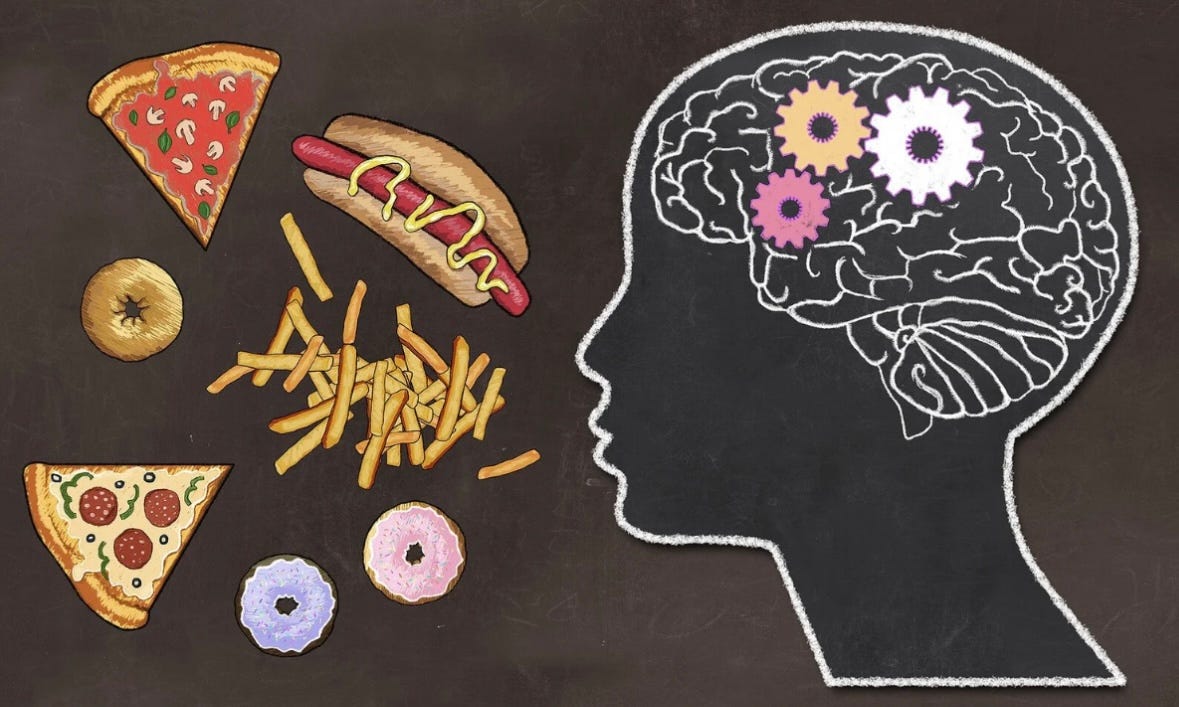
This is one of the most common forms of dissociation that I’ve worked with as a women’s nutritionist, and it’s the one that I struggled with the most from about 13 years old until my late twenties. It’s also directly tied to emotional dissociation because food often becomes the tool we use for dissociating from our emotions—this is often how eating disorders start. Unfortunatley, due to the toxic elements of diet, beauty, and health marketing culture, dissociative eating patterns can be a hole even otherwise healthy women fall into and can spend years climbing out of.
Food and eating can become vehicles for dissociation in multiple ways. Some people eat without any awareness - mechanically consuming food while mentally "somewhere else," which disrupts natural hunger and satiety cues. Its incredibly common for people, especially those who eat most of their meals alone, to feel incapable of eating without having something else to pay attention to, such as a screen to focus on. This can impact our digestion, breathing, chewing, and even our food choices because we’re less likely to notice how certain foods leave us feeling.
Others use food as a way to dissociate from uncomfortable emotions or sensations, eating to create numbness or escape. This is what I did for YEARS as a binge eater—eating large quantities of highly palatable processed carbohydrates to numb out and down-regulate. I’d say this is also very common, even if it’s not taken to the extreme level that women like myself took it. There's also restrictive eating as dissociation - using hunger and the control of food as a way to feel "above" bodily needs and emotions, which creates a pattern of high-cortisol-induced survival states.
These patterns are often misunderstood as purely behavioral issues, but they're nervous system responses that require a trauma-informed, somatic approach to address effectively.
Chronic dissociation creates a unique pattern of dysregulation in our stress hormone systems that directly impacts metabolic health and overall sense of safety, especially over time as our resources get run down. Unlike acute stress, which creates cortisol spikes followed by recovery, chronic dissociation often involves a flattened cortisol curve - low morning cortisol when we need energy to start the day, and either continued flatness or inappropriate evening spikes that disrupt sleep. Having looked at hundreds of labs and DUTCH test results while working with clients’ hormones, I’ve seen this pattern of low morning cortisol and higher cortisol at nighttime and again.
Of course, this isn’t always the result of dissociation alone, but can also result from poor energy and stress management, poor sleep hygiene, under-eating, and life stressors. But it’s been a consistent pattern in almost all of the women that I’ve worked with who have a C-PTSD diagnosis and hormone imbalance. This pattern also tends to wreak havoc on our blood sugar regulation, making it difficult to maintain stable energy throughout the day. People might experience crushing fatigue alternating with anxious energy, sugar cravings, difficulty waking up, and that "tired but wired" feeling. Understanding this connection helps explain why addressing trauma and nervous system regulation is often necessary for resolving metabolic issues in those with ACE-related complex trauma.
Several other metabolic mechanisms are impacted by maladaptive dissociation, which I won’t go into detail about in this post to keep the reading time manageable. However, I’d like to mention a few of these so that I can potentially dig more deeply into them in future posts and get them on the radar of those who may be struggling with them at the moment:
Relationship to Mitochondrial Function
Our mitochondria - the energy powerhouses of our cells - are exquisitely sensitive to our nervous system state. Chronic dissociation and the accompanying stress response pattern can significantly impair mitochondrial function, leading to cellular energy production problems that manifest as brain fog, fatigue, and poor recovery from physical or emotional stress.
Impact on Digestion
Proper digestion requires parasympathetic nervous system activation - we literally cannot digest well when we're stressed or dissociated. Chronic dissociation keeps us in a state where digestive function is consistently compromised. Stomach acid production decreases, digestive enzymes are reduced, and gut motility slows down.
Nutrient Deficiencies
Certain nutritional deficiencies can both result from and contribute to dissociative patterns, creating another vicious cycle that needs to be addressed. B vitamins, particularly B1 (thiamine), B6, and B12, are crucial for nervous system function and become depleted under chronic stress. Magnesium deficiency is extremely common in trauma survivors and directly impacts our ability to regulate stress responses and maintain nervous system calm. Many more nutrients are likely to be deficient in those with dissociative tendencies, thus making regulation and embodiment harder than it already is.
As someone with a long history of these patterns, I’ve grown to recognize that pushing ourselves to show up and be present in life is often a hypervigilant reaction we can take that may backfire in harmful ways.
I’ve seen this reaction in myself and many of my clients; seeking out an experience of hyper-awareness to counteract the time spent escaping, long hours meditating, self-reflecting beyond what is helpful, and removing more and more sources of escape in an almost militant attempt to “face reality.”
The result is often heightened interoceptive stress, anxiety, a tendency to ruminate, and a belief that our healing requires us to show up for every little discomfort and rupture. We can be incredibly hard on ourselves when we seek escape, and we can also drain the innate joy and spontaneity out of the present moment.
In response to this, I’d say that we want to look toward children as models for healthy escape, fantasy, and how presence can ebb and flow throughout the day. We don’t want to, nor should we have to be fully present for every aspect of our lives, especially the painful things! If pain and discomfort are all or most of what the brain is experiencing, we’re going to be very unhappy and stressed, which is defeating the point of healing and growing in the first place.
Here are my general suggestions for beginning to address your patterns in maladaptive dissociation, if this is something you struggle with:
Rebuild Interoceptive Awareness, Gradually
Reconnecting with our bodily sensations needs to happen slowly and gently, especially for trauma survivors who may have disconnected from their bodies for good reasons. Start with external sensations before moving to internal ones - feeling your feet on the ground, the temperature of the air on your skin, or the texture of clothing. Gradually introduce gentle internal awareness through practices like noticing your breath without trying to change it, or doing slow body scans that focus on neutral sensations rather than areas that might hold trauma. The goal isn't to feel everything immediately but to slowly expand your window of tolerance for bodily awareness. I don’t recommend closed-eye mindfulness meditation for those working with dissociation, nor do I suggest ANY somatic practice that places demands on your attention for extended periods of time.
Nutritional Support for Nervous System Regulation
Supporting nervous system regulation through nutrition involves both addressing deficiencies and ensuring you’re eating enough macros (carbs, proteins, fats) each day to keep your nervous system feeling safe. Focus on blood sugar stability because when blood sugar drops, stress rises, and this is a common survival pattern that can keep us in long-term disorganization as a result of physiology alone. Support adrenal function with minerals and B and C vitamins, which we lose quickly when we’re stressed. Provide building blocks for neurotransmitter production through amino acid-rich foods and adequate protein. Ensure you’re getting adequate carbs, which often get demonized or downplayed in nutrition and diet circles. Glucose is absolutely essential to combat stress, and simple sugars are not bad for us when they’re used in the context of an otherwise nourishing diet. Support the gut-brain connection with home-made bone broth, gelatin-rich foods, raw carrots, and coconut oil. The key is understanding that nutritional support works best when combined with nervous system regulation practices rather than being used in isolation.
One of the most crucial principles in working with dissociation is titration - working with small, manageable amounts of sensation, emotion, or awareness rather than trying to process everything at once. This might mean spending just 30 seconds noticing bodily sensations before taking a break, or processing one small aspect of an emotional experience rather than diving into the whole story.
Titration prevents the nervous system from becoming overwhelmed and going back into dissociative states. It's about building tolerance gradually and respecting the wisdom of your system's protective responses while slowly expanding your capacity for presence and aliveness. Humans tend to have a hard time with moderation, which shows up in countless ways in our lives and even in the way society is often structured. I see this causing a lot of problems for us when we’re seeking to heal and change our habits and patterns—we often seek to change them all at once, which then backfires and leaves us feeling contracted and ashamed for our lack of progress.
Changing patterns and integrating more of who we are (our True, adult selves) into our everyday lives is also what I support my private clients with, if this is something my readers should ever desire support with. The point is to be patient and to allow ourselves grace. The brain will never respond well to big, dramatic changes, and the cells in our bodies will only absorb so much of the nutrients or oxygen we try and take in at one time. We have built-in boundaries that keep our pace in check for a reason, and pushing ourselves past capacity can be viewed as a very human experience that is teaching us where our capacity lies in the first place. Escaping can be a natural response to this, and a pleasurable one at that. Please allow yourselves some pleasure, life is too short for us to work so hard just to be here!
Nourishing Our Sanity is a reader-supported publication. To receive new posts and support all that my work entails, please consider becoming a paid subscriber for as little as $6 a month, which will increase the quality of content I’m able to create on here
No posts
Comments
Nothing yet. Say the first thing.
Sign in to join the conversation.