
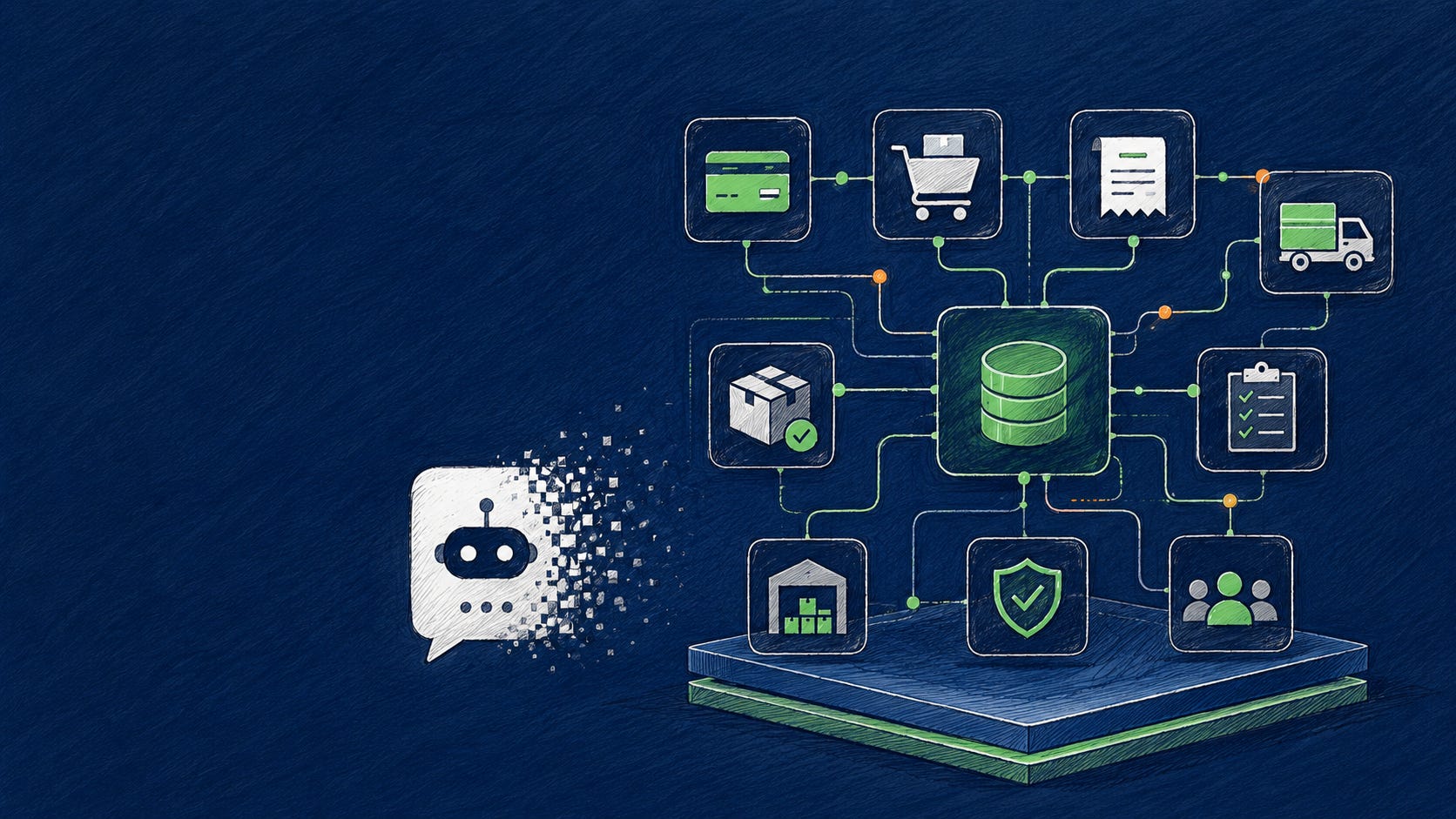
When Meta announced Business Agent, a lot people asked me if it killed Sarufi and Ghala.
And the answer is Yes, It killed the version of Sarufi and Ghala I would never have been proud of anyway.
The FAQ bot version. The demo version. The “we connect to WhatsApp API” version.
The version that actually matters the one connected to local payments, real merchant workflows, African languages, and business execution that version just got a much bigger market.
Let me explain.
Most WhatsApp bots were never real businesses. They were wrappers.
They answered FAQs.
They collected names.
They showed product lists.
They sent basic notifications.
They looked impressive in a demo, then broke the moment the business changed its prices.
The customer asks what time you open. The bot replies. The customer asks about delivery. The bot replies, sometimes correctly. That is not deep infrastructure. That is automated conversation. Meta can do that. Meta should do that. And once Meta does it natively faster, cheaper, closer to the customer the value of a standalone basic WhatsApp bot collapses.
Meta just killed the WhatsApp bot business. But only the shallow version of it.
Bad news if your moat is
“We know how to connect to the WhatsApp API”
“We build WhatsApp bots for small businesses”
“We automate customer replies”
A demo that breaks when the business changes
Good news if you are building
Payments connected to conversations
Order and fulfillment workflows
Local language and market infrastructure
Business execution inside the conversation layer
The mistake many people will make is thinking this is about chatbots. It is not. This is about the future of business software.
For a long time, business software has lived behind dashboards. Merchants log into systems to manage orders. Sales teams log into CRMs. Support teams log into ticketing systems. Finance teams reconcile in yet another tool. Meanwhile, customers do not live inside dashboards. They live inside messaging apps.
In Africa especially, the business interface is already WhatsApp, prices, negotiation, payment screenshots, delivery updates, complaints, reorders, trust. The conversation is already the storefront, the support desk, the sales channel, and the relationship layer. Meta Business Agent simply makes this reality impossible to ignore.
Can the business check inventory when a customer asks for a product?Meta: maybe
Can it collect money through local mobile money rails?Infrastructure
Can it issue a compliant local receipt?Infrastructure
Can it dispatch a rider and update the customer on delivery?Infrastructure
Can it reconcile the order against payment and revenue?Infrastructure
Can it escalate a complaint, track resolution, and learn from it?Infrastructure
Can it qualify a lead, assign it, follow up, and measure conversion?Infrastructure
The reply is the surface. The transaction is the business. Meta will own more of the interface the entry point, the business profile, the catalog, the messaging experience. That is rational and expected. But Meta can own the interface and still not solve the full business problem. Especially in markets like Africa.
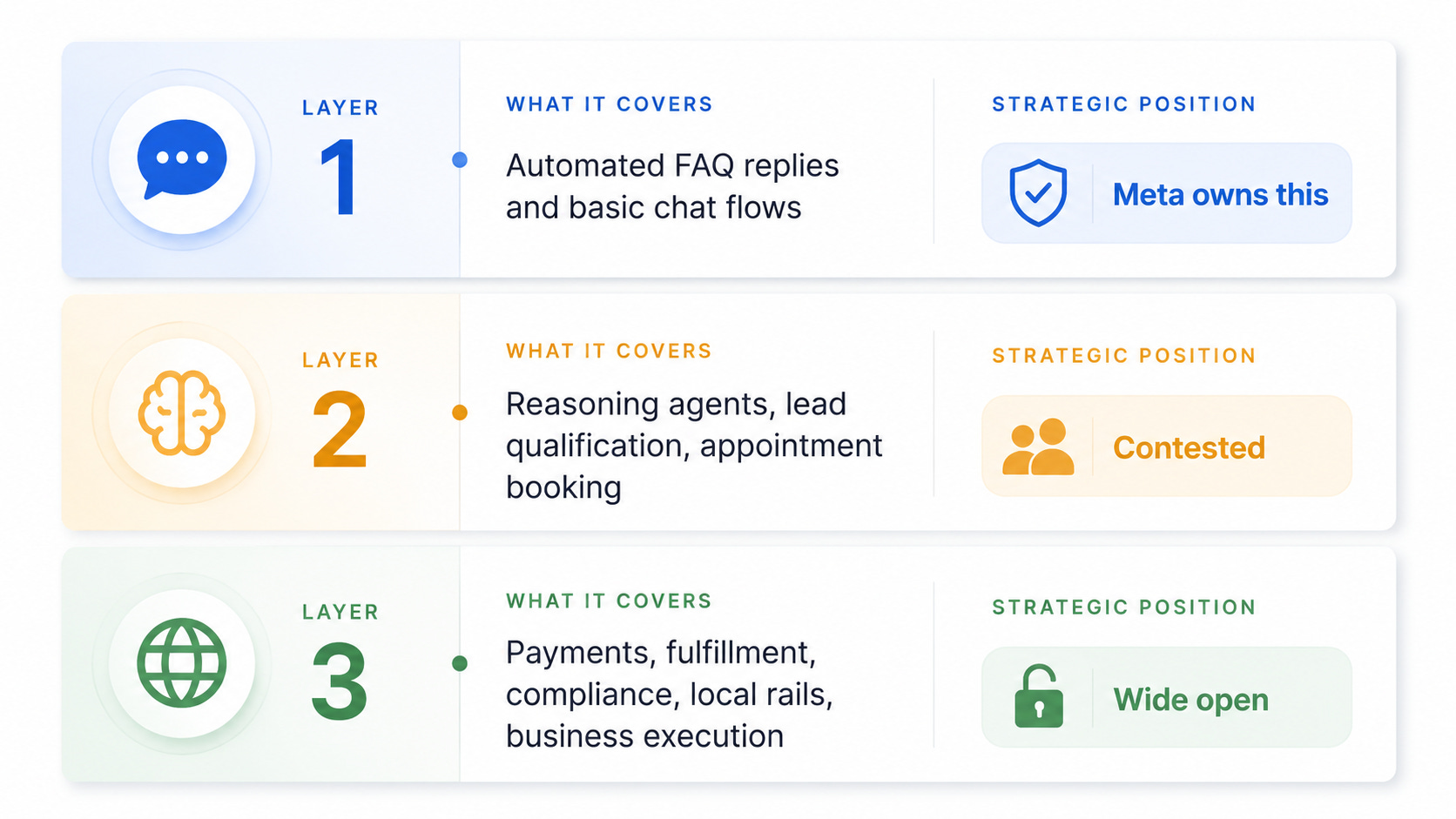
The third layer is where the real infrastructure lives. Taking orders, collecting payments, issuing receipts, managing delivery, updating inventory, qualifying leads, reconciling transactions, triggering workflows, connecting to CRMs, generating reports, enabling human takeover, measuring conversion, supporting local compliance. That is not a chatbot feature list. That is a business operating system.
This is not a surprise to us. At Neurotech, we have spent years building around one thesis, the same thesis this announcement now confirms to everyone: the future of business in Africa will not be app-first. It will be conversation-first.
Neurotech product stack
Sarufi
Conversational AI infrastructure across channels, languages, and business workflows
Ghala
WhatsApp commerce operating system orders, payments, receipts, delivery, campaigns, merchant tools
Snippe
Lightweight payment infrastructure for creators, developers, freelancers, and small businesses
Sema
Voice AI layer, calls, IVR, transcription, and routing for African business operations
The point is not that we predicted every move Meta would make. The point is that we always believed the same thing this announcement now confirms to the entire market.
Gen 1
Bots
FAQ replies, basic flows, demo-ready, production-fragile. Meta just made this free.
Gen 2
Agents
Reasoning, recommendations, handovers. Meta is entering. Contested territory.
Gen 3
Operating systems
Business execution inside conversations. Payments, fulfillment, compliance, intelligence. The prize.
In Africa, this matters more because many businesses will never fully move through the traditional SaaS adoption curve. They may not start with a CRM, an e-commerce website, an ERP, or a mobile app. They will start with WhatsApp. Then they will need everything else to connect around it.
Meta’s move will educate the market at a scale we could never afford. It will make business agents normal. It will make conversational commerce mainstream. It will tell millions of businesses that messaging is not just for chatting it is for selling, supporting, operating, and growing.
Once businesses start using agents, they will quickly ask harder questions. Can this collect payments? Can it handle our local language? Can it connect to our bank and tax system? Can it be customized for how our business actually works?
Those questions are answered by infrastructure companies, not by the platform.
Meta has made the front door smarter. The opportunity is to build the rooms behind it.
That question is finished. The new question is whether AI can help businesses actually operate.
Can it sell? Can it collect? Can it fulfill?
Can it reconcile? Can it report? Can it learn?
Can it work in local markets with real-world messiness?
Meta Business Agent is not the end of conversational commerce. It is the end of pretending that a simple WhatsApp bot is enough. The companies that only automated replies will be squeezed. The companies that build real infrastructure will become more important.
The interface may belong to Meta. The execution layer is still wide open. And in markets like Africa where business already happens inside conversations — that execution layer may be one of the most important software opportunities of the next decade.
No posts
Comments
Nothing yet. Say the first thing.
Sign in to join the conversation.